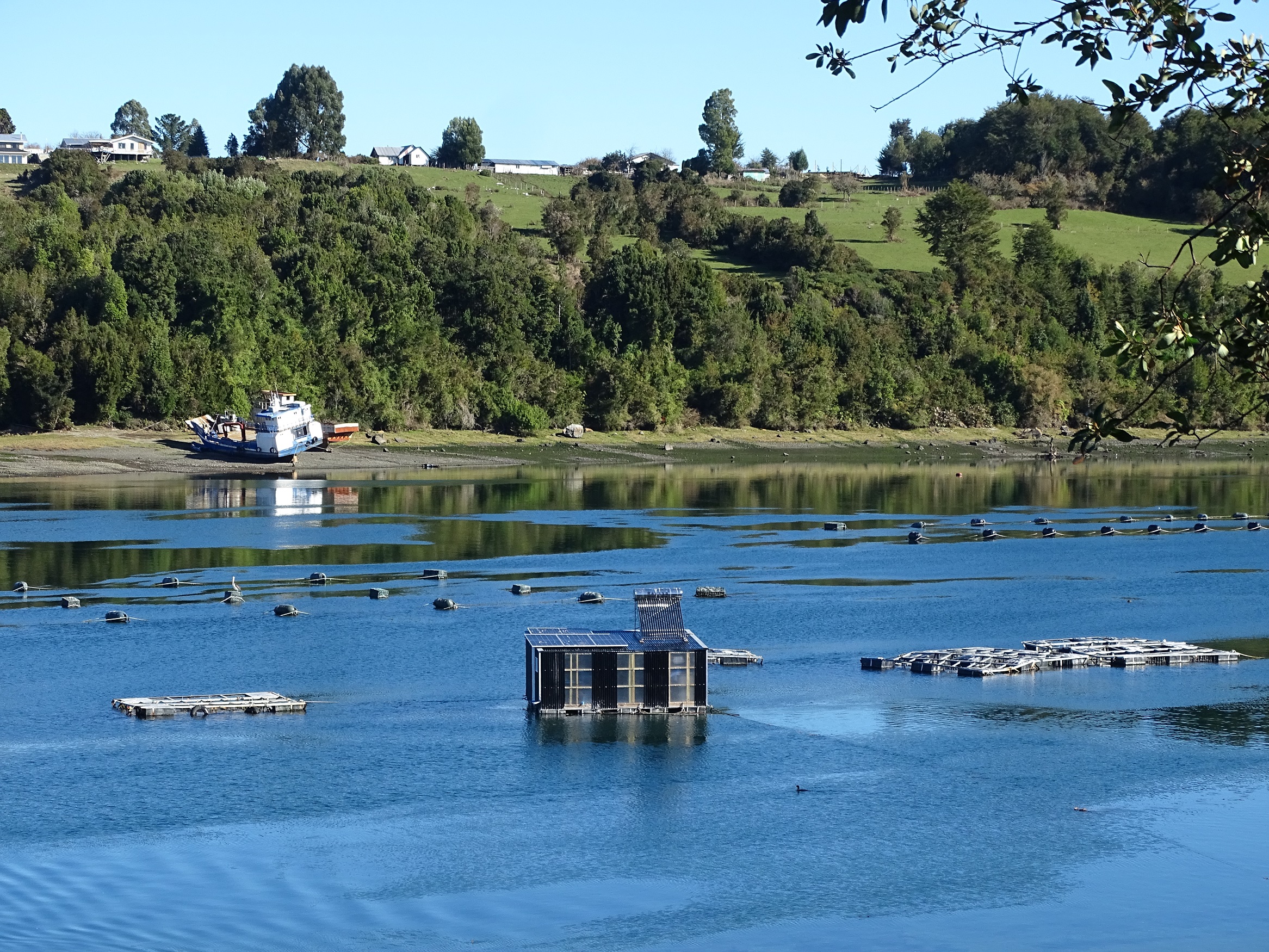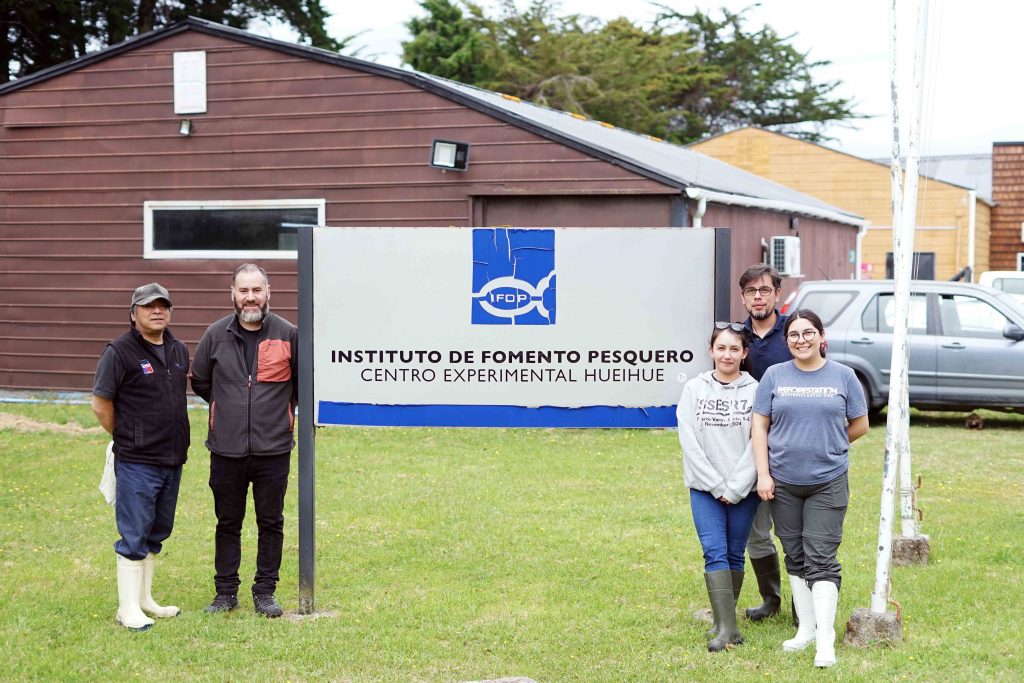
The seeds were cultivated at the Hueihue Experimental Center of the Fisheries Development Institute, which is located in the commune of Ancud.
With important results finished the project "Technology transfer for the production of Japanese oyster (Giant mussels) and northern oyster (Purple scallop)", whose objective was to implement a seed production system for these two species in hatchery.
The head of the "Viviana Videla Vidal" Seed Production Center of Chinquihue Foundation, Jorge Tillería, explained that "the idea of the project was to carry out a technology transfer for the production of Japanese oyster and northern oyster from Fundación Chinquihue to professionals from the Centro Experimental Hueihue of Fisheries Development Institute (IFOP), located in the commune of Ancud, Chiloé province (Los Lagos region). This, through expert advice."
Also read » More than 600 people participated in workshops to address a General Aquaculture Law
For this purpose a series of activities were carried out, all necessary for the success of the consultancy, process that took around ten months of intense work.
It went off producing microalgae, this in order to feed the breeders, larvae and seeds of both species. The project programme also envisaged the cultivation of adult specimens in controlled systemThis is to get quality gametes.
Work was done on the different stages of production from the spawning, until the fixing of oysters and oysters, for which it is necessary different fixing systems in each case. Progress was made in the cultivation of preseed, as well as in the feeding and management of hatchery. Finally, the sowing at sea to obtain the seeds.
Tillería detailed that all these steps were aimed at "that FIFG professionals could acquire this knowledge and then you can reproduce it on your own. hatchery and thus succeed in producing seeds of form independent.
National problems
Pablo Leal is currently an FIFG researcher and is in charge of hatchery. The professional explained that "the idea of starting with the hatchery is part of the national problem of the seed deficit for bivalves in small-scale aquaculture (SSA)".
Read more » On land: 30 million to support small-scale crops
He recalled that they began working on this idea in 2023. "We spent a year trying to produce seeds and didn't make much of it. This year we decided seek help And as we knew about Fundación Chinquihue, we contacted them," he said.
On the results achieved, the FIFG official assures that "for us it is successful because we already know that we can produce. Now we're missing scale that production and we hope to do so in the coming years."
Read more » Advances in Japanese oyster farming
The idea is to produce seeds and then transfer them to those who are interested in working with these species. "Can be fishermen handicrafts that want to start growing or aquaculture farmers small scale they are already producing, but need more. The main thing is to transfer it," says Leal.
"Today there is a need in Chile to work in hatchery de bivalvos", notes the FIFG professional. However, he has realized that moving forward on this is not so easy. "It's not just about producing and obtaining larvae or seeds overnight. It's needed time, interest and much knowledge and these three elements are not easy to achieve, especially in fishermen or fish farmers. You may have the interest, but you need people from experience to guide you in the process," he concluded.
Read more » The story of the aquaculturist who drives trout production in San Fernando
These activities are part of the "Integrated Aquaculture Development Programme for Artisanal Fishermen and Small-scale Aquakeepers", which is implemented by the IFOP, and which focuses on the development of the APE of bivalves and macroalgae in the country.
This programme forms part of an agreement with the Undersecretary for Economics and Smaller Enterprises, being its scientific-technical counterpart Fisheries and Aquaculture Subsecretariat (Subpesca).
* Credits from the featured photo: courtesy of Fundación Chinquihue.