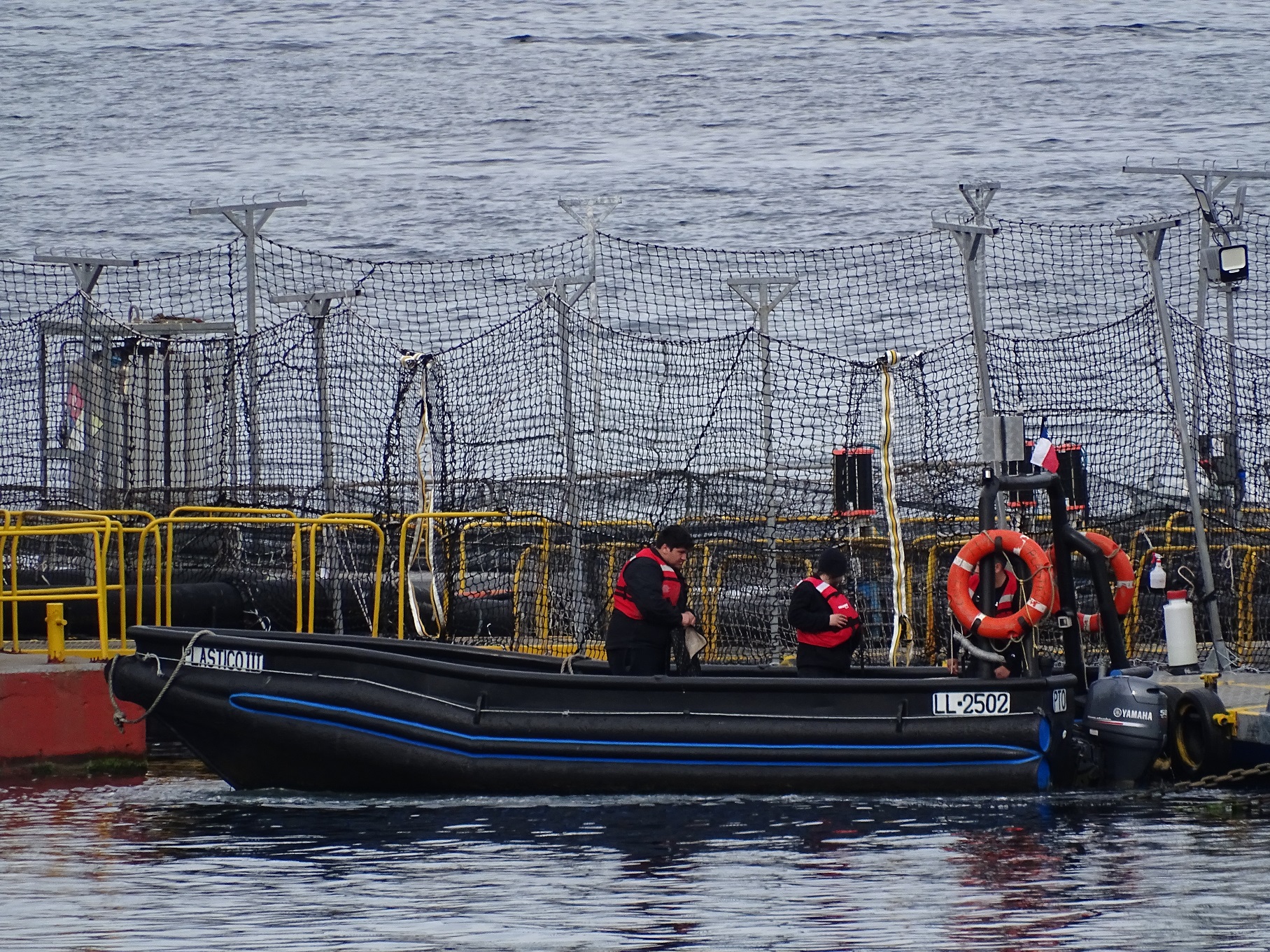
Last Friday, the final meeting took place, thus closing the process of collecting field proposals that had stops in Puerto Natales, Temuco, Coquimbo, Puerto Aysén, Castro, Quellón, Puerto Montt and Hornopirén.
With the declared task of working on a General Aquaculture Law (LGA) that is the result of an open and transparent debate; that addresses and provides answers to the challenges facing the sector for the coming decades and that continues to contribute sustainably to national and global food security, the Subsecretariat of Fisheries and Aquaculture has carried out since October of last year a series of territorial workshops for gathering proposals, a process that concluded last Friday, December 6, with a final meeting in online format.
They were a total of more than 620 people linked to the aquaculture sector, who gathered at the events held in the localities of Puerto Natales, Temuco, Coquimbo, Puerto Aysén, Castro, Quellón, Puerto Montt and Hornopirén, a tour that represented an opportunity for dialogue with key actors in the sector and involved significant work and on-site deployment by officials and experts from the Subsecretariat of Fisheries and Aquaculture, who conducted these workshops with the support of members of the Institute of Aquaculture and Environment of the Austral University of Chile, Puerto Montt campus.
The workshops addressed fundamental issues such as environment, permits, development, research and regulation, allowing the collection of proposals that reflect the needs and challenges of the sector. This process reaffirms the Subsecretariat's commitment to building a law based on an open and transparent debate, which will promote sustainable aquaculture.
Constance Silva, head of the Aquaculture Division of the Subsecretariat, was responsible for delivering the closing remarks of the process, pointing out that public participation "is never something easy, as there are many stages and moments in which to conduct it," and that one thing that is clear from this path is the need to improve governance and strengthen collaboration mechanisms.
Also, that it is not feasible to address all the problems that aquaculture currently has before starting this process, but rather it is a path that must be taken in parallel towards a law that sets clear limits on the sector, supports sustainable aquaculture and the challenges for the coming decades.
It also dismissed the idea of wanting to "end the industry" as raised by some voices during the listening process. "We need as a country to find places where sustainable aquaculture can be carried out, applying science, technology and researching in order to be able to use hydrobiological, water and marine resources in a sustainable, efficient and effective way, which are going to become increasingly scarce. We also have to contribute" To this lack of food that we are already living by the water crisis and we will probably have to support in the generation of a healthy and sustainable food industry for the world in general," said Silva.
The collection and analysis of the proposals, by the Universidad Austral de Chile, will be presented in a report that will be available during the first quarter of 2025. This document will be a key tool for the preparation of a bill that responds to the expectations and challenges of the aquaculture sector in the country.
With regard to the online participatory process, until January 4, 2025, the banner will be enabled on the website of the Undersecretary to receive proposals and build a proposal for legislation enriched with the proposals emanating from the different actors of the sector.
Last workshop
In the case of the meeting held online with more than 50 attendees, the words of welcome were from Marcela Astorga, vice-rector of that headquarters of the Austral University of Chile. After her, Marisol Álvarez of the Management and Policy Unit of the Aquaculture Division of the Subpesca stressed that it was in 2022 that a commitment was made to draw up a General Aquaculture Law with a marked listening seal, and that That's what the efforts have been in. In fact, already in 2023 participatory dialogues were developed in the area of small-scale aquaculture, after which the contributions were consolidated in a document, as an input for the drafting of the law.
Daisy Carreño, from the Management and Policy Unit of the Aquaculture Division and in charge of Small-scale Aquaculture, then gave the context of the need to lift an LGA and, as was done in previous workshops, was explained to the attendees the scope of a law and how it differs from a resolution and a norm.
Among the topics addressed in the more than two hours that the meeting lasted was the schematization that the law would have, its scopes, the articulation between authorities and institutions, as well as consultations on how animal welfare will be considered in the legislation. The idea of adding value to productive activity and promotion, among other matters, was also discussed.