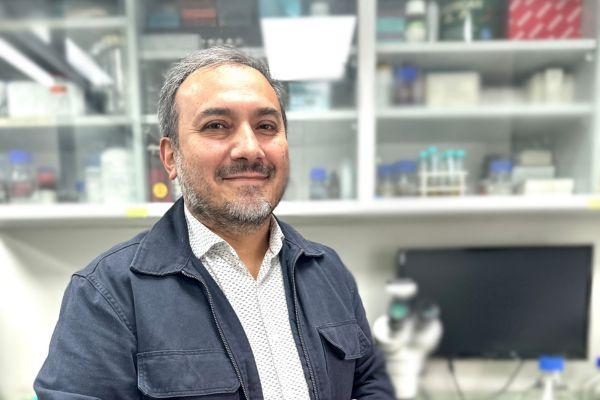
Reducing the incidence of bacterial diseases in fish is the objective of a project led by Jaime Romero, coordinator of INTA's Food Biotechnology Laboratory, through the award of the 2024 Regular Rings of Technology competition of the National Agency for Research and Development (ANID). The researchers of INTA Johana López and Alejandro Villasante also participate.
"Development of Fagus Therapy Strategies for Effective Prevention of Vibriosis and Bacterian Kidney Disease (BKD) in Aquaculture" is the name of the initiative that will focus on the development of therapies with phages (bacteriophages) as a promising and sustainable alternative to antibioticsoffering potential solutions to mitigate the impact of these pathologies, at the same time as promotes environmentally friendly practices in the aquaculture industry.
The project addresses concerns related to the use of antibiotics, considering that vibriosis affects the larvae of crops in northern Chile (Atacama and Coquimbo regions) and BKD (renibacteriosis) poses a threat to the production of ovas in the south (La Araucania and Los Lagos regions). Both diseases pose significant risks to aquatic species, negatively impacting aquaculture production.
"In the north, vibriosis affects the cultivation of fish and other marine species such as osthion. In the south, a major problem is renibacteriosis for the production of ova. For this reason, the project has an emphasis on regional problemsdetails the teacher Jaime Romero, PhD in Microbiology and coordinator of the Food Biotechnology Laboratory of the Institute of Nutrition and Food Technology (INTA) from the University of Chile (University of Chile).
"The therapy with phages will seek to offer a effective and sustainable alternative to antibiotics, using specific bacteriophagous viruses to attack and destroy pathogenic bacteria without affecting beneficial microbiota", said the academic, adding that "the objective will be to reduce the incidence of these diseases, improve the health of the fish and increase productivity in aquaculture systems."
The initiative includes: participation of the Catholic University of the North (investigators Claudio Miranda and Rodrigo Rojas) and the University of La Frontera (Jennie Risopatrón and Jorge Farías), which will contribute with their research lines in antimicrobial resistance and reproduction, respectively. In addition to this collaboration the company STIM, pioneer in the development of phages products for the prevention of diseases in aquaculture. The synergy between academia and the business sector seeks to enhance the advancement and effective application of these innovative solutions in aquaculture.
Read more » Biotechnology: Coordinating entity of PTEC-INVA is highlighted for its contribution to regional development
Also read » It is free: Last spots to participate in the international fish nutrition seminar
The researcher Romero emphasized that this award grants "the opportunity to implement a collaborative project in phagotherapy at the national level, which It's unprecedented.". He also emphasized that "to achieve the award not only strengthens the collaboration between these institutions, but also allows to address specific regional problems with a innovative and highly specialized approach".
The project will be implemented between 2024 and 2026.
*Featured photo courtesy of INTA | UChile.