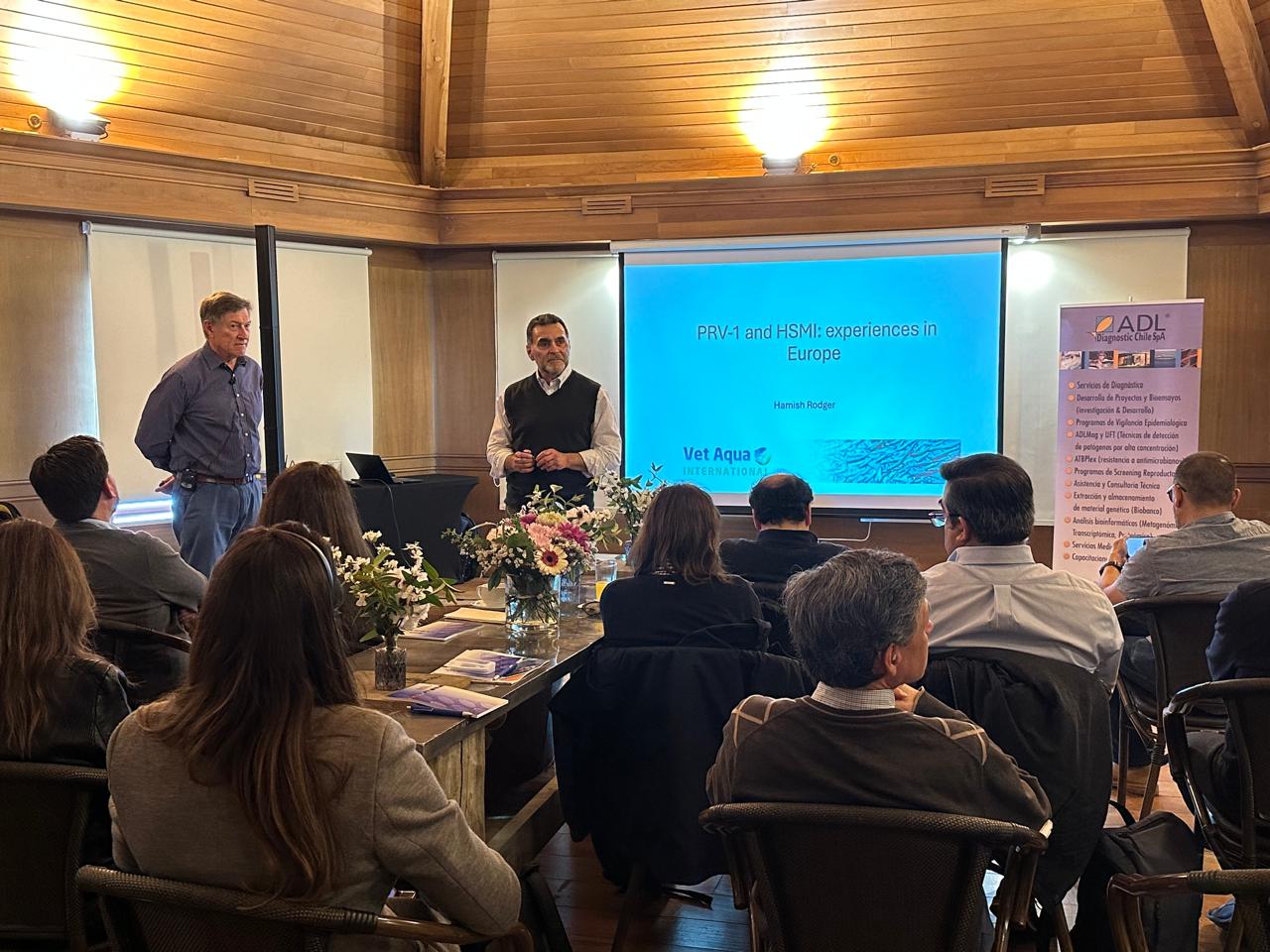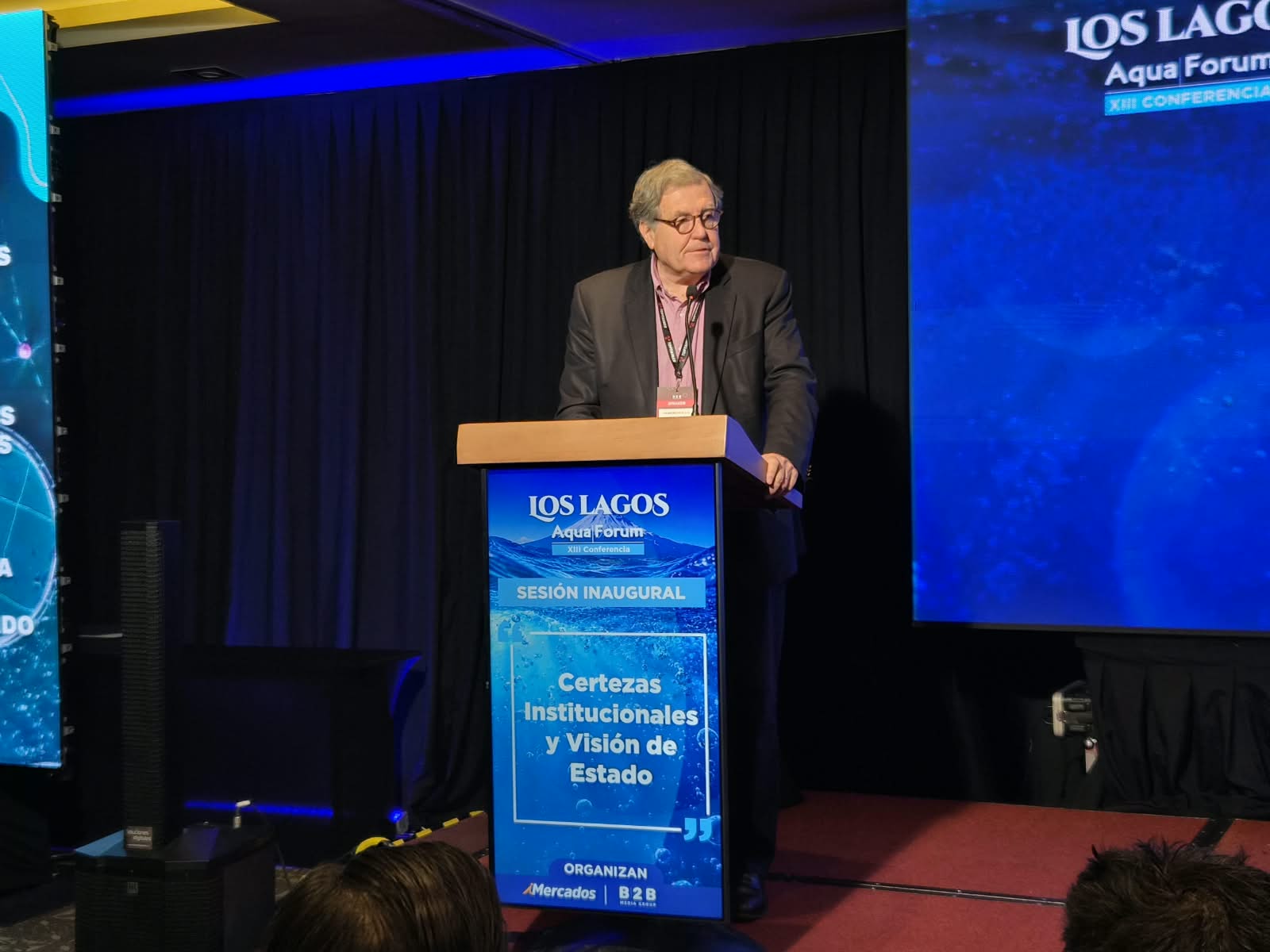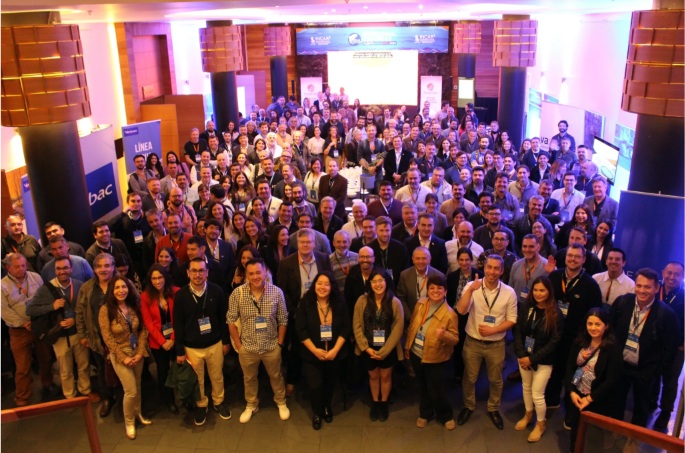
With a call of 240 attendees, began in Puerto Varas, the First International Conference on Salmon Rickettsial Syndrome, SRS 2026. The event organized by the Incar2 Center is a pioneer in being the first at the global level to exclusively address scientific advances and strategies to confront piscirickettsiosis and its bacterial agents.
The meeting that brought together researchers, industry professionals and representatives of public institutions facing one of the most important challenges for the productive sector, began with the greeting of the mayor of Puerto Varas, Tomás Garate, who added that “for Puerto Varas it is very valuable to host a meeting that brings together the scientific community, the public sector and the industry around one of the main challenges of the salmon farming. Generating these spaces for dialogue and collaboration is fundamental to building innovative and sustainable solutions for a strategic sector for the country’s development.”
Subsequently, the Undersecretary of Fisheries and Aquaculture, Osvaldo Urrutia, sent a video greeting to the attendees. “The holding of this meeting shows that the challenge presented by the SRS for salmon farming requires a shared look and a collective effort. The active participation of academia, public institutions and industry reflects a common desire to generate knowledge, boost innovation and build evidence-based solutions. Only through collaboration and articulated work among all actors will we be able to move towards a more sustainable, resilient and sustainable salmon farming in the long term,” he said.
Next, Mowi Chile's Health and Nutrition Manager and member of the Scientific Committee of SRS 2026, Dr. Jorge Mancilla shared a perspective from the salmon producers, on the relevance of this meeting. In his speech, he said that "our goal is not only to better treat diseases, but to prevent them more effectively. To move towards salmon farming with less dependence on pharmacological treatments, we must strengthen vaccination, diagnosis, nutrition, animal welfare and good management practices. The collaboration between industry and academia, together with R & D work, is key to accelerating innovative and applicable preventive solutions for the sector."
One of the main moments of the day was in charge of the director of the Incar2 Center, Dr. Cristian Gallardo-Scare, who announced the initiative “Cure4SRS”, aimed at developing new alternatives to face piscirickettsiosis over the next five to ten years. The programme considers four complementary lines of work: new generation vaccines, genetic editing, non-pharmaceutical strategies based on metabolites and epidemiological and bioeconomic evaluation of developed technologies.
In the area of immunization, Dr. Gallardo-Escárate explained that Cure4SRS contemplates the development of a new generation of messenger RNA vaccines and administration systems based on genetically modified bacterial spores to express antigens. This latest technology could open up possibilities for oral vaccination using food, allowing to strengthen protection during sea growing.
“One of the major challenges in the fight against SRS is to ensure that solutions that show good results in the laboratory are also effective in real growing conditions. At INCAR² we are advancing new tools based on genetics, metabolism and artificial intelligence to identify and combine the most promising strategies. But finding a solution to the SRS is a task that requires the commitment of the whole industry, academia and research centers; it is a search that we must do among all,” said the director of INCAR².
The opening ceremony of SRS 2026 ended with Dr. Fernando Mardones, academic and researcher at the University of Edinburgh, Scotland, “From evidence to action: scientific advances on Piscirickettsia salmonis towards an integrated disease management strategy.”
“Most of the mortality associated with the SRS is explained by what happens within each grouping of concessions, so prevention and health coordination are fundamental. No single measure will solve the problem; we must combine vaccination, productive management, seed planning, epidemiological surveillance and collaborative work between companies. With more coordination and better analysis tools, it is possible progress towards more effective and sustainable control of the SRS,” said the University of Edinburgh researcher.
Scientific sessions
The scientific program of the conference began with a session on Environmental Epidemiology moderated by Dr. Manuel Estay (UdeC/ INCAR²) and Rolando Barra (Monterrey Bay Aquarium).
The session focused on environmental, epidemiological and management factors that influence the presentation and spread of piscirickettsiosis in salmon culture. During the session, analyses of a decade of epidemiological surveillance were presented in Chile, studies on the temporal dynamics of fatal infections by Piscirickettsia salmonis, assessments of risk factors associated with SRS mortality in culture centers and new tools based on artificial intelligence to strengthen prevention and health control.
The afternoon day began with the keynote talk “Social and economic impacts of disease in the salmon industry” by Dr. Frank Asche, who addressed the strategic challenges facing global salmon farming to move towards more sustainable, competitive and resilient development.
“Smonculture faces an increasingly demanding health, environmental and regulatory scenario, so strengthening the governance and adaptive capacity of the sector will be key to its future development. Moving towards more resilient and sustainable production systems requires the integration of science, innovation and collaboration among all actors in industry in order to maintain competitiveness in a global context constant evolution,” said Dr. Frank Asche.
Subsequently, Session II was held: Genetics and Genomics, moderated by Dr. Yeny Leal (UdeC/ INCAR²) and Dr. Jorge Mancilla (Mowi Chile). Presentations by researchers from Chile, Norway and the Netherlands addressed advances in genomic selection for resistance to Piscirickettsia salmonis, identification of genes and markers associated with a better immune response, genetic evolution of resistance traits and new applications of genomics to optimize genetic improvement programs.
The third and final session of the day was dedicated to Control Tools for SRS, moderated by Dr. Antonio Casuso (UdeC/ INCAR²) and Carolina San Martín (MNL-Group).
The presentations addressed topics such as the economic assessment of control measures, the use of functional nutrition to strengthen fish response to Piscirickettsia salmonisstrategies for the responsible use of antimicrobials and the most recent advances in the development of vaccines and other preventive tools. Overall, the session demonstrated the need to integrate health, productive and economic solutions to move towards more efficient and sustainable management of the SRS, combining technological innovation, applied research and good cultivation practices.
“The high call for this conference, with more than 240 participants, demonstrates that there is a real and cross-cutting interest in advancing solutions for the SRS. We have seen researchers, companies, authorities and professionals from the sector gathered in the same space, sharing knowledge and building collaboration. This joint commitment is essential, because the health challenges facing salmon farming will not be resolved by in isolation, but through coordinated work between academia, the public sector and industry to generate innovative and sustainable responses,” concluded the Member of the SRS 2026 Organizing Committee and Deputy Director of INCAR², Dr. Ruben Avendaño-Herrera.