SalmonChile's president, Patricio Melero, led a series of strategic activities in the Los Lagos Region, with the aim of deepening regional dialogue and addressing in the field the productive, regulatory and social priorities of the southern South. The itinerary combined the exhibition of new evidence on the socioeconomic importance of the activity with the union participation in a new edition of AquaForum and in instances key of public-private articulation of the area.
Regional impact: socio-economic balance in Puerto Montt
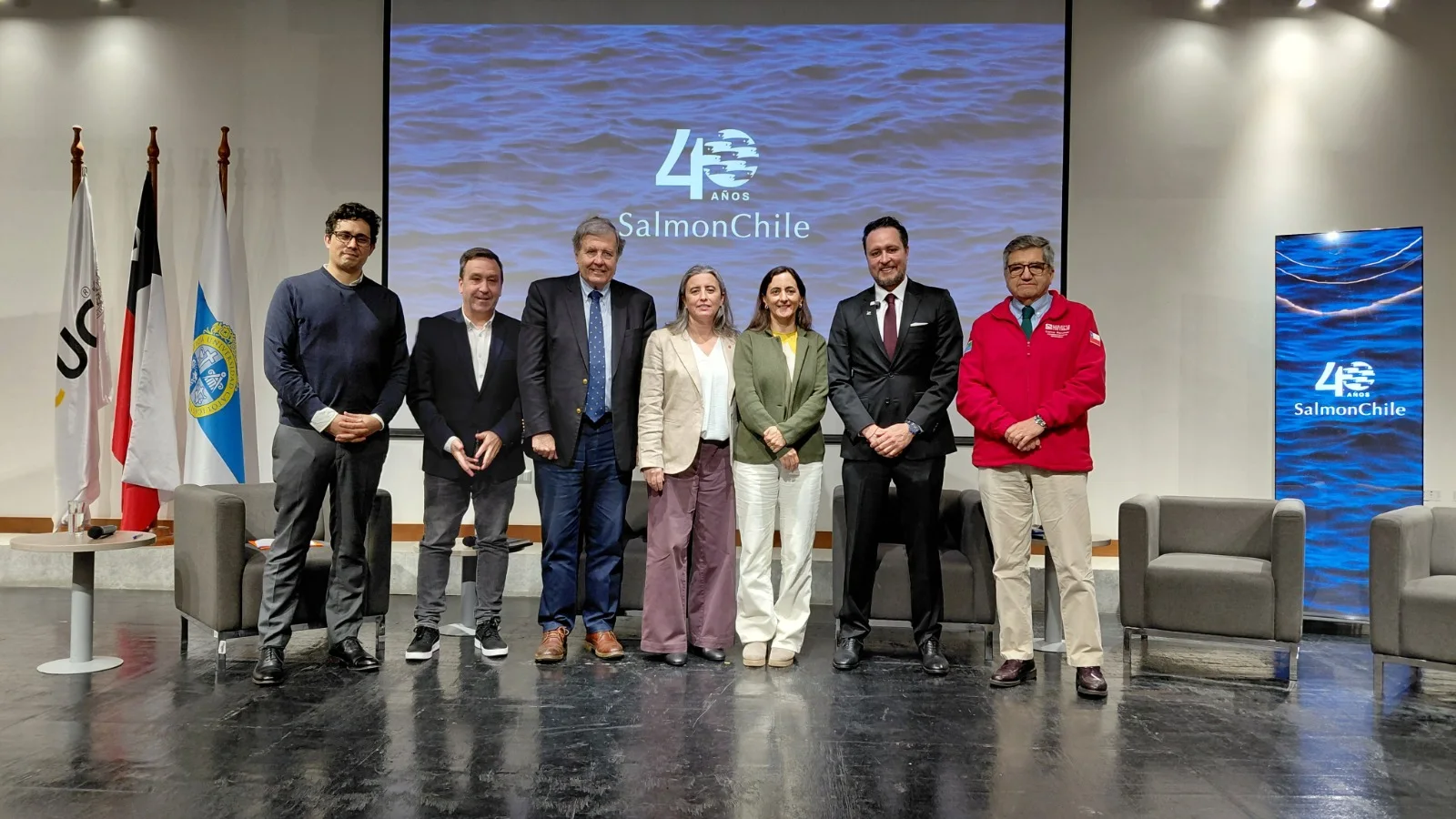
The tour began in Puerto Montt, in the headquarters of Duoc UC, where the leader of the guild led the presentation of the report “Economic contribution of the salmon industry in Chile”, prepared at the request of the guild by CoMov Consultores. The panel was attended by Francisco Carrillo, partner of the consultant and MPP from the University of Oxford; Maria Emilia Undurraga, former Minister of Agriculture and current Director of Food and Food Forestry in SEDE-UAI; and Juan Pablo Swett, president of the Multigremial Nacional de Emprendadores; in addition to local authorities such as the mayor of Puerto Montt, Rodrigo Wainraihgt, and the regional administrator of Los Lagos, Carlos Recondo.
The forum brought together the academic world, union leaders and productive representatives to analyze an updated X-ray on the labour and social footprint of the sector. According to the above figures, salmon farming accounts for 47,279 jobs in Los Lagos - equivalent to 15.2% of the regional labour force - and generates 12.6% of the local GDP - about US$ 1,166 million - while at national level the chaining production allows to exceed 337 thousand direct and indirect jobs.
AquaForum Los Lagos 2026: Legal Certainties and State Vision
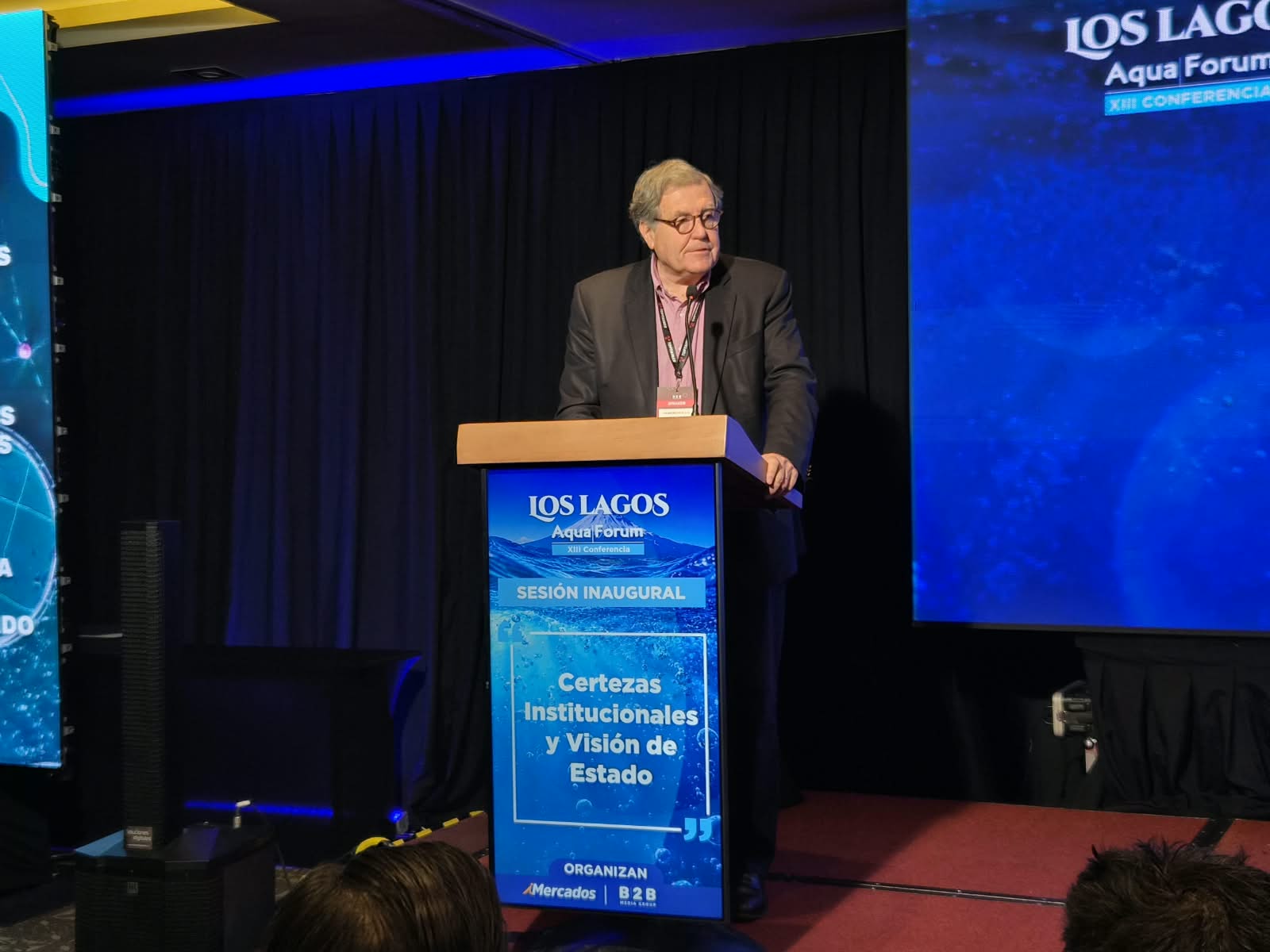
The agenda was moved to the Wyndham Petra Hotel in Puerto Varas for the opening of the XIII AquaForum Los Lagos 2026, summit meeting that brought together more than 300 attendees and 25 top-level rapporteurs among scientists, suppliers and industry leaders, along with authorities such as the regional governor, Alejandro Santana, and the Undersecretary of Fisheries and Aquaculture, Osvaldo Urrutia.
In the opening ceremony and under the premise “salmon farming of the Future. Certezas, Sustainability, Leadership”, Patricio Melero relieved the activity as the engine of development of the Chilean south and the main non-mining export sector of the country, highlighting its decisive role in the creation and maintenance of thousands of jobs in the territory. He cautioned, however, that in order to safeguard this dynamism, it is essential to governance and have clear rules.
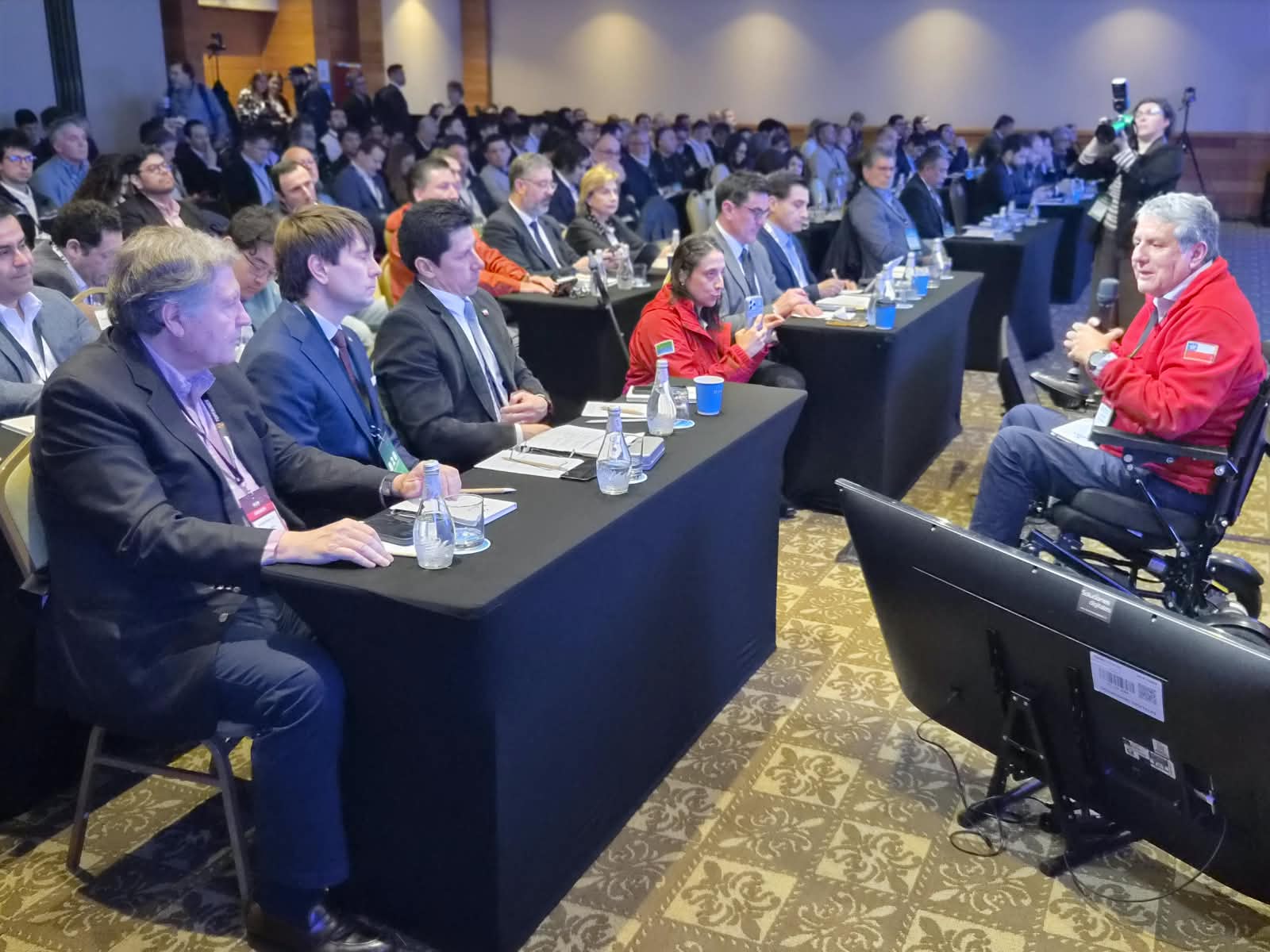
“We do not ask for privileges or to lower socio-environmental standards. We believe in sustainability and produce under the most demanding certifications on the planet. What we demand with a sense of urgency are legal certainty, agility in the permitlogy and vision of the State, which projects our productive sector towards the future,” said the president of SalmonChile, adding that “the State of Chile must believe in salmon farming with the same strategic conviction with which he supported mining or agriculture at the time.”
In international matters, Melero addressed the recent confirmation by the USTR of the 12.5% tariff imposed on domestic salmon in the United States - its largest destination market - and noted that the guild continues to work with the authorities to return to a favourable tariff scenario. On environmental and productive issues, he warned of the development of the El Niño phenomenon and the possible occurrence of Harmful Algae Flowering (NAF): “In the face of the threat of the NAF there is no room for improvisation or for isolated efforts,” he stressed, calling on the public apparatus, researchers and the different users of the coastal edge to coordinate preventive actions.
Technical table and school nutrition in southern Chile
Within the framework of the activities around AquaForum, SalmonChile, Subpesca, Junaeb, the AChM and productive unions agreed to increase the presence of marine products in school feeding and to project to other regions the model that today delivers monthly salmon in Los Lagos and Aysén.
In this regard, Mayor Marcos Vargas highlighted the cross-cutting coincidence of the participants. “We want to reach as many regions as possible, gradually and gradually, incorporating seafood into the country’s school tables. All the actors who participated agree to keep moving in that direction,” he said.
For his part, Undersecretary Osvaldo Urrutia valued institutional coordination. “We appreciate the initiative of the Chilean Association of Municipalities through its Fisheries Commission. We have a major gap in the consumption of seafood and to overcome it we have to join forces across the country,” he said.
As a next step, participating entities will designate delegates to form a technical team. This technical table will meet from January to establish the working bases around 2027, with a view to initiating the expanded implementation of school feeding programmes in 2028.