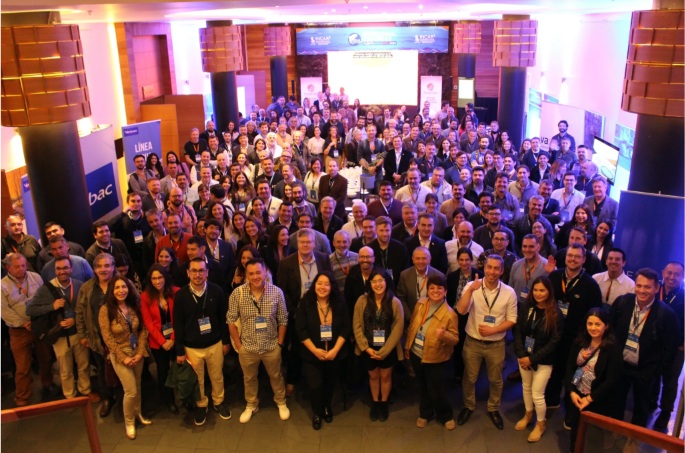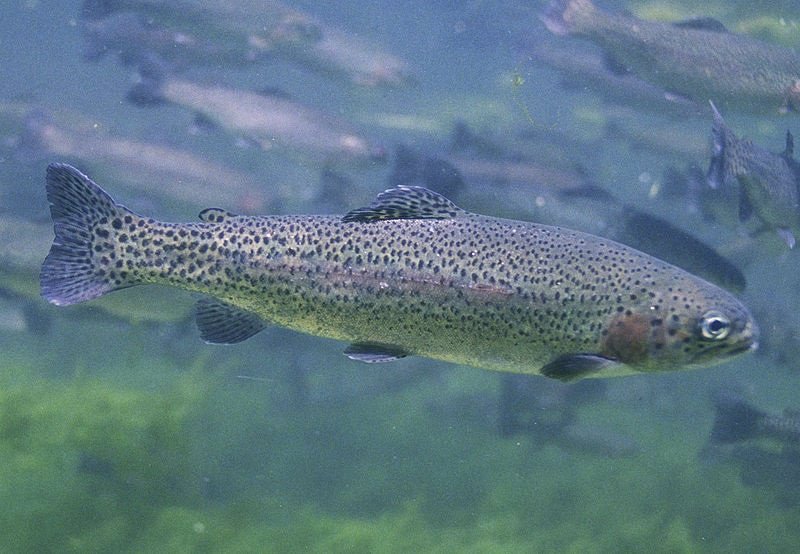
More than 180 specialists from Chile, Norway, Brazil, the United Kingdom, the United States, Japan, Australia and New Zealand will meet between 9 and 11 November in Puerto Varas to participate in the International Conference on Salmon Rickettsial Syndrome (SRS 2026), the world's first scientific meeting dedicated exclusively to the study of Salmon Piscirickettsiosis or Rickettsial Syndrome (SRS), one of the main challenges health services facing salmon farming worldwide.
Organized by the Interdisciplinary Center for Applied Aquaculture Research, INCAR², the conference seeks to become the main international space for the exchange of scientific, technological and regulatory knowledge aimed at improving the understanding, prevention and control of this disease that generates important productive, environmental and economic impacts for the salmon industry.
Official launch of INCAR²
The official inauguration of the meeting will take place on Tuesday, November 10 and will also mark the public launch of INCAR², a center funded by the Ministry of Science, Technology, Knowledge and Innovation through the National Agency for Research and Development (ANID).
This will be led by the Director of the Applied Research Centre, Dr. Cristian Gallardo-Escáratewho will show how INCAR² strengthens applied interdisciplinary research to comprehensively address the health, environmental, technological and productive challenges associated with the sustainable development of local and global aquaculture.
After the inaugural ceremony, the academic of the University of Edinburgh, United Kingdom Dr. Fernando Mardones, will offer the master conference “From Evidence to Action: Scientific Advances in Piscirickettsia salmonis Towards an Integrated Disease Management Strategy”, where it will review the scientific advances that have made it possible to improve the knowledge and management of the disease during the last decades.
Science to understand the disease
Scientific activities will begin with the session “Environmental Epidemiology”, focused on the analysis of epidemiological and environmental factors associated with SRS.
In this block will participate Benjamin Diethlem-Varela (PUC, Chile), who will present a review of ten years of epidemiological surveillance in Chilean salmon farming; Rodrigo Montes Aste (INCAR², Chile), with a study on the temporary reconstruction of fatal Piscirickettsia salmonis; Tony Chen (Manolin, United States)who will address the opportunities offered by artificial intelligence to deal with aquaculture diseases; and Alex Moyano Escobar (Aquabench, Chile), who will discuss risk factors associated with SRS mortality in cultivation centers in the regions of Los Lagos and Aysén.
During the afternoon, the programme includes the master conference “Social and Economic Impacts of Disease in the Salmon Industry”, by the Dr. Frank Asche (United States), renowned researcher in Natural Resources Economics and academic at the University of Florida. Their presentation will address the economic consequences of infectious diseases for the salmon industry and the territories where the activity takes place.
The meeting will then be held. Genetics and Genomicsdedicated to advances in resistance genetics and genomic improvement.
Among the exhibitors stand out Rayner González-Prendes (Hendrix-Genetics, Netherlands), Diego Valenzuela (INCAR², Chile), Alberto Sandoval (INCAR², Chile), Thomas Moen (AquaGen, Norway), Víctor Martínez (UChile, Chile) and Osiel Guzmán (Caleta Bay, Chile), who will present research related to genomic selection, identification of resistance genes, genetic evolution of pathogen response and new tools to strengthen salmon genetic improvement programs.
The day will end with the session “SRS Control Tools”focused on innovative strategies to reduce the health and economic impact of the disease. They will participate in it Jorge Dressner-Cid (INCAR², Chile), Carolina San Martín (MNL-Group, Chile), Manuel Estay (INCAR², Chile), Jaime Tobar (Vaxxinova, Norway) and Esteban Valdebenito (PUC, Chile), who will discuss economic analysis, functional nutrition, responsible use of antimicrobials and development of new vaccines for the control of SRS.
International cooperation to confront piscirickettsiosis
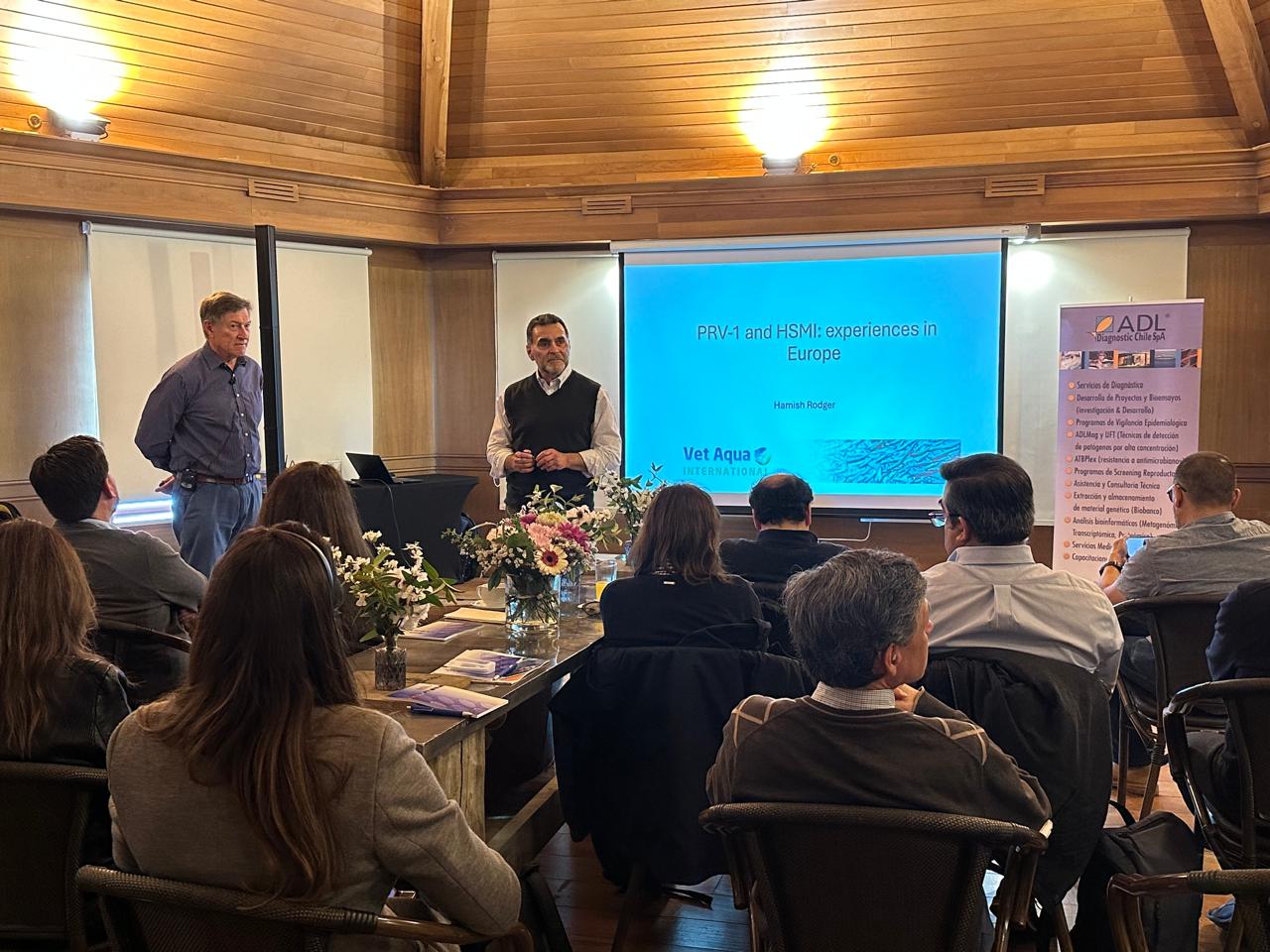
The second day will start with the master conference “Global Lessons, Local Solutions: Piscirickettsiosis in Europe and its Main Challenges”submitted by the Dr. Hamish Rodger, founding partner of VET-Aqua International and one of the main international references in fish health.
The exhibition will analyze the spread of the disease outside Chile and the contribution of international collaborative initiatives such as the PisciNor project to strengthen scientific knowledge and control strategies for piscirickettsiosis.
In the morning a new session of the “SRS Control Tools”, where researchers Bjorn Krossoy (Vaxxinova, Norway), Marius Karlsen (PHARMAQ, Norway), Gabriela Carril (BioMar AS, Norway), Jorn Bethke (AQUIT, Chile) and Pablo Ibieta (Pincoy Initiative, Chile) will address the latest advances in vaccination, functional nutrition, precision medicine applied to aquaculture and new strategies for health management.
A second session of environmental epidemiology, focusing on risk factors, use of antimicrobials, health surveillance and decision support tools, will then be developed, with presentations of Jorge Mancilla (Mowi, Chile), Daniel Jiménez (Aquabench, Chile), Fernando Mardones (University of Edinburgh, Scotland), Cristian Valenzuela (IFOP, Chile) and Rodrigo Montes (INCAR², Chile).
Technological innovation and animal welfare
The conference will continue with a session dedicated to new technologies for the control of the SRS, including artificial intelligence applications to identify antibacterial compounds, experimental platforms for vaccine evaluation and new immunization strategies under productive conditions with exhibitors such as Francisco Arancibia (ISR-Bio, Chile), Pablo Ibieta (TekBios Ltda. Chile), Jorge Infante (Pharmah Analytiq, Chile), Daniel Woywood (Aquabench, Chile) and Carlos Saffie (Aquabench, Chile).
Later, attention will be transferred back to the area of genetics and genomics, where researchers from Norway and Chile, such as Thomas Moen (AquaGen, Norway), Rodrigo Vidal (USACH, Chile) Yeny Leal (INCAR² Chile), José Manuel Yáñez (UChile, Chile), Constance Saez-Vera (INCAR² Chile) and Constanza Urzúa (UChile, Chile) will present studies on genetic resistance, cellular RNA sequencing, comparative genomics and metabolomic-associated analysis of salmon response to Piscirickettsia salmonis.
The scientific program will end with a session focused on animal welfare and fish health with presentations of Byron Morales (Norwegian University of Life Sciences, Norway), Roberto Montt (CERES BCA, Chile), Marcos Mancilla (ADL Diagnostic, Chile) and Fernando Flores (Alianza Yelcho, Chile).
Recognition of scientific research
The conference will conclude with an award ceremony aimed at recognizing the best scientific works presented during the meeting, highlighting research and innovations that contribute to the knowledge of the disease and the development of new solutions to reduce its impact on salmon production.
The event has the sponsorship de Vaxxinova, AquaGen Chile, Virbac, Yelcho Project, Mowi, Cermaq, ADL Diagnostic, Hendrix Genetics and MNL Group; the patricinior Subsecretaria de Pesca y Aquicultura (SUBPESCA), Servicio Nacional de Pesca y Aquicultura (SERNAPESCA), INTESAL, SalmonChile, the Salmon Council, the Magellan Salmon Farmers Association and the Municipality of Puerto Varas.
The event will also be supported by the media partners Salmonexpert, Media AQUA, InfoSALMON, World Aquaculture, Partnerfish, AquaToday, Panorama Acuícola and AquaFeed.com.
For more information, visit www.srs2026conference.cl