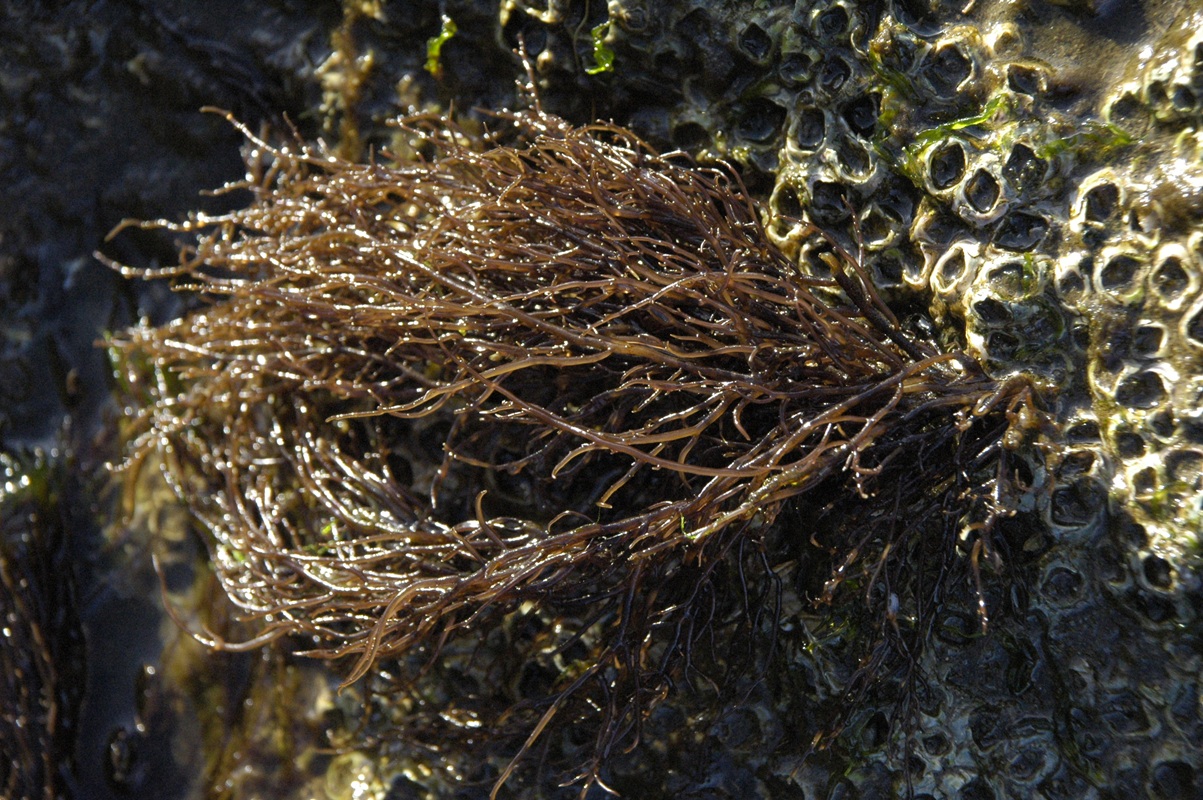
Chile is one of the main exporters of Gracilaria chilensis, red algae essential for the production of agar. However, in crops these algae are almost non-sexually reproductive and depend on clonal propagation, which limits their genetic diversity.
A team of Chilean researchers from Marine Algae Agronomy Millennium Research Core (MASH) along with international partners of the center GEOMAR of Germany, discovered that bacteria that inhabit the surface of algae (biofilms) play a decisive role in the fertility and growth of two species of Gracilaria: G. chilensis, main macroalga grown in Chile, and G. vermiculophylla, considered invasive in various regions of the world.
The study, published in Journal of Applied Phycologyevaluated how the removal or manipulation of biofilms influenced the formation of tetrasporangis — reproductive structures — and population growth rate natural (sexual) and clonal (cultured or non-native).
The results showed a ecological context-dependent effect: in natural/native populations, biofilms were essential to maintain high levels of fertility while, in cultivated and non-native populationsbiofilms favored growth, but reduced reproductive capacity.
In addition, attempts to reignacular bacteria after removal of biofilms failed to fully restore their functions, which evidences the complexity of these interactions.
In the same vein, the study confirmed that “despite the low fertility characteristic of the G. chilensis and of the clonal propagation that predominates in sandy-fangous backgrounds, some specimens still retain the ability to form tetrasporangis, reproductive structures essential to maintain the genetic diversity of the species,” said the research team.
The work was developed by scientists Sara Usandizaga, Juan Pablo Olivos, Jessica Beltrán and Sylvain Faugeron (MASH-Pontifical Catholic University of Chile), Marie-Laure Guillemin (MASH – Universidad Austral de Chile) and Florian Weinberger (GEOMAR, Germany).
This discovery is relevant to the Chilean aquaculture Gracilaria chilensiswhere low fertility in growing environments has been a limiting factor to improve the productivity of agar in Chile.