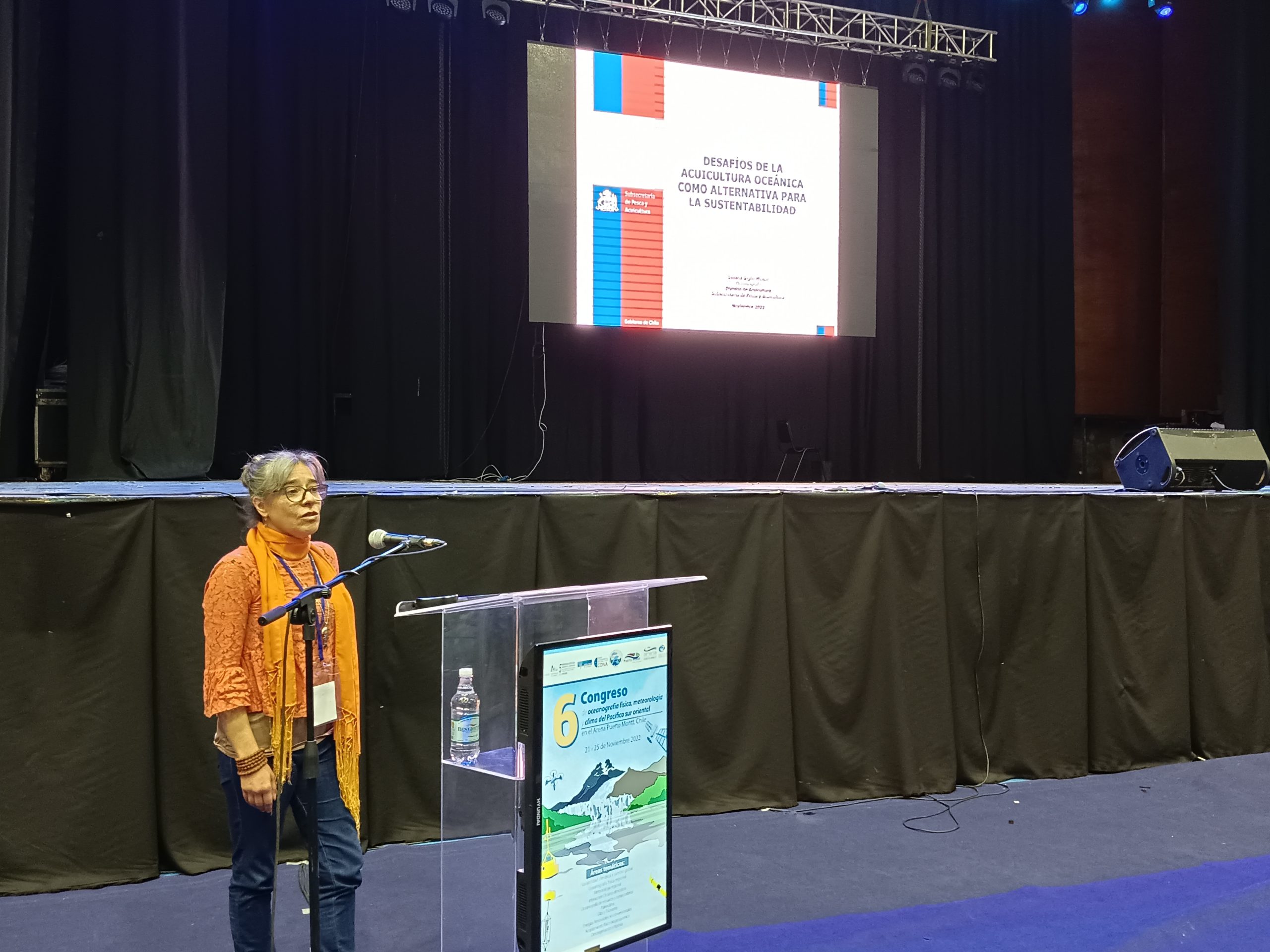
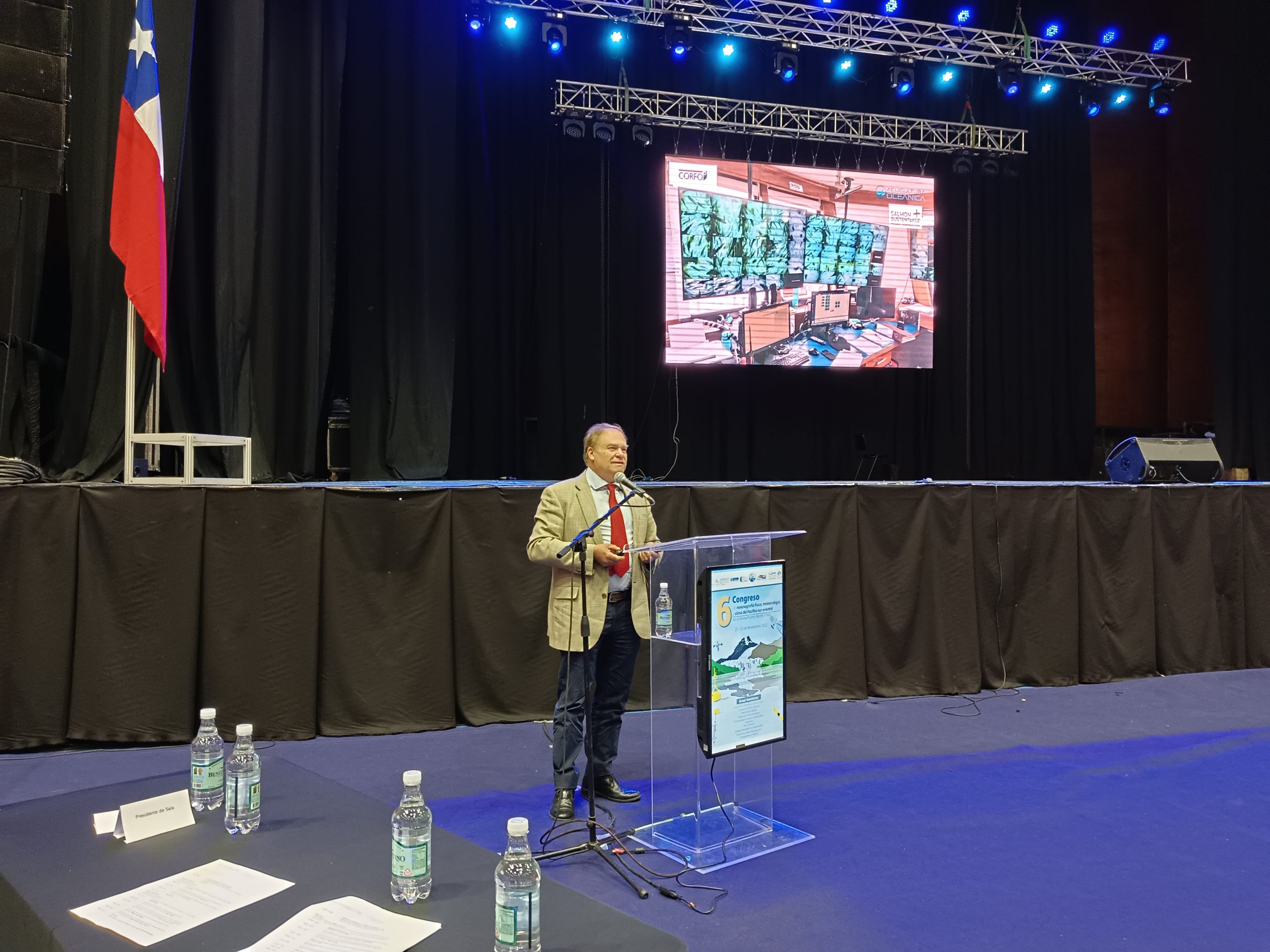
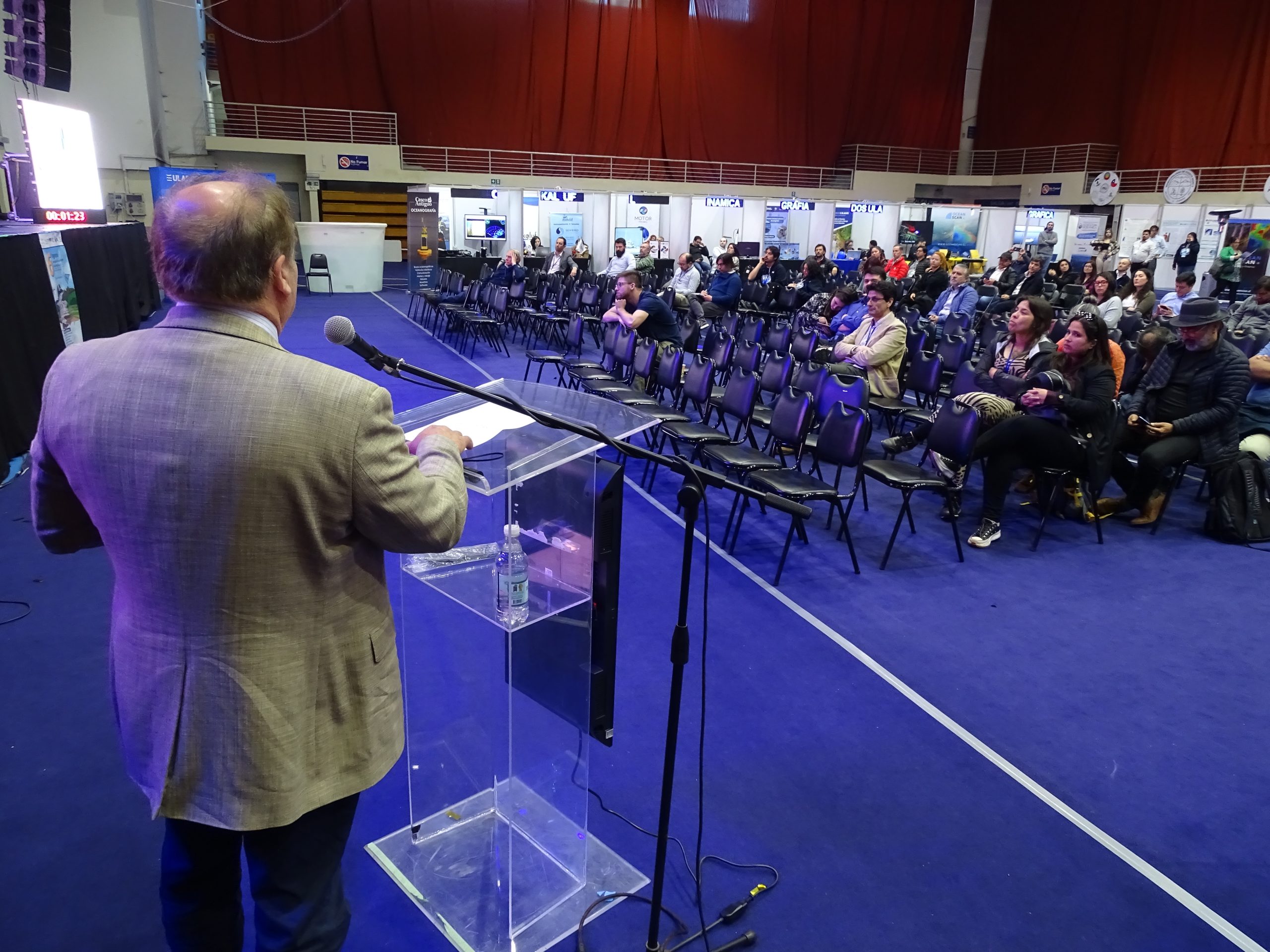
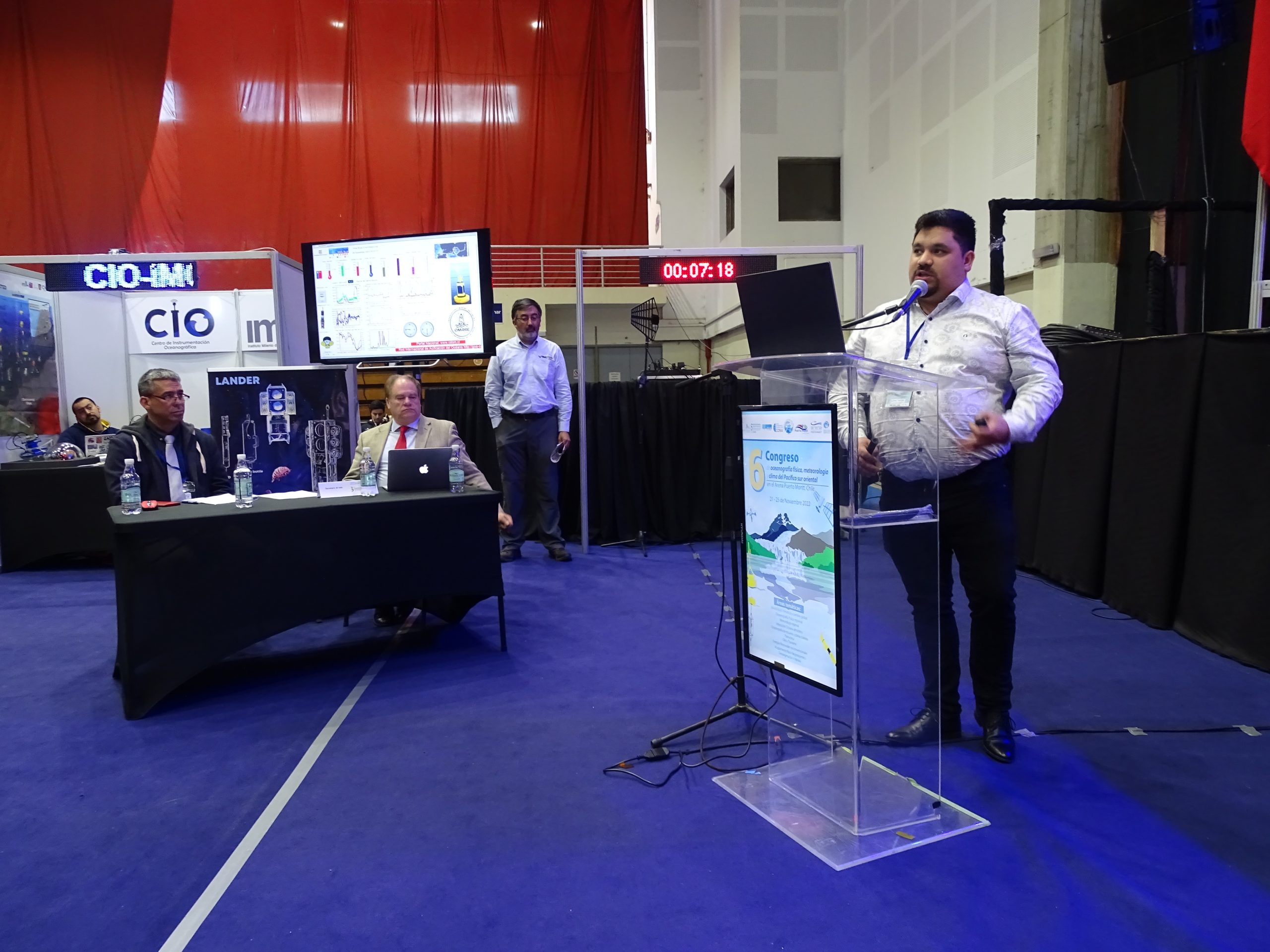
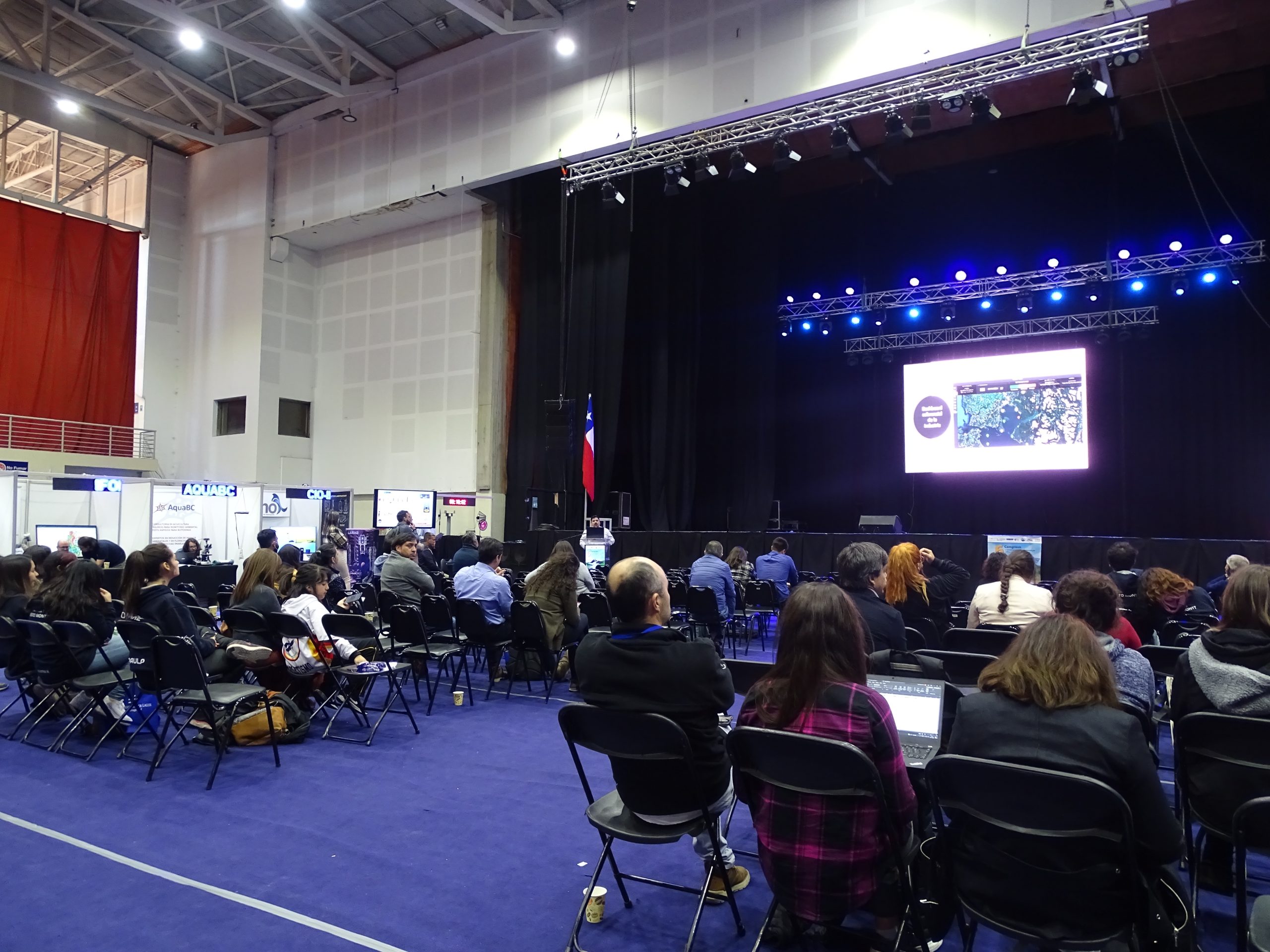
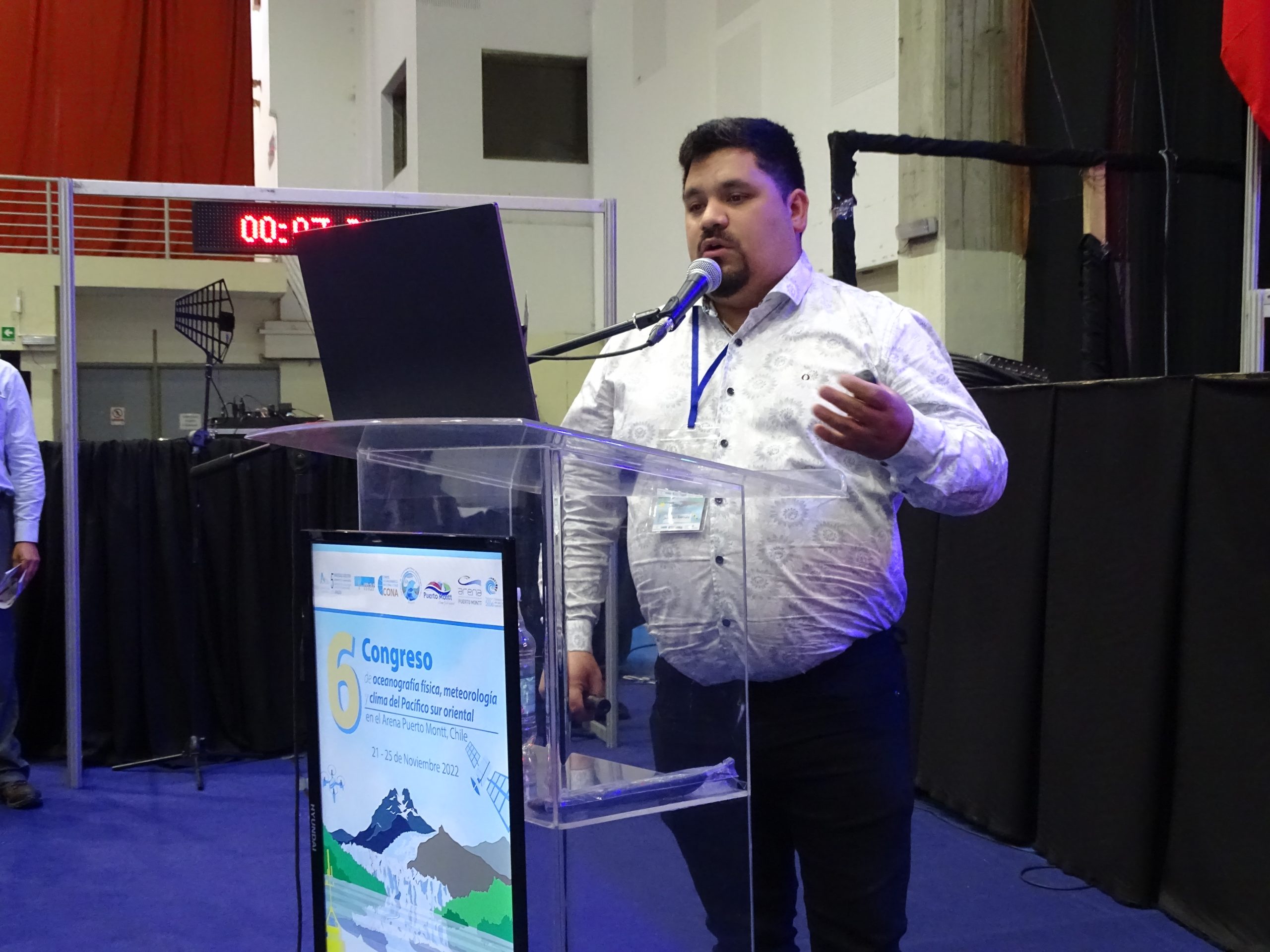
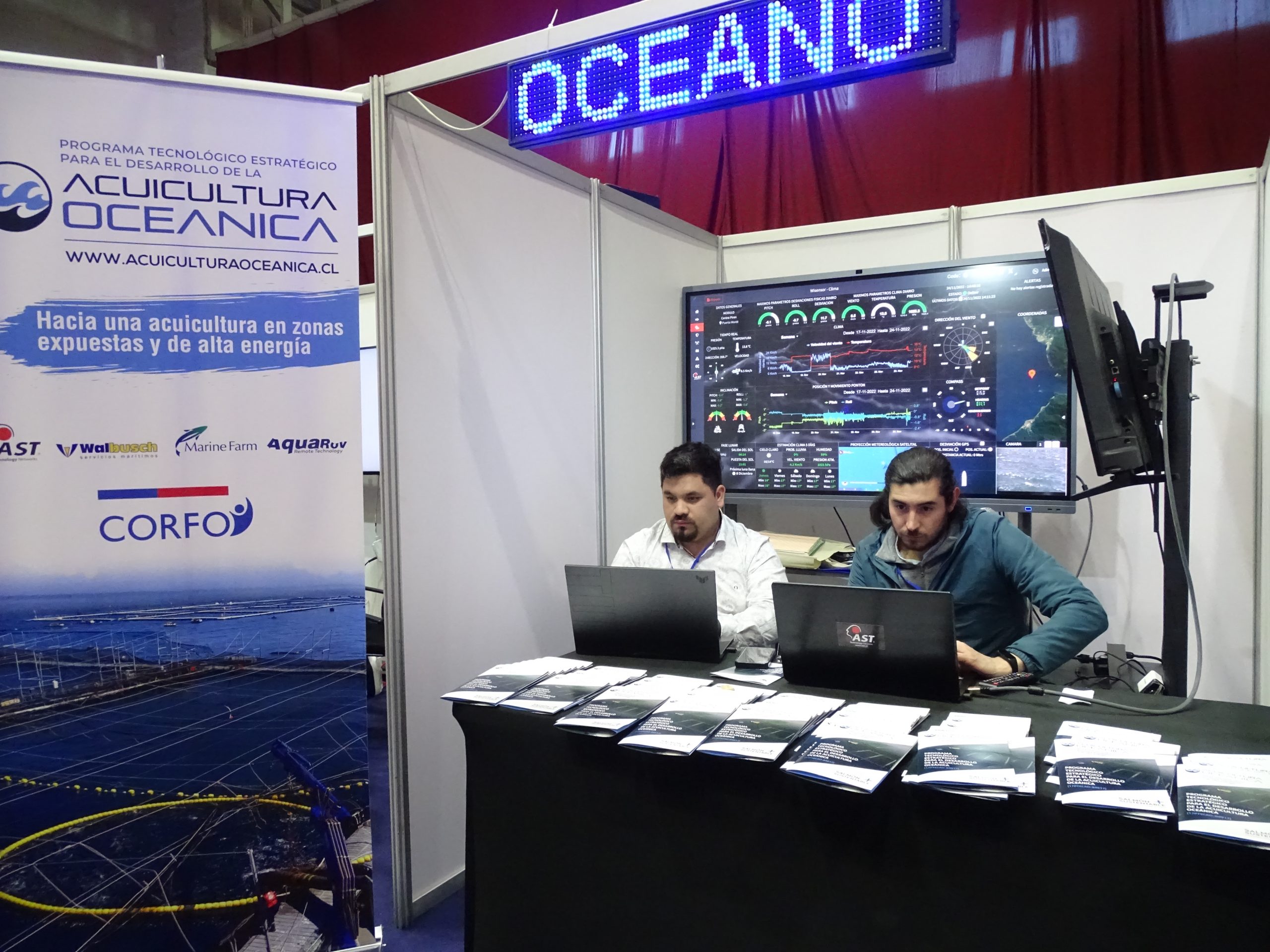
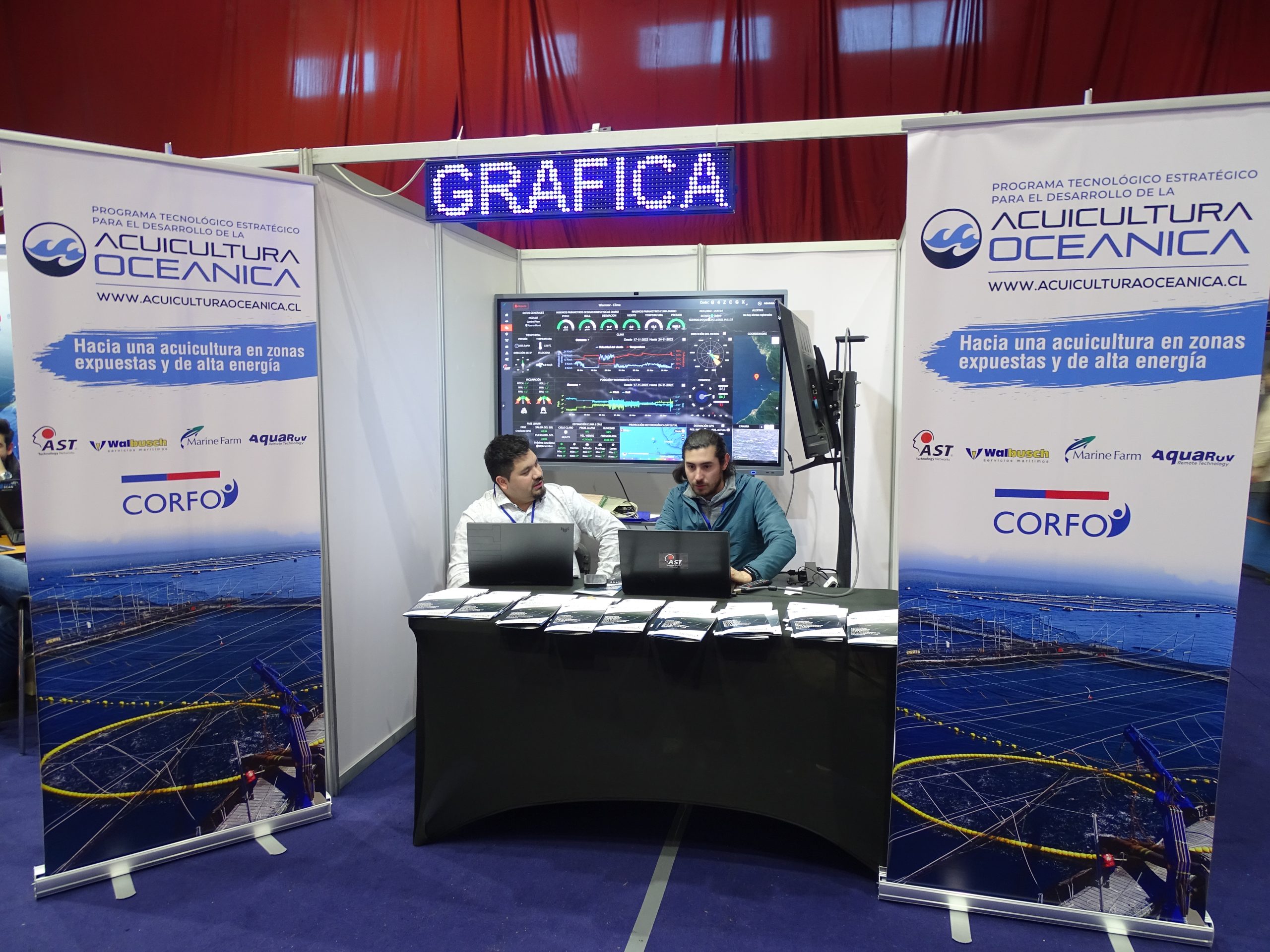
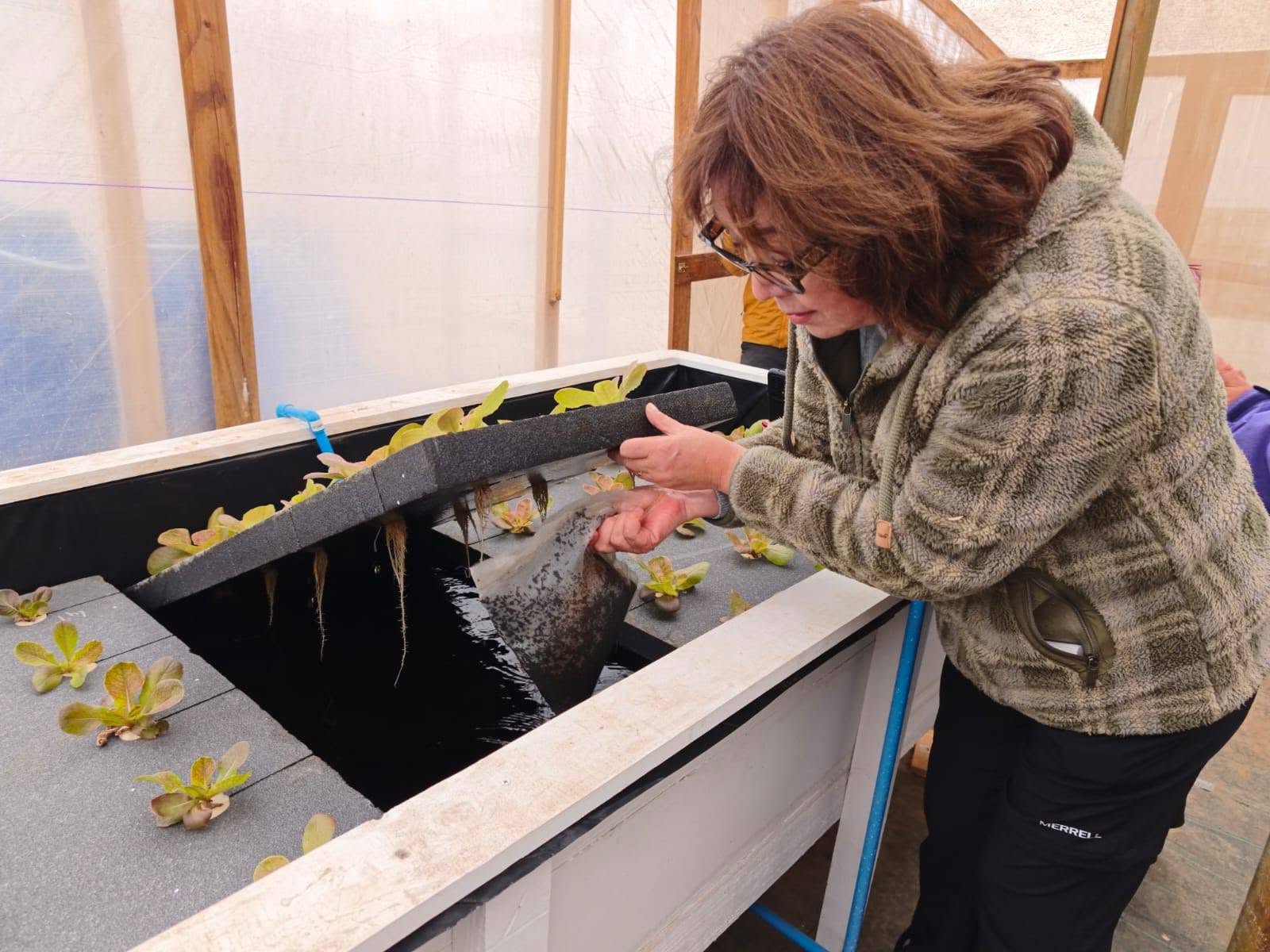
Yesterday Thursday was held the “Symposium of Ocean Aquaculture and the Environment”. In addition, the PTECAO powered by Corfo has a stand in the arena sector of the Arena Puerto Montt.
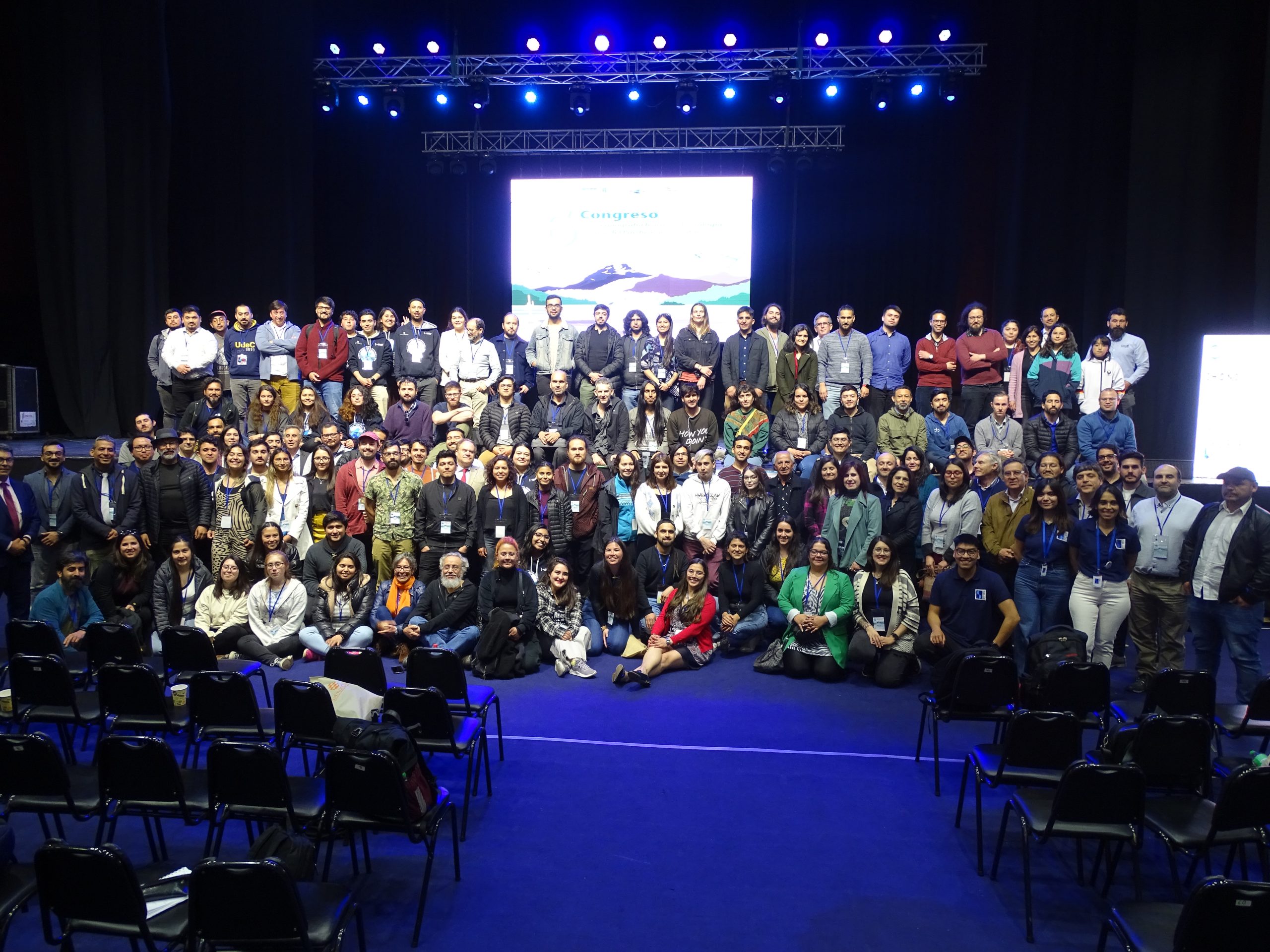
Between last Tuesday 22nd and Friday 25th of November, the Sixth Congress of Physical Oceanography, Meteorology and Climate of the Eastern South Pacific is being developed in the city of Puerto Montt, Los Lagos region.
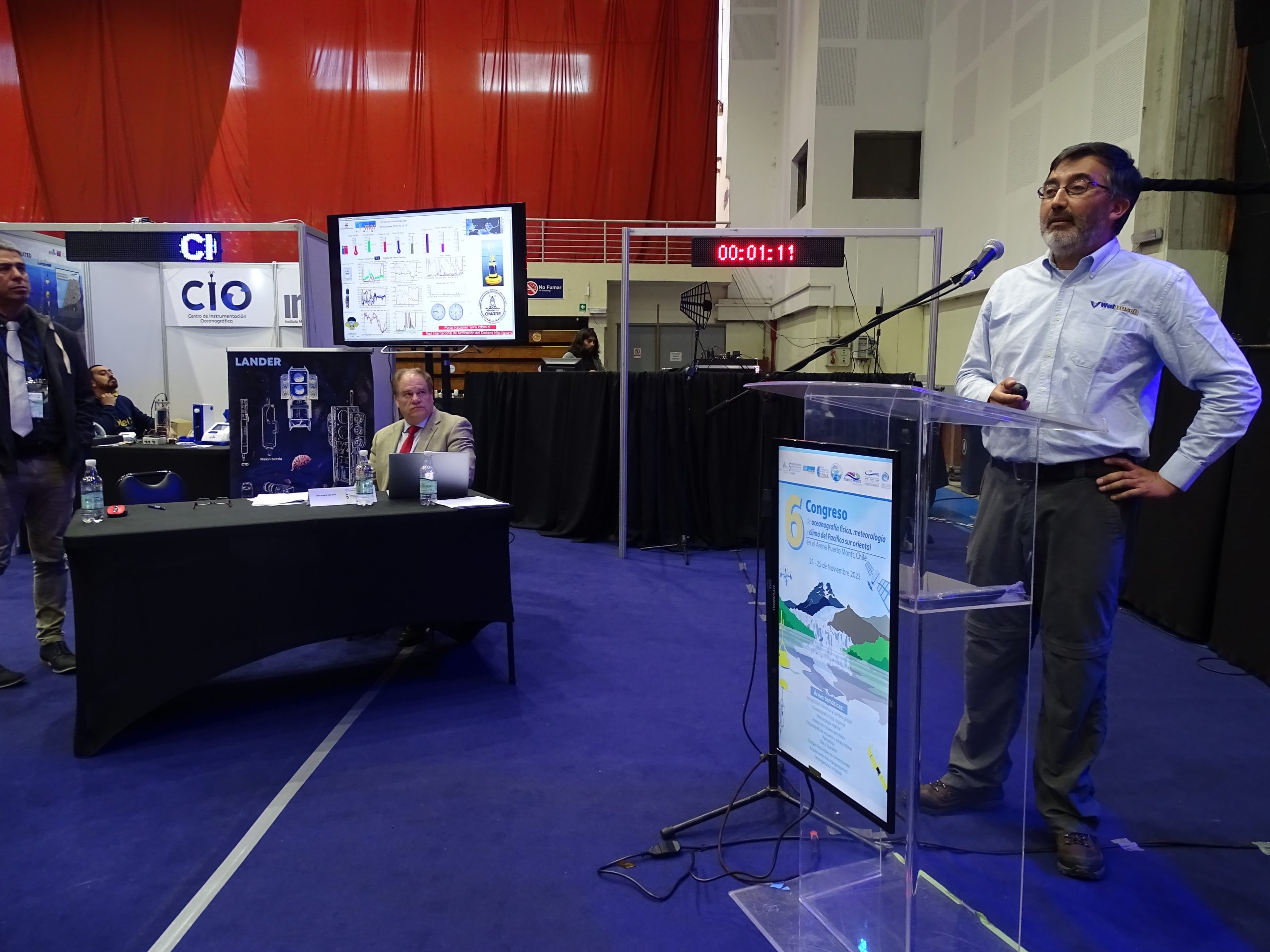
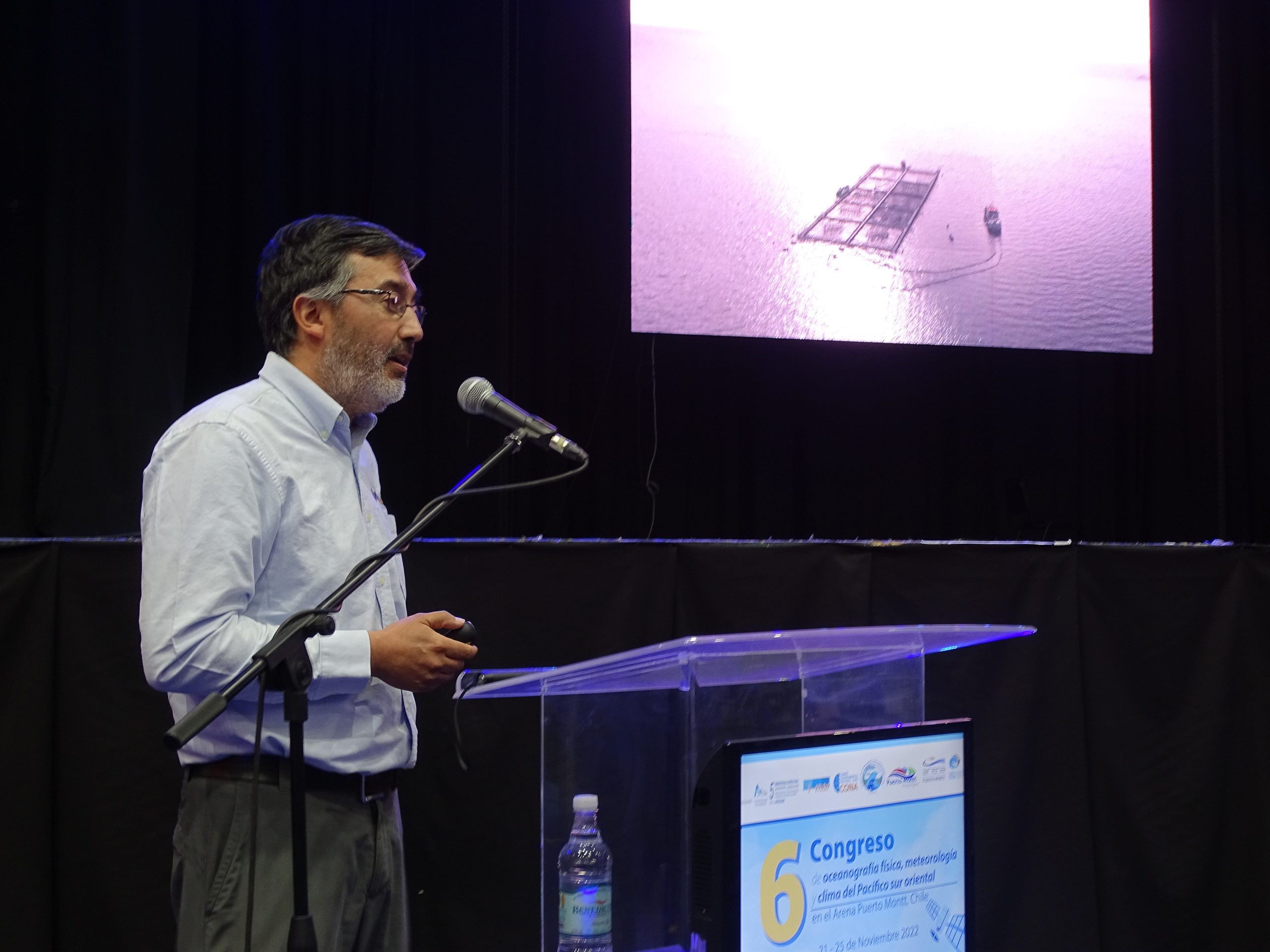
And it was in this international event that yesterday afternoon, Thursday (24) was held the “Symposium of Ocean Aquaculture and the Environment”, an instance that had as co-chair and exhibitor the director of the Strategic Technological Programme for the Development of Ocean Aquaculture (17PTECAO-84017), Dr. Daniel Nieto Díaz-Muñoz.
To Dr. Nieto also joined as exhibitors and exhibitors of this symposium the representatives of AST Networks and Walbusch (both co-executors of the 17PTECAO-84017 together with Aquarov and Granja Marina Tornagaleones – Marine Farm), besides Susana Giglio of the Undersecretary of Fisheries and Aquaculture (Subpesca), Felipe Hurtado of EcoSea Farming and the researchers of the i-mar Center of the University of Los Lagos of Chile (ULagos) Patricio Díaz and Iván Pérez Santos (co-chair of the symposium).
Dr. Nieto began by detailing that the PETEAO (summary sections of 17PTECAO-84017) is a public-private initiative launched in 2019 under the umbrella of the Most Sustainable Mesoregional Salmon Strategic Program of the Corporation of Production Promotion (Corfo) and that has as its fundamental objective to advance towards the cultivation of fish in exposed areas or also called high energy.
“The technologies developed under the programme, which has more than 15,500 million Chilean pesos in funding (75% private and 25% public), were designed by suppliers Walbusch, which makes the farming rafts; Aquarov, which builds the underwater robots; and AST Networks, which develops the automation systems. Salmon farmer Marine Farm is now testing the technologies, specifically in the high-energy centers of Quillaipe and Pirén,” he explained.
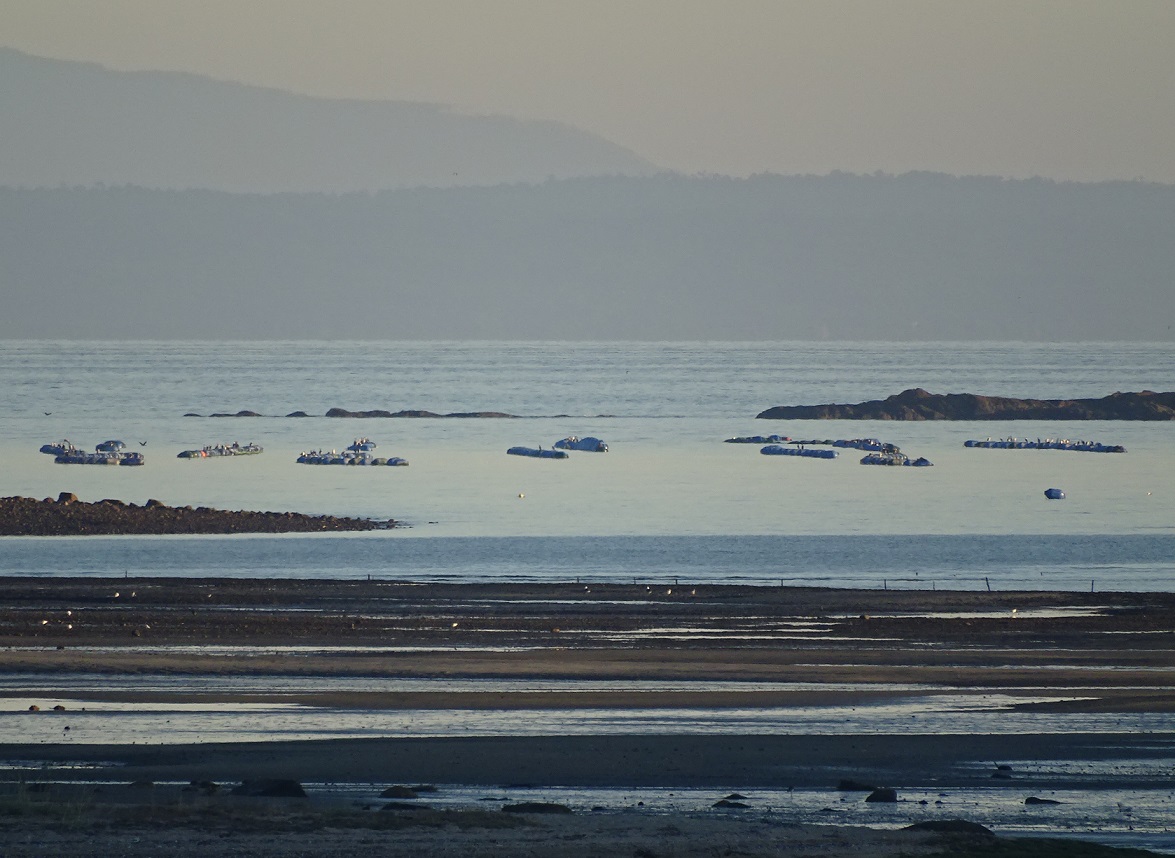
In turn, he emphasized that it should be clarified that these are not necessarily oceanic areas, sea outside (far from the coast) or offshore, because both centers are located in the inland sea of the region of Los Lagos, but because the measured waves are from 3 to 6 meters, currents of 3 knots and winds that can exceed 100 kilometers per hour, represent oceanographic conditions similar to the offshore, so these technologies, which are already being sold on a commercial scale, can be approved for this purpose.
“These high energy conditions allow for greater animal welfare for fish, as it increases the replacement of water, oxygen, among other positive characteristics for salmon farming and the search for the Program as a real contribution to the sustainability of industry. All this, together with delivering the necessary inputs so that the Sub-fishing can establish new legislation for aquaculture in exposed and high-energy areas.” Dr. Grandson.
Table of conversation
At the close of the “Simposio de Aquicultura Oceánica y Medio Ambiente” there was a discussion table where both Susana Giglio de la Subpesca and each of the representatives of PETECAO showed that the immediate objective is not to advance towards the cultivation of salmonids in oceanic areas proper, but rather to demonstrate that the technological platform developed within the framework of the Program is capable of resisting conditions of high energy and therefore use concessions already granted in areas of this type.
“The engineering developed is approximately three times more robust for currents and waves; it supports 4 knots traversed to the current, compared to 1.5 knots compared to the traditional version of 30 by 30 (Quillaipe has a cage-raft of 80 by 80 meters, while Pirén with a 50 by 50 meters); it supports oilings of 5 meters high, versus 3 meters of traditional cages; it is much more compact in its operation, therefore, more control, lower costs and fewer equipment,” said Dr. Nieto, adding that other advantages is that there is the “possibility of using equipment to control more sophisticated environmental parameters by using fewer units; more continuous and slower feed to cages, and hence better control; much less maintenance of fish tank and lober, and therefore less number of nets – about 50% less to maintain”; fish tank without deformations by current or swell; and much less maintenance because it is the most robust cages.”
In conclusion, Dr. Nieto invited all interested in delving into this topic to approach the stand of the Strategic Technological Program for the Development of Oceanic Aquaculture located on the 1st floor of the Arena Puerto Montt court sector.
For more information, please enter acuiculturaoceanica.cl and/or write to info@acuiculturaoceanica.cl. You can also review the videos posted on the YouTube - Corpho Oceanic Aquaculture Program.