Recently, Partnerfish visited the facilities of Fundación Chinquihue, an opportunity in which it was possible to learn about the work carried out by the professionals in charge of the hatchery of this institution, which today focuses on the production and sale of oyster and mussel seed focused on APE (Small Scale Aquaculture).
Created in 1994, currently the hatchery or the hydrobiological species seed production center of Chinquihue Foundation, located in Puerto Montt, provides an important service for small-scale aquaculturists in the southern part of the country. Although, until a few years ago, the role of this infrastructure was focused on the implementation of mollusc and echinoderm cultivation technologies, with an emphasis on areas of artisanal fishing management, it has now shifted its focus. This is due to the creation of the Small-Scale Aquaculture Regulation, approved in the year 2022.
According to Jorge Tillería, aquaculture engineer and master in Environment and Aquaculture Biosecurity (MABA) from the Austral University of Chile (UACh), who is currently in charge of hatchery, the reason for this change was to give a more productive focus, especially in two species, such as the Japanese oyster (Pacific oyster) and the North ostion (Argopecten purpuratus).
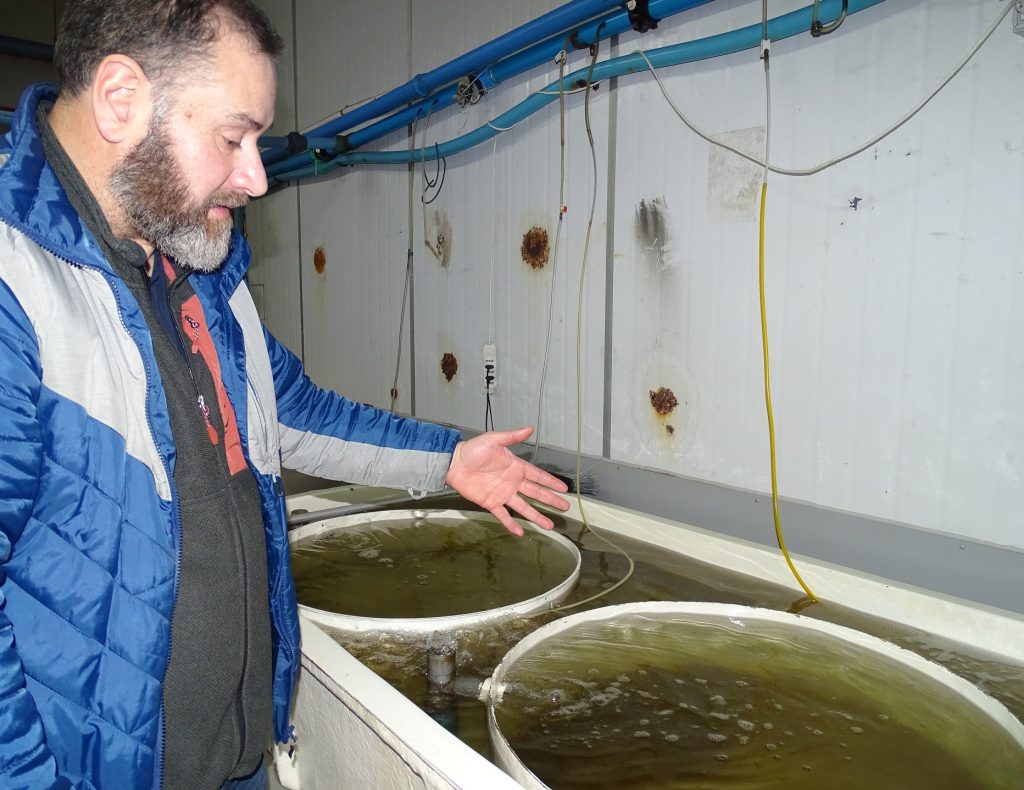
“They are two resources of commercial importance, given their good value in the market. We're working on a project with the A.G. Aguas Azules, with excellent economic and productive results in both species,” explains the professional, who adds that they also have breeding specimens of abalón, to produce seeds in the future, together with carrying out, eventually in the summers, spawning of hedgehogs.
Business model
The new commercial model of the hatchery From Fundación Chinquihue it has been two years since its implementation and, since then, it has already managed to position itself as a relevant seed supplier for small-scale aquaculture farmers in the south of the country. “At the moment we have a waiting list, selling the product almost green. We began with a production of a million seeds a year, based on the facilities we had. We've been getting better and we're going at two million. per year, but we plan to expand much more, especially on the basis of projects,” says Jorge Tillería.
Just a couple of weeks ago the Technical Program (PTEC) of CORFO “Sustainable development and scaling of the cultivation of the Japanese Ostra resource”, in which will participate this productive unit of Fundación Chinquihue, given the objective of the initiative to produce larvae and seeds of Japanese oyster of standardized quality. “In the framework of this program, we will implement a complete room, which will allow to expand the larvae room to twice its capacity, which will entail new challenges, both in the primary production of microalgae, as well as of larvae and their equipment,” complements the Aquaculture engineer.
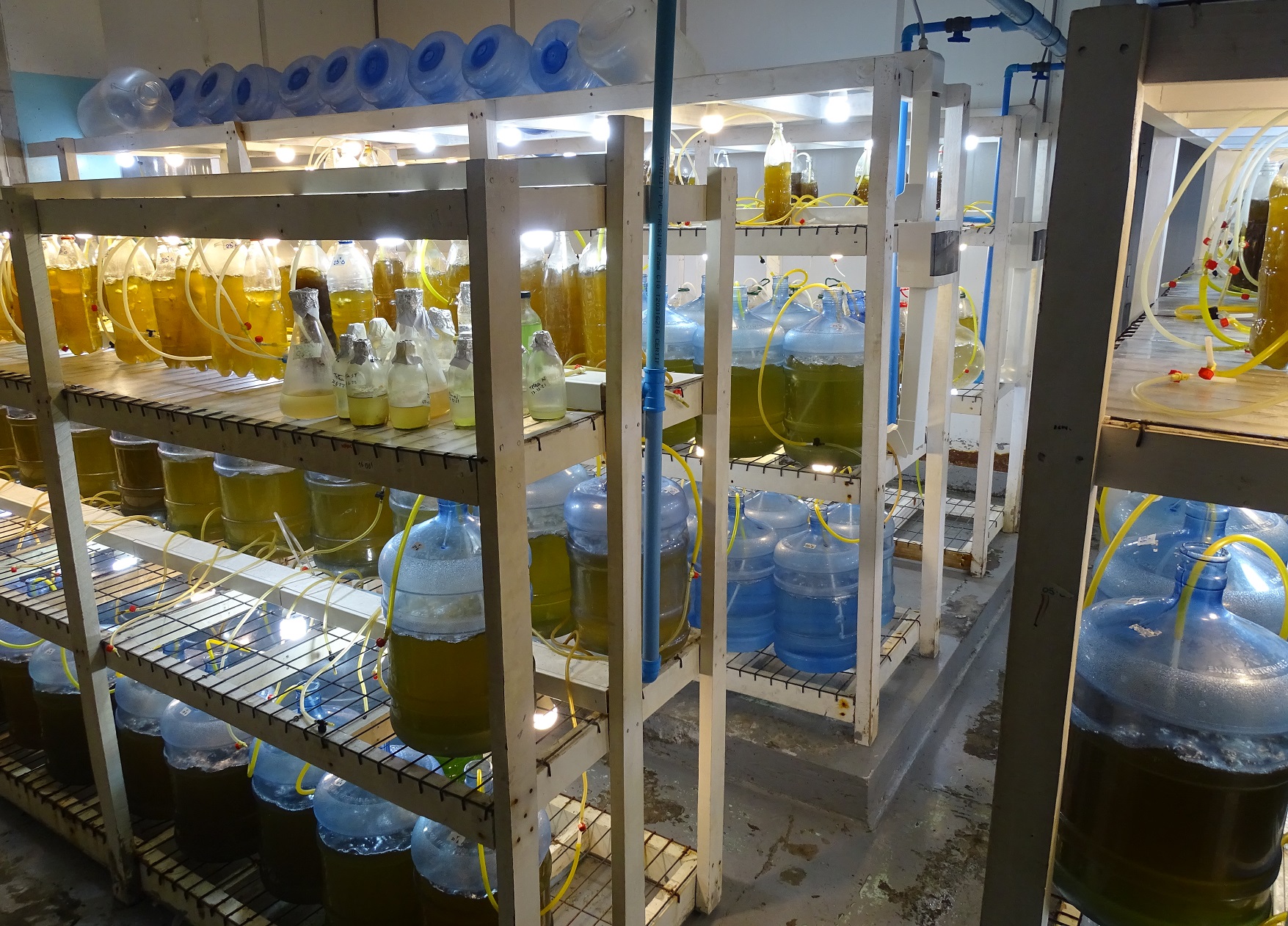
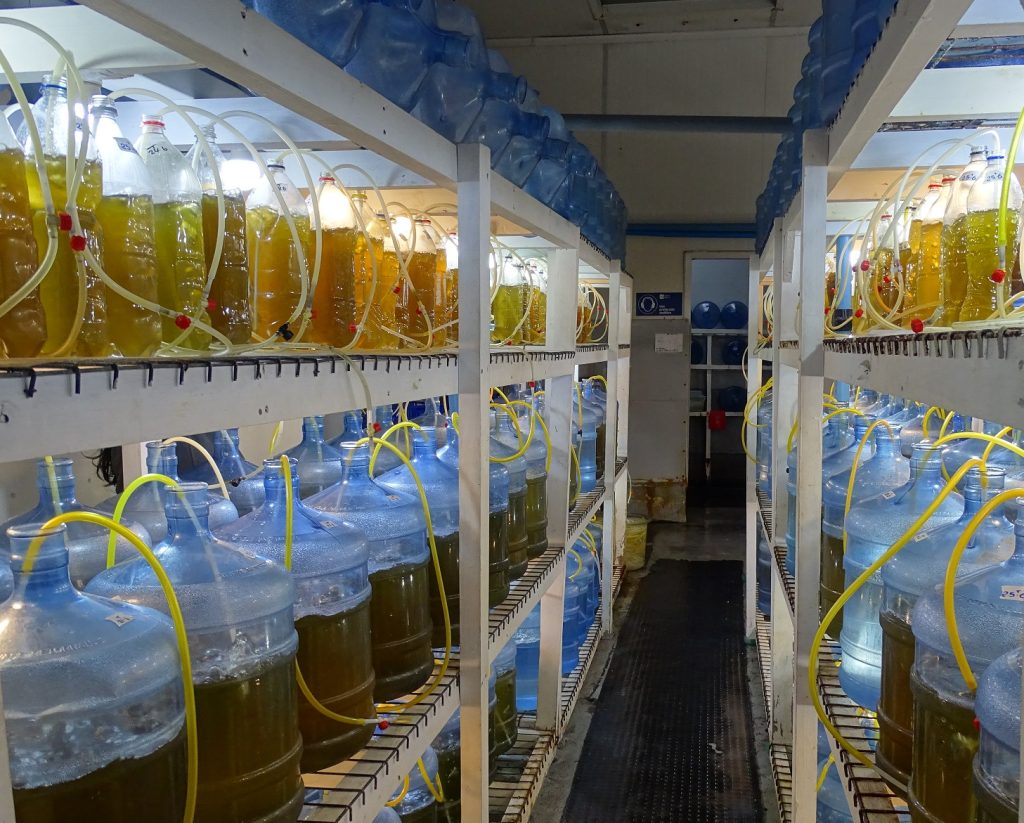
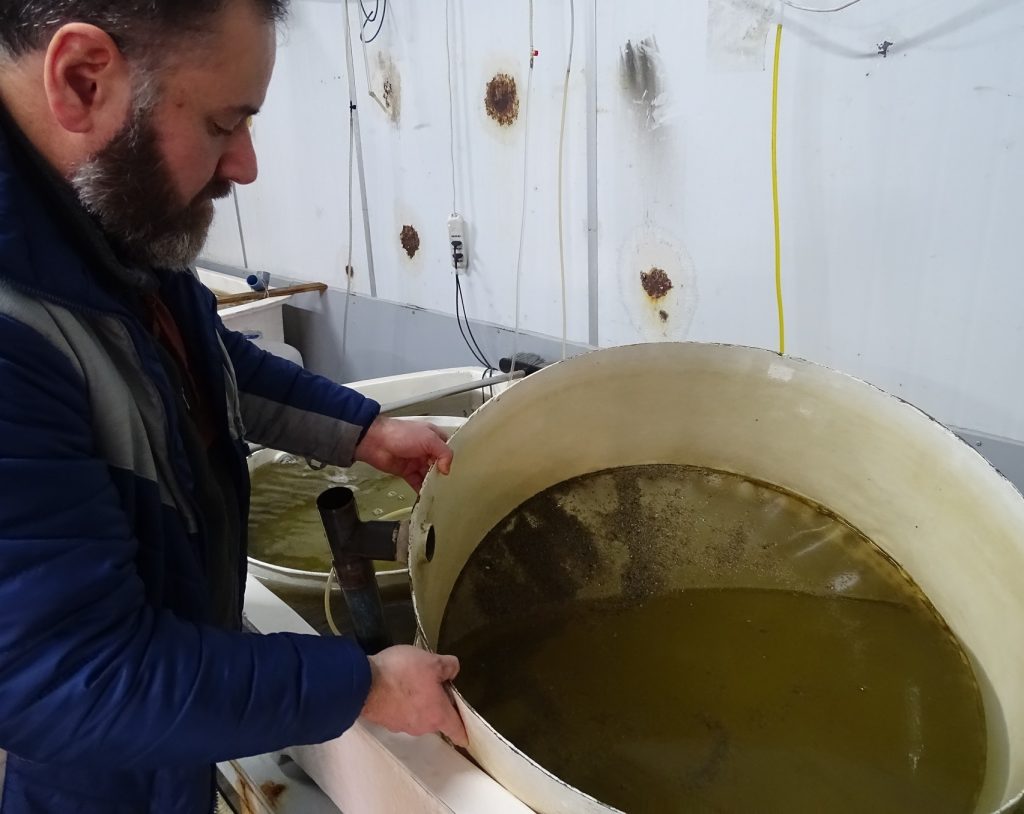
Like a fish farming, the hatchery Fundación Chinquihue is divided into different rooms. The first of these is that of microalgae, which is the productive heart of the system, since the supply of food for the individuals who are cultivated depends on this area.
Subsequently, there is the larvae room, which feed on microalgae, and another room where the seeds are fixed, the type of which depends on the species being cultivated. According to Tillería, in the case of osthion, because it has a view, it adheres to a substrate that in this case is a special collector for that species, which is mesh. In the case of oysters, the ground conchilla of adult leaflets is used as a substrate.
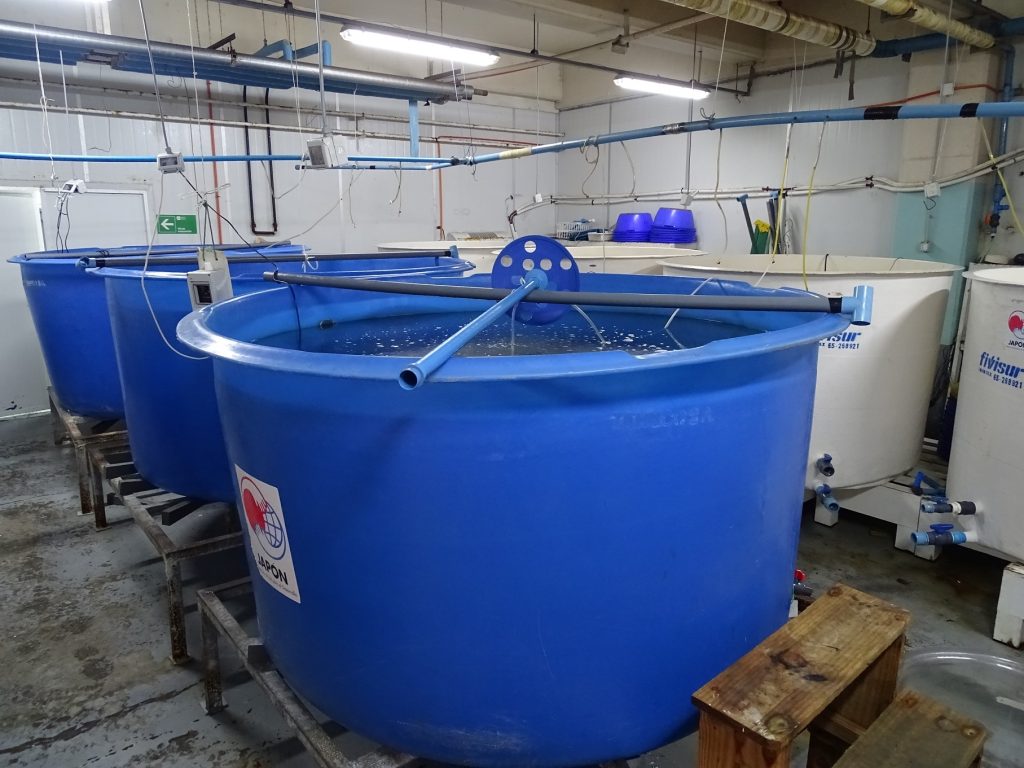
Finally, there is the room with the breeders of each species, which are first caught in the sea and then move on to a conditioning that varies between a month, in the case of oysters, to two months in oysters. “We work continuously throughout the year, with the aim of getting out every month a batch production and availability for sale,” says the unit manager.
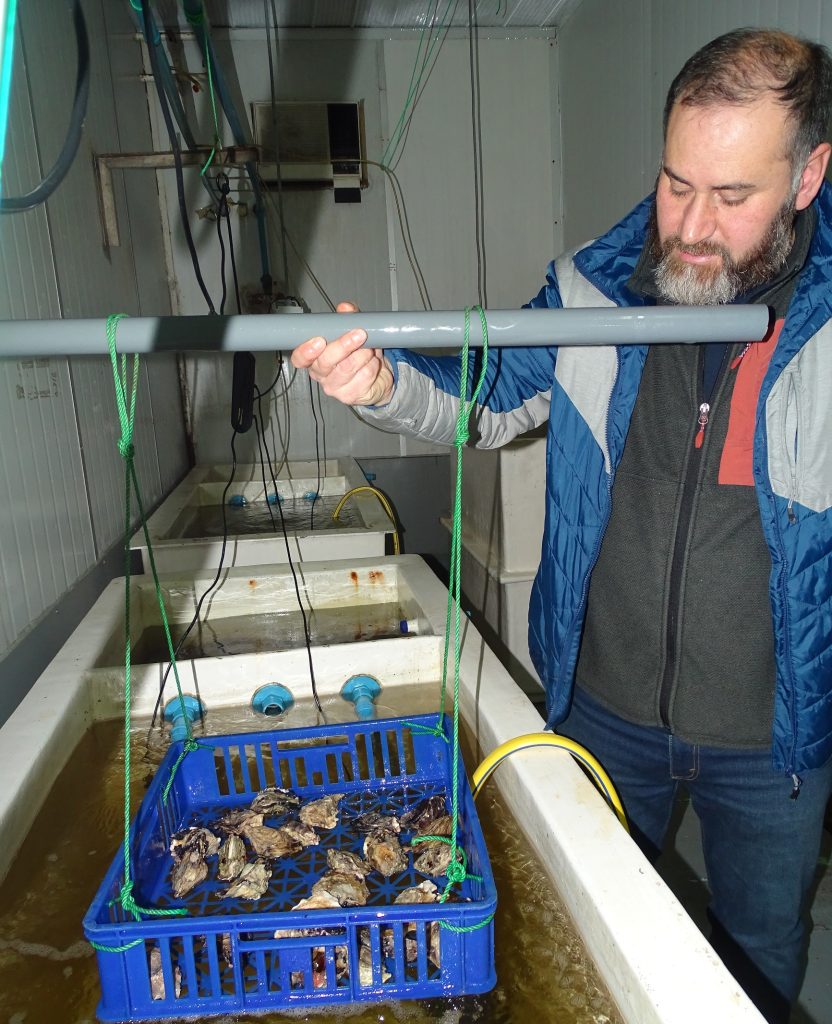
It should be noted that a single female of Japanese oysters can produce 10 million eggs. “With a couple of specimens, we can fill two ponds. And one of their qualities is that they have a high tolerance to environmental variables, such as salinity, being very versatile when it comes to seeing crop areas,” says Tillería.
As for the northern ostion, the head of the hatchery points out that because it is hermaphrodite, the amount of oocytes it can produce is less (not more than 5 million per specimen).
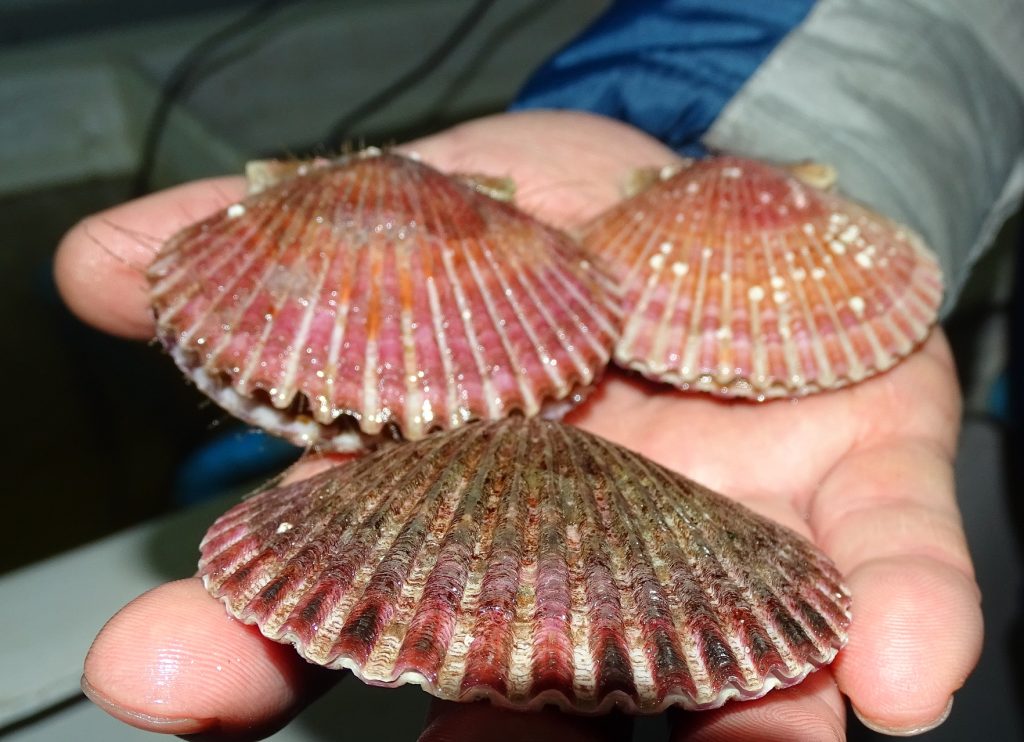
“With that we don’t want more, since the percentage of fixation is higher, achieving to have for pond a million seeds of fixed, which is quite good for the quantity of production that we have,” says the plant manager.
Marketing
At present, such as the hatchery Fundación Chinquihue has this production model, it has prices established for sale, but with priority to supply artisanal fishing and small-scale aquaculture. “They are our customers, which are concentrated mainly in the Los Lagos region, an area that has approximately 700 Small Scale Aquaculture concessions (SAPs), which represent almost 80% of producers of this type throughout Chile,” he says. Tillería, who emphasizes that oyster seeds are marketed once they reach 20 millimeters. “We have noticed that when sold very small, mortality rates are very high. While they are individuals a little more expensive at that size, mortality turns out to be very low, which directly influences the productivity of aquaculture farmers,” he says.
In the view of the aquaculture engineer, today there are many mussel producers who are visualizing oyster and osthion as potential species to focus part of their efforts, although training through the various state institutions is vital. “I believe that what is coming, as an alternative to mussel cultivation, with the new APE regulation that we have, is to migrate to marine farms, where you can cultivate different species, which are economically profitable. The good thing about small-scale aquaculture is that it has the National Institute for Sustainable Development of Artisanal Fisheries and Small-scale Aquaculture (Indespa) that supports them financially. We ourselves have delivered projects to incorporate oyster and osthion crops into this institution, which is a good sign of conversion,” concludes the head of the hatchery of Fundación Chinquihue, an organization that has worked on seed marketing from the Maule region to the Aysén region.
To Pedro A. Barra Léniz, journalist, director of Partnerfish.