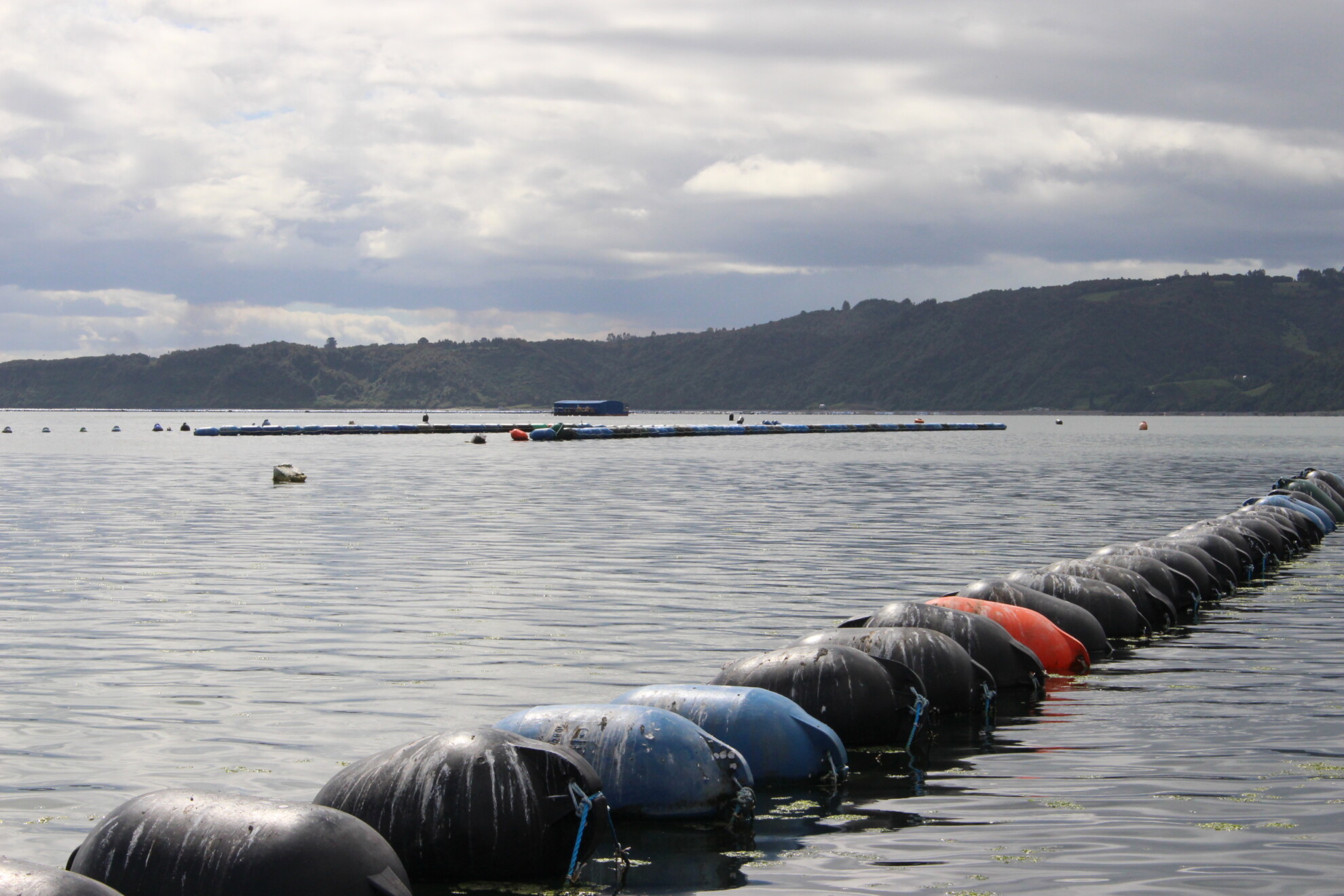
The session, organized by the INCAR Center, will start by addressing the interaction between fishing and aquaculture.
The Acuaculture Hour it is an activity to analyze relevant issues of national aquaculture and, in this first episode of the new season, it will address The interaction between fishing and aquaculture in the context of seed capture and repopulation of benthic species, and will feature the interventions of the researchers from the Integrated Program Dr. Doris Soto, Dr Carlos Molinet and Dr. Jessica Fuentes, and a panel of invited experts including the general manager of the Chilean Mussel Farmers Association A.G. (AmiChile), Yohana González; to the producer of the Cochamo (Los Lagos region), Miguel Algiers; together with representatives of the Under-Secretary for Fisheries and Aquaculture (Subsecretariat) and the National Fisheries and Aquaculture Service (Sernapesca), who will discuss a proposal for recommendations from public policies promoted and developed by researchers and researchers of the Interdisciplinary Center for Aquaculture Research (INCAR).
INCAR, an institution that organizes this event and confirmed that the fourth season start on 3 September, explained that an important portion of fishing and aquaculture activities in Chile share the same ecosystem, physical space, landing points, sales points and more or more relevant than that, may depend on the same resources (example, species). In this way, both sectors can impose costs or benefits to the other and even to compete in markets.
Read more » Seafood: How to address the Chilean diet with tourism?
"The current regulation does not adequately address the interaction between fisheries and aquaculture, as it treats them as watertight compartments, which is deepened by the allocation of fragmented competences to sectoral bodies, a characteristic characteristic of the Chilean legal system. In this way, while both activities fall under the General Fisheries and Aquaculture Act, the regulations regulating them are not clearly coordinated with each other to facilitate and/or promote the exploitation of the benefits of this interaction or to adequately regulate the externalities negatives of the same," emphasized the associate researcher of the Integrative Program of INCAR, Dr. Jessica Fuentes.
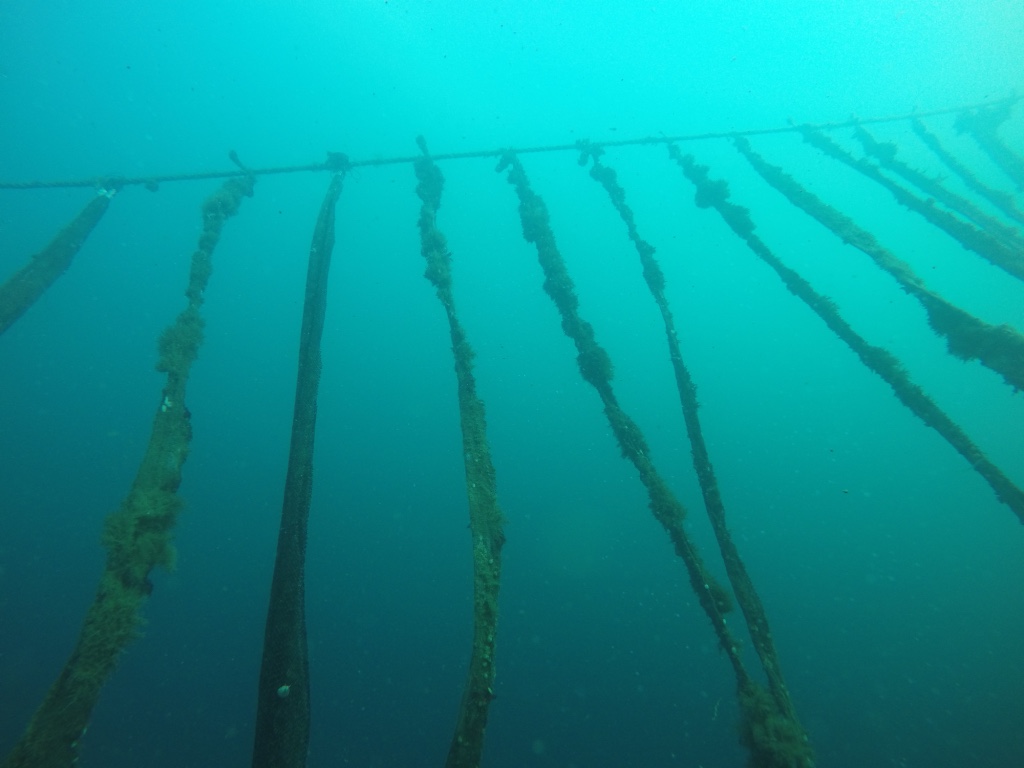
By the same token, the Dr Carlos Molinetwho is an academic at the Universidad Austral de Chile (University of Chile) and associate researcher of the INCAR Center, stressed that the proposal recommendations focuses on the interaction of fisheries and aquaculture activities, specifically in the field of fisheries and aquaculture. Benthic resources.
Read more » In Los Lagos: First relocation of mussel concession delivered
"A concrete example of this interaction is given with the seed capture or collection wild of benthic resources, which then supplies the small-scale aquaculture (SSA) for fat and production. In addition, the aquaculture of native benthic species can function as 'habitat' and at the same time as larvae and propagules source and then perform repopulation of areas available for fishing of these same species," argued Dr. Molinet.
You may also be interested in » Deliver up to 30 million for small-scale aquaculture projects
More than 2,500 persons
In its previous seasons, "La Hora Acuícola" has called more than 2,500 attendees in the sessions held in which researchers and researchers from INCAR together with prominent guests presented and analyzed relevant studies for the sustainable development of the Chilean aquaculture sector.
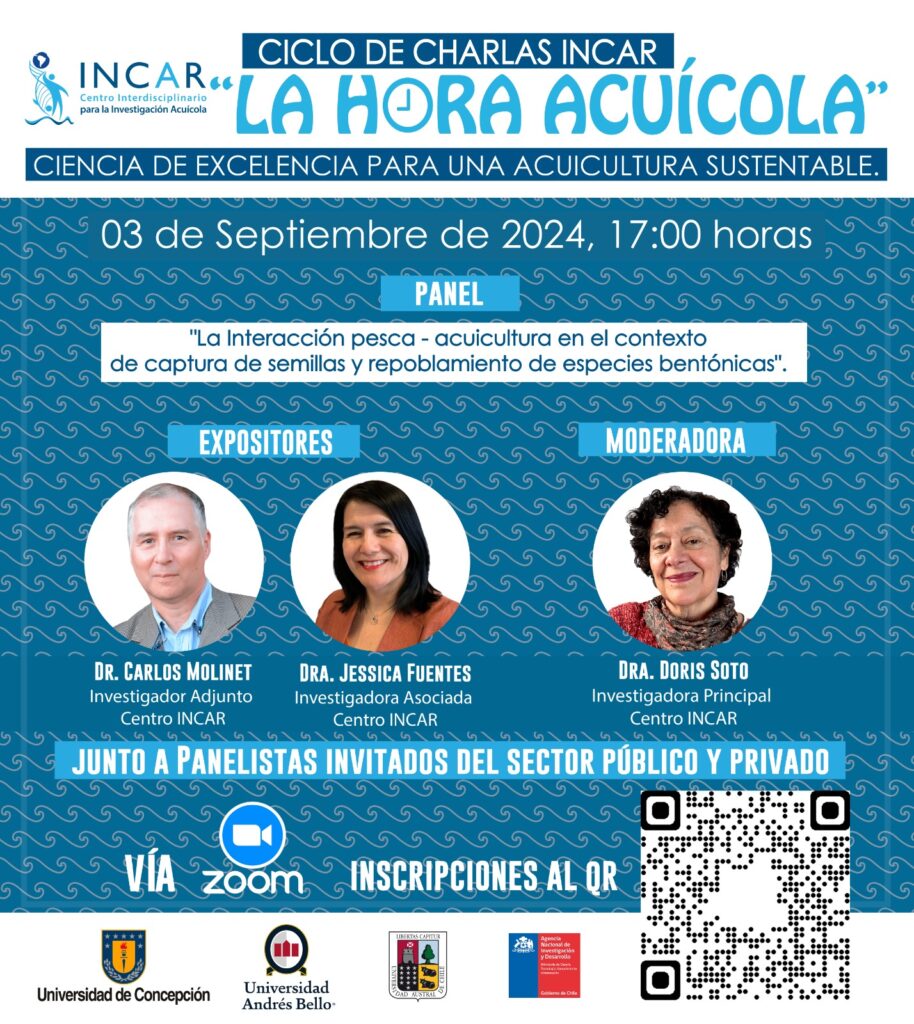
The panel will start next Tuesday, 3 September at 17:00 of Santiago de Chile, will be in Spanish, via Zoom and will have online transmission by social networks INCAR Center.
To register - quotas are limited - click here. You can also do this through the QR code of the following poster:
*Images: courtesy of INCAR.