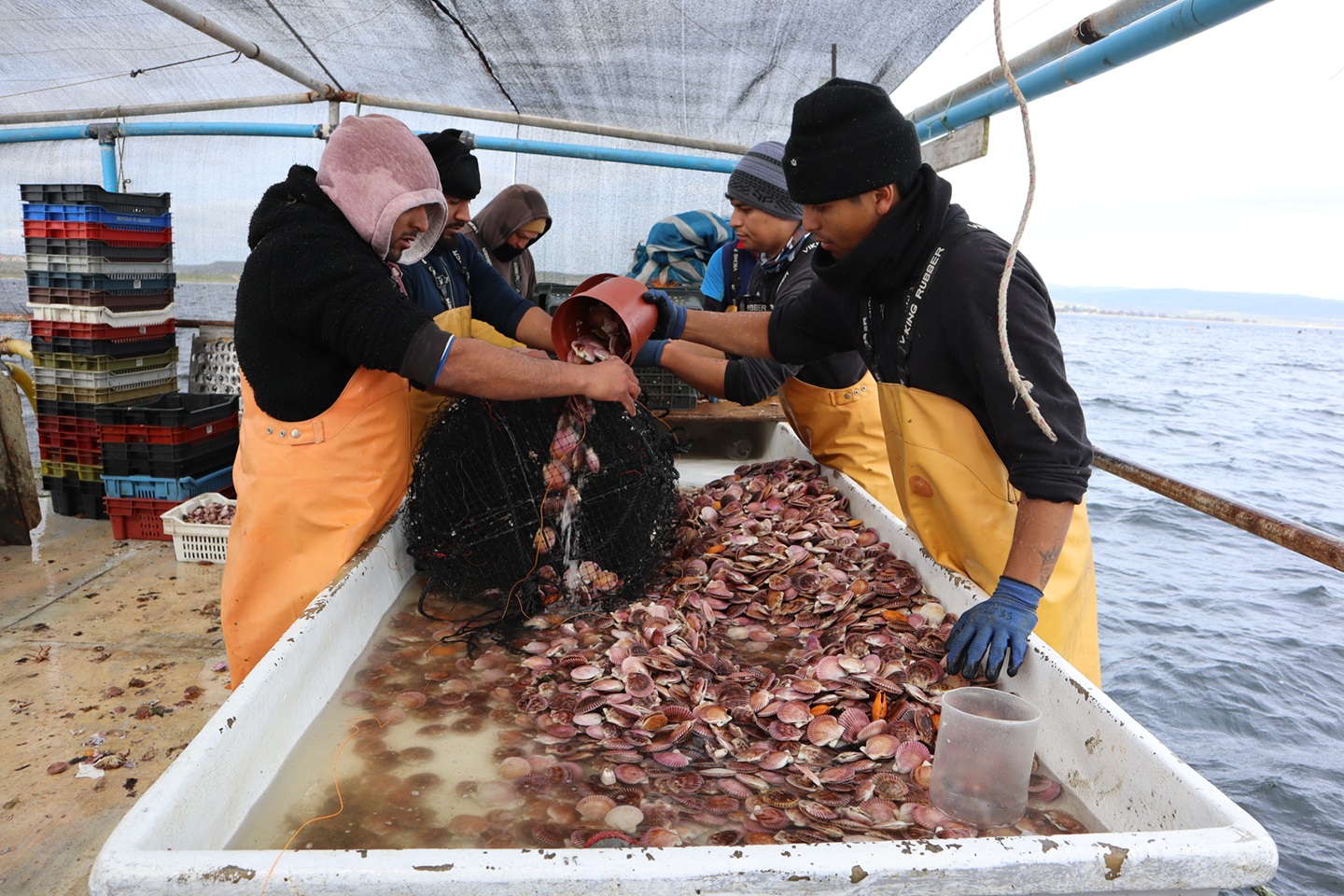
A project funded by the Coquimbo Regional Government defined with the beneficiaries the prototypes that will seek to reduce the physical effort of workers and improve the efficiency of operations at sea.
After months of collaborative work with Small Scale Aquaculture Organizations (APE) from Tongoy, the AquaPacífico Aquaculture Technology Innovation Center reached a new milestone in the implementation of the project "Technological Solutions for APE", an initiative funded by the FIC (Fondo de Innovación para la Competitividad) of the Coquimbo Regional Government, which aims to improve working conditions and competitiveness of producers. local areas through the incorporation of technologies adapted to their productive reality.
Currently, the project has the design of three prototypes aimed at optimizing critical tasks associated with oyster farming, which were identified directly by the aquaculturists during participatory workshops, surveys and field information gathering activities.
The regional governor, Cristóbal Juliá, highlighted that this initiative reflects the Regional Government's commitment to strengthening strategic productive sectors through innovation and technological development.
"Innovation makes sense when it improves people's lives and strengthens our productive activities. This project will allow aquaculturists to have better tools to develop their work, increasing the efficiency of their operations and strengthening a strategic activity for the Coquimbo Region," he said.
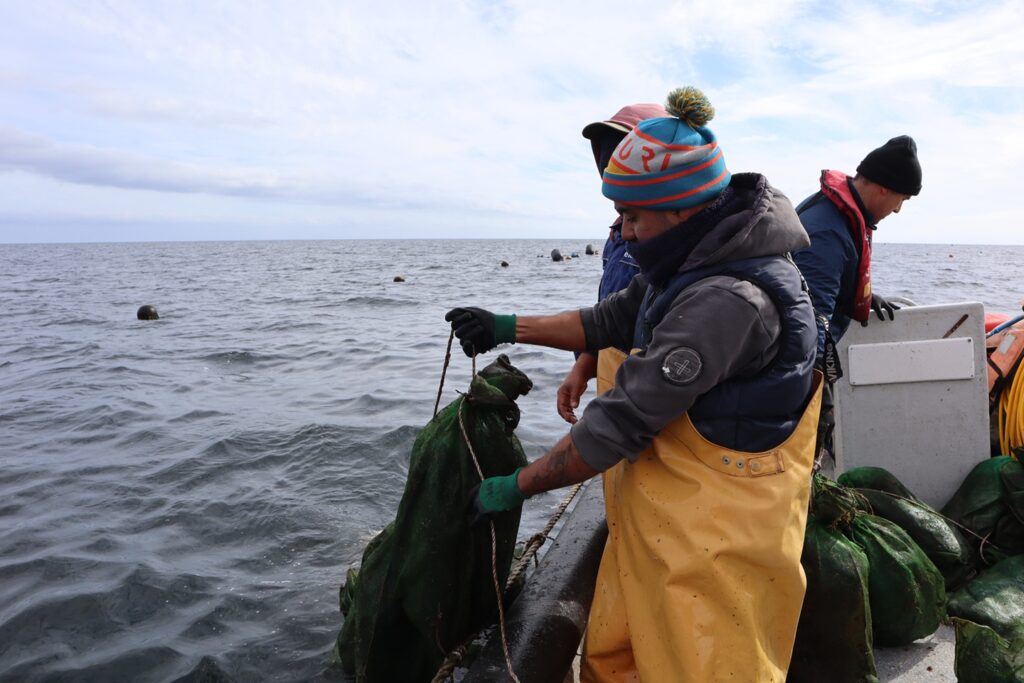
According to Daniel Arriagada, Business and Technology Transfer Coordinator of AquaPacífico and director of the initiative, the process allowed to prioritize the main gaps present in the offshore operations.
"We held workshops and surveys with the workers to identify which maneuvers were the most complex from their experience. From this analysis it was determined that the lifting, sieving and emptying tasks represented the main gaps, both because of the physical effort they involve and their impact on the productivity of the operations," he said.
The initiative aims to reduce the physical load associated with these tasks, promoting safer and more efficient working environments. For this, the technical team evaluated different technological alternatives inspired by solutions already used in other aquaculture sectors, such as mussel farming in southern Chile, adapting them to the characteristics of regional aquaculture.
Innovation built next to users
One of the relevant aspects of the project is the co-design process developed together with representatives of Aguamarina S.A., Pescamar Ltda. and Fernando Solís Ltda., who have actively participated in the evaluation and definition of technological proposals.
Alejandro Segura, mechanical engineer responsible for the design of prototypes, stressed that fieldwork has been key to ensuring the relevance of solutions.
“The process has not only been technical, but also participatory. Based on the needs identified by the aquaculture farmers themselves, we developed conceptual proposals in 3D models, which were revised and adjusted in conjunction with them. We seek to make the solutions simple, robust, easy to operate and compatible with the real working conditions that exist in the activity,” he explained.
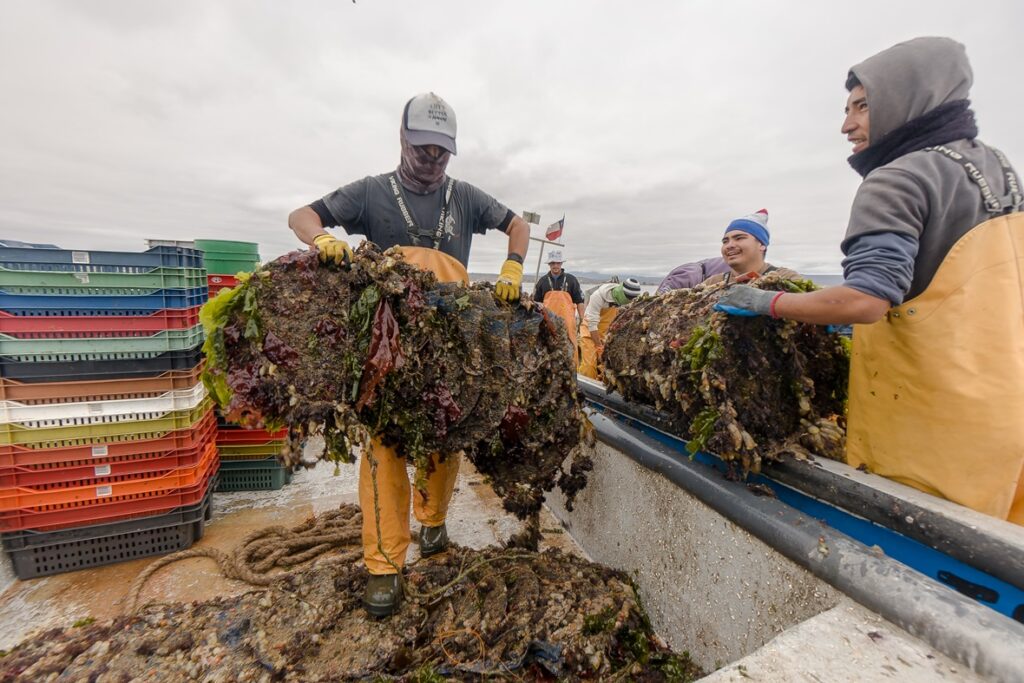
The professional added that one of the main engineering challenges has been to adapt technologies to reduced spaces, considering that much of the operations are carried out on vessels and work platforms of limited dimensions.
“In some cases there were no equivalent equipment directly applicable to ostion cultivation, so we should develop solutions practically from scratch, taking references from other productive sectors and adapting them to a very specific reality,” he said.
The experience of beneficiaries
For participating organizations, the possibility of being directly involved in the development of solutions represents one of the main values of the project.
Fernando Solís, legal representative of Fernando Solís Ltda., stressed that his observations were considered throughout the process.
“I have felt listened to and part of this work team. The prototypes look great, especially the lifting solution to be used in screening. Some alternatives will have to be evaluated on the ground, but it has been a very positive experience,” he said.
A similar view was shared by Lorenzo Zambra, member of the board of Aguamarina S.A.
“For us, as small-scale fish farmers, it has been very important to participate in this project. Our opinions have been heard and we have participated fully in the designs that will help us improve our work,” he said.
Next steps
With the selection of the prototypes completed, the project will now enter the detail engineering phase, where materials, dimensions, technical specifications and drawings for its manufacture will be defined.
Subsequently, the construction and implementation of the equipment will begin, which will be subject to field testing in the participating companies for an approximate period of six months. This stage will allow to evaluate their performance under real operating conditions and measure indicators associated with productivity, ergonomics and perception of physical exertion by workers.
From AquaPacific, its executive director, Claudia Soto, highlighted that this initiative is part of a broader vision aimed at strengthening the sustainability and professionalization of Small Scale Aquaculture.
“This project demonstrates that innovation can be built together with users to respond to specific challenges of aquaculture activity. Our goal is to contribute to safer, more efficient and more competitive aquaculture, incorporating technology that will have a real impact on the productivity and working conditions of those who carry out this activity,” he concluded.