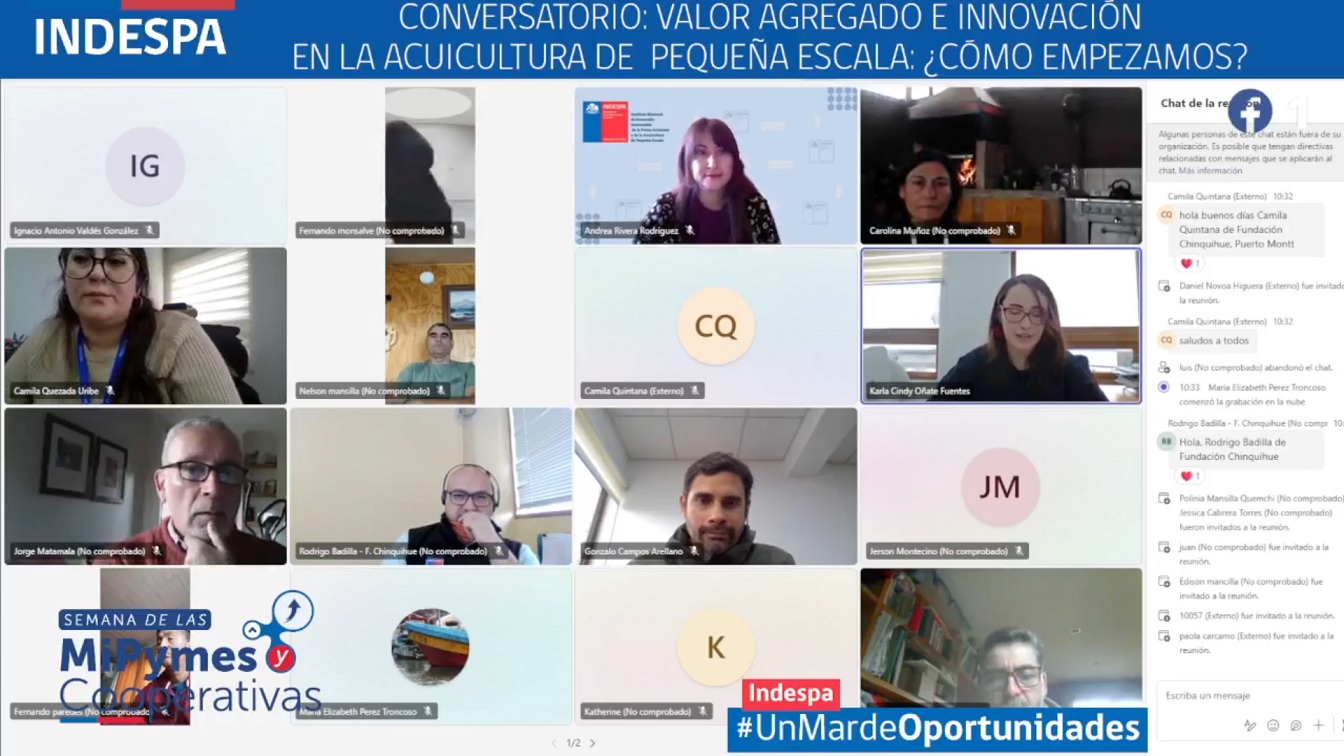
Small-scale aquaculture producers from the Los Lagos region participated in a discussion titled "Added value and innovation in small-scale aquaculture."
An interesting dialogue and exchange of experiences were held by half a dozen small-scale aquaculture producers from the Los Lagos region, in the conversation session Added value and innovation in small-scale aquacultureThe event marked the start of INDESPA's activities during the 2024 Week of Small and Medium Enterprises and Cooperatives, which will run until this Friday in different regions of the country with workshops and meetings together with representatives from the fishing and artisanal aquaculture sectors.
The discussion, organized by the regional office of the National Institute for Sustainable Development of Artisanal Fisheries and Small-Scale Aquaculture, INDESPA, and the Regional Directorate of Economy, Development and Tourism of the Los Lagos region, was moderated by the regional coordinator of INDESPA, Karla Oñate Fuentes, and brought together the experiences of the aquaculturists Polinia Mansilla Navarro from Quemchi, Chiloé, and Carolina Muñoz Ríos from Caldera, in the Atacama region, who presented the innovative work they carry out from their territories to add value to their products.
The seremi of Economy, Development and Tourism, Luis Cárdenas Mayorga, highlighted the role of small-scale aquaculturists as a driver of the economy in the country, and in this sense valued the space offered by the Small and Medium Enterprises Week to highlight, learn and share experiences and knowledge among those who give life to the network of enterprises that drives Chile.
Polinia Mansilla, started in 1998 with his family in mussel farming, but after the pandemic in 2020 and already with his brand Chiloé Mil Sabores, he decided to venture into the production of mussels, clams and piures in smoked and dehydrated format, following the tradition and ancestral method in which his family preserved food. Today, he offers direct sales in cans and snacks for the regional and national market.
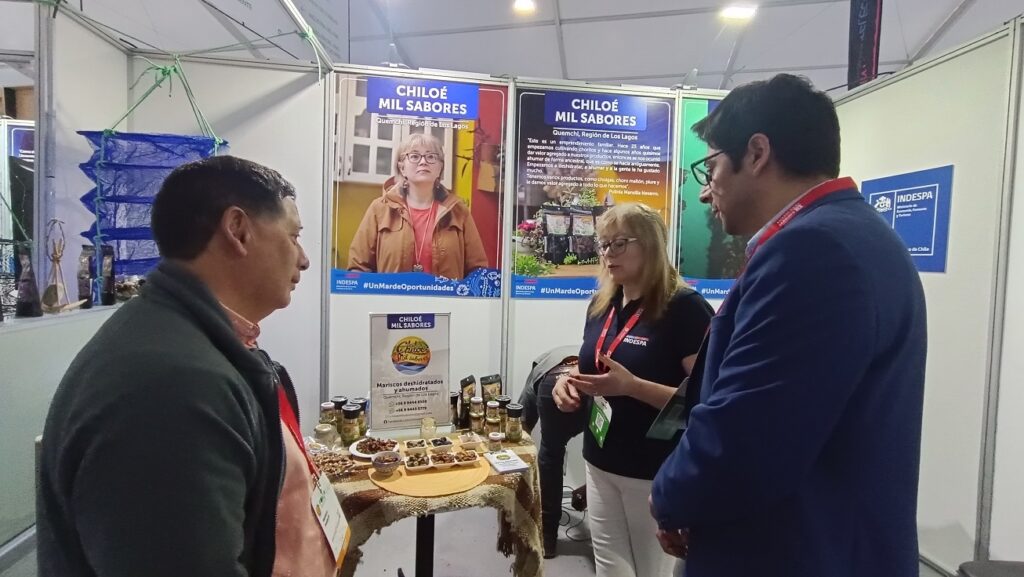
"Nothing is impossible, persistence and being sure of wanting to start a business is the beginning, seek advice and hire the support of a professional if necessary, to continue ... but nothing is impossible, there are setbacks yes, but they can be solved," emphasized Polinia Mansilla as she concluded her presentation.
On the other side of the coast, Carolina Muñoz together with her husband José Avilés, 25 years ago they farmed Glacilaria (_pelillo) in Bahía Inglesa (Caldera) and other algae, of which in particular the gummy lichen has led them to innovate in the production of thickening gel for human consumption.
"About a couple of years ago we saw that the sea moss that the model Kim Kardashian promoted in her superfood smoothies, was the same algae that we export for industrial use and that in the United States becomes human food ... we started to test with different products ranging from smoothies, gummies, cookies or snacks so that it can also be consumed in Chile," highlighted Carolina Muñoz and José Áviles, who added that "without association" It is very difficult to reach the final market. It is important to start building relationships to open the eyes to our products and we have to look at what is being done outside," concluded.
Within the presentation, the professional from the Seremi of Health of Los Lagos, Lorena Valenzuela, explained and addressed some queries regarding the procedure for obtaining permits and health resolutions.
National Consultation
In the context of this event, Claudia Puebla Arce, professional from the Small Scale Aquaculture Unit from INDESPA, presented the national consultation: "Small Scale Aquaculture 2024", which will run until December 5th next year in www.indespa.cl and social networks of the institute to collect information that contributes to the development of new promotion instruments, according to the needs identified by the small-scale aquaculture sector.
The Los Lagos region produces 80% of the resources from small-scale aquaculture, followed by the Coquimbo, Atacama and La Araucanía regions.