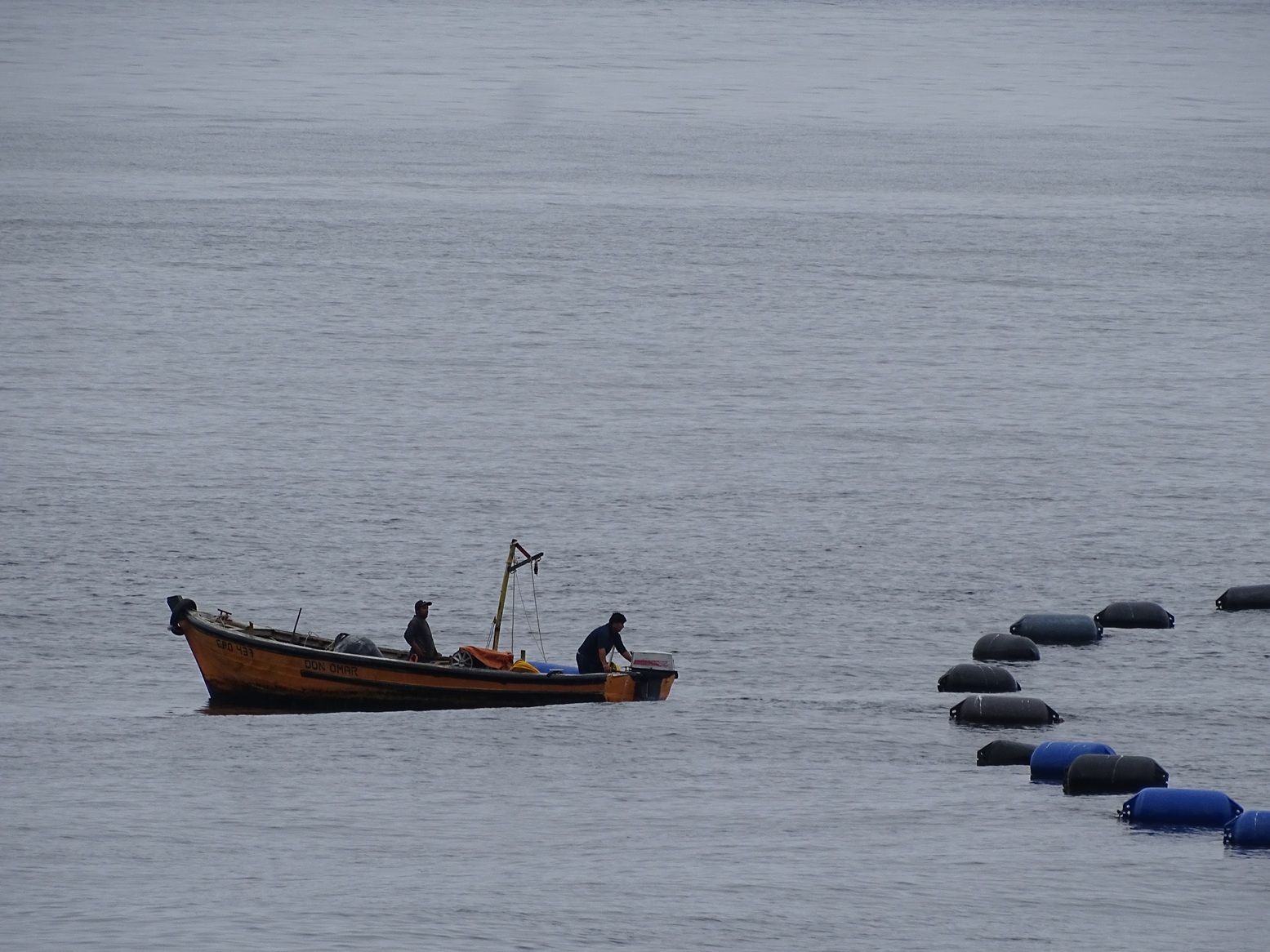
The body brought together technical teams from Subpesca and researchers from UCN and PUCV to analyze the progress of the FONDEF project and refine a tool that integrates biological, oceanographic, social and regulatory variables to support future productive diversification initiatives.
At the premises of the Subsecretariat of Fisheries and Aquaculture (Subpesca) in Valparaíso, the first technical workshop on Integrated Multi-Trophic Aquaculture (IMTA) in Areas of Management and Exploitation of Benthic Resources (AMERB) was held, an event aimed at presenting the main scientific advances of the FONDEF ID24I10108 project and to collect technical observations to strengthen future support tools for the implementation of these. productive systems.
The activity, which took place in July, brought together professionals from the Aquaculture Division, the Benthic Resources Unit, the Management and Policies Unit and the regional directions of Subpesca throughout Chile, along with researchers from the Universidad Católica del Norte through its Aquaculture Program in Managed Areas, and from the School of Marine Sciences of the Pontificia Universidad Católica de Valparaíso.
During the day, where biological results and advances in oceanographic modeling were presented, one of the main focuses of the discussion was the AMTI Integrated Prioritization Matrix, a tool that incorporates biological, oceanographic, social and regulatory variables to support decision-making regarding future productive diversification initiatives in AMERB.
Technical teams from Subpesca assessed the potential of this approach and proposed the convenience of continuing to refine the methodology, explore its integration with administrative processes, incorporate economic components and strengthen regional capacities that will support fishing organizations interested in developing aquaculture.
An integrated look at the challenges of the AMERB
For Cristián Sepúlveda, researcher at the Universidad Católica del Norte and director of the Aquaculture Program in Managed Areas, one of the main contributions of the work carried out is to expand the traditional way of approaching multi-trophic aquaculture. "Our approach proposes to understand AMERB as socio-ecological systems. Beyond the trophic relationships between the cultivated species and the oceanographic conditions," We incorporate natural populations as part of the production system, along with social and regulatory factors that condition the implementation of these innovations. We believe that this integrated approach represents an important advance in order to continue refining the tool and support a gradual and territorially relevant implementation.
Meanwhile, Dr. Felipe Hurtado, academic of the School of Marine Sciences of the Pontifical Catholic University of Valparaiso, said that "this initiative demonstrates how complementary scientific capabilities can be integrated to respond to complex challenges. The experience of the UCN in artisanal fishing, small-scale aquaculture and territorial work is complemented by our capabilities in oceanography, numerical modelling and cultivation technologies. This integration makes it possible to build more robust tools with greater application potential in public management."
For its part, Marisol Álvarez, in charge of the Management and Policy Unit of the Sub-Pesca Aquaculture Division, valued the technical exchange mechanism and the willingness of universities to build tools in conjunction with institutionality. "This type of space allows early knowledge of the advances of the research and generate a technical dialogue about its potential application. The proposal opens interesting opportunities to continue deepening tools that contribute to the gradual implementation of new aquaculture alternatives in AMERB, considering the regulatory and territorial particularities of our country."
The conference allowed consolidating an agenda of institutional and academic collaboration between the UCN, the PUCV and Subpesca aimed at continuing to strengthen the tool through new instances of technical validation and to advance in the design of strategies that facilitate, in the medium and long term, the incorporation of the AMTI approach as an alternative for the sustainable diversification of the Management Areas in Chile.