From July 1, 2024, the national aquaculture industry has a new regulatory framework with the entry into force of the Exempt Resolution 1821. This resolution involves significant changes in the design, construction, operation and inspection of systems for the cultivation of salmonids, especially in areas such as mooring elements, cage rafts, nets and environmental data measurement.
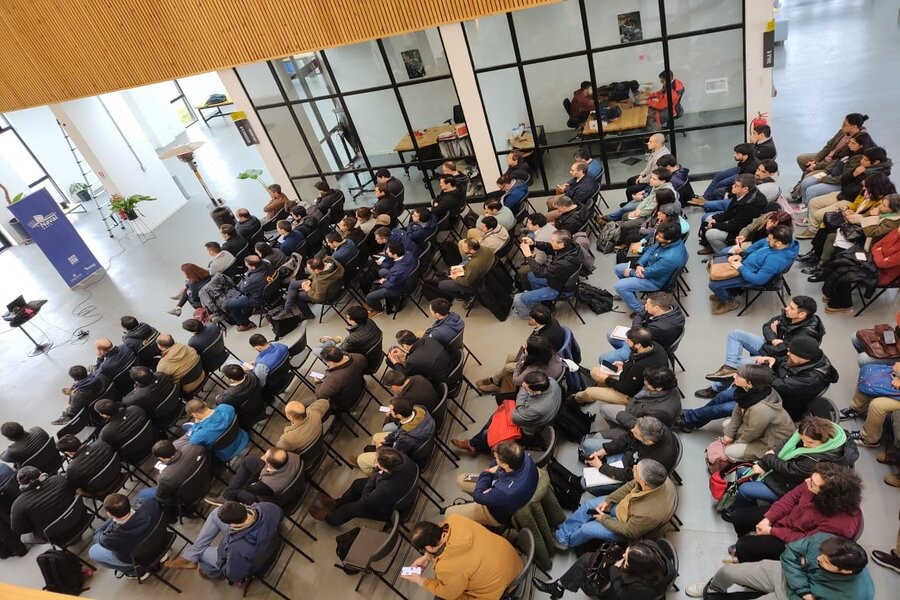
To address the scope and challenges of this regulation, it was carried out the seminar "Res. Ex. 1821: Scope of the new regulatory framework in the national aquaculture industry" organized by the Institute of Naval and Maritime Sciences of the Austral University of Chile together with the companies Green Aqua and Scale AQ and that counted with the participation of representatives from the Subsecretariat of Fisheries and Aquaculture (Subpesca) and the National Service of Fisheries and Aquaculture (Sernapesca). The event allowed generating a space for conversation between academia, regulators and companies in the field.
The topics covered included the experience in Norway with its regulatory framework, the effects of the new regulatory framework on the design of the system of anchoring of cultivation centres, the participation of applied research in the development of public policies and the details of implementation of the resolution.
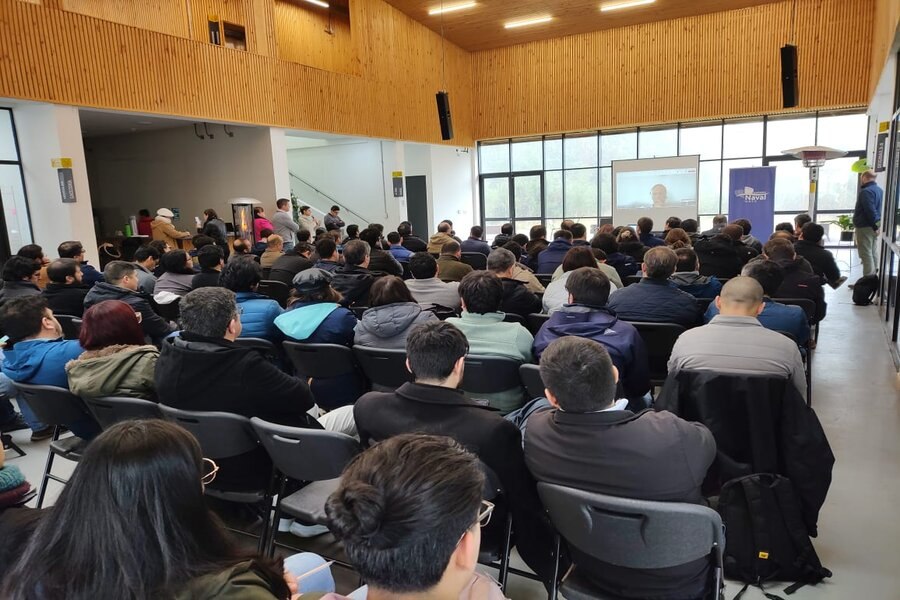
One of the organizing companies of the seminar was Green Aqua, specializing in the calculation of anchoring systems for cultivation infrastructures. Your general manager, Esteban Patroni, naval engineer graduated from the UACh, was one of the exhibitors who referred to the challenges of the new regulations. “The truth is that the current regulations still leave room for interpretations. There are aspects we need to clarify in order to work on common ground.” One of the challenges is the transition from simple line anchors to double lines, which involves additional costs. Despite the four years of white march since the the resolution of 2020, still remains points of discussion between public and private actors. The task ahead is to strike a balance between security and economic viability.
For his part, the naval engineer, César NavarreteProject Manager of Scale AQ, a Chilean company of Norwegian parentage that was also part of the organization of the seminar said: “We wanted to be part of this dialogue together with the authorities and the University. As suppliers of industry, we are committed to following the guidelines and promoting a safe and sustainable industry for the future.” Scale AQ specializes in building cage rafts, and its use of modeling software is essential for keep up to date on safety coefficients and structural efficiency.
In representation of the Undersecretary of Fisheries and Aquaculture participated Constance Silva, head of the Aquaculture Division who explained that the new regulations are aimed at protecting the ecological systems that we have in Chile. "We must bear in mind that in 2020 we had a significant decline in global species biodiversity and we have to move towards protection. The salmon we grow in Chile are not originating in Chile, so there are ecological risks in the escape of salmon, risks that we need to continue to study,” he said.
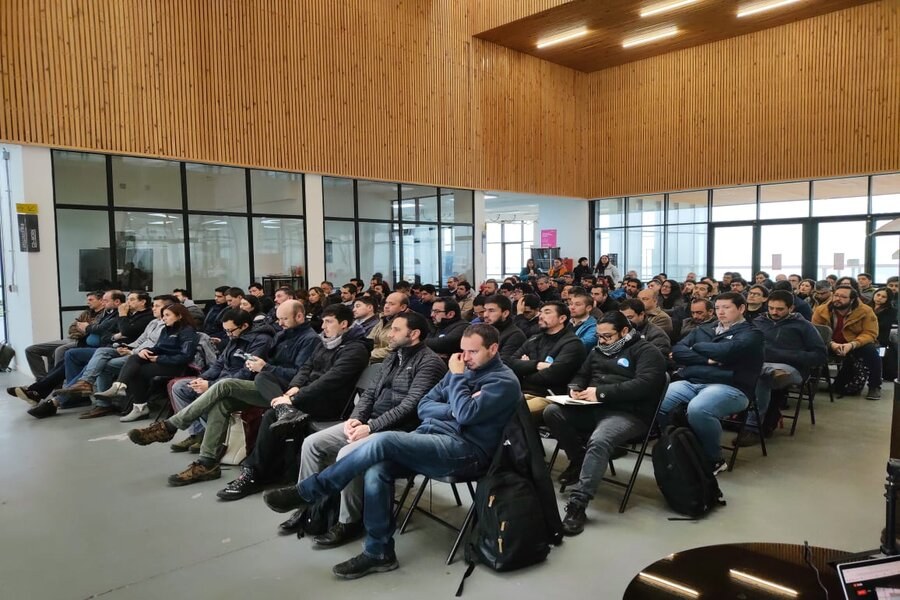
The representative of the regulatory body also emphasized the need to strengthen both academia and people working in the industry in order to move towards safety and sustainability and sustainability.
By the same token, the Dr. Cristian Cifuentes, academic of the UACh Naval and Maritime Science Institute, who explained the role of academia in public policy generation, commented that “this type of instances of exchange of ideas between the public, private and academic sectors are fundamental to move towards a regulatory framework that protects the interests of society and at the same time allows the development and expansion of industry.”
The academic also highlighted the role of applied research in decision-making by the state and industry, in which the generation of information obtained at the laboratory level or with measurements in the field allows to adjust the design parameters in order to work more safely, safeguarding the integrity of the cultivation systems which results in the protection of the environment and favors the obtaining of the license. social rights of producers.
In short, the Chilean aquaculture industry faces significant challenges in its quest for safety and sustainability. Regulatory adaptation and collaboration between actors will be key to overcoming these challenges.
Image credit: Press FCI UACh - Green Aqua.