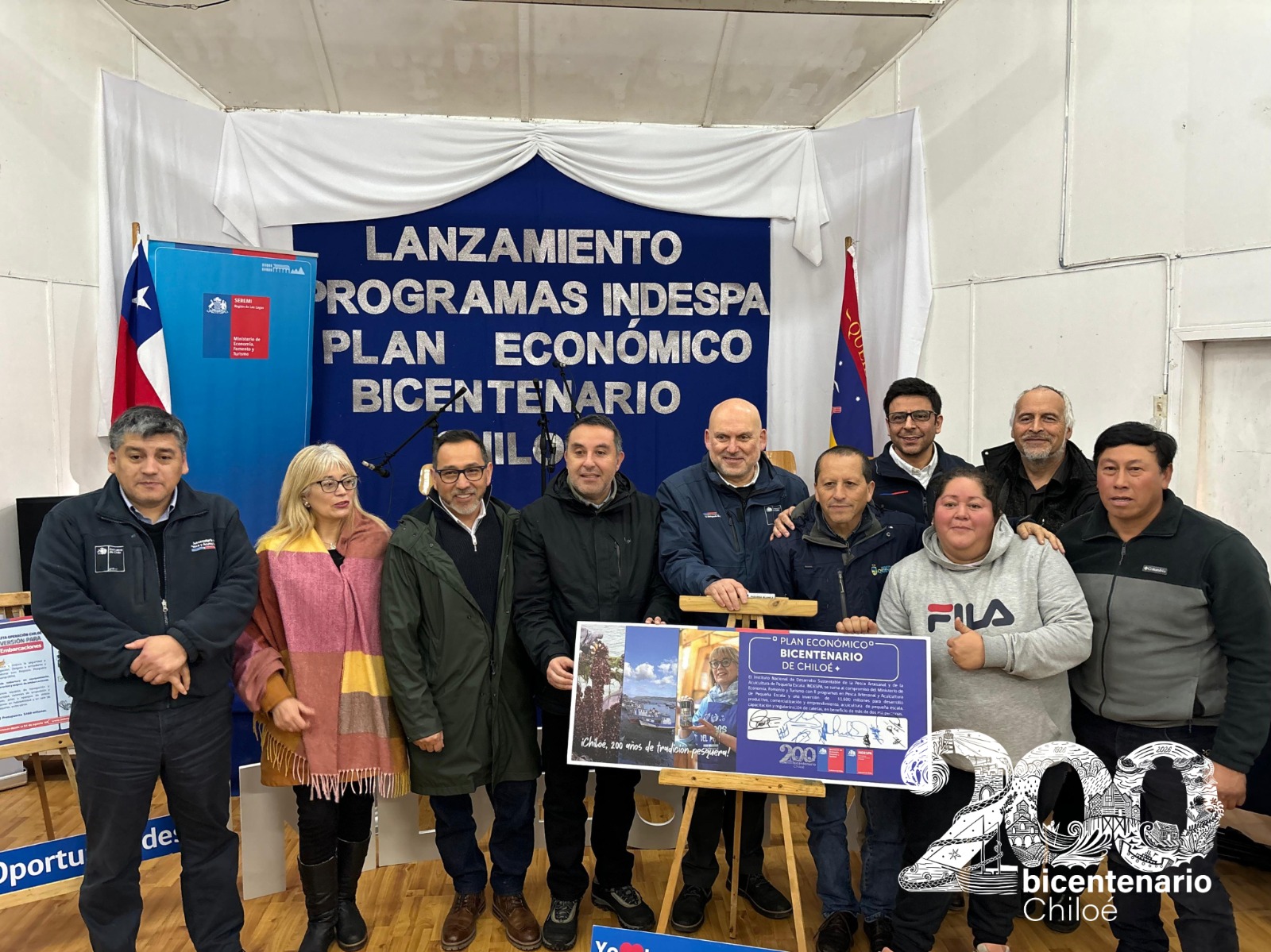
Indespa opened this Monday the investment fund for small-scale farming and will call for two new initiatives on August 4th for improvements in artisanal vessels and women fishermen's productive entrepreneurship.
In January next year, Chiloé will commemorate the 200 years of its annexation to Chile and to highlight this historical milestone, the Ministry of Economy has launched the Chiloé Bicentennial Economic Plan, with 37 productive development programs for three axes: Tourism; Productive Promotion, Entrepreneurship and Innovation; and Small-scale Fisheries and Aquaculture.
In this context, the national director of Indespa, Leonardo Llanos, along with local authorities, launched eight development initiatives focused on small-scale fishing and aquaculture this Friday in Queilén. This is an investment of 1,600 million pesos that will benefit more than two thousand three hundred people in the artisanal fishing and aquaculture sector. These programs aim to strengthen the social, economic and productive development of small-scale fishing and aquaculture communities, with support tools in areas of entrepreneurship, regularization of spaces and human capital.
The national director of Indespa, Leonardo Llanos, highlighted that "Chiloe has a fishing tradition from ancient times, which in its crafts and knowledge enriches the artisanal fishing culture, small-scale farming, marine gastronomy and the consumption of seafood products. From Indespa we are fulfilling the commitment of the Ministry of Economy to contribute to development with 1,600 million pesos, which will benefit more than two thousand" three hundred people, with better working conditions and quality of life.
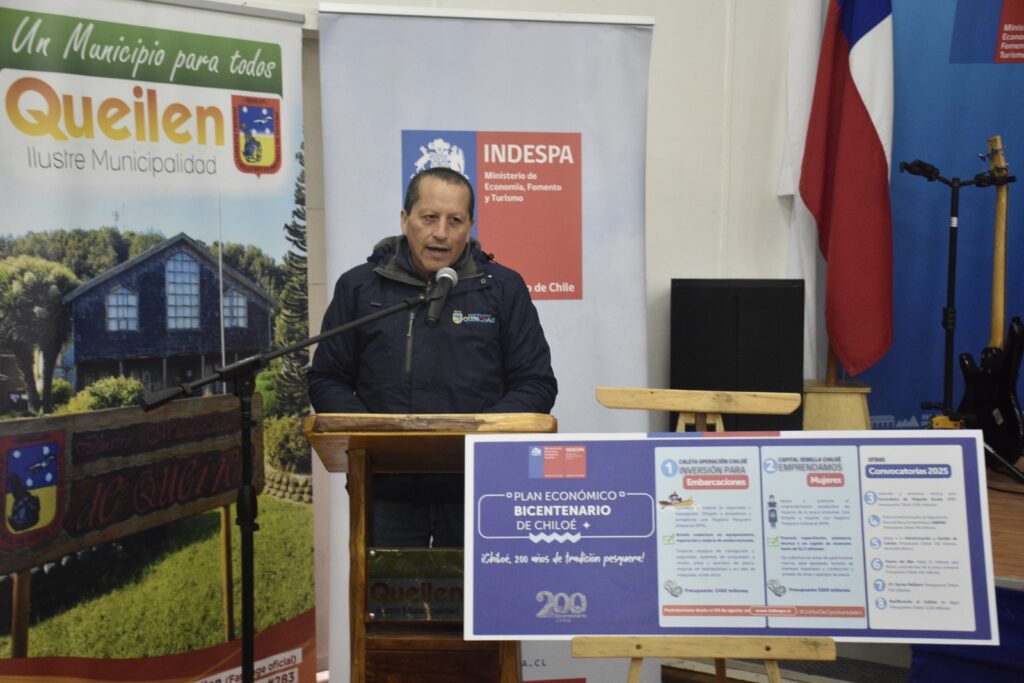
The provincial presidential delegate of Chiloe, Marcelo Malagueño, emphasized that this launch responds to President Boric's mandate to work with the communities: "This initiative that was born in the commune of Queilén a little over a year ago is now becoming a reality. This is what the President has asked us to do: to listen first to the people and then deliver solutions, fulfilling the promises we have outlined. Today we are
fulfilling that commitment, delivering a Bicentennial Plan for artisanal fishing. It has already been delivered for culture, it has been delivered for public works, and we continue advancing in the fulfillment of the agreed tasks and commitments.
By the same token, the seremi de Economía, Fomento y Turismo, Luis Cárdenas, explained that this investment was built in a participatory way: “We discussed at many times with artisanal fishing organizations, adjusting programs to reach agreements, and finally what we have built with them, with absolute territorial relevance. That is precisely what we seek as a Government, to commemorate these 200 years together with all the chilotes and chilotas, contributing to development in three dimensions: tourism; artisanal fishing and small-scale aquaculture, which we supported today by launching INDESPA’s programme with 1,600 million pesos; and support for entrepreneurs and innovation through a programme unprecedented in the Economy Ministry’s history, worth 8,100 million pesos over three years.”
From the fishermen's organisations, Carola Barría, head of the Provincial Federation of Artisan Fishermen United Fishermen, appreciated that resources reach directly to those who need them most. “Today we are happy and calm because we have achieved an economic milestone that will allow many artisanal fishing families to access productive promotion through INDESPA. We appreciate that the authorities recognize the importance of the fishing sector in Chiloé, where about 40% of Chile's artisanal fishing is concentrated. Out of every 100 divers, 44 are In this province, and out of every 100 shipowners, 25 are chilotes, generating employment and local development. That’s why it’s so important that the Economy portfolio has fought hard to bring fresh resources to the Bicentennial.”
On the same line, Marcos Salas, President of the Union of Fishermen of the Quellón Pier, said the investment sets a precedent. “This proposal, put forward by the mayors and their teams, has brought us recognition as an island for the first time. This bicentenary goes beyond the 200 years since Chiloé’s annexation. We are delighted because the initiative was never in the plans, but people’s work and vision have made it a reality. Chiloé is receiving 1,600 million pesos, while the entire region has just over 2,000 million. This is a first step, and we hope the amount can grow in future. The participation of artisanal fishers, organisations and women working at sea also led to productive discussions, analysis and
proposals. That democratic discussion is valuable.”
The mayor of Queilén, Marcos VargasHe recalled how this initiative was developed a year ago in meetings with the Minister of Economy and President Boric. “I mean I’m very pleased, satisfied and excited, because over time we’re going to dimension what we’re doing today. Perhaps now we do not take all the weight, and it is true that it is not desirable in terms of resources, but before 2024 there was no robust Bicentennial Plan, with financing and focused contests exclusively in Chiloé Province. The government and President Boric deserve credit, and I want to say so publicly. So does the minister, who listened when we, the mayors of Chiloé, invited him to meet on Lemuy Island in Puqueldón last year. That was where we began developing the Bicentenary Plan, which this year allocates 1,600 million pesos to artisanal fishing.”
Whereas the Mayor of Quinchao, René Garcés and president of the Association of Municipalities of Chiloé, stressed that this is a historical advance for the communities of the archipelago. “Today we have gathered to launch this Bicentennial Plan that devotes actions and resources to artisanal fishing in the province of Chiloé. As mayors, we had raised the need for the Bicentennial to have concrete measures to commemorate this date, and today it becomes a reality. We hope that these benefits will reach those who need it most, because this is a recognition of the work being done in our province.”
Projection 2026: more investment for Chiloé
The programme will continue in 2026 at the same funding level, providing a further 1,600 million pesos for artisanal fishing and small-scale aquaculture in Chiloé. This extends the Bicentenary Plan’s impact into the medium term and provides sustained support for the sector.
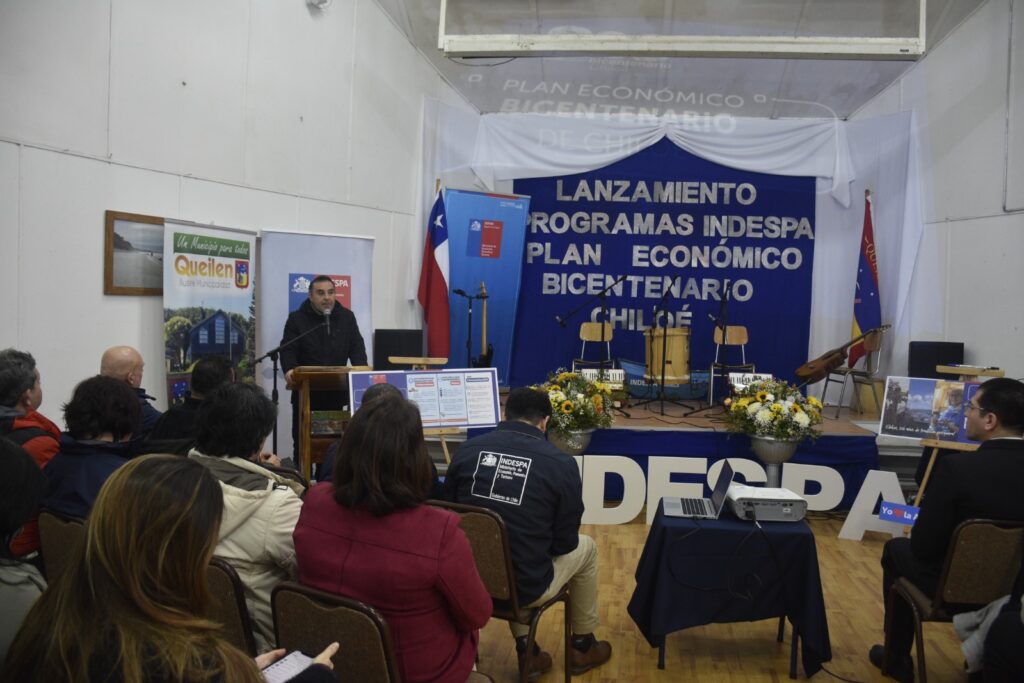
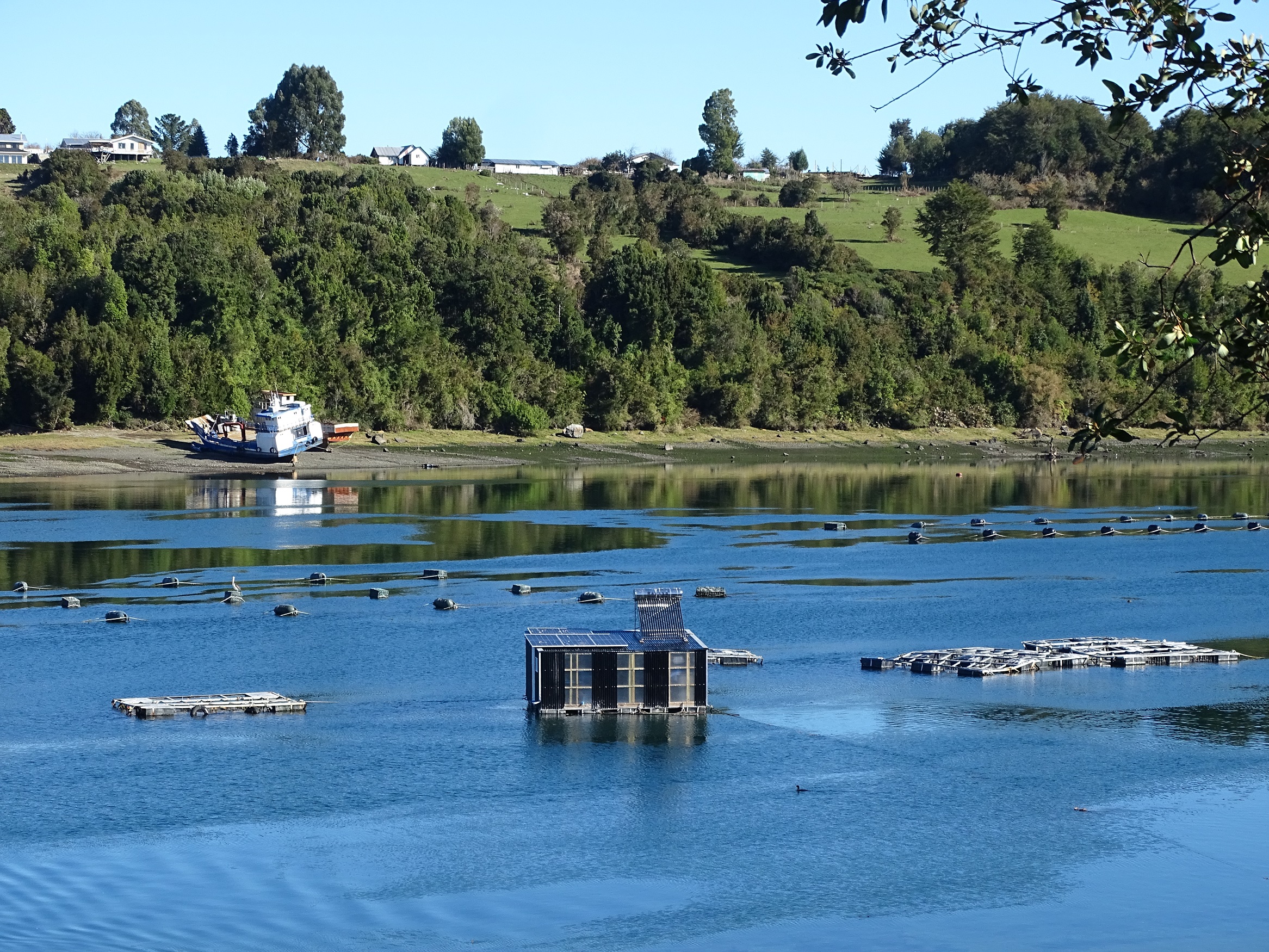
On Monday, July 28, INDESPA opened on its website www.indespa.cl the applications to the Small Scale Aquaculture program (APE) Investment Stage 1 with 550 million pesos that will help to finance infrastructure such as capes and buoys, harvesters, gauges and cultivation platforms, to boost the cultivation of choritos, oysters and algae.
This support is aimed at holders of aquaculture concessions (CC.AA.), Special collection permits (PECs) o permits for aquaculture or experimental aquaculture en Management Areas (AMERB), which have not been beneficiaries of Indespa in APE in 2022, 2023 and 2024. The call is open from July 23rd and will extend for 30 days.
For next Monday, August 4, the director of the Indespa advanced the opening of applications to two others.
new calls:
- Caleta Operation Chiloé, which strengthens safety and navigation. This fund finances equipment, repair and improvement of fishing vessels with the purchase of navigation and safety equipment, propulsion and winding systems, fishing gear and gear, or improvements in habitability and machinery room, among others. It is aimed at shipowners and shipowners and considers 460 million pesos.
- Capital Semilla Chiloé “Emprendemos Mujeres”, executed in alliance with FOSIS. It uses 300 million pesos to boost the productive entrepreneurship of women from artisanal fishing and strengthen their economic autonomy. The call for women over 18 years of age, with Artisanal Fishing Register (RPA), will provide coverage in marine gastronomy, added value, special interest tourism and preparation and arming of fishing gear and gear, financing training, technical assistance and investment capital of up to one and a half million pesos.
- Other calls from Indespa in this second semester are the financing of Monitoring Studies Areas of Management and Exploitation of Benthic Resources (AMERB), with resources for 40 million pesos, and the call Festivals of the Sea, with 50 million to support organizations that preserve traditions and promote the consumption of sea products and tourism in traditional festivals, being able to choose up to three million pesos.
The investment portfolio is completed with three initiatives with special quotas for Chiloé in the regular offer of Indespa. These are APE Sector Pelillero, currently in the process of evaluating applications with resources of 30 million for the archipelago; Administration and Management of Caletas, for organizations in process of the Caletas Law with 50 million; and the program Bonificación al Cultivo de Algas, with 115 million for thirteen applicants that participated in the last so-called 2025.
The province of Chiloé has an active participation in the provision of food and seafood products, concentrating about 19 thousand people (52%) in the regional fishing register, with 37 percent participation of women.