Technological Program works together with more than 60 beneficiaries, between trade unions and small producers who have incorporated this species as an opportunity for productive diversification.
Two and a half years after its launch, the initiative launched by the Catholic University of the North and financed by Corfo has consolidated a network of more than 60 beneficiaries of caletas from all over Chile, strengthening the cultivation of Japanese oysters through seed production, technological transfer and permanent accompaniment to small-scale aquaculture farmers (APES).
The programme is in the middle of its implementation period, and it shows the work done both in the laboratory and together with the producers, through seed production, applied research, training and ongoing support to the beneficiaries, which has enabled this species to be promoted as a new productive alternative for the coastal communities of Chile.
One of the main milestones corresponds to the delivery of more than five million Japanese oyster seeds, purchased by beneficiaries located in the regions of Tarapacá, Antofagasta, Atacama, Coquimbo, Bío Bío, La Araucania, Los Ríos and Los Lagos, allowing to strengthen the development of crops from the Tarapacá Region to Los Lagos.
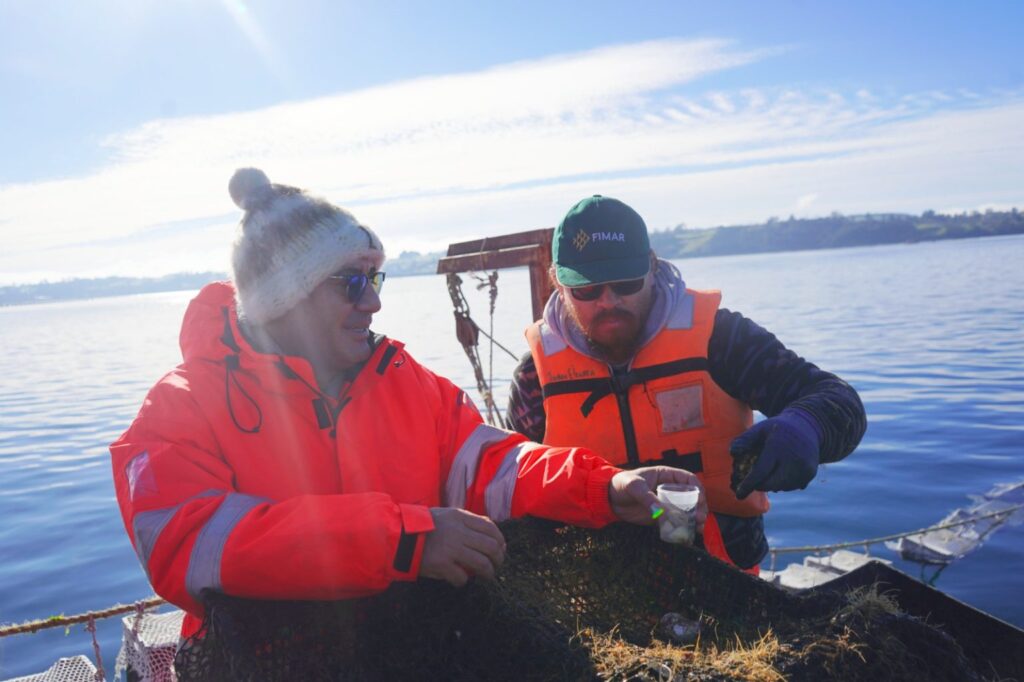
Increased seed availability has also enabled producers to increase their growing capacity. Juan Elgueta Soto, beneficiary of Calbuco, emphasizes that “the PTEC came to favor us, because initially the availability of seeds was lower and, by accessing payment agreements, we were able to count on a greater volume of production. That allowed us to grow.”
Behind these figures is permanent work that goes far beyond seed production. Since the beginning of the program, the team has carried out 14 technological tours to the Los Lagos Region, in addition to maintaining a constant presence in the northern part of the country, visiting the beneficiaries periodically to gather technical information, carry out health monitoring and accompany them directly in the development of their crops.
The experience behind the PTEC
The program is led by Dr. Rodrigo Rojas Araya, specialist in pathologies in larval studies of farmed molluscs, along with the alternate director, Dr. Gonzalo Álvarez Vergara, renowned for his career in microalgae cultivation and the study of Algales Nocivas (FAN). The latter also leads the Portfolio (stage) N°2, focused on establishing a baseline for the food safety of the Japanese oyster.
The team is complemented by Dr. Jesús López Carvallo, specialist in mollusc cultivation and director of Portfolio N°1, in addition to the researcher Germán Lira Godoy, whose experience in technology transfer has been relevant to bring technical knowledge closer to producers. They are joined by a multidisciplinary team of professionals who, from different areas, contribute to the development and projection of the program.
Technology transfer
The transfer of knowledge has been one of the axes that has marked the first years of the programme. Workshops and trainings, held both in the Los Lagos Region and at the Catholic University of the North, have allowed beneficiaries, co-executor institutions and associated entities to exchange experiences and deepen their knowledge about Japanese oyster cultivation.
Since its inception, the program has sought to bring these knowledges directly to those who today develop the cultivation. The objective has not only been to increase the availability of seeds, but also to provide tools for growers to strengthen their knowledge and project this activity in the long term.
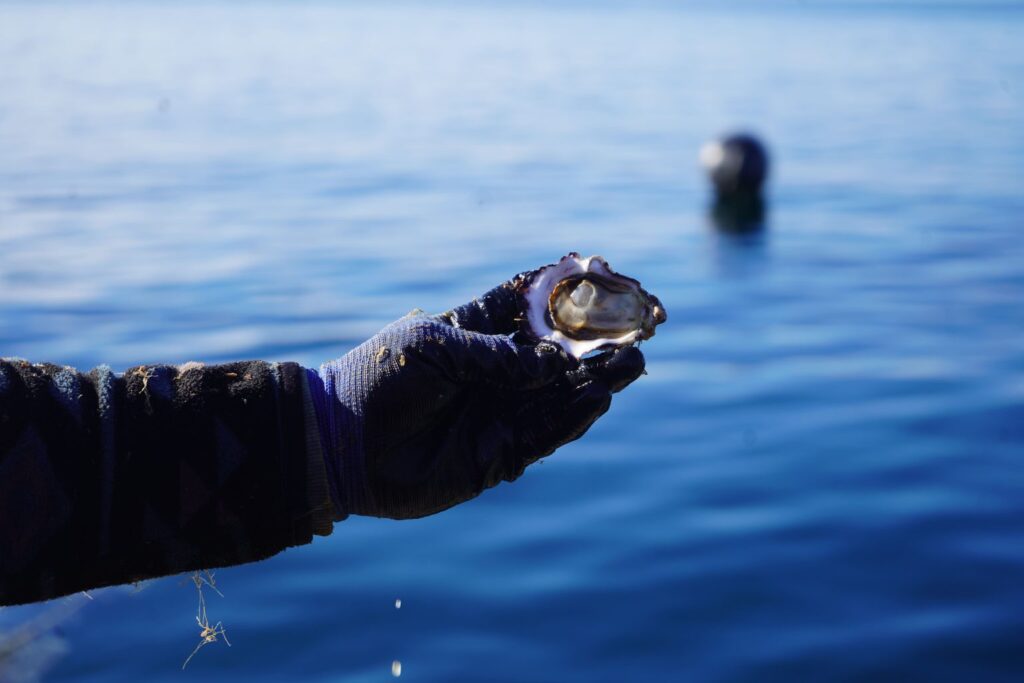
This field work process has been critical for producers who have incorporated new cultivation practices. This is what Sergio Donoso Castillo, beneficiary of the Faro Corona sector, points out in Ancud, who says that “Everything goes in the management of oysters, in the cleaning, in the care, in the fold and all that we have learned thanks to the PTEC of the Catholic University of the North.”
For the manager of the Technology Program of the Japanese Ostra, Alex Poblete Castillo, the main value of the initiative transcends the productive indicators. “Beyond the numbers and production, for us an extremely important aspect of the program are the people who work on it. You can see the enormous amount of social resources committed by families and this program has been able to merge both worlds. We hope that this initiative will become a new industry for our beneficiaries who visit month by month on the ground,” he said.
With half of its execution accomplished, the Catholic University of the North continues to promote, through the PTEC Ostra Japan, an initiative that seeks to strengthen the productive development of ostriculture through technological transfer and permanent work with producers, contributing to consolidate this species as a sustainable alternative for national aquaculture.