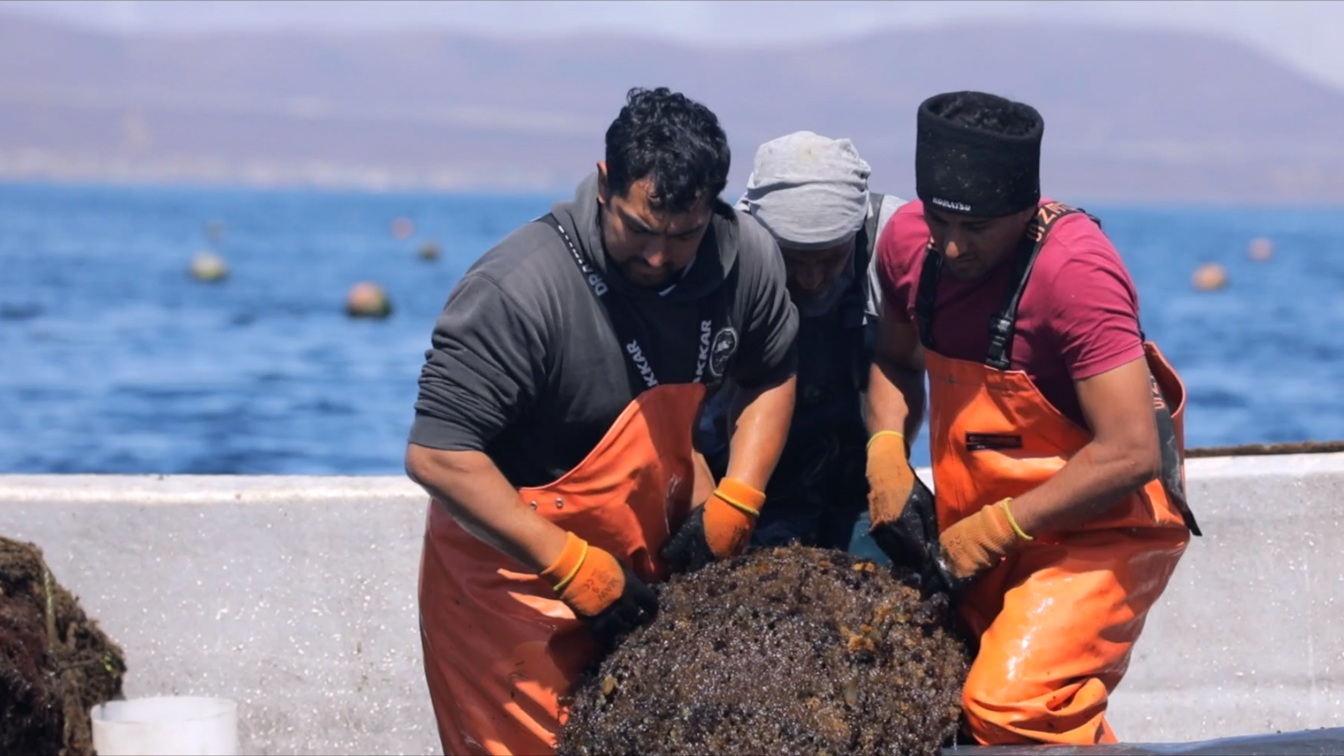
Regional initiative will focus on addressing specific gaps that small-scale aquaculturists face during critical operations such as lifting, emptying and filling of lanterns, as well as screening.
The Aquapacific Aquaculture Technology Centre officially launched the project "Technological Solutions for APES", an initiative funded by the Regional Competitiveness Innovation Fund (FIC-R) of Coquimbo Regional Government.
The proposal aims to develop and apply engineering solutions that allow the technification of the production processes of Small-Scale Aquaculture (APE), strengthening the capacities of local organizations and improving their competitiveness in the long term.
Technology for a more efficient and sustainable APE
The initiative will focus on addressing specific gaps that small-scale aquaculturists face during critical operations such as lifting, emptying and filling of lanterns, as well as screening. These tasks, which currently require a high level of physical effort and a large workforce, represent one of the main challenges for the continuity and efficiency of oyster farming in the Coquimbo Region.
The project proposes to adapt and transfer technologies already tested in other sectors, such as Chilean mussel farming, where mechanization has allowed to increase productivity, reduce injuries and improve the working quality of life of the workers.
"This project has as its main objective to design and adapt technology that allows to resolve the technological gaps that Small Scale Aquaculturists present in sea operations. It is an initiative developed together with organizations from Tongoy such as Aguamarina S.A., Pescamar Ltda. and Fernando Solís Ltda.", explains Daniel Arriagada, Project Director and Business Coordinator and Technology Transfer of AquaPacífico.
Start workshop: applied innovation and international experiences
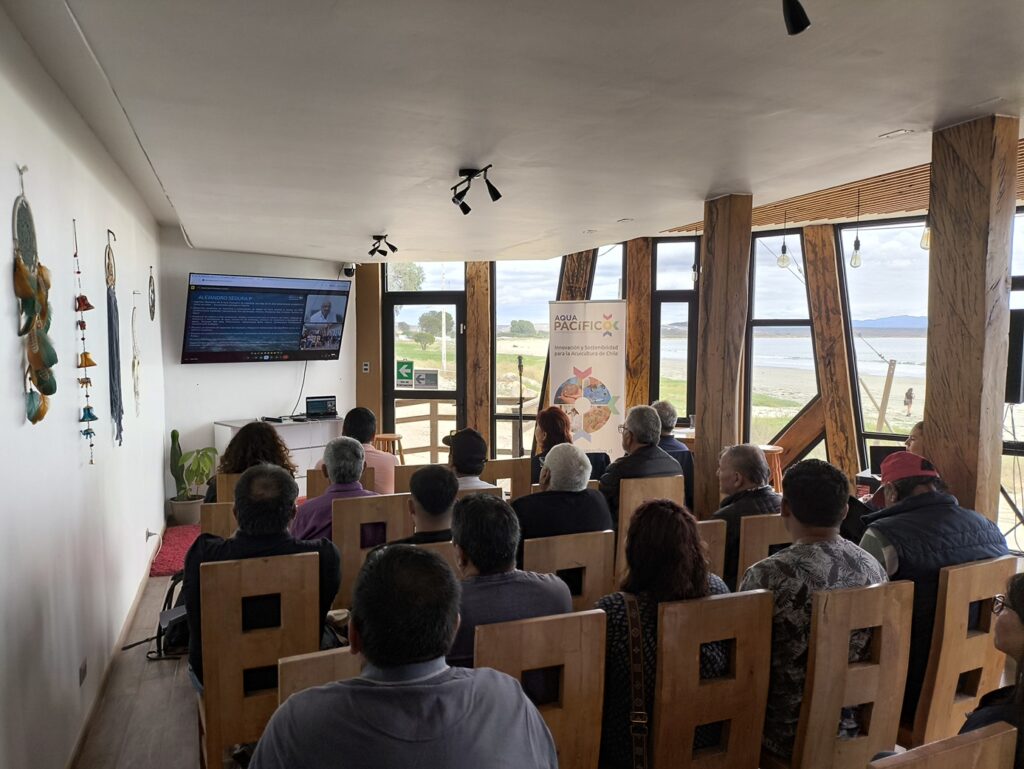
As an inaugural activity, AquaPacific held in Tongoy the workshop “Innovations and technological adaptations in Small Scale Aquaculture”, aimed at producers of oysters in the north of the Coquimbo Region.
The event brought together key actors from the ecosystem and brought together experiences of modernization from Spain and the Chilean mussel production sector.
Mechanical engineer Alejandro Segura shared the evolution of the mussel sector in Galicia. “The mussel industry went from a completely manual job to a mechanized process in about 60 years. Investment in R & D & I and the momentum of the producers themselves have been key to improving efficiency and quality of life,” he said.
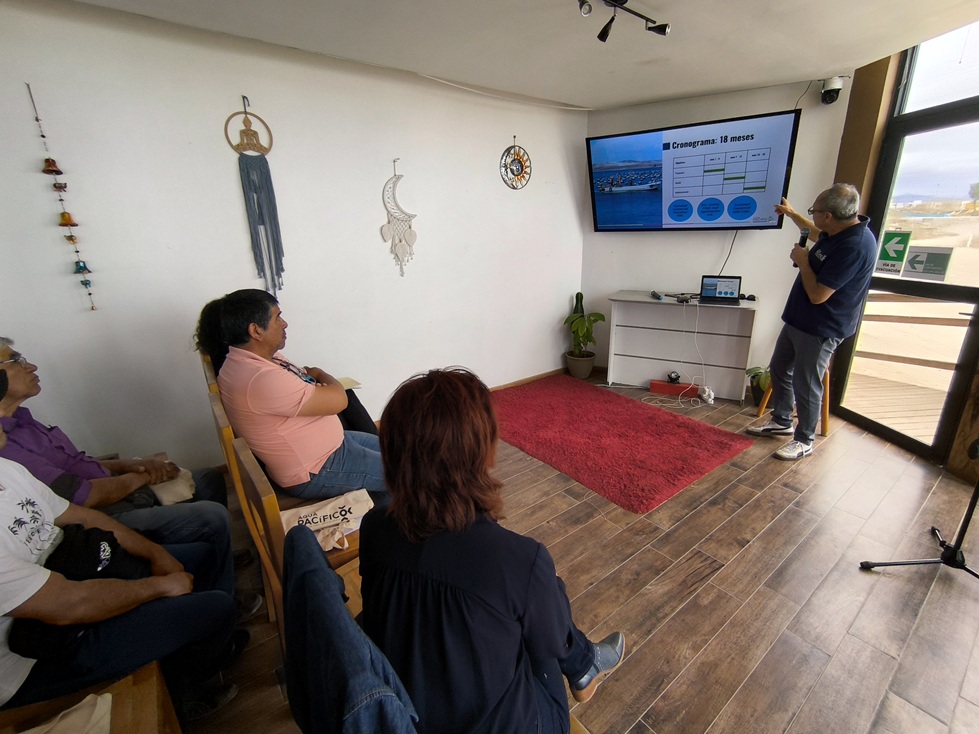
For his part, Yohanna González, Director of Innovation and Business at Hub Chile, highlighted the learning that Chilean mussel cultivation leaves for small-scale crops. In that line he said that “we wanted to show how small producers have incorporated technology into a large industry. Progress is possible when there is collaboration between producers, the state and specialized centers like AquaPacific.”
While the fish farmers present valued the activity and expressed their main technological needs. “Today we need a sifter with a belt that transports the ostion and avoid lifting trays at a pulse. This would make it possible to improve times, reduce injuries and optimize production,” said Lorenzo Zambra, legal representative of Aguamarina S.A., Tongoy.
Strategic Relevance for the Region and the Country
The APE is a sector with great potential to diversify national aquaculture and generate opportunities for artisanal fishermen and small producers. However, the lack of adapted and affordable technologies limits their development.
The technification of osthion cultivation — an activity that requires high physical effort since the 1980s — is an urgent challenge to improve the profitability and competitiveness of local producers.
The FIC-R project promoted by AquaPacific will contribute directly to: Reducing the physical burden and occupational risks associated with cultivation; optimizing operational times and increasing productive efficiency; promoting innovation and regional technological development; and supporting the transition of artisanal organizations to modern and sustainable aquaculture. A synthesis of the project in the following video: https://youtu.be/oTOKJKYE0Mw