The meeting brought together more than 200 attendees between the two days that took place via zoom, and on this occasion had the participation of exhibitors from Costa Rica, Cuba, Colombia, Peru and Chile.
A positive evaluation carried out the Academic of Andrés Bello University and Principal Researcher of the line “Animal Health in Early Stages of Salmonids and Native Resources”, of the Interdisciplinary Center for Aquaculture Research (INCAR), Dr. Ruben Avendaño-Herrera, on the second Latin American Seminar on Diseases in Aquaculture, which organized the center between 20 and 22 October.
The virtual meeting that in this opportunity deepened in the “Development of Vaccines to Prevent Bacterial and Parasite Diseases in Aquaculture: Lessons and Experiences”, gathered more than 200 attendees between the two days that were carried out via zoom, and this opportunity counted with the participation of exhibitors from Costa Rica, Cuba, Colombia, Peru and Chile.
The session on Wednesday 22 began with the greeting of Dr. Avendaño-Herrera, who appreciated the great participation of the attendees in the first day, and thanked the exhibitors for the motivation to participate, “even when we are in different geographical and time zones”.
The session began with the presentation “Vaccination by immersion in Chilean salmon farming: from strategy to results” of the Biological Technical Sub-Manager of Veterchemistry, Dr. Matías Poblete.
During his presentation, Dr. Poblete made a comparison between oral, immersion and injectable vaccines, considering some key aspects such as the way of entry, fish handling, species size, application in closed and open systems, stress and side effects on fish, labour and their respective economic cost.
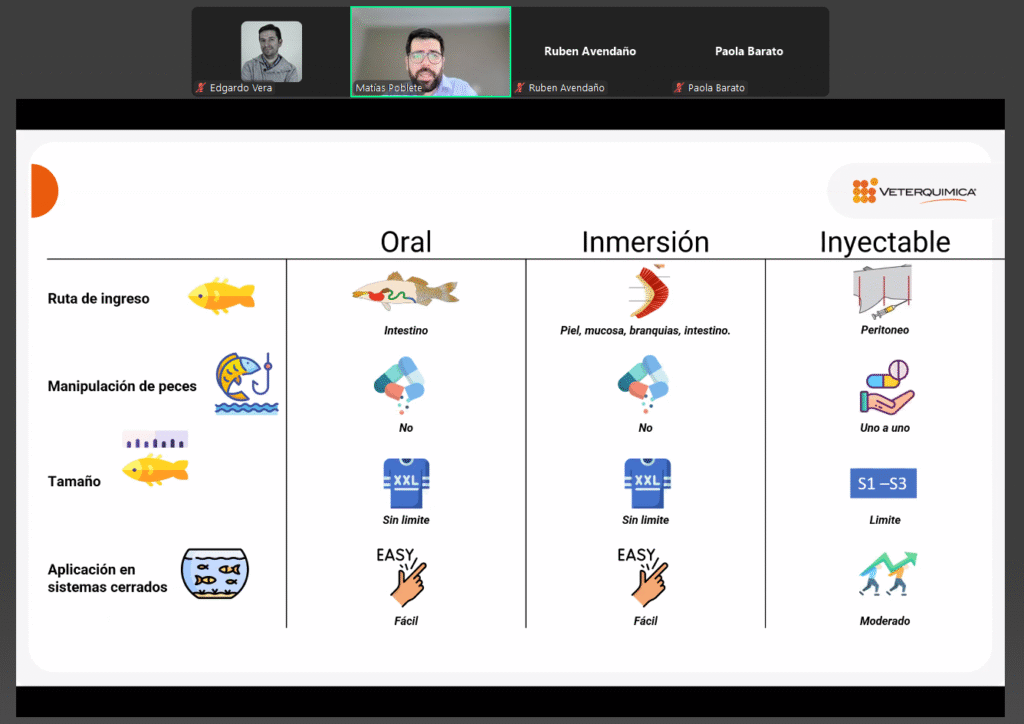
Subsequently, the case of the atypical Furunculosis immersion vaccine developed by Veterchemistry was analyzed."AERO-VAC demonstrated to generate an increase in the post-vaccination serological titre, minimizing the accumulated mortality in the RAS system", stressing that vaccination programs should define the best time for its implementation based on casuistics, taking into account fish conditions and the conditions themselves. environmental issues.
The presentation round continued the Researcher of the Department of Animal Biotechnology of the Center for Genetic Engineering and Biotechnology (CIGB) of CUBA, Dr. Yamila Carpio.
Dr. Carpio exposed “Prime-boost emptiness with chimeric antiques conferences protection against experimental Lepeophtheirus salmonis infestation in Atlantic salmon (Salmo salar L.)”, in which he showed the results of a study using hidden antigens.
“The hidden antigens are components of the parasite that, during the infection, do not naturally come into contact with the host’s immune system and present little or no homology with the host’s proteins. However, when they are part of a vaccine, they are able to induce a protective immune response. Experience with terrestrial parasites has shown that the combined use of several immunogens involved in different physiological processes, it is a viable method to control ectoparasites infestations,” explained Dr. Yamila Carpio.
The Gavac® commercial vaccine, based on Bm86, has demonstrated a reduction in tick population in the context of an integrated control program. Its application significantly reduced the number of chemical treatments over time; therefore, based on this experience, “the reduction in the number of chemical treatments for sea lice control during the salmon production cycle would be a viable approach to assess the impact of vaccination in field conditions,” he said.
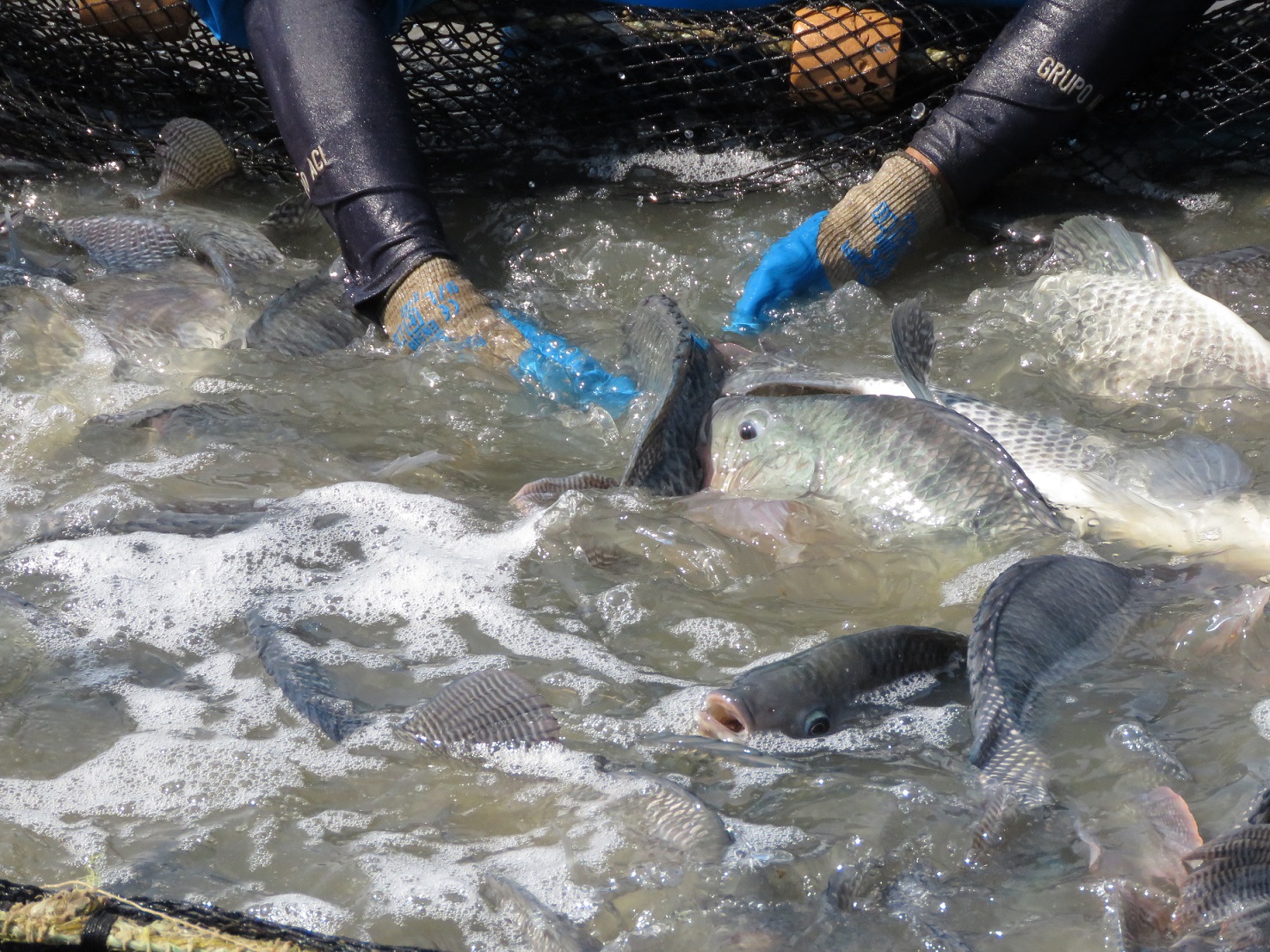
The third presentation, “Successful experience of inter-agency cooperation with the approach of Una Salud in the management of streptococcosis in tilapia in Colombia” was in charge of the Executive and Scientific Director of Corpavet, Colombia, Dr. Paola Barato.
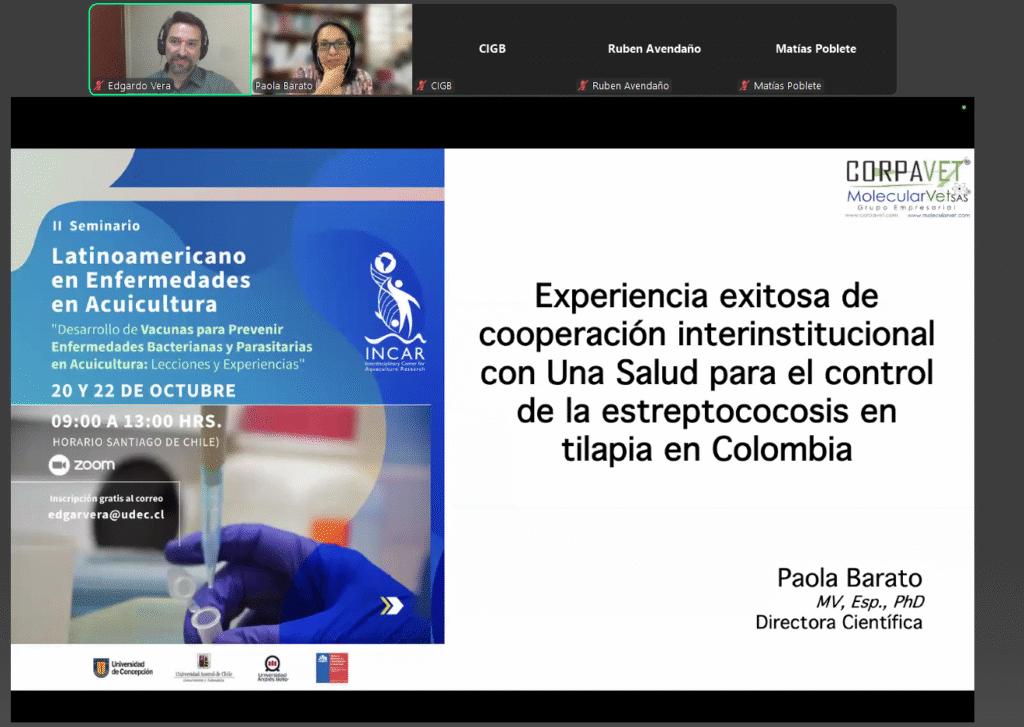
In her presentation, the expert addressed the impact of streptococcosis by S. agalactiae which began in 2021 in Mexico and extended to Colombia in 2024. “The early diagnosis, self-vaccination, the declaration of health emergency, and teamwork, prevented the collapse and economic losses from this disease in the Colombian tilapia industry in Huila,” Dr. Cheap.
Finally, the Academic of UNAB and Researcher of INCAR, Dr. Ruben Avendaño-Herrera, closed the day with the presentation “Development of an experimental vaccine to prevent tenacibaculosis caused by Tenacibaculum dimantrarchi in Atlantic salmon.”
Dr. Avendaño-Herrera detailed the work his laboratory has done on the pathogen and the development of an experimental vaccine that would improve the protection of Atlantic salmon against tenacibaculosis.
The study successfully tested different prototypes of vaccines against Tenacibaculum dimantrarchi, which showed a decrease in mortality compared to unvaccinated fish. Currently Dr. Avendaño-Herrera is focusing its efforts on identifying the most suitable antigens to develop an effective vaccine for the prevention of tenacibaculosis induced by T. dimantrarchi.
Being consulted on the relevance of carrying out such an initiative, Dr. Avendaño-Herrera highlighted the wide participation of students, growers, public officials and other actors in the sector, as well as the enthusiasm and commitment of the exhibitors, who with great generosity shared not only technical aspects related to the development of fish vaccines, but also their positive experiences and the challenges faced during the development of these biological products.
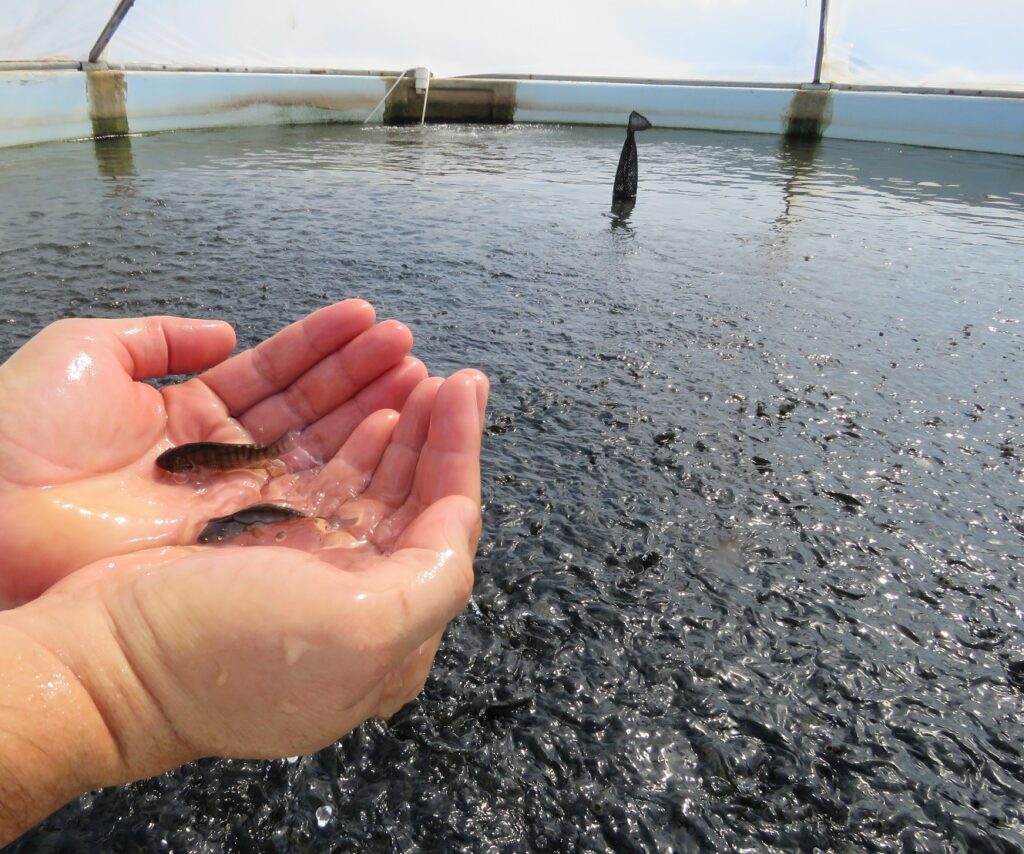
Dr. Avendaño-Herrera stressed that "vaccines are not intended to eradicate diseases, but to protect fish and, indirectly, to promote a more sustainable and environmentally friendly crop by reducing the use of antimicrobials for therapeutic purposes. This approach contributes directly to the Sustainable Development Goals (SDGs), especially SDG 2: Zero Hunger, SDG 12: Responsible Production and Consumption and SDG 14: Submarine life by promoting safer, responsible and environmentally sustainable aquaculture practices."
He also appreciated the quality of research developed by colleagues from Latin America and the Caribbean, and stressed the great potential of regional collaboration to address common challenges. He even mentioned the possibility of establishing an international network of scientific cooperation, incorporating researchers from Brazil, Mexico and other countries, in order to strengthen research and innovation in vaccine development. contribute to the achievement of SDGs and to the sustainability of the global aquaculture sector.