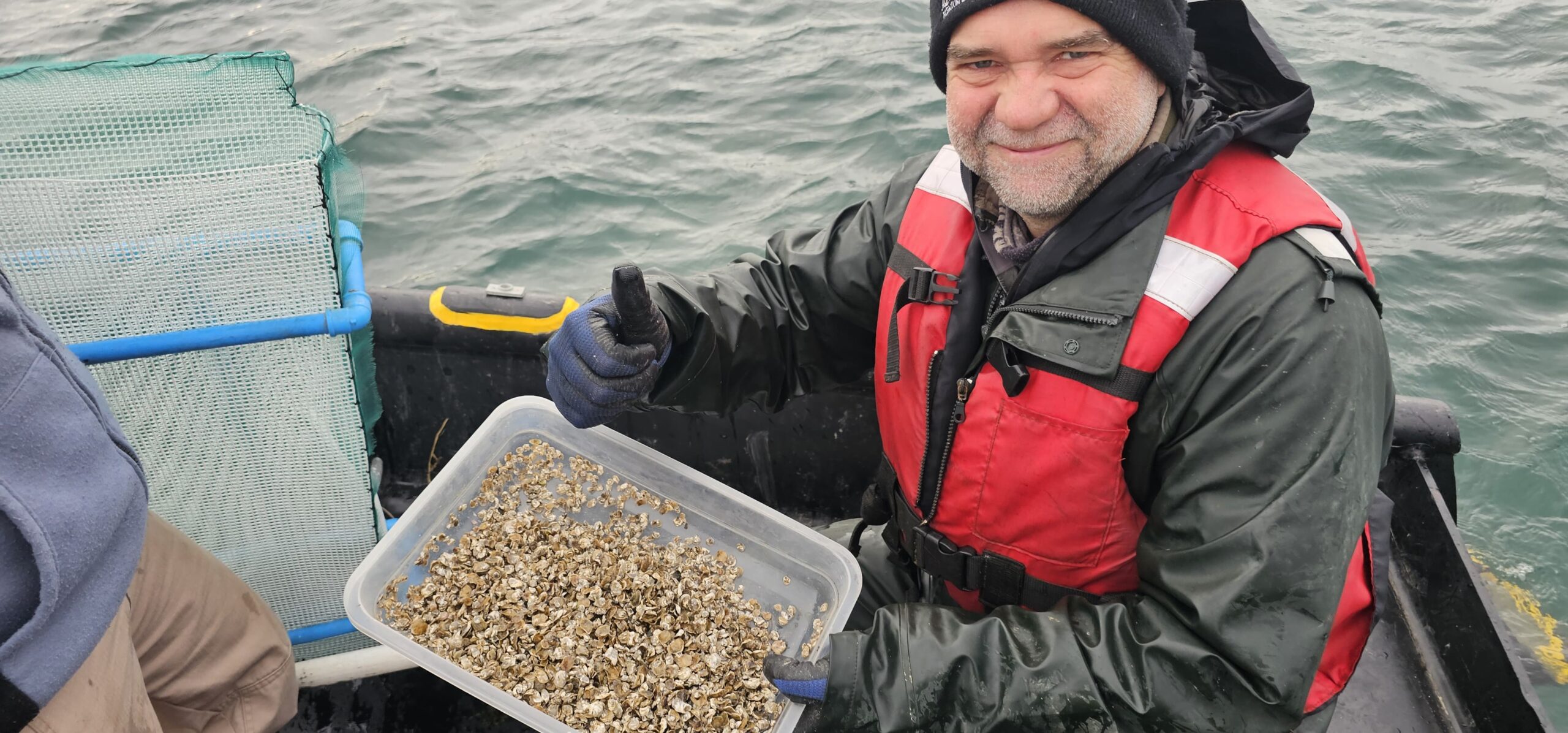
The agreement, sealed at the Quempillén Experimental Station of the Austral University, already has its first pilot test underway in concessions of Chiloé and Cochamó, where a group of mussel farmers has begun cultivating this native species with the aim of international markets.
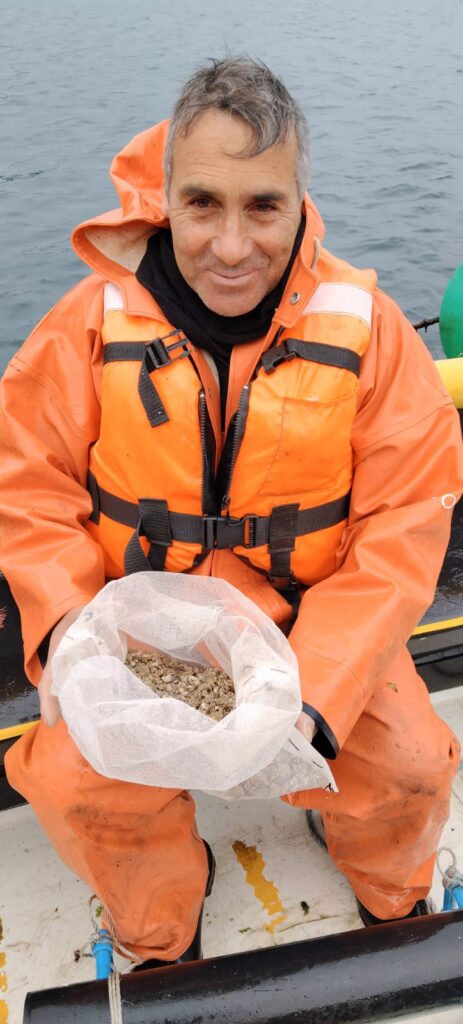
A native species that once supported a prosperous export activity and that today survives in a residual way is seeking a new opportunity. The Austral University of Chile (UACh) and HubChile signed a Framework Cooperation Agreement to reactivate the cultivation and export of the Chilean oyster (Chilean oyster), and the alliance has moved from paper to water: in concessions of Chiloé and Cochamó the first pilot test is underway, with seeds delivered to a group of historical mussel farmers willing to diversify their crops towards this native species.
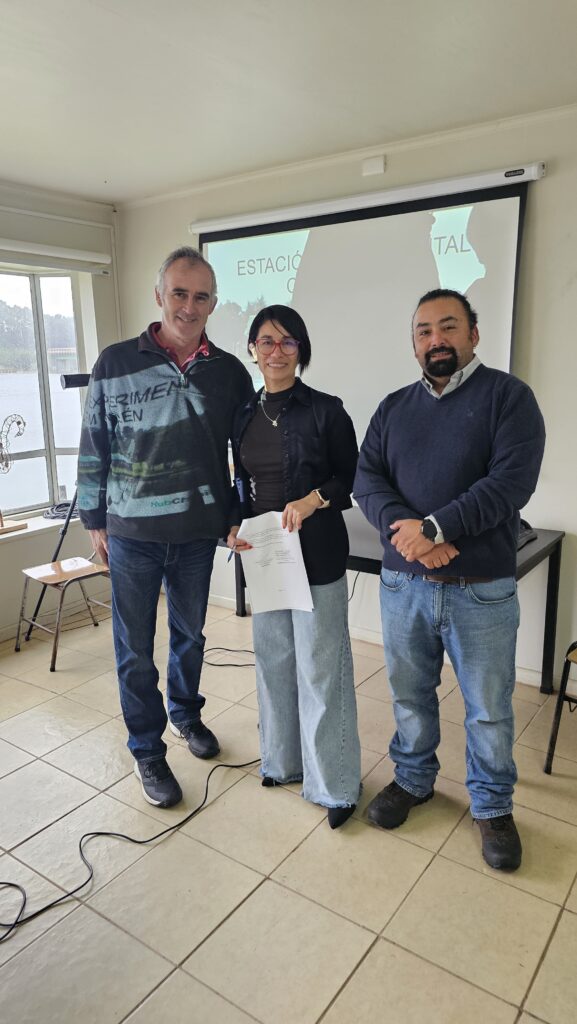
The agreement was signed at the Quempillén Experimental Station and was led by Jorge Ruiz Troemel, director of the Quempillén Experimental Station of UACh, and Yohana González Sepúlveda, director of Innovation and Business of HubChile. The agreement aims to resolve the bottlenecks that have hindered the deployment of the species as a competitive export product: the supply of quality seed, the lack of techniques of cultivation that allow for scaling up production, and no less important, the sanitary certification required for exports. The roadmap is straightforward: transfer scientific and technological knowledge from academia to the productive sector, with a clear objective, which is to export.
A story of rise and fall
The Chilean oyster has a long tradition in Chiloé—the first closure dates from 1869 and the first school of ostriculture opened in Quetalmahue in 1910—and came to sustain a prosperous activity at the beginning of the XX century. The 1960 earthquake and tidal wave broke that story: it hit the Pullinque Ostrícola Station and landed 220 tons in 1959 to barely six the following year. The activity never regained that level.
The arrival of the Japanese oyster (Pacific oyster) in 1977, with a shorter production cycle, shifted the focus from national oyster farming and managed to build its own export activity in the following decades. But it also eventually declined: when its destination markets began to require health certification - including the absence of norovirus - production failed to meet these standards, largely due to the lack of water treatment, and by 2011 the activity practically ceased. Today, the presence of both oysters is marginal compared to mussel farming.
That path left a lesson that is now at the center of the new initiative: without traceability and verifiable sanitary standards, there is no sustainable access to international markets. That is why the agreement focuses, from day one, on the quality of the seed, the traceability of the production and the compliance with the requirements of the destination.
A partnership that relies on the mussel farming platform
The day did not end with the signing. In parallel, a working table was held with representatives from the Semillero Cascajal Cooperative, Agromarina La Estancia, Colorado Sur and other mussel farmers from the region, all sharing a common conviction: to diversify their cockle crops by incorporating Chilean oyster, with the aim of international markets. The objective was to outline a sustainable business model that integrates the cultivation of oysters in operating concessions, supported by technical and commercial innovation.
In that context, the Austral University committed to the permanent sale of seed as the cornerstone of the alliance, a support that gives certainty to the producer and allows projecting volumes. HubChile, through its REDIA platform, will act as a commercial coordinator: it will connect producers with the technical and input supply of the sector, ensure the traceability of the production and organize the supply model for associated producers. The The long-term bet is to build a value chain with global standards, capable of meeting the sanitary requirements of destination markets. An objective that requires adding more links: universities and research centers that contribute knowledge, and suppliers of inputs, materials and technology that complete the operational chain.
Mussel farming provides a foundation to build on. The world’s leading mussel exporter harvested around 338,597 tonnes of Chilean mussels in 2025, down 16% from the previous year owing to production cycles and market conditions. The sector retains an established logistics, sanitary and commercial infrastructure. It is registered with Sernapesca’s Bivalve Mollusc Sanitation Programme (PSMB), with certification for demanding markets and Operational traceability. That is the platform on which the export revival of Chilean oysters can be leveraged.
The health bottleneck: the front that only the State can unlock
If the history of the Japanese oyster made something clear, it is that access to international markets is at stake in health. And that is the front where the sector cannot advance on its own: the qualification to export bivalve molluscs depends on the authority. It involves classifying and monitoring the areas of cultivation, certifying safety for human consumption and, above all, managing with the health authorities of the countries of destination ratings that open up each market.
There was consensus at the table on a direct call: that the State assume this diversification as a sectoral priority and push it forward with an active and committed role, not just a monitoring role. The task involves Subpesca, Sernapesca, the Health Service, Subrei and ProChile — productive management, health control and certification, trade agreements and promotion abroad — but requires more than coordination between offices: it demands that the institutions are played by the sector and accompany the process from the first day, so that the traceability and the standards that are built today in the water find, at the exit, the export doors open.
The Voices of the Day
Jorge Ruiz Troemel, director of the Experimental Station Quempillen (UACh, Ancud) and coordinator of the agreement:
“As Universidad Austral de Chile, we take this agreement as a concrete opportunity to put scientific knowledge at the service of a productive challenge with territorial identity: to re-energize the Chilean oyster from solid bases, focusing on quality, traceability and sustainability. From the Quempillen Experimental Station, our role is to provide evidence, technological development and capacity building so that this diversification is not only viable, but competitive in demanding markets, contributing to the strengthening of the southern southern aquaculture ecosystem and generating shared value for sea-related communities.”
Yohana González Sepúlveda, Director of Innovation and Business at HubChile:
“This agreement is an important step towards advancing one of the historical challenges of the Chilean oyster, access to quality seed and verified traceability, although we are aware that the road has several fronts to solve: technical, sanitary, productive and market. With the UACh as a scientific support and REDIA as a commercial articulator, we are building a chain of value in stages, realistically and realistically. sustainable. The Chilean oyster is a niche business, and there is our bet: a differentiated product, of traceable origin and with high productive standards, able to position itself in demanding international markets. A model designed for mussel producers with an export vocation, willing to join an alliance with a clear and shared goal.”
Marcos Galindo, Agromarina La Estancia:
“From the knowledge and experience accumulated for years in the cultivation of mussels, our company participates in the development of a pilot project to grow Chilean oysters in the archipelago of Chiloé. The recent signing of an agreement between HubChile and the Universidad Austral de Chile represents a great opportunity to advance the diversification of the aquaculture matrix, incorporating an endemic species, cultivated in pristine waters and with high resilience to climate change. We know this is a first step. The path requires technical strengthening, applied research and commercial development. However, there is a clear conviction: just as in the past the joint work between the State, academia and the private sector allowed to position the Chilean mussel as a leading product worldwide, today the possibility arises to replicate that history of success.”
A pilot who's already underway
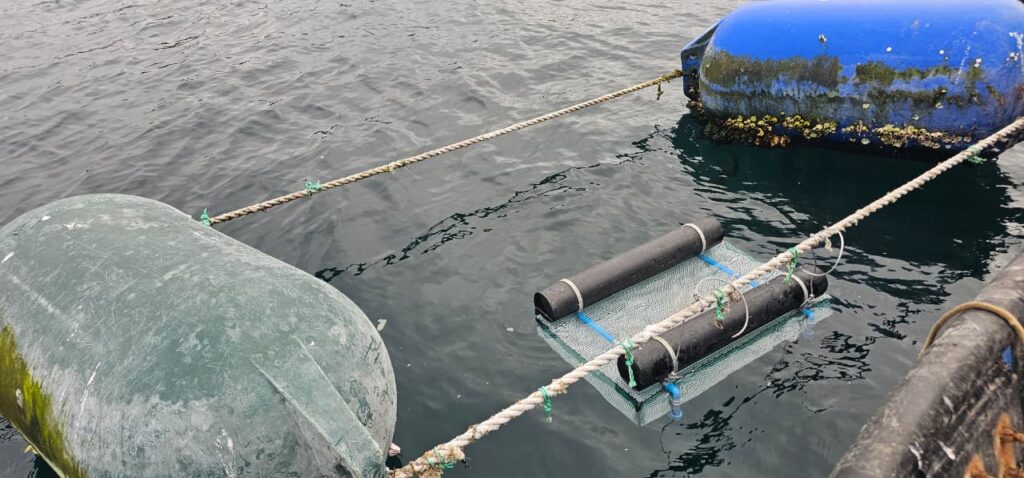
The agreement already shows its first results on the ground. With the seeds delivered, it began the validation of the cultivation units in operational concessions; in the following months, the parties will monitor the growth and survival of the seed, key information to adjust the techniques and project volumes with export focus. In parallel, the conversations are already starting to sound figures like a cooperative or a Consorcio ostrícola, options that are profiled as the natural consolidation of the process once validated the pilots and strengthened the supply chain.
More than an agreement between two institutions, what is beginning to take shape is a productive and commercial alliance between the academy, HubChile and the mussel producers involved, open to adding new producers who meet the required standards. The Chilean oyster, this time, does not start from scratch: part of an alliance.