The PTEC-INVA is a bridge between the land and the sea that seeks to transform the economy of the entire south-southern macrozone.
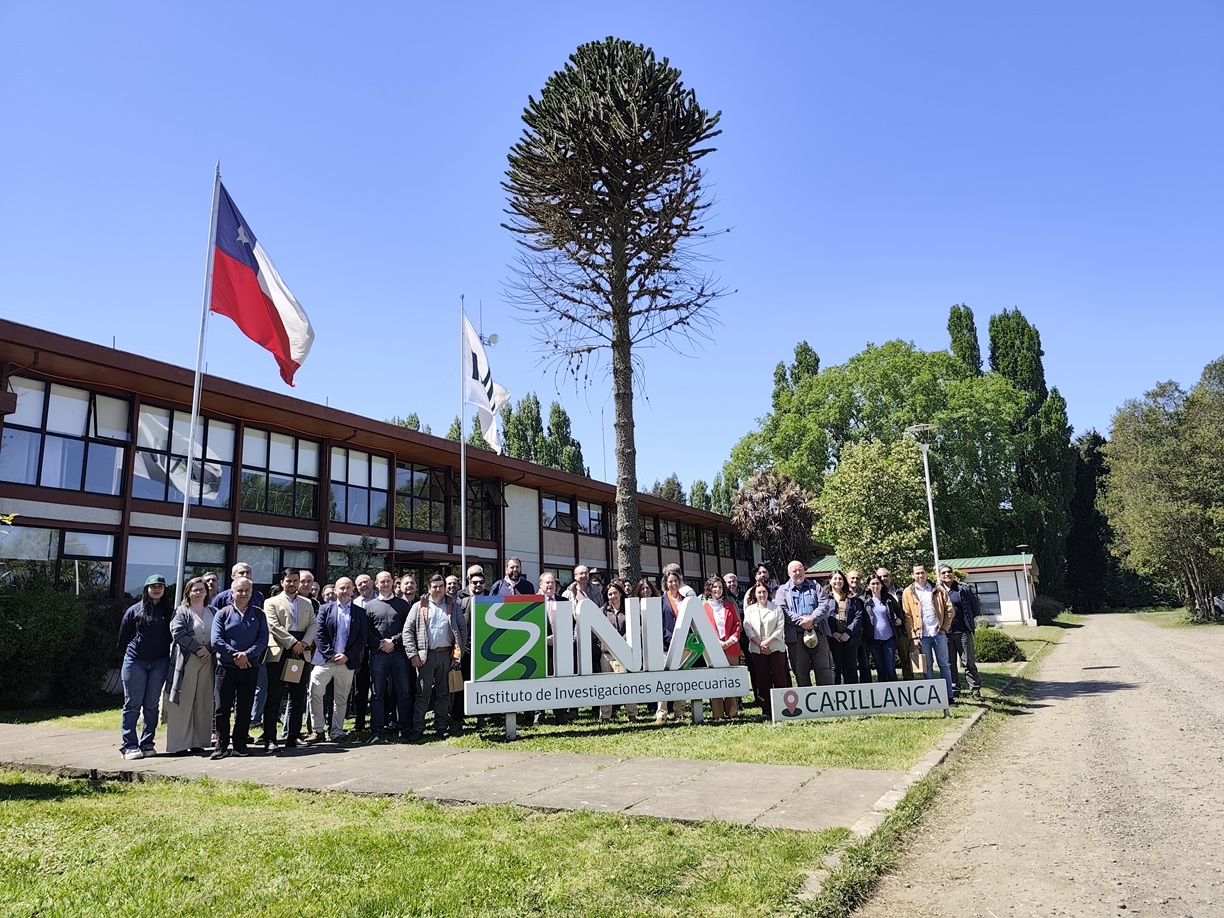
In the agricultural heart of La Araucanía, between experimental plots and a landscape dominated by cereal and legume crops, recently developed the International Seminar: Creating A Third Industry, a meeting that allowed to demonstrate the way to lay the foundations for a new productive chain that links agriculture with aquaculture under a sustainability and regional development approach.
The event - which brought together more than a hundred people - took place at the Regional Research Center INIA Carillanca, host institution and co-executor of the Technological Program for the Local Production of Nutritional Inputs for Aquaculture (PTEC-INVA), initiative funded by the Corporation for the Promotion of Production of Chile (Corfo) and led by Antarctic Salmon, with the participation of the Institute of Agricultural Research (INIA), the Food Technology Innovation Center (CeTA), Agrotop Companies, Veterinary Histopathology Center (VeHiCe) and the universities of Chile (University of Chile) and Catholic University of Temuco (UCT).
The seminar also received the collaboration of the Salmon Technology Institute (Intesal), the Chilean Salmon Industry Association A.G. (SalmonChile) and the companies BioMar, Nuseed and Alliance Team, reaffirming the productive sector's commitment to sustainable innovation.
All committed
The objective of this technological program is as simple as it is ambitious: demonstrate that Chile can produce, in its own territory, the vegetable oils and proteins that feed the salmon farmingreducing dependence on imports and strengthening the link between the agricultural and aquaculture sectors.
Este seminario reúne a investigadores, empresas, agricultores, representantes del Estado y de la industria acuícola, todos comprometidos con una same idea: to produce in Chile the plant inputs that feed our salmon farming, and to do so in a sustainable, efficient and less carbon footprint,” Dr Daniel Nieto Díaz-Muñoz, manager of the PTEC-INVA, at the opening of the day.
A productive model that is born on earth and ends in the sea
With more than three years of implementation, PTEC-INVA has made progress that consolidates its vision. The technical and scientific team has validated lupine and canola rap cultivation in different areas of the south-south, has developed protein concentrates applied in actual diets of salmon and troutand has woven a network of farmers between La Araucania and Magellan who are joining the challenge of producing strategic inputs locally.
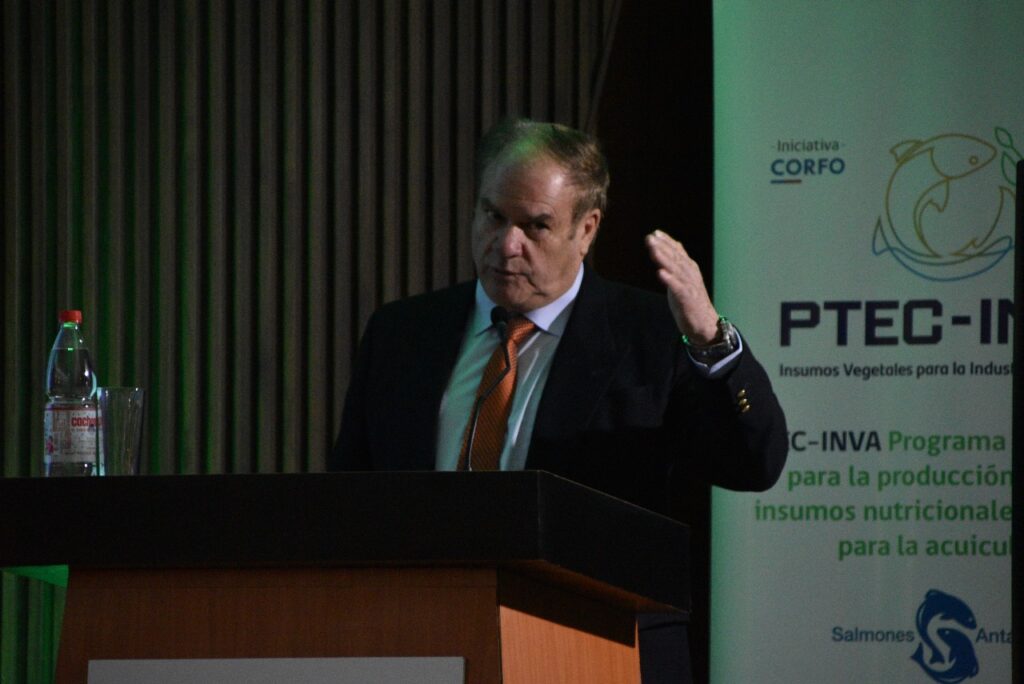
“Reducing dependence on imported inputs is not just an economic issue: it is also a environmental and strategic decision. Fewer kilometers of transport mean less emissions, less carbon footprint and a direct contribution to our country’s climate goals,” explained Dr. Grandson.
The concept of “third industry” emerging as a new productive category: a hybrid alliance between the agriculture (which provides plant inputs), aquaculture (which uses them in food formulation) and science (providing innovation and technological validation). This model not only generates a positive environmental impact, but also redistributes economic value in rural territoriesespecially in southern Chile.
Science, territory and technology transfer
The Dr. Claudia Osorio Ulloa, regional director of INIA Carillanca and deputy director of PTEC-INVA, highlighted that the seminar marks the Completion of the first phase of the Programme, focusing on research and development of crops with potential to be used as inputs to salmon farming.
“We were deployed territorially for three years evaluating different species and varieties to find which are best suited to the different agroecological niches of the south-southern macrozone. We're taking it. very good surprisesespecially in regions such as Aysén and Magallanes, where there is a high productive and health potential,” explained Dr. Osorio.
The scientist explained that this first phase allowed to establish a solid base of agronomic, nutritional and health knowledge, and that the next two years of the Program will focus on technology transfer to producers, cooperatives and food-forming enterprises. “The challenge now is for these results to come out of the lab and reach the fields, the processing plants, and finally to industrial ecosystem that feeds our salmon farming,” he added.
Institutional momentum: Corpho and the long term
From Corfo La Araucaniathe Deputy Regional Director Julio Salas Muñoz underlined the strategic importance of bringing together different actors in the production chain. “It has tremendous relevance to be able to sit different actors at the same table. This allows to know the gaps and challenges of each industry, generating the necessary synergy to improve the competitiveness of both agriculture and the salmon industry,” Salas specified.
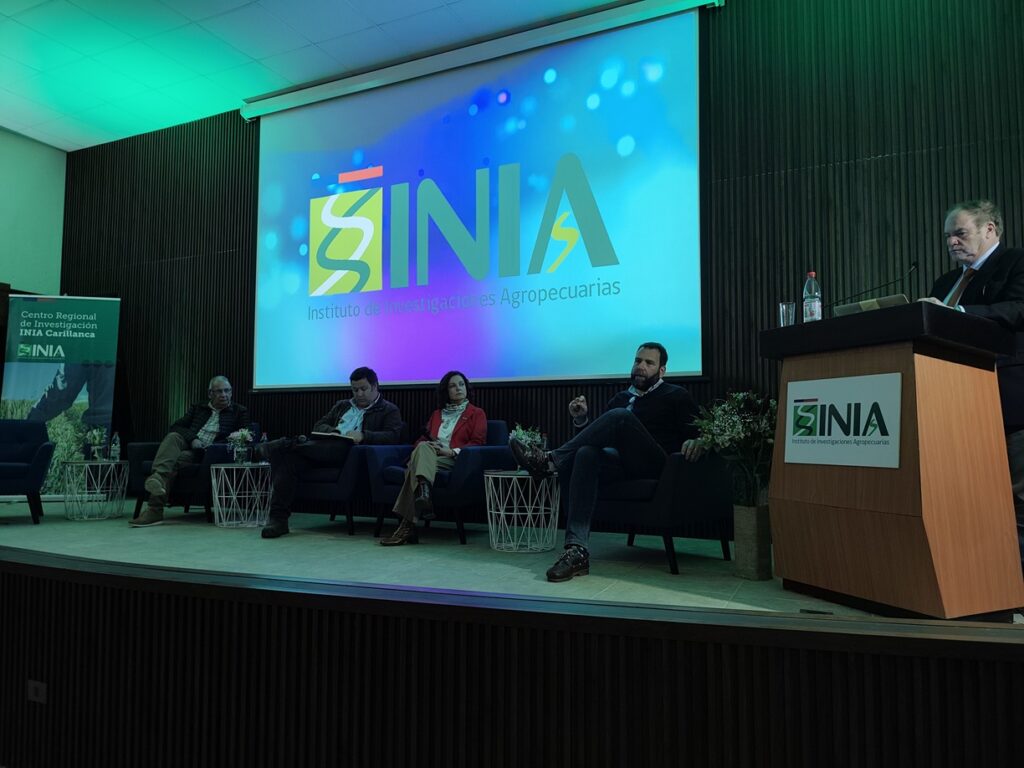
Corfo is currently promoting a series of technological programmes – such as the PTECs – that aim at development of long-term solutions, articulating science, industry and public policies. In the case of PTEC-INVA, the goal is double: replace imports and strengthening territorial resilience to climate change. “At the regional level, we are promoting networks of suppliers with companies such as Agrotop, addressing gaps in sustainability and technology transfer towards the farmers,” said Corfo’s representative.
The agricultural world: opportunities and challenges
One of the most anticipated moments of the seminar was the intervention of the director of the National Society of Agriculture (SNA), president of the Southern Agricultural Consortium – CAS F.G. and also director of the Temuco Agricultural Development Society (SOFO), Gaston Caminondo Vidal, who valued the joint effort as a historic milestone in the relationship between the agricultural and aquaculture sectors.
“Once and for all, we realized that the aquaculture and agricultural world must walk together. This path has already begun, and we believe that it can open up 200,000 hectares of new productive opportunities to feed salmon,” said Caminondo.
The leader also raised the need to make progress on regulatory and technological issues, particularly in biotechnology and the use of GM cropsarguing that the lack of regulatory updating could limit the country’s competitiveness. “We are big producers of GM seed, but we cannot use it in Chile. We export the raw material and then import the processed oil. It's time to rethink. that logic,” he warned.
For Caminondo, PTEC-INVA has shown that associativeness and applied research are key to diversifying agriculture and opening up new marketing routes.
The vision of salmon farming: virtuous alliances and local value
The Corporate Affairs Manager ofSalmonChile, José Tomás Monge Valdéshe stressed that the future sustainability of the sector necessarily involves strengthening its integration with other productive sectors. “These virtuous alliances between salmon farming, agriculture and agro-industry are essential to advance sustainability and local value. Today, there are about 80,000 hectares of agricultural land for salmon food, but the potential is 200,000. It's a Huge opportunity from Biobío to Magellan,” Monge explained.
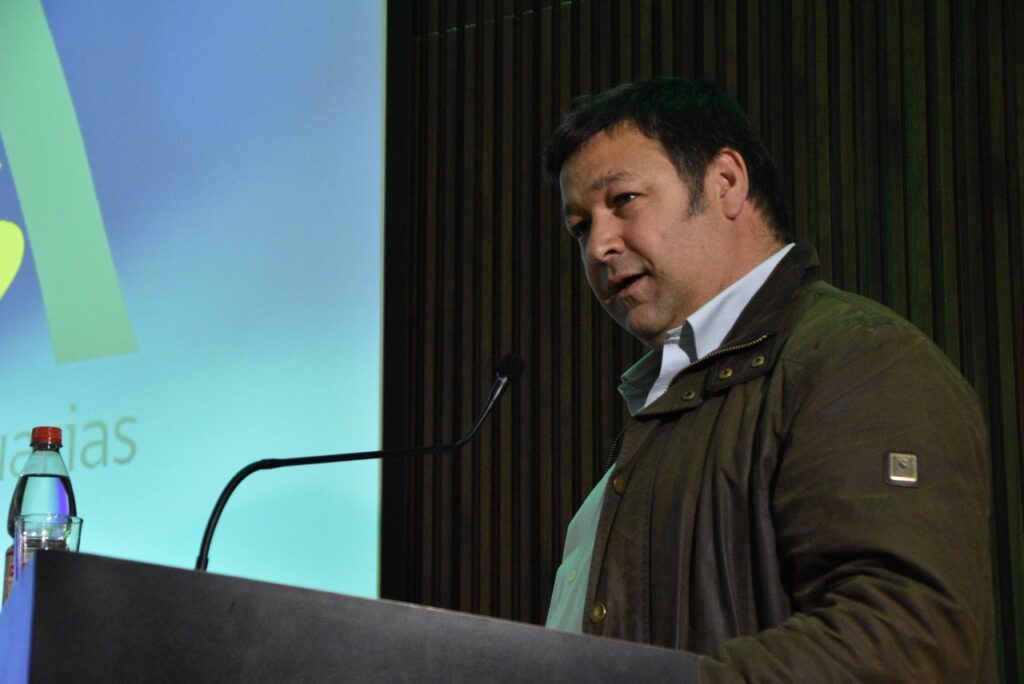
For the representative of one of the two main trade associations of the Chilean salmonicultor category, the path towards lower carbon aquaculture is not achieved only with industrial innovation, but with inclusive and collaborative territorial developmentwhere national science and agriculture are an active part of the productive ecosystem.
The role of the State: knowledge and innovation for the future
The regional ministerial secretary (seremi)Agriculture of Araucania, Carlos Labrin Olave, reaffirmed during the day the commitment of the State to applied research and technological innovation.
“From the Ministry of Agriculture (Minagri) We reaffirm our commitment to innovation and support for initiatives that promote productivity and sustainability. Linkage between producers, researchers and teachers is essential to strengthen the agro-food and aquaculture sector,” said Labrin.
The regional representative added that scientific knowledge and technology transfer are key tools to address current and future challenges the sector, especially in a context of climate change and pressure for cleaner production.
A shared horizon for the south-south
The seminar closed with a message of cooperation and long-term vision. The so-called “third industry” not only seeks to create a new value chain, but also redesign the way Chile produces and distributes its wealthstrengthening local capacities and fostering innovation.
“The future of Chilean salmon farming—that more sustainable and low-carbon future—can also be born on land,” concluded Dr. Daniel Nieto Díaz-Muñoz, summarizing the spirit of the encounter.
What began as a technological project today is emerging as a country strategy to connect science, agriculture and the sea for the same purpose: to build a production model Chile, sustainable and with territorial identity.
For more information, visit www.inva.cl and/or write to info@inva.cl