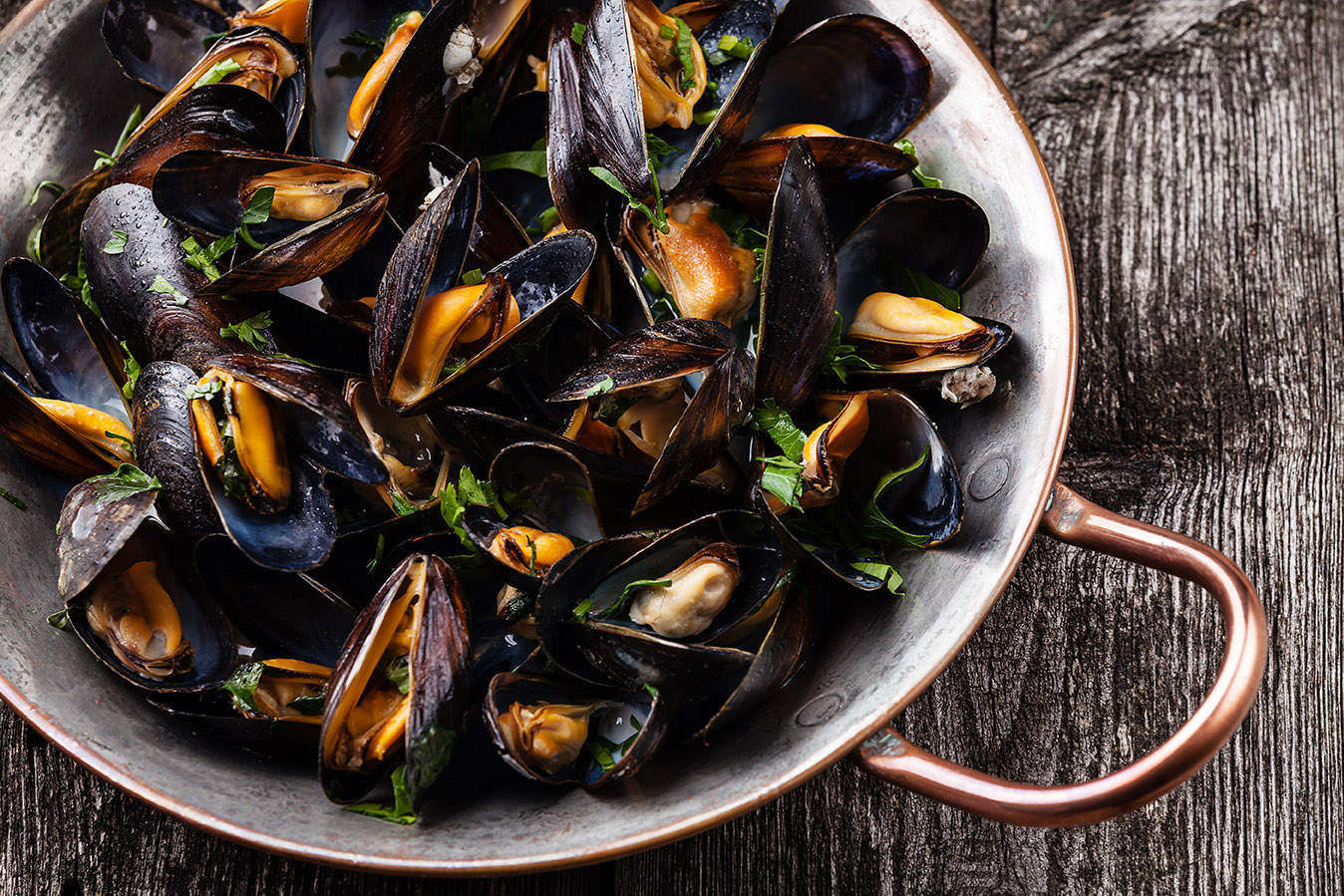
SIAM has been consolidated as a key space for dialogue between science and mussel industry.
This Tuesday, October 22, will take place the expected IX Applied Research Seminar for Mussel Farming (SIAM) in the Events Hall Enjoy Castro, Chiloé province, Los Lagos region. This meeting represents a valuable opportunity to deepen innovative solutions on circular waste management clams and sustainability in the recruitment of seeds, with the participation of leading national and international researchers, including researchers from the Interdisciplinary Centre for Aquaculture Research (INCAR), of St. Thomas University (UST) and the Catholic University of the North (UCN). In addition, from the organization they anticipated that there will be dialogs Openness and opportunities for collaboration during the event.
"We are very excited about this new edition of the seminar, which reaffirms the collaboration with important researchers, which we have maintained for many yearsas well as with the sectoral authorities invited. We hope that this day will allow us to extract views and perspectives to contribute to the management and public policy linked to the mussel production sector, enhancing the sustainability and development of this important sector for our region," said the general manager of the Association of mussel producers of Chile (AmiChile) and the Technological Institute for mussel cultivation (Emit it), Yohana González.
Challenges and opportunities
The SIAM has been consolidated as a key space for the dialogue between science, innovation and the mussel industry (better known as chorito in the national market), and aims to address the challenges and opportunities of mussel cultivation from a scientific and applied perspective, innovation and sustainable development.
The organization emphasizes that "the seminar has grown in relevance, positioning itself as a platform where applied science connects directly with the needs and opportunities of industry. With each edition it has promoted the generation of new knowledge, strategic alliances and allowed to open spaces for the development of collaborative projects aimed at improving the competitiveness of mussel cultivation. The issues addressed have been varied, but always with a focus on relevant problems for the sector."
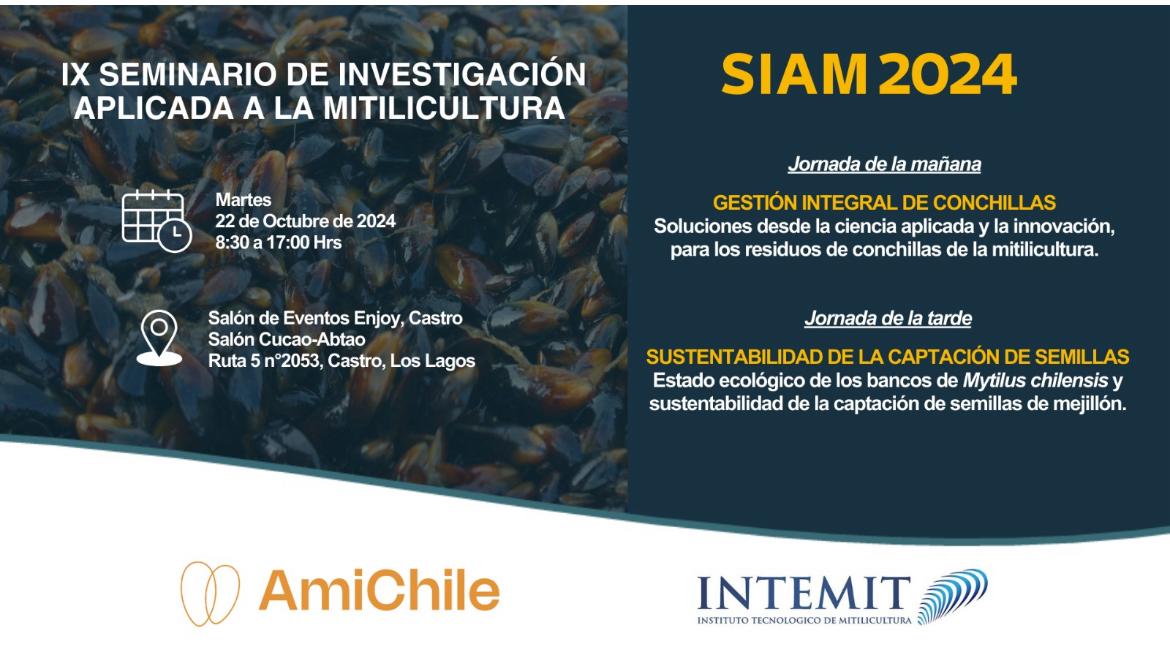
This year, the morning day will address the comprehensive shell management. Between the 09:00 and 12:30 hours, innovative solutions will be discussed for the management and reuse of waste shell generated by mussel cultivation, one of the main environmental problems facing the sector. The applied science play a crucial role in finding sustainable and effective ways to deal with these waste.
The programme includes presentations on "Ecological restoration of mussel banks, New Zealand experience, research gaps and perspectives", from the Dr. Andrew Jeffs, academic and researcher of the Institute of Marine Sciences and School of Biological Sciences of the University of Auckland and Sponsorship Program for Collaborative Research of the OECD, New Zealand; "Solutions Based on Nature (SbN) as a strategy to strengthen the management of mussel cultivation", of the Dr. Nelson Lagos, Centro de Investigación e Innovación para el Cambio Climático – CiiCC, Universidad Santo Tomás and Instituto Milenio en Socio-Ecología Costera – SECOS, Chile; "Mechanical analysis in materials derived from conchilla residues of miticulture", del Dr. Álvaro Navarrete and Claudio García, Department of Mechanical Engineering, Doctoral Program Engineering Sciences, Universidad de Santiago, Chile; "Opportunities and challenges of recycling waste from mussel cultivation", of the Dr. Begoña Peceño, UCN and Instituto Milenio en Socio-Ecología Costera – SECOS, Chile; and will end with a Open dialog panel by Dr. Nelson Lagos of the UST, which will be attended by Dr. Andrew Jeffs, Dr. Emilee Benjamin, Dr. Begoña Peceño, Dr. Alvaro Navarrete and Marcela Ávila.
Meanwhile, the INCAR Center will collaborate with the realization of the afternoon day, which will address the sustainability of seed harvesting. "This section will address the availability, genetic variability, and management of mussel seeds. The presentations will address a comprehensive vision of factors affecting seed production and seeks to propose alternatives to improve understanding of the predictability and availability of the seed", explained the assistant researcher of the INCAR Center and academic of the Universidad Austral de Chile (University of Chile), Headquarters Puerto Montt, Dr Carlos Molinet.
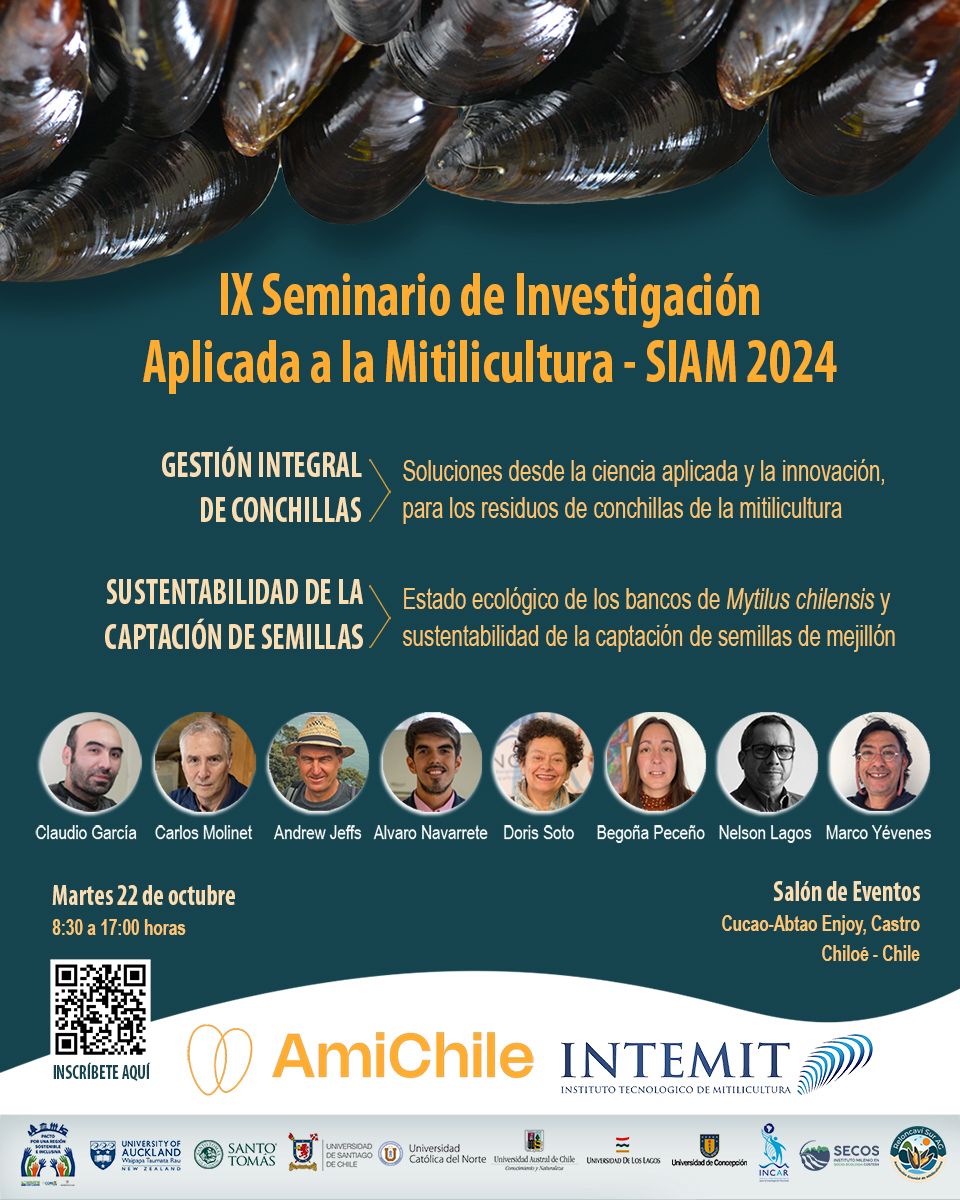
The afternoon day (14:00 to 17:00 hours) begins with the presentation "Analysis of an indicator of the ecological status of natural banks of Chilean mussel associated with seed-harvest areas", from Dr Carlos Molinet; "Genetic variability of natural mussel banks, seed origin and traceability", Dr. Marco Yévenes, associate researcher of the INCAR Aquaculture Genomics Program and researcher of the Laboratory of Genetics, Aquaculture and Biodiversity, University of Los Lagos (Lagos), Chile; "Impact of climate change in the coastal systems that support Chilean mussel cultivation: advances in interdisciplinary research for timely decision-making", of the Dr. Jorge León, academic of the Faculty of Sciences of the Catholic University of Santa Concepción (UCSC) and associate researcher of the Integrative Program of INCAR; and will conclude with an open dialogue of all the panelists, moderated by the academic of the Department of Sociology of the University of Concepción (University of Chile), Oscar Santis.
The SIAM 2024 also provides for the signature of a document that will strengthen collaboration between researchers and AmiChile.
Check the full presentation program:
Then download the summary of the seminar:
*Source of the featured photo (in context): ProChile.