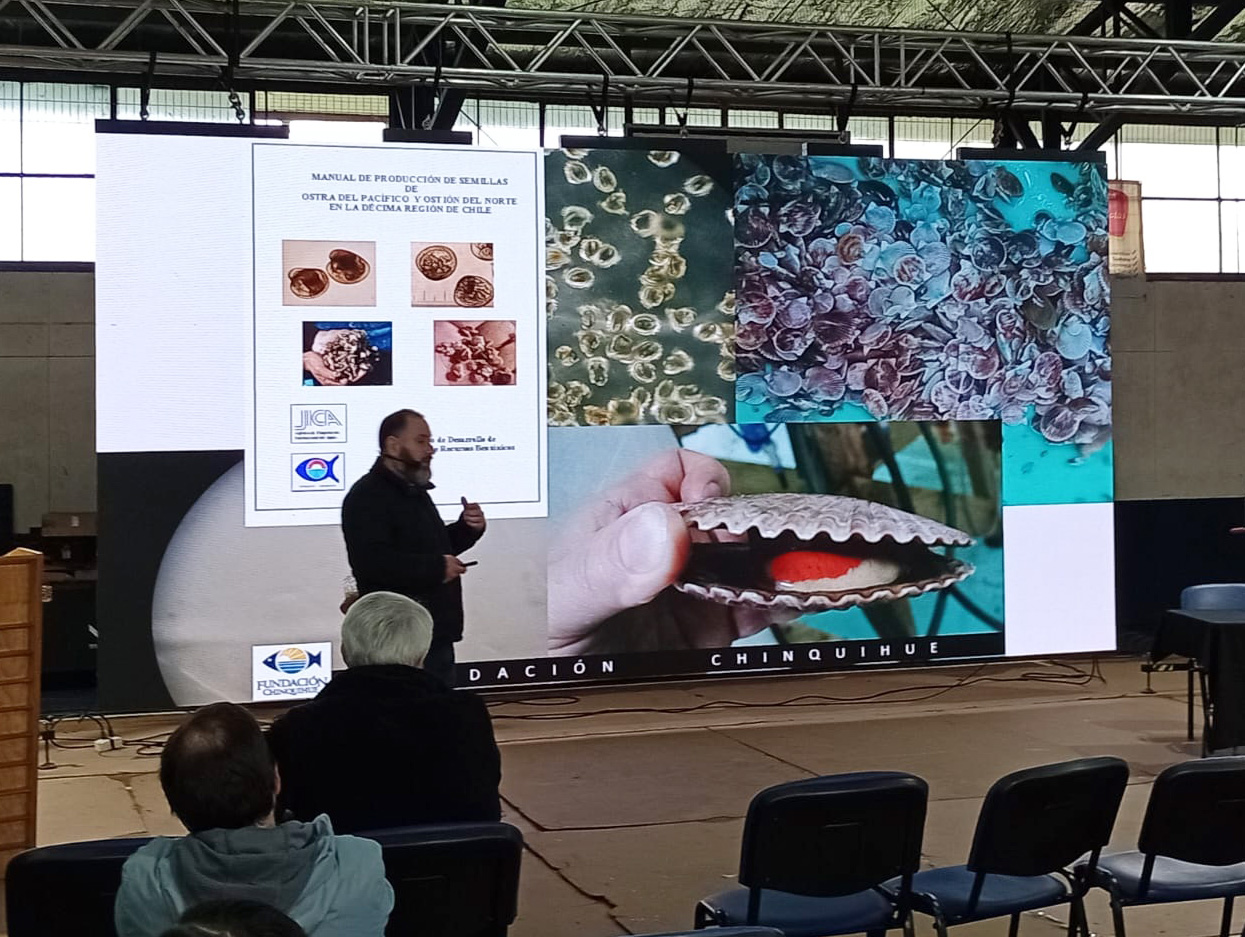
Professional from Fundación Chinquihue spoke about the cultivation of the Japanese oyster as an alternative to advance towards productive restructuring.
Strengthening of technical, productive and regulatory frameworks in the APE of Chile was the title of a seminar held in Nehuentue, in the commune of Carahue, which was attended by Jorge Tillería, head of hatchery from Chinquihue Foundation.
Organized by the Regional Directorate of the National Fisheries and Aquaculture Service and the Municipal Fisheries Unit of the Illustrious Municipality of Carahue, the seminar brought together artisanal fishermen and mussel farmers, as well as officials from public institutions and local actors.
The objective of the activity relates to the importance of seeking alternatives and productive opportunities for organizations dedicated to artisanal fishing and small-scale aquaculture in the Imperial River.
Of that activity participated Jorge Tillería, head of hatchery of Fundación Chinquihue, who presented the topic ‘Alternatives for growing Japanese oysters in the Araucania region’.
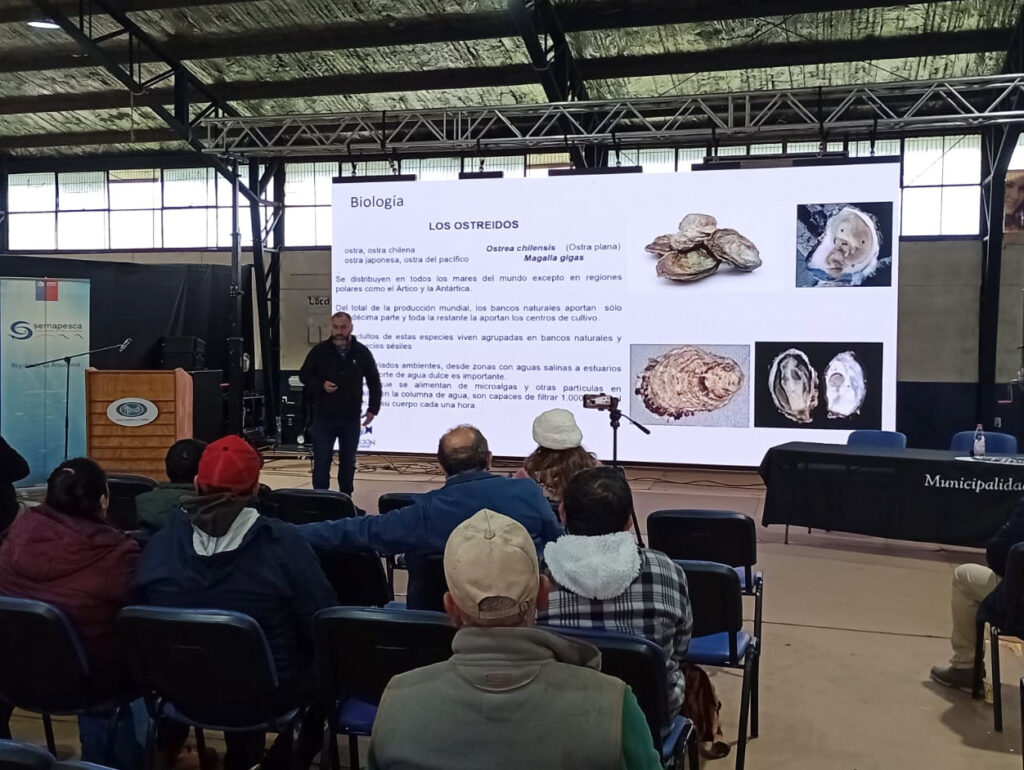
In his presentation, the professional explained that the hatchery who directs in Chinquihue Foundation, aims at seed production and technology transfer aimed at artisanal fisheries and small-scale aquaculture.
"We are currently producing mainly two species of high commercial value. One is the Japanese oyster (Giant scallop) and the other is the north oyster (Purple scallop). In addition, on a smaller scale we work with other species such as Red abalon (Red abalone) and Red urchin (White mussel)’, he said. Enclosure.
In the same vein, he indicated that “in the case of the Japanese oysterour goal is to produce high quality seeds that allow to supply fish farmers and organizations of artisanal fishermen, contributing to the productive development of new areas of cultivation. At the same time, we carry out activities of extensionism, technology transfer, training and technical support to strengthen the capacities of the producers and promote the sustainable growth of this activity in the south of Chile’.
APE in Araucania
In the current landscape of small-scale aquaculture, Chile stands out as an aquaculture producer alongside other important countries such as China, India, Indonesia and Norway, among others.
However, the La Araucania region is an area where small-scale aquaculture is developed on a large scale, as is the case in the Lake Region.
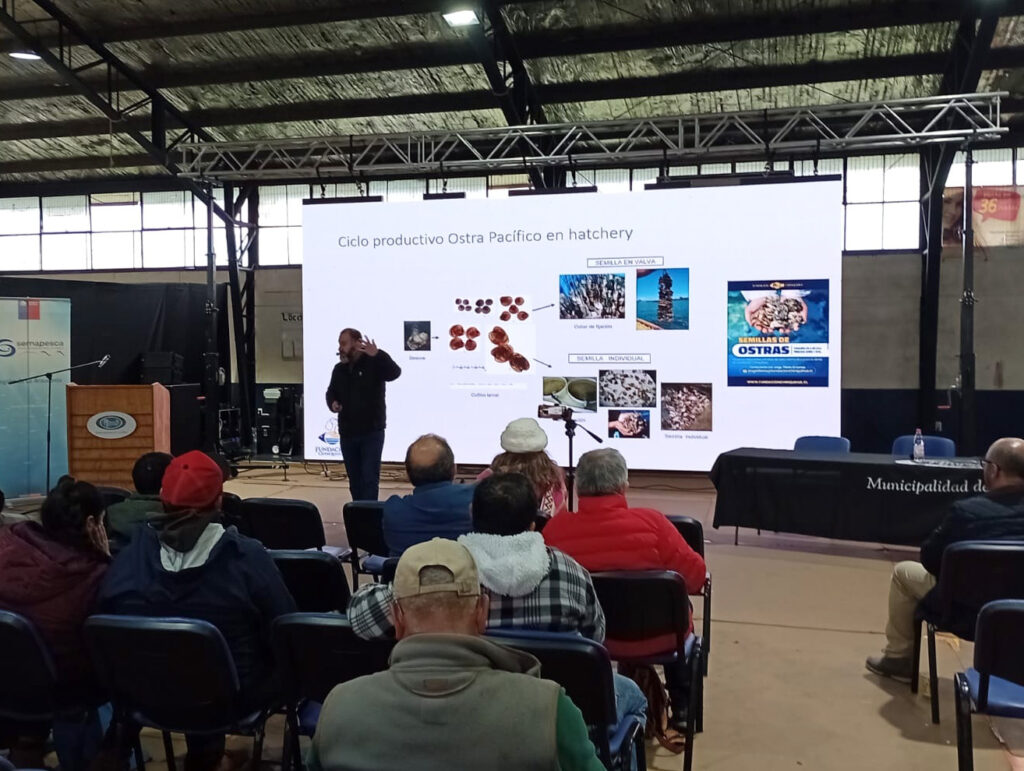
Enclosure considers that, thanks to the environmental conditions present in the La Araucania region, prospects for the cultivation of Japanese oyster "The availability of protected coastal areas, together with adequate conditions of temperature, salinity and natural productivity, allow us to visualize an important potential for the development of this resource," he said.
In the same way, he stressed that “the Japanese oyster It represents an attractive alternative for the productive diversification of artisanal fishermen and small fish farmers, due to their demand in markets and the experience accumulated in other regions of the country".
In his opinion, the success of the activity requires adequate planning, access to quality seeds, technical training and constant monitoring of the environmental and health conditions of the cultivation centers.
‘From Chinquihue Foundation we see a concrete opportunity to continue promoting the development of this resource in the region of Araucania, supporting producers through the provision of seeds and the transfer of technical knowledge to enable sustainable and cost-effective aquaculture", he concluded.