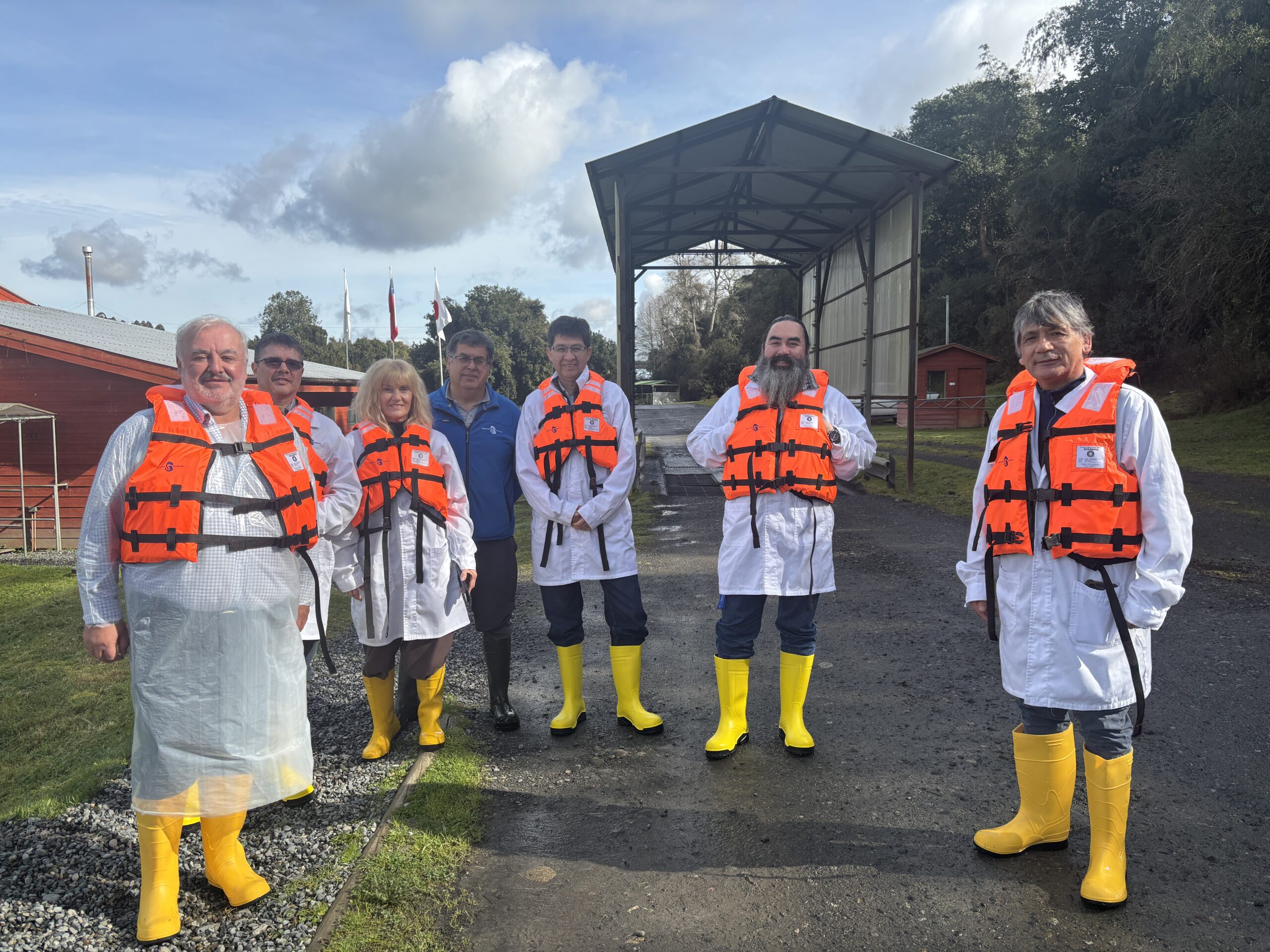
In an intense day of opportunity exploration, the Los Lagos University Osorno campus received the third week of August a distinguished Argentine delegation from Comodoro Rivadavia, Chubut Province, with the purpose of strengthening bilateral ties for aquaculture development.
Chilean aquaculture, like the Aquatic Engineering degree at the University of Los Lagos, is a reference in South America, due to its extensive research and also because it is the pioneering career to be taught in Latin America, enhancing the engineering profession.
The main reference for the delegation is the Experimental Fish Farming of ULagos in Lake Rupanco. This center is known for its production of Coho salmon, whose specimens are fed in the lake for five months before being transferred to marine centers. In addition, the facility leads a project of female fingerlings in land-based ponds for the production of eggs intended for international markets such as the United States. This track record is transforms into a mirror for Argentina, a country that assumes less experience in the matter due to its limited availability of freshwater flows in the area, such as rivers and lakes. The immediate challenge for Argentine technicians is to install cages directly in the sea for trout farming. Meanwhile, the University of Los Lagos and the Chilean sector will closely follow this process: the plan is to capitalize on the experience at sea. opened in Argentina to later experiment with the same systems in the complex coasts of southern Chile.
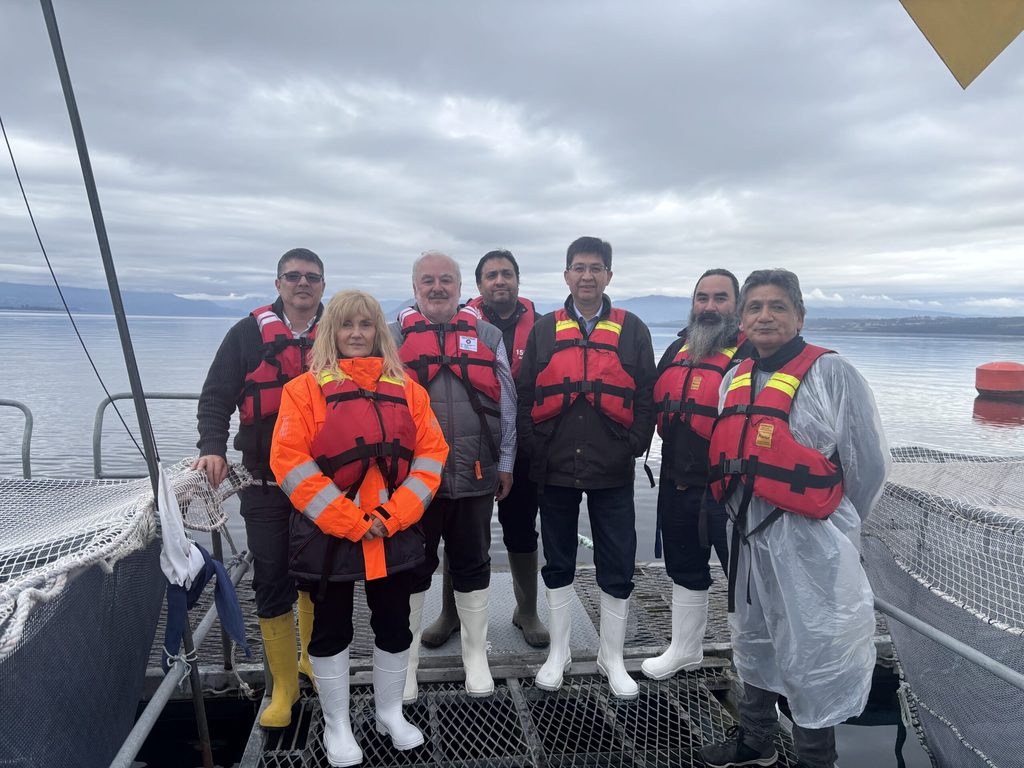
For this reason, and in the spirit of concluding an agreement on mutual cooperation, the Mg. Rubén Zárate, President of the Commodore Knowledge and Development Agency, an agency that promotes sustainable development and productive diversification in Comodoro Rivadavia and the Patagonian region, through public policies based on science, technology and innovation along with Dr. Monica FreileSecretary of Science and Technology of the Universidad de la Patagonia San Bosco and the Lic. Gustavo Méndez, Director of the San Jorge Gulf Oceanographic Observatory visited three strategic locations organized and accompanied by the team of Department of Aquaculture and Agrofood Resources of the University of Los Lagos consisting of Óscar González, Óscar Mora and René Espinoza who on the first day of the meeting showed the Experimental fish farming at the University of Los Lagos on Lake Rupanco leaving behind the experience, after going through the cages and teaching how to handle them.
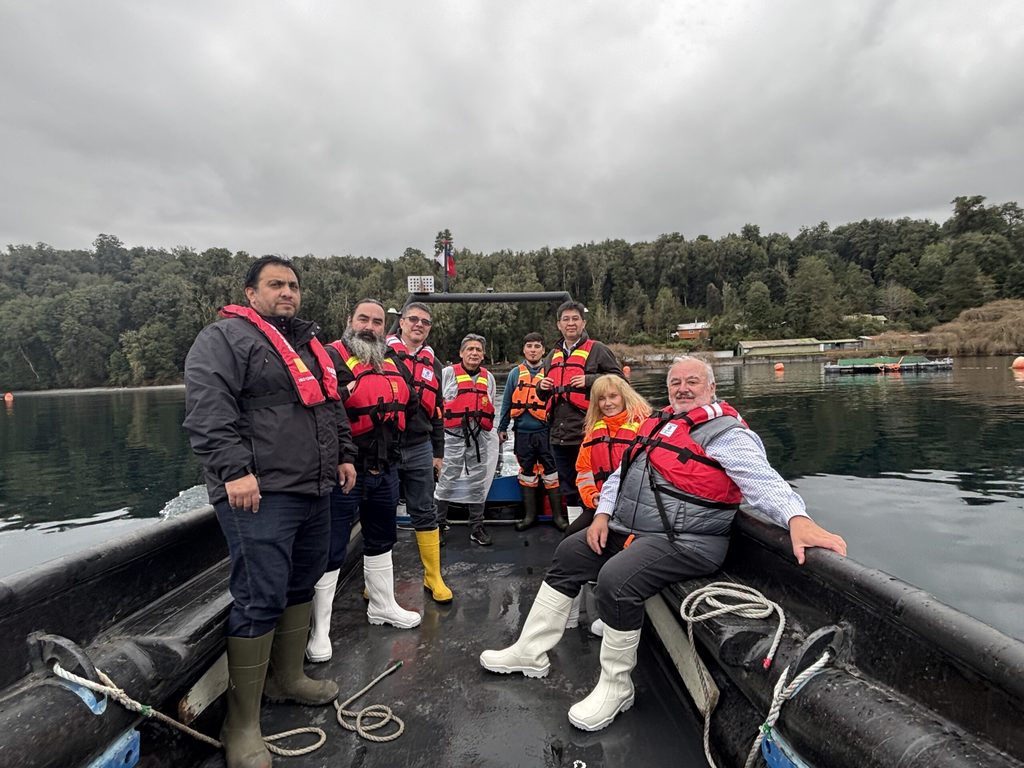
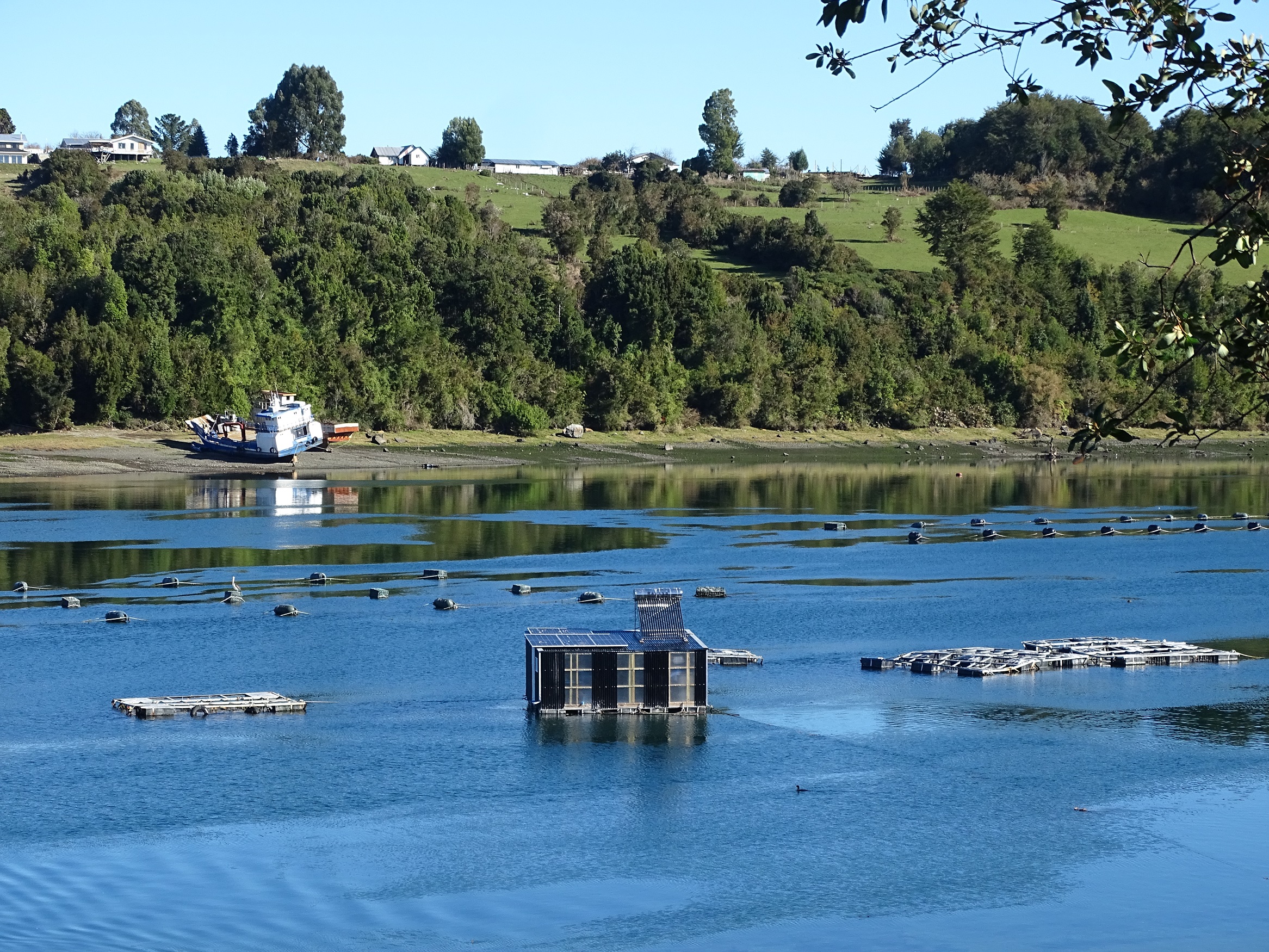
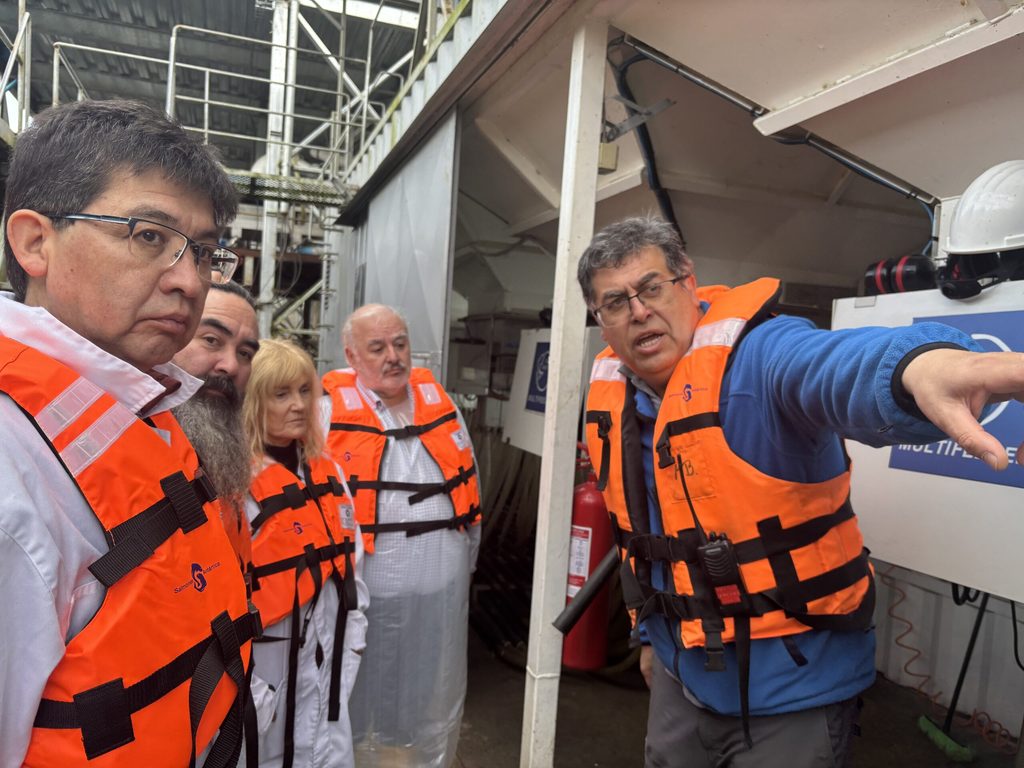
While, for the second day, the technical agenda continued with a visit to the Fish farming Los Tambores, ownership of the company Antarctic Salmon. On site, attendees learned about the operational aspects of the plant and its state-of-the-art technology in the fattening processes, which stand out for their strict compliance with environmental regulations. Subsequently, the delegation moved to the Scale AQ (Ocean raft technology off shore) on Route 5, up to Puerto Varas. The company of Norwegian origin, an international leader with a strong presence in the regions of Los Lagos and Magellan, exhibited its specialized solutions in floating circular cages of polyethylene and steel, anchoring systems and technological infrastructure.
Reflections on the framework agreement
The University of Los Lagos seeks to internationalize its experience in aquaculture. After consolidating a pioneering educational and productive model in the country, the rector Oscar Garrido projected the impact of signing future collaboration agreements with Chubut province.
“To be able to share the trajectory that our university has built in the field of aquaculture since 1972 is a great opportunity. We were the first institution in Chile to create a career in Engineering in Aquaculture, consolidating a virtuous relationship with private enterprise; a development model that later replicated several universities of the Council of Rectors. This support allows us today to transmit our experience to the colleagues from Chubut Province, Argentina, linked to science and applied technology. We hope to formalize partnership agreements with the Universidad Nacional de la Patagonia San Juan Bosco so that, through our specialized departments, we lay the foundations for transfer, training and vocational training focused on the salmon farming and mussel cultivation industries,” he said.
By the same token, the president of the Comodoro Knowledge and Development Agency, Rubén Zárate, appreciated the agreements reached during the days and advanced the design of a joint work agenda that will seek to transfer trans-Andean scientific capabilities to the Chilean aquaculture sector.
“The political will has emerged to sign a framework agreement of broad cooperation for the development of aquaculture in the Atlantic and of industry in general in Chile. There are Argentine disciplines and experiences that, although not directly linked to aquaculture, can be very productive for the sector because of their scientific and technological knowledge. We are on our way to formalize a work plan with programs, projects and goals clear for the coming years. We found a large reception by the rector and his technical team, and both from the Universidad de la Patagonia San Juan Bosco and from the Municipality of Comodoro Rivadavia there is a total decision to advance in this alliance,” he emphasized.
Óscar González, Aquaculture engineer and organizer of the meeting highlighted the historical value and the new strategic role of the study house, stating that this exchange represents both a recognition of institutional leadership and a complex scientific challenge due to the geographical conditions of the Atlantic.
“It’s a big challenge. The University of Los Lagos is a pioneer in the development of aquaculture and salmon farming, and this milestone brings us to a new starting point: today we are in a position to transfer knowledge to a public university in another country. This challenges us because it involves dealing with open sea cultivation, unlike the inland sea with which we usually work. Faced with the need for diversification of the fleet Argentina, our scientists provide advanced research in algae, molluscs, marine fish, sturgeons and salmonids. This interaction will nourish us with new experiences thanks to its high quality engineers. They looked side by side and chose us as the benchmark with state-of-the-art technology and innovative farming methodologies and that motivates us to continue in constant aquaculture research,” he said.
By their part, the Secretary of Science and Technology of the National University of Patagonia San Juan Bosco, Monica Freilepraised the technical leadership of the University of Los Lagos and detailed that the central purpose of the march is to structure a long-term binational academic agenda “We came to learn, because we know that it is the most qualified center in the area of Aquaculture and I am surprised by the amount of things that can be done here and the amount of things that we can do in collaboration, between the two institutions, our idea or the idea with which I came from the rector is to formalize agreements in principle framework agreements that allow us to have different types of relations and activities as a whole and later more specific agreements aimed at studying Aquaculture a little more binationally,” he said.
From the perspective of scientific monitoring, the Director of the San Jorge Gulf Oceanographic Observatory, Gustavo Méndez, explained how the collection of environmental data will serve as technical support for the future installation of cage rafts on the coasts of Comodoro Rivadavia.
“As part of the march, I represent an observatory that, despite its few years of work, already generates crucial data on the coasts and the Gulf of San Jorge. Our idea is to contribute with technical information in a systematic, authentic and constant way so that Comodoro Rivadavia achieves the productive diversification we seek. This will serve as a basis for the implementation and safe development of cages for the fattening of fish in the Argentine sea” concluded.