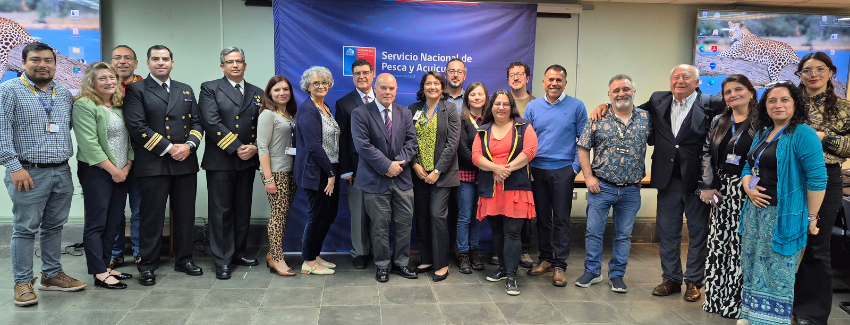
The day ended with an open panel discussion allowing questions from the audience, an opportunity for direct exchange with authorities and experts, and highlighting the importance of moving towards innovative, transparent and sustainable aquaculture, emphasizing applied science.
In the National Directorate of the National Service of Fisheries and Aquaculture (Sernapesca) it was held on Friday a complete day of analysis and conversation within the framework of World Aquaculture Day. The activity, organized by the National Oceanographic Committee Aquaculture Working Group (CONA) with the support of Sernapesca, brought together representatives from the public sector and specialists in the aquaculture activity in Chile.
The event included greetings from the president of the Aquaculture Working Group of CONA, Marcelo Campos Larraín, and the executive secretary of CONA, Juan Cuneo Arenaldi, who highlighted the strategic role of aquaculture in food security and the productive development of the country.
In turn, the national director of Sernapesca, Soledad Tapia Almonacid, highlighted the Service's commitment to modern supervision, the strengthening of traceability and the promotion of regulatory compliance as pillars to safeguard environmental sustainability.
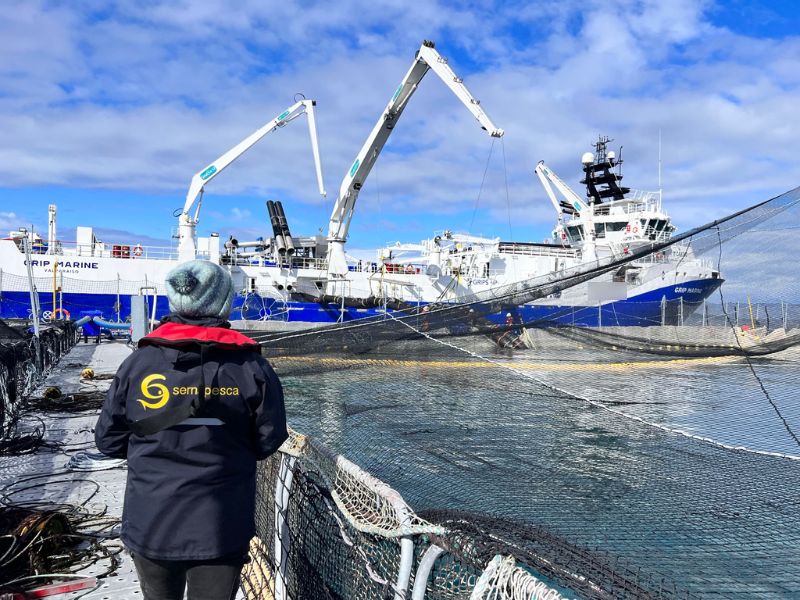
Aquaculture is undoubtedly one of the most concrete and strategic responses to global challenges in terms of food security, sustainable development and climate change. The SOFIA report from the FAO projects an increase in this activity, and Chile, as one of the main producers at a global level, has the challenge and responsibility to move towards modern, transparent and environmentally friendly aquaculture, for the which we must work collaboratively,” said Sernapesca’s national director.
The meeting also featured the participation of the regional director of CORFO, Etienne Choupay Magna, who emphasized the role of innovation and investment in technologies to continue driving a more competitive sector; and the head of the Aquaculture Division of the Undersecretary of Fisheries and Aquaculture, Constance Silva Hernández, who valued the normative advances and the current challenges to contribute to the sustainable development of fisheries and aquaculture. activity.
The first of the central presentations of the activity was “Historical Resignation of salmon farming in Chile”, by Alfredo Valenzuela Leal, one of the pioneers of industrial salmon farming in the country, who reviewed the milestones, learnings and transformations of an activity that today positions Chile as one of the main producers worldwide.
Then it was the turn of Francisco Cárcamo Vargas, head of the Department of Repopulation and Cultivation of the Instituto de Fomento Pesquero (IFOP) of Puerto Montt, who presented “Systemic Perspective for the Sustainable Development of Small-scale Aquaculture in Chile”, where he addressed the challenges and opportunities to strengthen the fishers and fishermen who participate in this productive modality.
The Chair of the CONA Aquaculture Working Group thanked the exhibitors and attendees who enriched this activity: “It was a very helpful instance. The vision we had of what is being done and what is coming is very important (...) we have to continue to promote, develop, we have much to do. Campos highlighted the importance of crop diversification in the country, as well as the training of professionals of high level for the continuity of the aquaculture activity and the social concern for those who work in isolated cultivation centers.
The day ended with a round table open to questions from the public, an instance that allowed for direct exchange with the authorities and specialists, and that emphasized the importance of moving towards innovative, transparent and sustainable aquaculture, taking stock of applied science.
With activities like this, Sernapesca and the National Oceanographic Committee reaffirmed their commitment to promote responsible aquaculture development, articulating knowledge and visions from different sectors to meet the country's future challenges in this area.