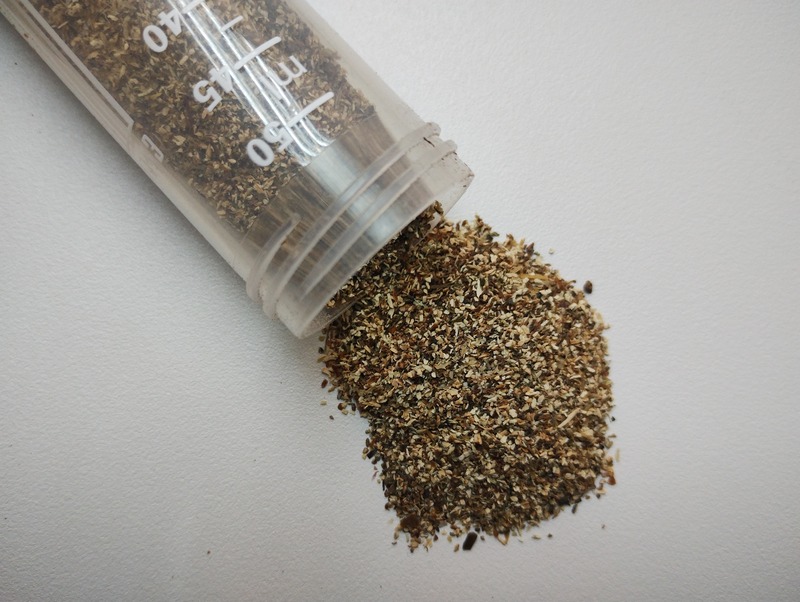
What is sought is to advance in one of the greatest challenges faced today by the cultivation of native species in the central northern macrozone, which are the diets for specific species associated with the different stages of the life cycle of these.
Currently, the development of native species aquaculture in the central northern macrozone of Chile does not have formulated and adapted feeds for the needs and particularities of these organisms, as the feed used today for native marine fish is mostly based on formulations developed for the salmon industry in the southern part of the country.
Therefore, it is especially important to have a technological laboratory capable of producing food in pilot mode, considering that in the country native species aquaculture is being promoted, especially in the northern area. In this line, it is estimated that the start-up of this new experimental and pilot plant will begin in the second half of this year.
Plant services
Among the services arising from this new infrastructure is the processing of new raw materials to define the nutrient levels they may have; the use of these raw materials in the generation of formulated feeds for the aquaculture industry at a pilot scale; bioassays to evaluate digestibility and growth and survival parameters; sensory or organoleptic analysis and consultancy; training or national and international courses related to these topics.
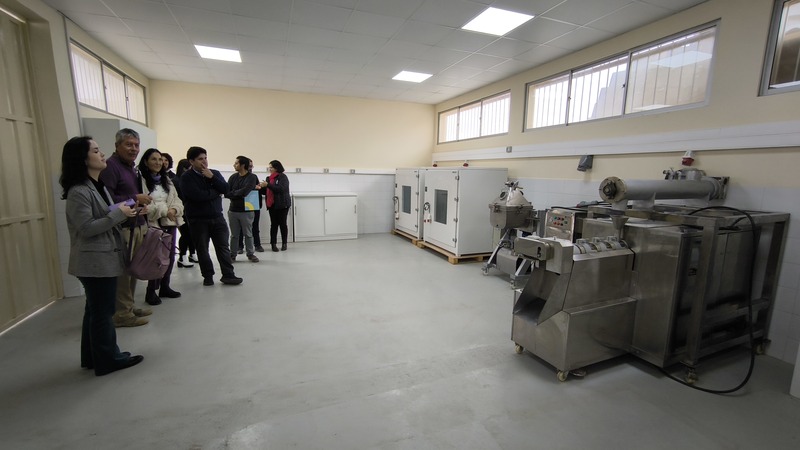
"The idea is to be able to analyze and/or validate raw materials and ingredients to formulate foods on an experimental and pilot scale, that is, with a production potential of up to 100 kilos of feed per day, aimed at aquaculture in the central northern area, both in marine and freshwater species," explains the executive director of AquaPacífico Center, Claudia Soto Canales.
Waste or use of by-products
The rendering or the process of transforming animal and/or vegetable by-products into raw materials suitable for animal consumption and nutrition, arises as a strategy in the search for ingredients that contribute to the formulation of appropriate, sustainable, accessible and aligned with the principles of circular economy for the growing demand of the aquaculture sector.
In this context, the academic of the North Catholic University (UCN), Dr. Pedro Toledo Agüero, explains that "what we initially did was recover by-products from the oyster industry such as organs and other parts that usually go to the rubbish, and try to incorporate them into some foods. Such actions will also be part of the work of the plant whose aim will be to process new raw materials, incorporate them into the diets we will work on, test them and do that kind of" "experimentation that does not exist in the northern region of the country".
The executive director of AquaPacífico, Claudia Soto, adds that "regarding the process and generation of ingredients, the idea is to test new raw materials and this is where the component of circularity comes in, with the intention of using waste (or aquaculture by-products) that could be input for this. So, thinking about how we connect with the industry, these raw materials can be used in the development of diets at level" experimental or pilot, as well as to optimize diets already developed by companies and which are being sold on a commercial scale.
Optimization for aquaculture production
In Chile, productive aquaculture is considered to be the intensive and commercial cultivation of aquatic species, such as fish, molluscs and algae, with the aim of obtaining high quality and economic value food products. This term is used to distinguish aquacultural activities that are oriented towards large scale production and that have a significant impact on the country's economy.
Under this concept, profitability in aquaculture production proves to be a key point for the projection of a company, with feed, within the production chain, being responsible for the highest operational expenditure in the process, reaching up to 60% of production costs.
"If more economical foods are developed for the species, this production system becomes increasingly profitable, considering that the foods require certain raw materials whose current values are very high and affect the profitability of the cultivation of these species," emphasizes Dr. Toledo.
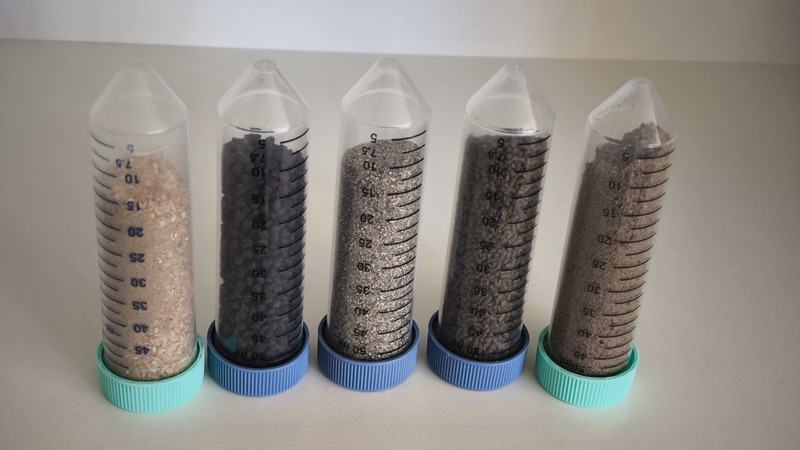
In turn, it argues that there is great interest in finding new sources of proteins and lipids that can reduce costs and provide nutritional benefits to farmed species. "We have here new sources of proteins and lipids that we are not using, which are being thrown away, so it is important the work that can be developed in this new production and consumption model called the circular economy," explains. Dr. Toledo.
AquaPacific currently has four lines of development of fish, molluscs, algae and food, so Claudia Soto maintains that the food plant comes to complement the area of aquaculture feeding, enhancing the capacities in the field of nutrition that the UCN already has: "This space comes to enrich that area of work associated with experimental production and at the level of piloting, but not only for the effects of research, but also for production, scaling and transfer effects for productive purposes and that's what should differentiate us from the work that the University is doing today," he concluded.
*Photo credits: courtesy of AquaPacific.