These advances are part of the Japanese Oyster PTEC, a program funded by CORFO and carried out by the Universidad Católica del Norte (UCN).
Double the annual production of Japanese oyster seed. This is how the objective that the professionals of the "Technological Program for the development and sustainable scaling of the cultivation of the Japanese oyster resource" have set themselves can be described.Pacific oyster" - also known as PTEC Japanese Oyster -", which is led by the Universidad Católica del Norte (UCN) and funded by the Corporación de Fomento de la Producción, CORFO.
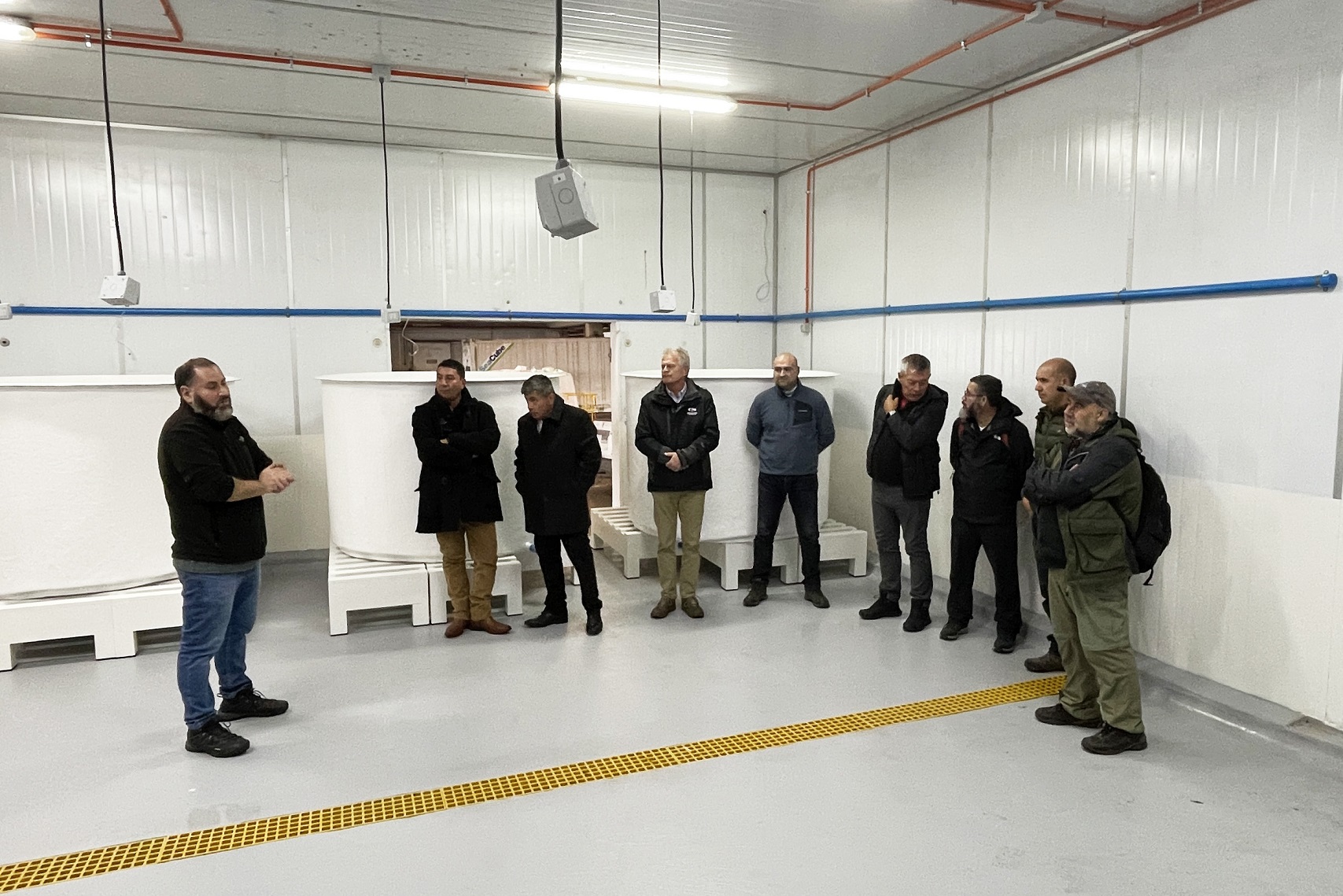
One of the co-executors of the program is Fundación Chinquihue, an institution that has just opened a new space within its hatchery, which comes to significantly increase the production of Japanese oyster seed, this in a context where the demand for this highly valued benthic resource continues to grow in the national territory. The works were funded within the framework of the aforementioned program.
Héctor Chocobar, sector executive of the Technology Capabilities Management of CORFO, visited these new facilities in the city of Puerto Montt. During the visit, he stated that his purpose was "to learn about the progress made by Fundación Chinquihue, considering its association with the Oyster Technology Program, whose beneficiary is the Universidad Católica del Norte, and to see the structural progress, in machinery and equipment," just to increase the production of microalgae and, subsequently, the production of oyster seeds.
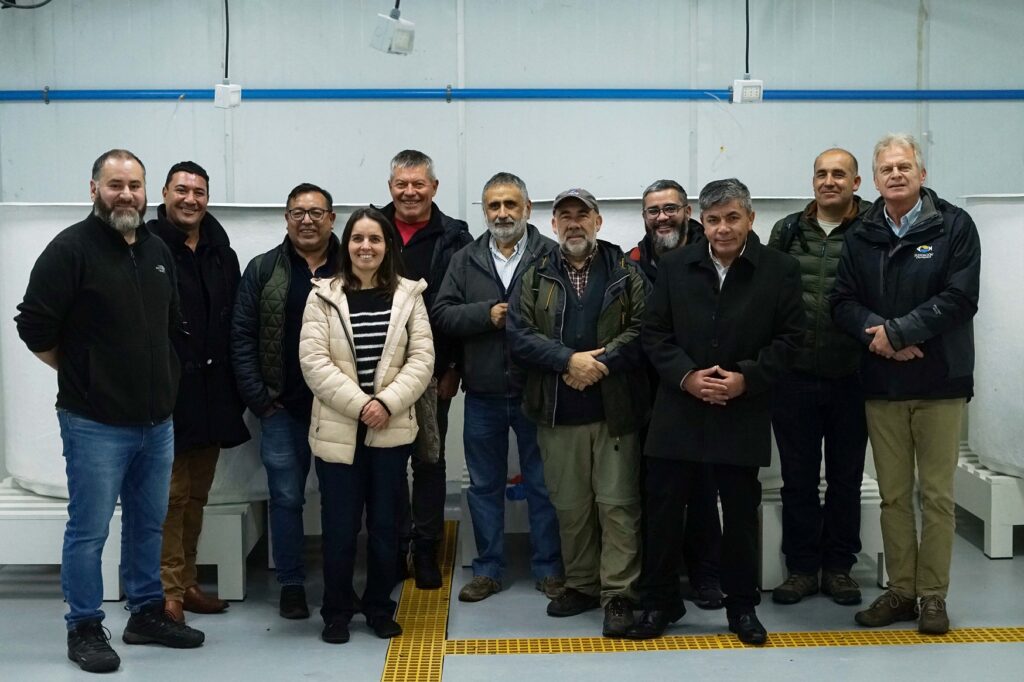
The executive said he left with a positive impression and, in that sense, indicated that the infrastructure progress is "within what had been committed by the Chinquihue Foundation". In that line, he expects that, "beyond infrastructure, there is human capital that can develop production, both of seeds and microalgae, in a good way, and thus enhance the development that the Universidad Católica del Norte has in" Coquimbo region and Chinquihue Foundation in the Los Lagos region.
For his part, Jorge Tillería, who is the head of the hatchery of Fundación Chinquihue, noted that “the increase in the production of Japanese oyster seeds is a significant milestone within what is the development and diversification of small-scale aquaculture in our region and the country. This advance allows us to have a better offer for those producers dedicated to the cultivation of this benthic resource.”
Tillería explained that, with this new investment, “the capacity for the production of seeds of Japanese oysters was increased by 20 tons of sea water, for which it was necessary to adapt a room of 100 m2 to achieve this objective”. He also explained that “this involves a challenge in increasing food production for this resource, which meant a reengineering of some microalgae production systems, key to sustaining these production systems.”
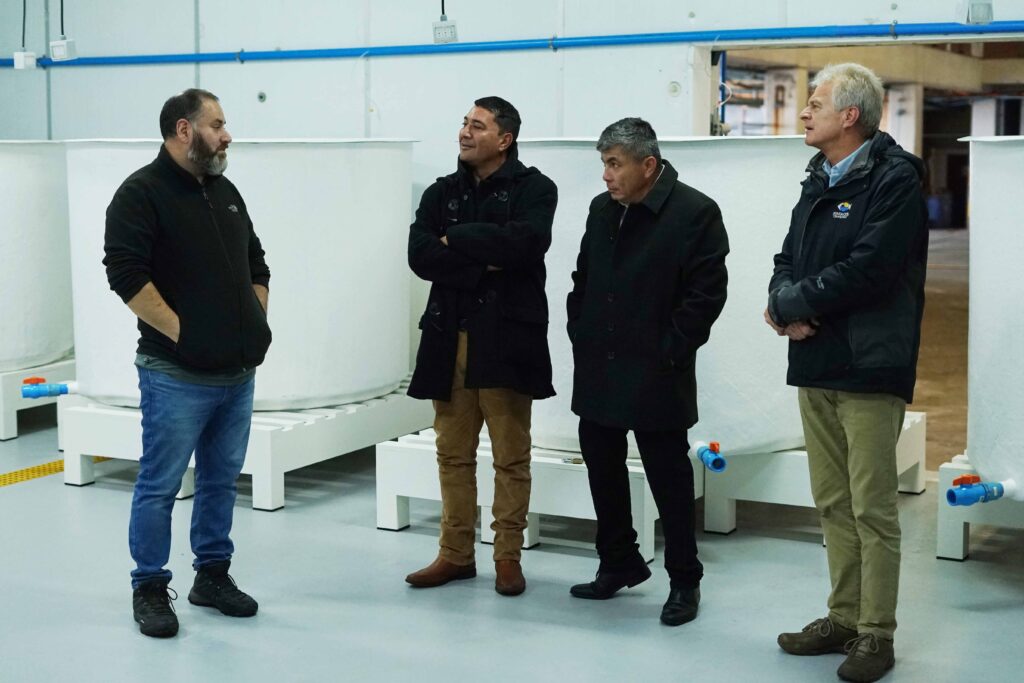
For his part, Alex Poblete, manager of the PTEC Ostra Japan, emphasized the importance of working collaboratively with Fundación Chinquihue, highlighting his experience in aquaculture development in the Los Lagos region. “They are ready to launch their first PTEC oyster production. We went through its facilities, which are already finished, and they were of very good quality. Therefore, we are confident that a new stage begins in the program, with one of the most important co-executors we have,” he explained.
Technological tour
In short, the team of the PTEC Ostra Japan concludes its fourth technological tour of the Los Lagos region, an opportunity in which, in addition to the incorporation of new clients into the program, progress is made towards the implementation of the portfolio N°2 and N°3. The first of these is focused on achieving food safety, through the taking of sanitary samples to detect the presence of heavy metals or harmful algal blooms (FAN). in Japanese oyster growing areas.
In this regard, Dr. Gonzalo Álvarez, director of the Program's Portfolio No.2, commented that “we visited some of the beneficiaries of the project to see the level of organization they have, with the purpose of establishing the sampling points that will be chosen. In addition, we held meetings with scientists from the area, such as the i~mar Center and the director of the Environmental Public Health Laboratory, who demonstrated much interest in the project, because it directly impacts their study area and is where they must guarantee safety and health of the population.”
For its part, the portfolio N°3 will be oriented towards the technological transfer and formation of human capital of the actors linked to aquaculture in the area. In this sense, the last portfolio is important, because it will be the Chinquihue Foundation itself that will carry out the trainings aimed at teachers of Technical Training Centers and technical-acuculture lyceos of the region of Los Lagos, this to count of the year 2026.
This concludes a successful tour of the Los Lagos region, where collaborative work continues among the PTEC Ostra Japonsay Fundación Chinquihue, to advance towards the development of aquaculture based on innovation, sustainability and directly linked to local communities.