The aquaculture sector harvested 1.463.463 tonnes. In total, a general harvest of 3.998.138 tonnes was recorded, representing a decrease of 2.5% compared to the total of 2023.
It is already available the Annual Report of the National Service of Fisheries and Aquaculture (Sernapesca) with the official sector figures reported in 2024 and containing indicators on landings and aquaculture, species list by region, raw material and production, fishing plants, among others.
For the year 2024, the industrial fishing sector recorded a landing of 1,165,596 tonnes, while the artisanal sector added 1,369,079 tonnes and the aquaculture sector harvested 1,463,463 tonnes. In total, a general harvest of 3,998,138 tonnes was recorded, representing a decrease of 2.5% compared to the total of 2023.
The industrial sector composed of industrial ships and factory ships accounts for 91% of its operations on pelagic resources such as Anchovy, Mackerel and Jack Mackerel, with a landing of 1,056,634 tonnes. It should be noted that the industrial activity is strongly concentrated in the Biobío region with 76%, Tarapacá with 9% and Antofagasta with 5% of the total landed.
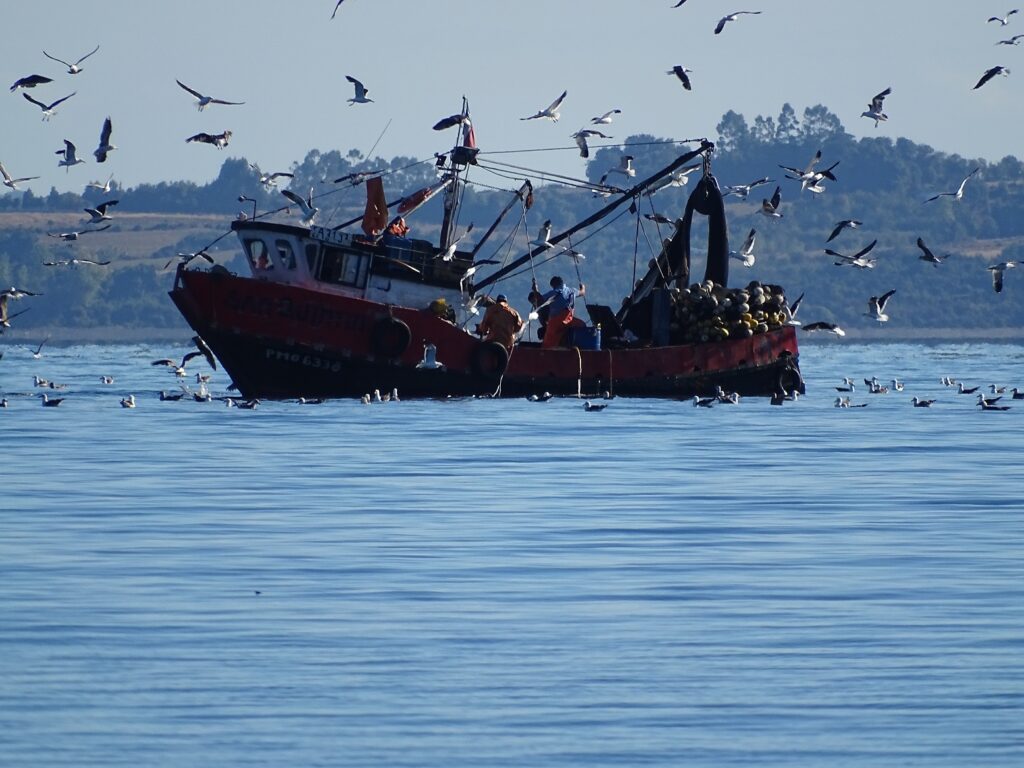
In the artisanal sector, 43% of the landings correspond to pelagic resources such as Anchoveta, Jurel and Common Sardine, which show a 33% decrease compared to the previous year, mainly due to the decrease in Common Sardine catches.
In the aquaculture sub-sector, 71% of the harvests correspond to fish, with Atlantic salmon accounting for 704,671 tonnes, silver salmon for 270,460 tonnes and rainbow trout for 63,544 tonnes. The remaining 28% of the total harvests corresponds to mollusc aquaculture, of which 99% corresponds to mussels (406,763 tonnes).
Similarly, in 2024, 671 processing plants operated, of which 201 corresponded to plants exclusively processing dried seaweed. Regarding production, a total of 3,749,888 tonnes of raw materials were processed, generating 1,945,686 tonnes of final products. Its main processing lines were meal, frozen and chilled, concentrating these three areas in 87% of the material. first and 91% of total production. In the case of the chilled cooling lines, 22% of the raw materials were allocated to them, generating 33% of total production.
Soledad Tapia Almonacid, National Director of Sernapesca, valued the work carried out to make sectoral data available in a clear and transparent manner. "It is very important to provide the public with clear and understandable information, in a timely and accessible way, as this strengthens the trust of the public and our sectoral users through transparent work and by using technology." developed with our strategic partner Data Observatory. An informed citizenry is key to participate in public policies and sustainable development of the fisheries and aquaculture sector,” he said.
For her part, the head of the Service's Department of Information Management, Lisette Montesi, said that “publication of the country's official figures is an effort to validate and consolidate the information collected through compliance with the regulatory obligations and the monitoring effort deployed by our institution. It is an expected and valued publication at both the national and international levels.”
The figures in detail can be consulted in the Statistical Yearbook of Fisheries and Aquaculture published in the Sernapesca website, or visiting the interactive platform developed and launched in 2022 with Data Observatory, which includes data since 2000 with information related to regulations and regulations, indicators on landings and aquaculture, list of species according to region, raw material and production, fishing plants, among others. The data are open access and are available to industry actors, decision makers, researchers and researchers. civil society.