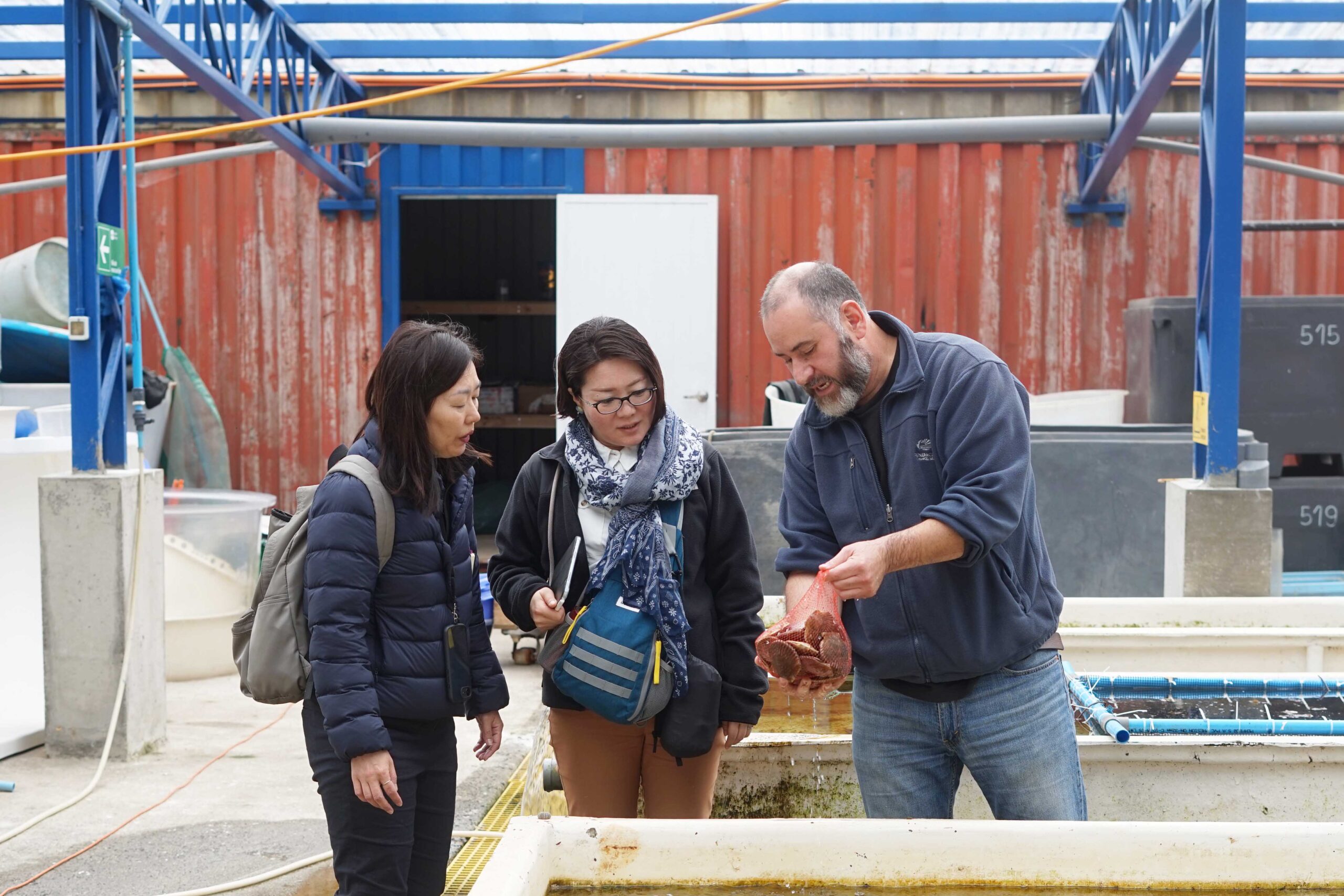
It refers to doctors Débora Hazuki Matsuda and Mayumi Fukunaga, who are working on a preliminary study on the development of aquaculture and social sustainability in Patagonia.
A fruitful visit was made to the facilities of Fundación Chinquihue by the Japanese researchers and teachers from the University of Tokyo, Débora Hazuki Matsuda and Mayumi Fukunaga.
At the opportunity, both met with the deputy manager of the institution's innovation and development department, Javier Valencia Camp, after which they visited some of the foundation's units, such as the sales room of Comercial Chinquihue and the hatchery.
Matsuda indicated that his time at the foundation is part of "a preliminary study on the development of aquaculture and social sustainability in southern Chile". In that sense, his interest is "to gain a thorough understanding of the foundation's history and its long track record of cooperation with Japan".
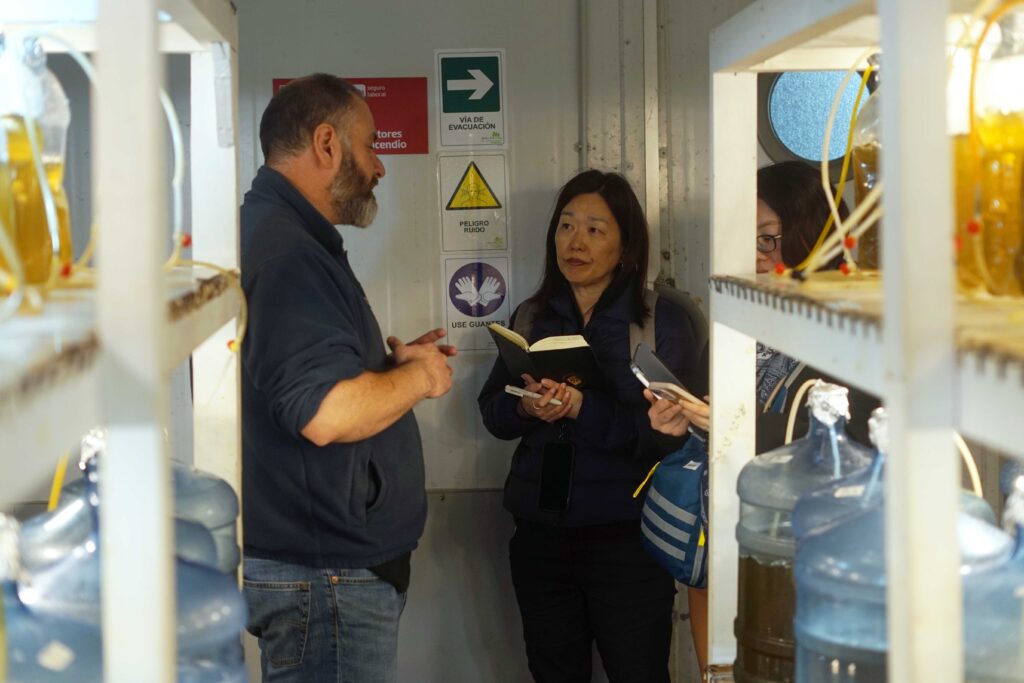
Thus, the researcher was updated on the activities and projects that the institution carries out in collaboration with different actors in support of artisanal fishermen and small-scale aquaculturists.
In his opinion, it has been "very interesting to meet in person the work of the experts in the research laboratories and the larval and mollusc production process of the institution, essential for the development of aquaculture".
The academic said she is certain that "the coordination between entities, companies and local communities is fundamental to sustaining the sector, and we hope to complete our study in collaboration and in dialogue with the different actors in the aquaculture area."
Matsuda expects that "our studies serve as a basis for the next development and sustainability projects of the sector".
Based in the commune of Puerto Montt, Fundación Chinquihue was created in collaboration with the Japanese International Cooperation Agency (JICA) and began operating officially at the beginning of 1989.
The mission of Fundación Chinquihue is to be a predominant entity in supporting the development strategy of the artisanal fisheries sector, both regional and national, thus helping to transform this sector into a sustainable activity.