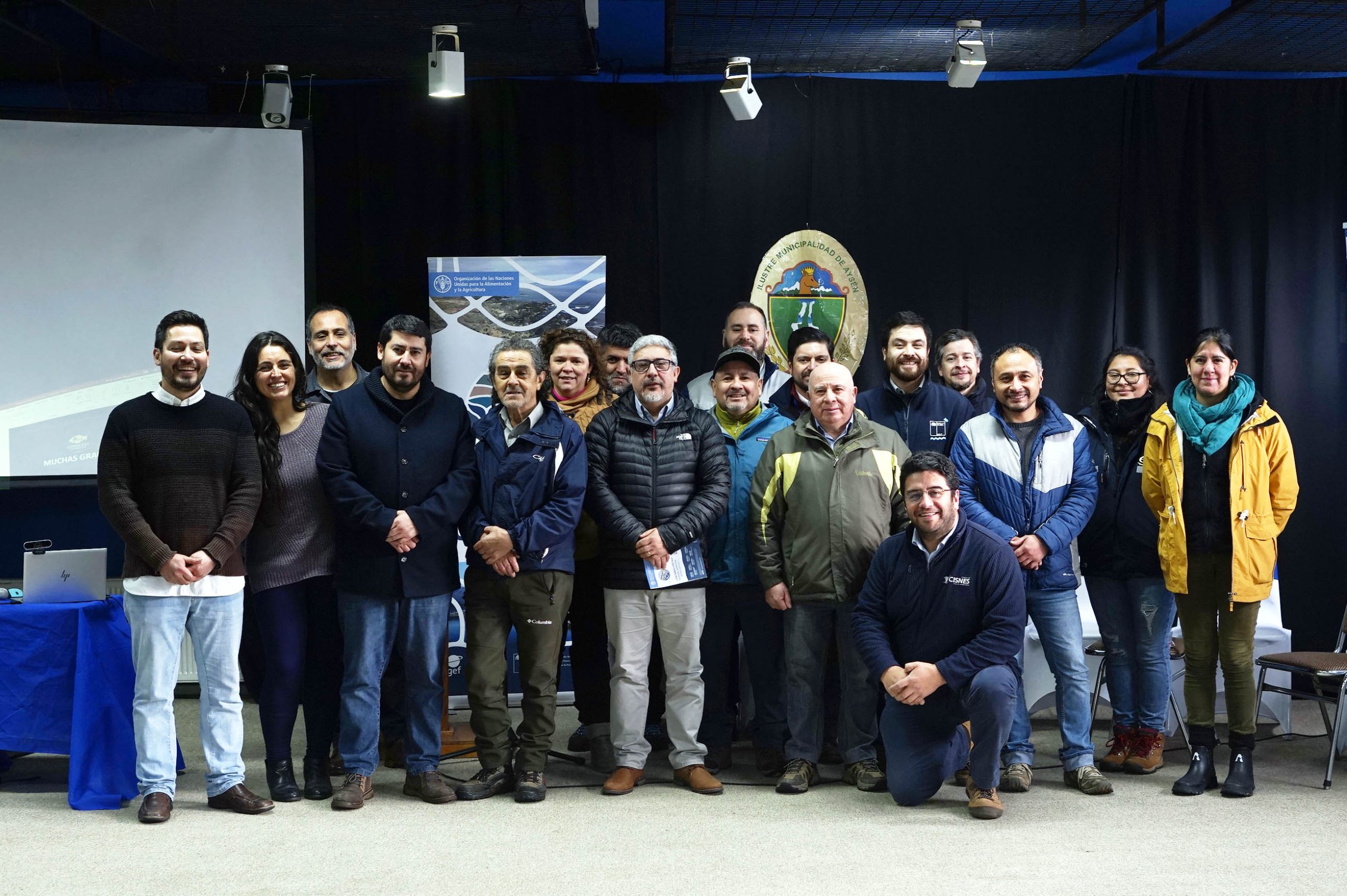
The event took place within the framework of a discussion that brought together local and regional actors, who discussed the opportunities of the territory to promote the activity in that region.
Under the title Interinstitutional seminar on small-scale aquaculture in the Aysén region, a meeting was held that addressed the opportunities and challenges to promote the activity in the area, which took place at the facilities of the Casa de la Cultura in the commune of Puerto Aysén. Organized by the regional office of the Fisheries and Aquaculture Subsecretariat of Aysén, the GEF Marine-Coastal Governance Project and the Chinquihue Foundation, the body brought together representatives from various institutions, public services, fishing and aquaculture experts, representatives from the aquaculture industry, local and regional authorities, as well as interested communities aiming to advance the sustainable development of the Aysén region.
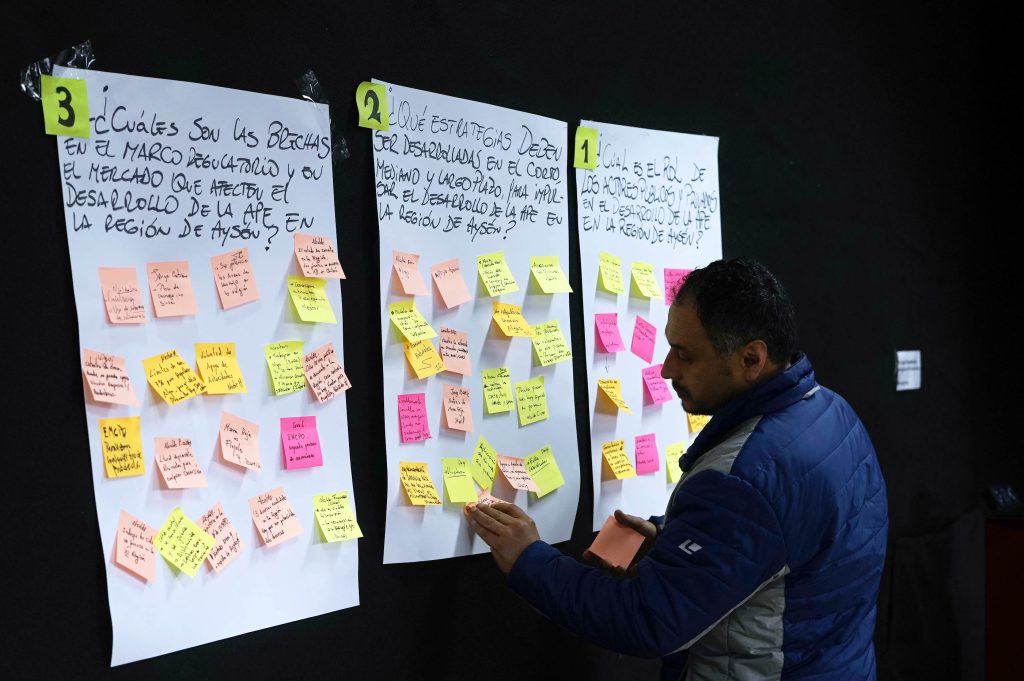
Francisco Roncagliolo, mayor of Cisnes, highlighted the conversation as a relevant space to analyze different tools that can be applicable in the territories of the southern zone. “I think it’s one of the relevant things, at least in today’s presentations, that are things that people can see as something tangible, something that can be replicated, and that something that can be within the experience that can be done. Obviously here in the territory you have to have be careful, be careful about the issue of isolation, it costs a lot to generate investment, it costs a lot to bring tools that can be applicable in the territory, and I think that in this dynamic we have to go forward,” explained the editor.
The communal authority also stressed that it is necessary to seek synergy between the public and the private, so that local producers, in this case artisanal fishing in general, have the necessary incentives to work. For its part, Julio Uribe, Mayor of Puerto Aysén“We have been away from the sea for many years, ” he said, “and I think these instances make it possible for us to have a look at the future. I've had a lot of experience at sea during my years of work. Therefore, I think it’s a look, a visualization that needs to be had for the development of our communities.”
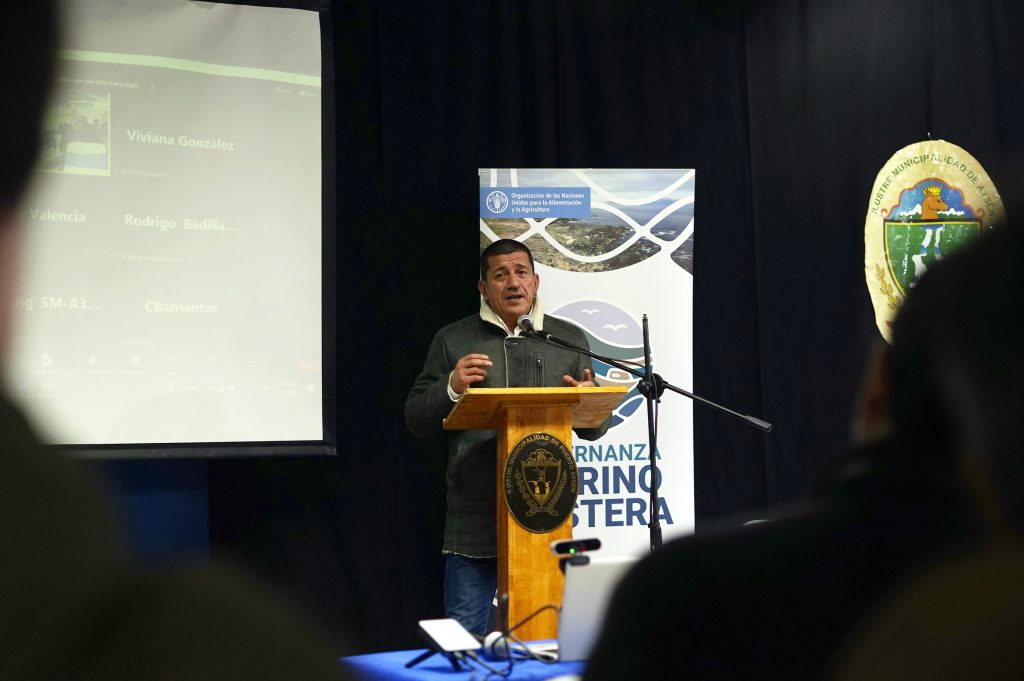
The authority recalled that “Puerto Aysén developed through fishing activity and today is focused on aquaculture”. In the same vein, he argued that “we have to go back to our roots and look back at the sea (...). We have many instances for development at sea, so that’s our look.”
Francisco Lara, head of the Planning and Regional Development Division of the Aysén Regional Government, said that “aquaculture and artisanal fishing is the main economic activity of the region, therefore, any instance of encounter is important.”
In this sense, the representative of the local regional government said that “it is okay to look at certain experiences from other regions, but that unfortunately do not apply to the reality of our region (...). It is important to talk, to dialogue; yes, it is important. But we also need to have our feet set, in this case, on land and at sea, on how effectively we are going to develop that small-scale aquaculture activity.”
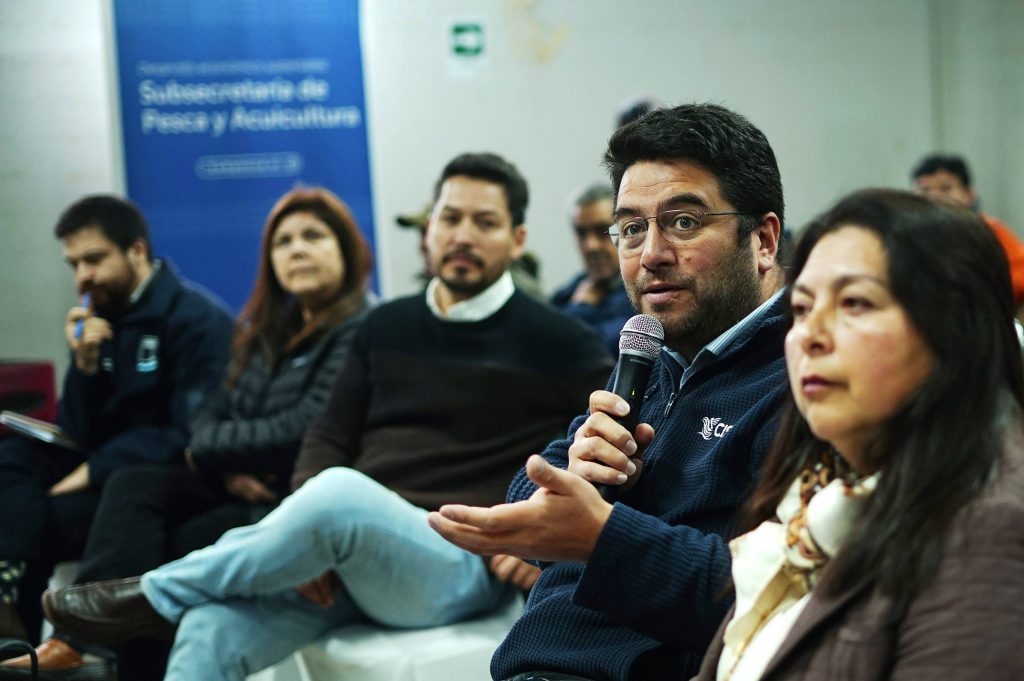
Miguel Moreno, regional coordinator of the GEF Marine Governance-Costera projectimplemented by FAO, he said that “this body confirms that small-scale aquaculture generates great attention among local actors, public and private organizations, and that the development of this activity, with a collaborative and long-term vision, will generate benefits for aquaculture and aquaculture women, and will promote the conservation of marine and coastal ecosystems in the region.”
Jorge Tillería, professional of Fundación Chinquihue“It is certainly important to develop small-scale aquaculture in the Aysén region. There is currently great potential to work in that direction. However, this implies progress in the articulation by public services, offering permanent technical assistance to producers, working collaboratively with other private institutions, among others. Our purpose from Fundación Chinquihue It will always be to develop productive activities that generate profitability, with a focus on sustainability.”