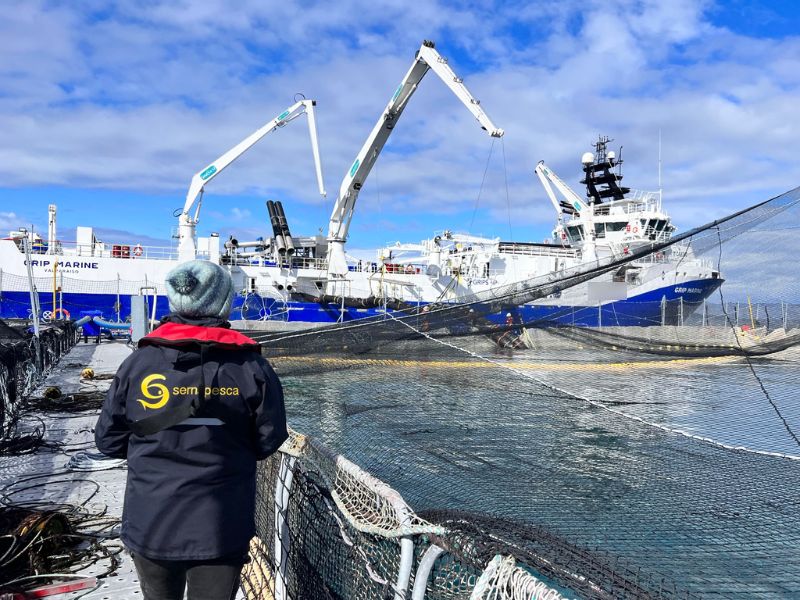
During the session of the Interinstitutional Committee for Environmental Contingencies (CIICA), different risk factors and response capabilities for this type of events were analyzed.
In order to strengthen inter-institutional coordination in the face of potential environmental emergencies, on Thursday a new session of the Inter-institutional Committee for Environmental Contingencies (CIICA) was held in the Aysén region, a key body for the comprehensive approach to scenarios associated with mass salmon mortalities and their logistical management, from the farming centers to the final disposal.
During the day, different risk factors and response capabilities in the face of this type of events were analyzed. In this context, Oscar Espinoza from the Institute of Fisheries Development (IFOP) presented on climate variability and the probability of occurrence of Harmful Algal Blooms (HABs), providing relevant technical information for preventive decision-making.
Similarly, the Labor Inspection presented the main requirements and safeguards associated with the port worker, while the Chilean Navy addressed the procedures for granting port worker permits. Meanwhile, the company Mowi presented its contingency plan for FAN events, specifically the Bhutan 2 scenario, sharing its operational experience and mitigation measures.
Daniela Leiva, regional director of Sernapesca in Aysén, highlighted the importance of CIICA as a coordination space in emergencies, stating: "this platform allows us to anticipate complex scenarios, ensure timely management of mortalities and protect both the environment and the health of the aquaculture activity". She also emphasized the role of Sernapesca in supervision, operational coordination and safeguarding the regulatory compliance, especially in emergency situations.
Meanwhile, the Seremi of the Environment, Yoal Díaz, emphasized the importance of acting preventively in the face of the possible occurrence of adverse environmental events, underlining that "preparation and coordinated work between public services and the productive sector are fundamental to minimizing environmental impacts." In this regard, he highlighted the role of the Seremi of the Environment in risk assessment, environmental coordination and strengthening of preventive actions against emergencies that may affect the ecosystems of the region.
The holding of CIICA reaffirms the commitment of the participating institutions to advance in a responsible, preventive and coordinated management, in the face of the environmental and sanitary challenges faced by aquaculture in the Aysén region.