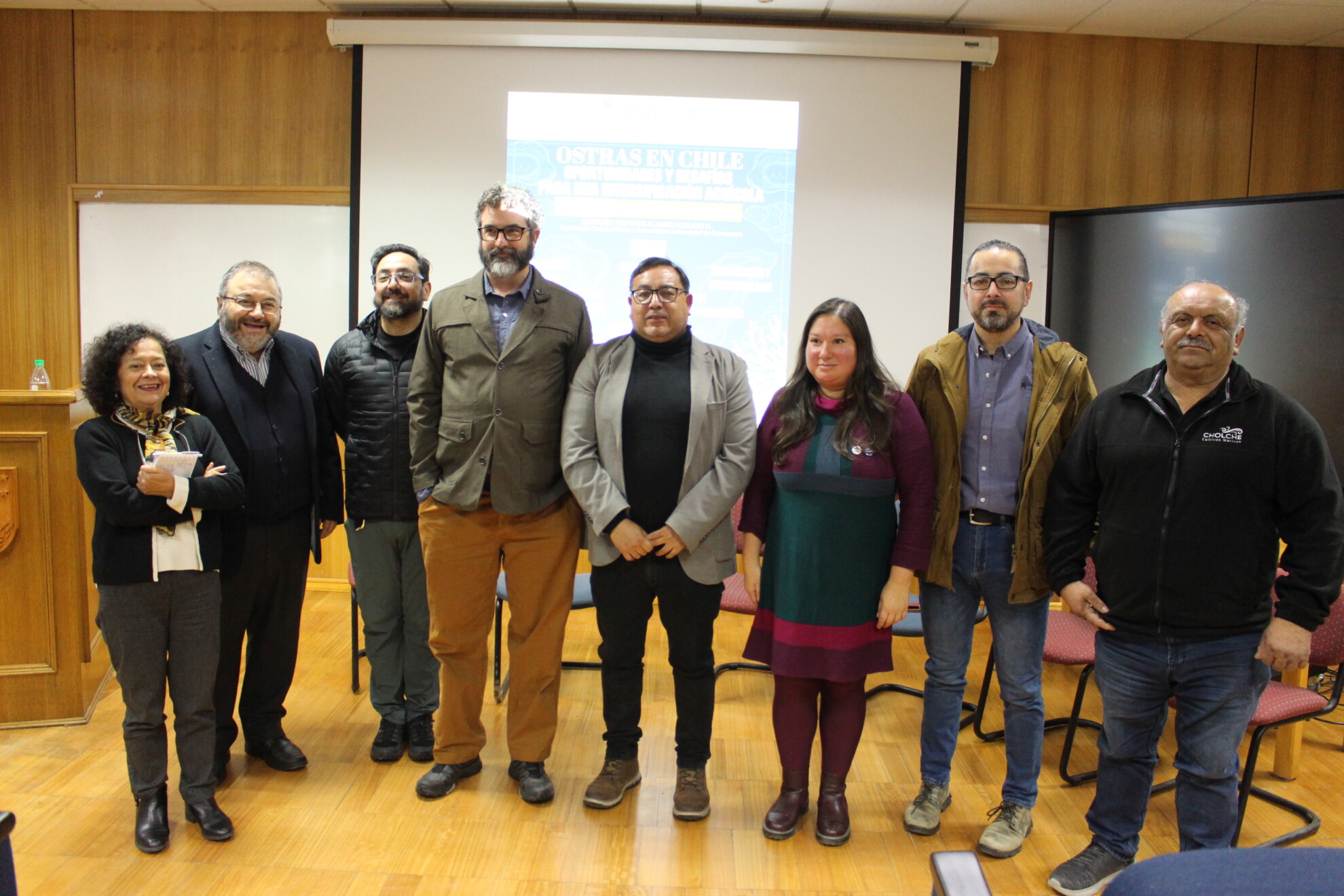
The activity included a discussion moderated by the principal researcher of INCAR, Dr. Doris Soto.
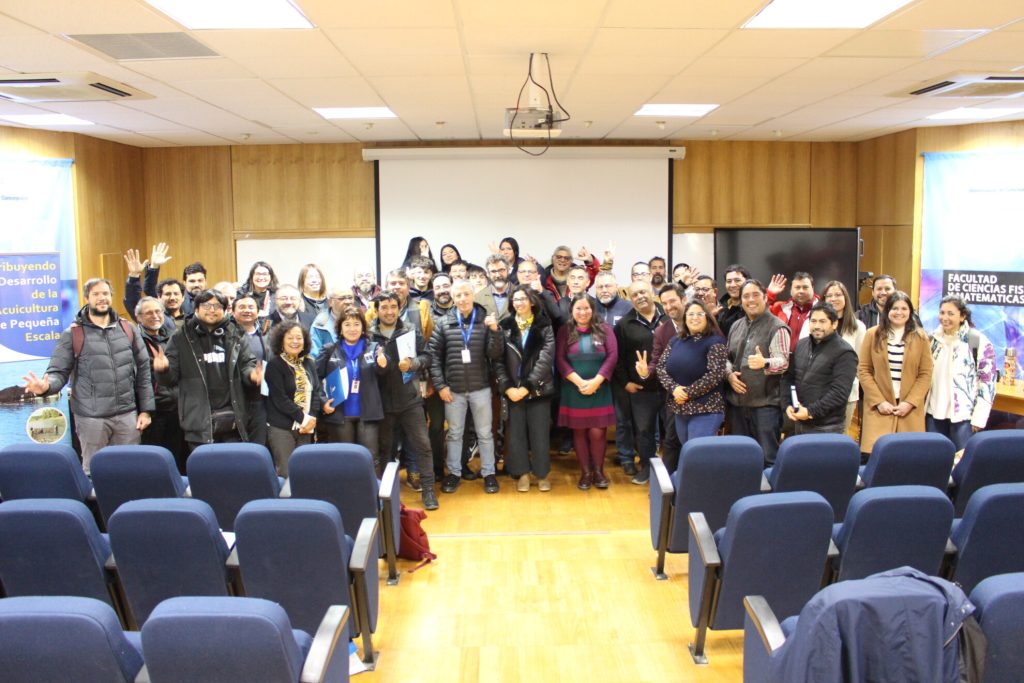
About 60 attendees gathered in the Professor Alamiro Robledo auditorium of the Faculty of Physical and Mathematical Sciences (CFM) from the University of Concepción (University of Chile) to participate in the seminar titled "Oysters in Chile: Opportunities and challenges for aquaculture diversification", which was organized by the Interdisciplinary Center for Aquatic Research (INCAR).
The body -which considered six presentations of national and foreign experts, as well as a final discussion panel - called for a heterogeneous public composed of representatives from academia, the public and private sectors, producers, aquaculturists, trade union leaders, professionals, secondary students and postgraduates, with the aim of reflect on on the development of oyster aquaculture in the country.
The themes of the presentations covered areas such as genomic research, technology transfer, restoration and sustainability, productive development, and channels for marketing and promotion.
The regional director of the Subsecretariat of Fisheries and Aquaculture (Subsecretariat) from the regions of Valparaíso, O'Higgins and Maule, Manira Matamala, positively valued the initiative driven by the INCAR Center. According to the sector authority's words, this type of event "gives relevance to oyster farming in Chile," putting into value the genetic, genomic, productive and marketing information of this resource". To which he added: "The interdisciplinarity and the Productive diversification is key to sustainable aquaculture."
Stop Justo Garcia, acuicultor behind the enterprise "Cultivos Cholche" and one of the exhibitors of the seminar, “the invitation allowed to share experiences of what we have been doing in all stages of the productive process, with special emphasis on the added valuewhich is where we need to move forward with aquaculture."
The seminar looked at the presentations "Olympia Oyster (Ostrea lurida) Restoration in the United States: A Physiology and Genomic Perspective", by the University of Washington researcher, Dr. Steven Roberts; "The genome of the Chilean oyster (Chilean oyster): A tool for the restoration and conservation of natural banks", of the Deputy Director of INCAR Center, Dr. Cristian Gallardo-Escárate; "Japanese oyster and algae co-culture experiences in the field and laboratory as an alternative for the APE", by the head of the repopulation and cultivation department of the FIFG, Dr. Francisco Carcamo; "Local experience of small-scale aquaculture (APE) in the production of Chilean and Japanese oysters", by the acuicultor Justo Garcia; "Advances of the Technological Program (PTEC) for the Sustainable Development of the Cultivation of the Japanese Ostra Resource (23PTECDA-247634)", by the Director of the Technological Program of the Catholic University of the North (UCN), Dr. Rodrigo Rojas; "Oysters at all costs: Ideas to reactivate the consumption of oysters in Chile", by the vice president of the Cooking Foundation, Meyling Tang.
"What we did today as a Center is to convene national and international experts from different areas to generate a multidimensional space in which all actors who are linked to the cultivation of Chilean oyster and Japanese oyster could interact. This seminar reflects our commitment as INCAR to transfer the scientific knowledge to be transformed into heritage of users and communities of the country," said the director of the Center, Dr. Renato Quinones.
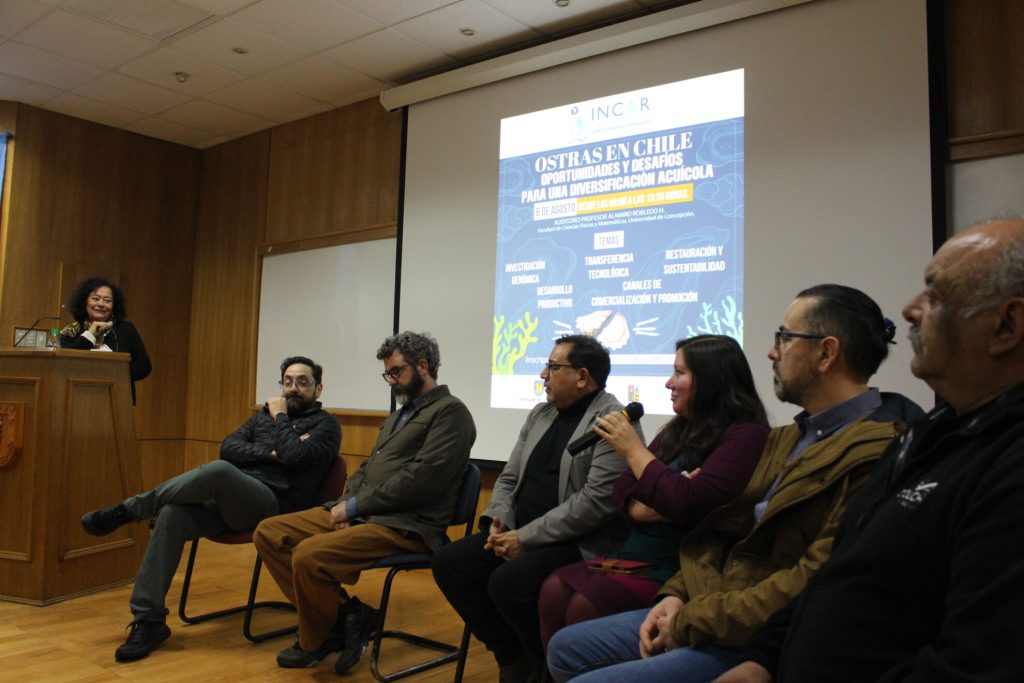
The activity closed with a conversation moderated by the main researcher of INCAR, Dr. Doris Soto, in which all the exhibitors reflected on the opportunities and challenges presented by the resource for aquaculture diversification from Chile.
*Photos: courtesy of INCAR Center.