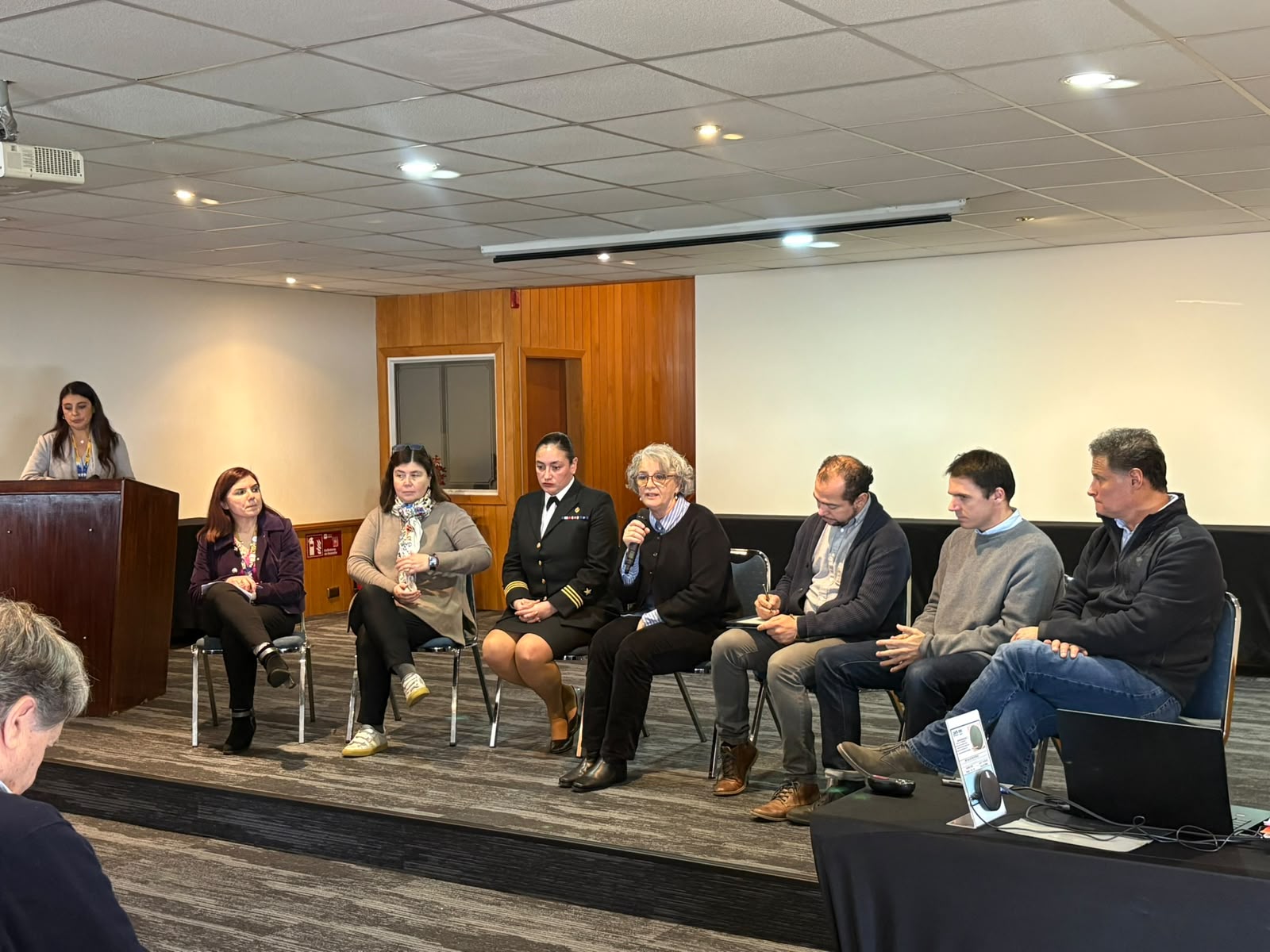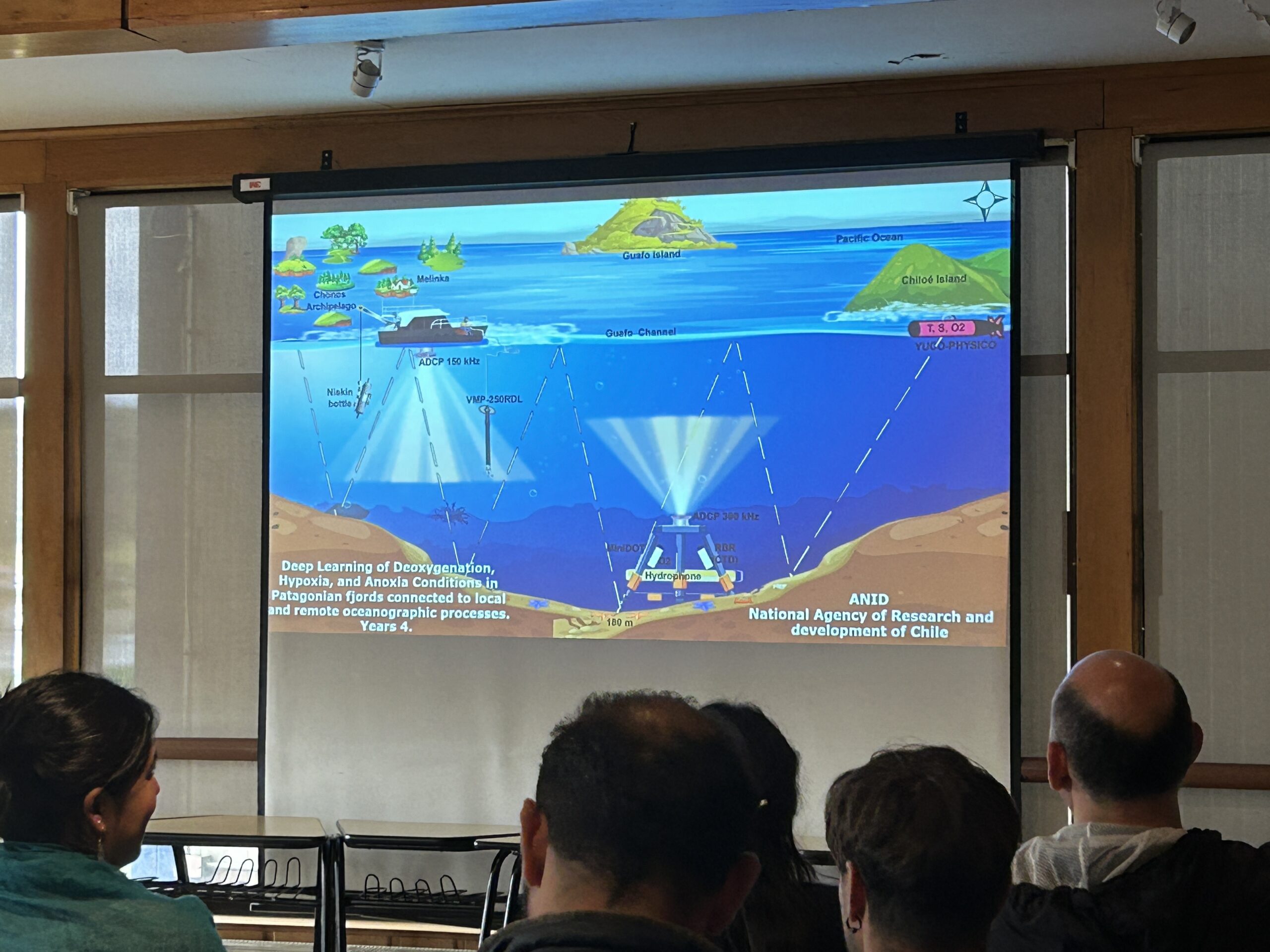
Academic, scientific and productive world met in this workshop organized by the Marine Observatory of Reloncaví, of the University of Los Lagos.
To know the variability of dissolved oxygen in the fjords of the North Patagonia due to the impact this phenomenon has on the marine ecosystem, is a concern that reaches the entire productive sector, industrial, private, scientific and academic world, who precisely met in the III Workshop organized by the Marine Observatory of the Reloncaví, OMARE of the University of Los Lagos, entitled “Deoxygenation, hypoxia, anoxia and ventilation.”
“The Marine Observatory of the Reloncaví every year summarizes its activities. This third workshop aimed to present the results of the initiation funds that are operating in northern Patagonia and that are now to be completed and other funds that involve researchers from other universities such as this main Fondecyt who is studying the variability of dissolved oxygen throughout northern Patagonia,” explains the researcher at the ULagos i-mar Center, Iván Pérez-Santos.
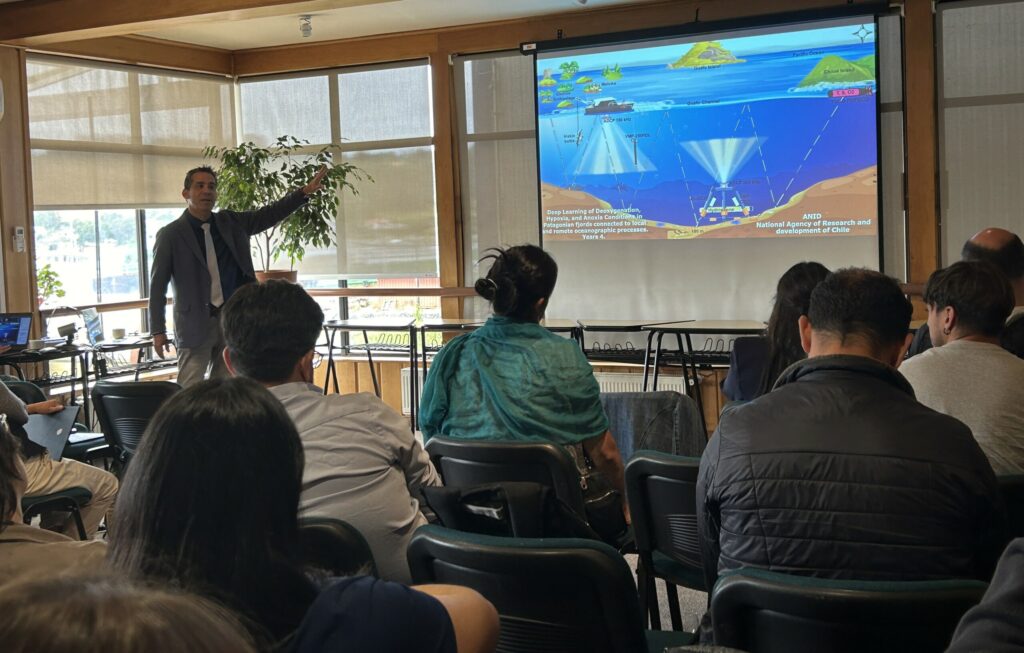
“While not alarming, it has been seen that overall levels have been declining by 2% to 3% of oxygen compared to 20 years ago. The important thing for science is to go and measure and we keep measurements, extend measurements, but not stop measuring or end instruments in offices because projects are over. Today we have had enough participation of the industry that has always been worried about this, especially the salmon industry worried about dissolved oxygen, that’s what collaboration is all about and this workshop was not only intended to spread results, but also to make a call to collaborate.” adds researcher ULagos.
Researcher Ivonne Montes, a PhD in oceanography, belongs to the Instituto de Geofísica de Perú and is an active member of the Global Network of Dissolved Oxygen created by the concern about this topic, who explained the global context and how science is facing it.
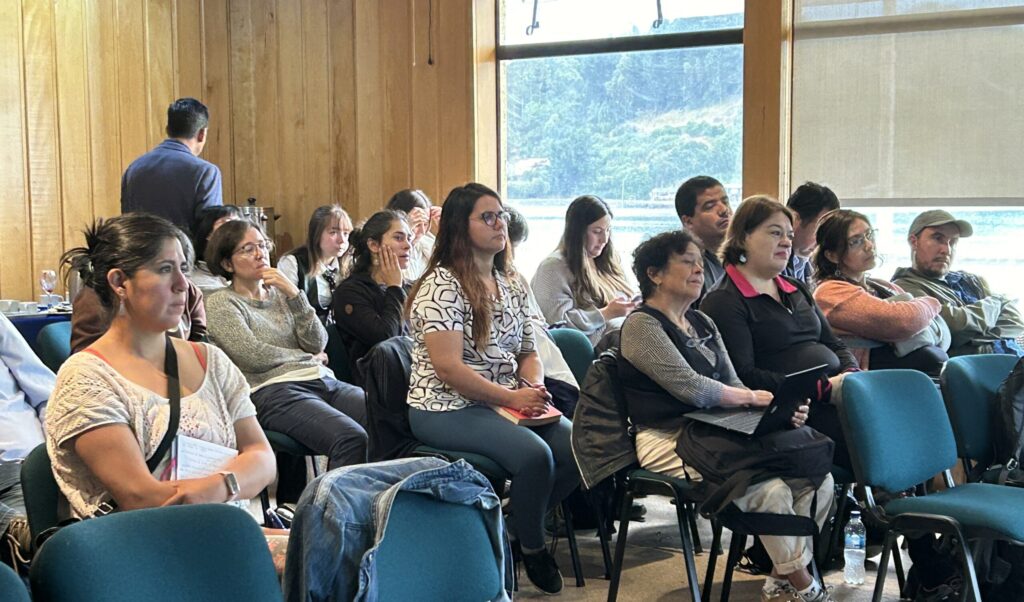
“Every year, water comes with low oxygen for other years with higher oxygen and that balance is maintained, but what we have seen today is that more oxygen is coming than it should be and from remote areas, it is not given by a more local process as it is when there is a lot of biological production, this comes from an equatorial process. And what is the characteristic of Peru and Chile, is that both places are part of what we call the systems of Outcropping of eastern edges, are the most productive areas in the world. Between 15% and 18% of world fish production are generated in these regions, so we are the bank of the world and unlike what is happening in the rest of the world globally, here it is still uncertain, we see oxygenation deoxygenation associated with that we have events like El Niño that allows us to give as a respite to the system”, indicates the Dr. Mountains.
Collaboration and joint work networks are highly valued by the team of researchers who participated in this workshop.
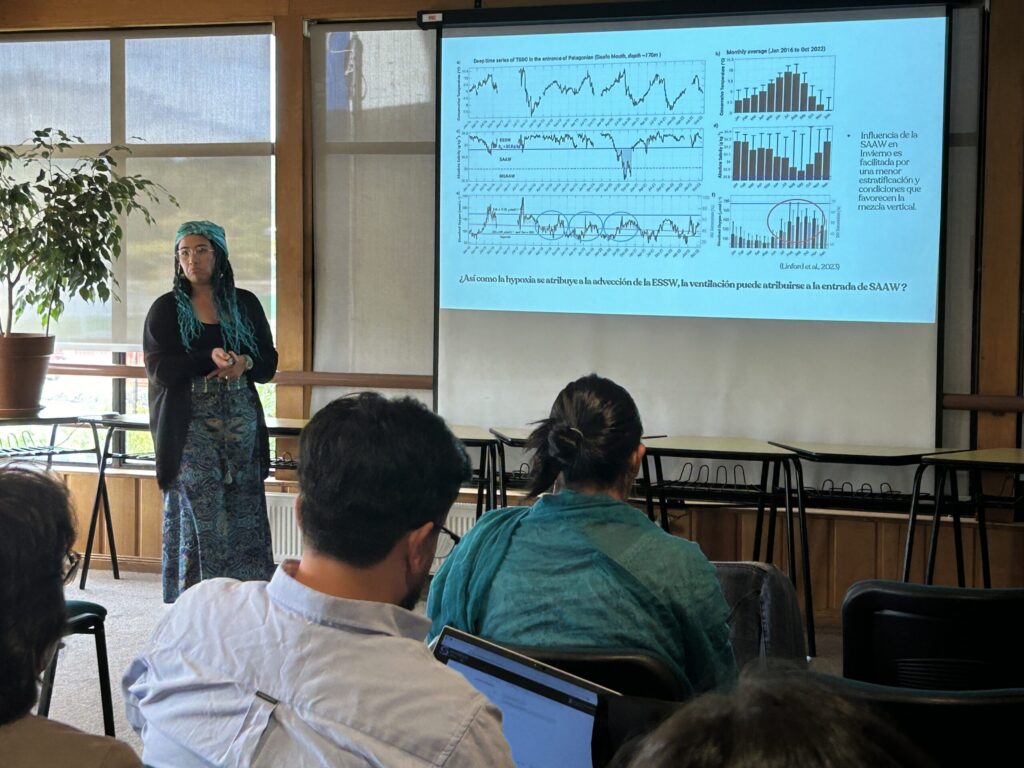
“What is most evident in this type of conference is that we are all working on the same thing and these are the instances through which more and better networks of collaboration are generated, besides if there are private and organizations not only scientists it is much better the collaboration that can be achieved among all, besides with scientific information you can make better decisions of management of resources in the region,” explains Camila Sola Hidalgo, Master of Oceanography (UValpo-UC).
The student, who precisely works on her master's thesis on deciphering the mechanisms that promote the increase in dissolved oxygen levels in northern Patagonia, argues that it is also necessary to bring research closer to all citizens. “I think sometimes from science we stay in many technicalities and people in their day to day are not able to size what we are talking about nor are we able to to generate useful tools with the information that we are raising, then we have to move from science to tools and management with the data that we have been generating can make better decisions,” he added.
The workshop also featured exhibitors: Boris Dewitte, Pamela Linford, Paulina Montero, Lauren Ross, Patricio Díaz, Gonzalo Saldías and Claudia Aracena, as well as the coordinator of this workshop Iván Pérez-Santos.