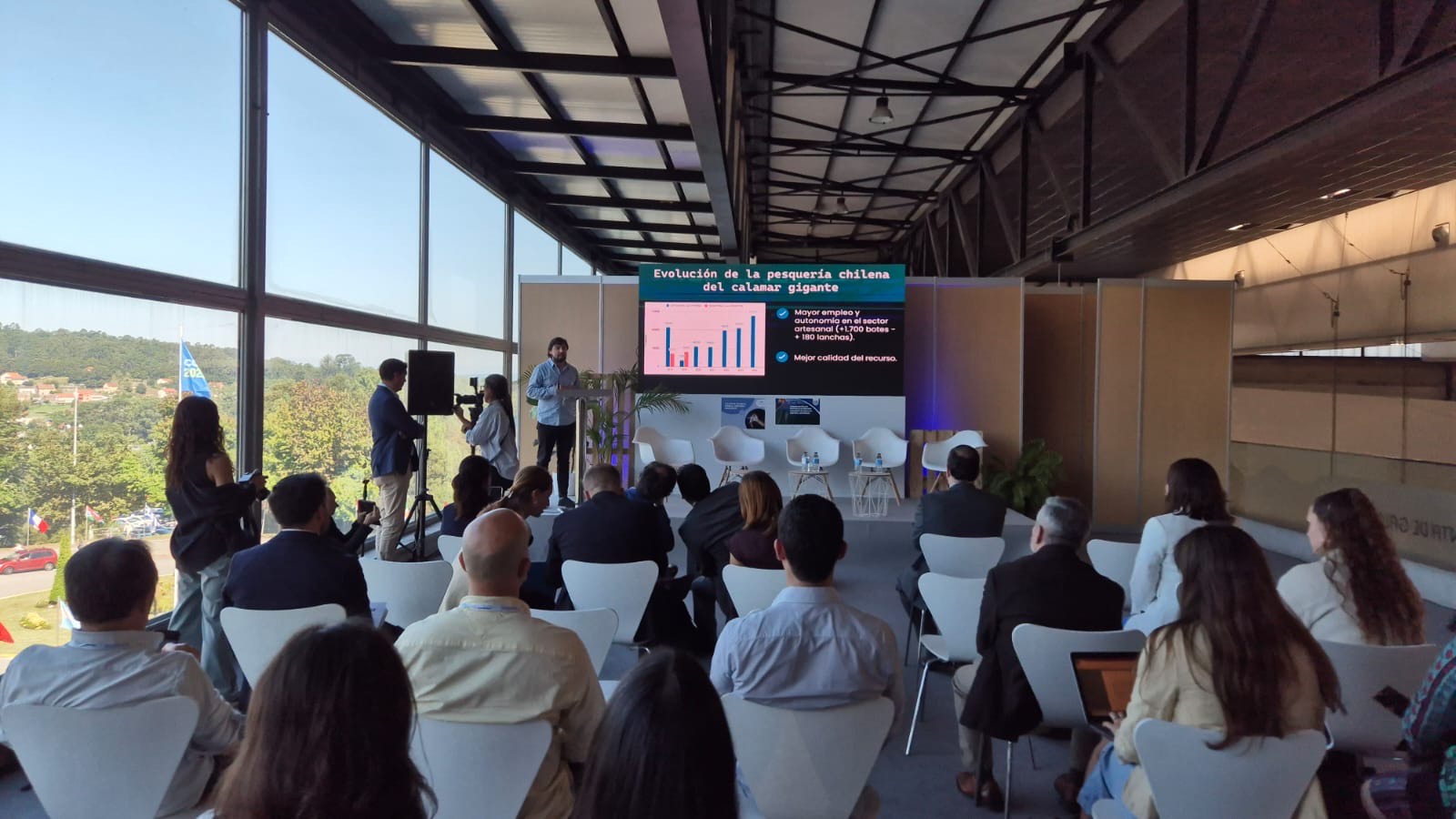
The presentation at Conxemar 2025 marked a milestone for the Chilean Alliance for the Sustainability of the Giant Squid, consolidating its presence in international spaces.
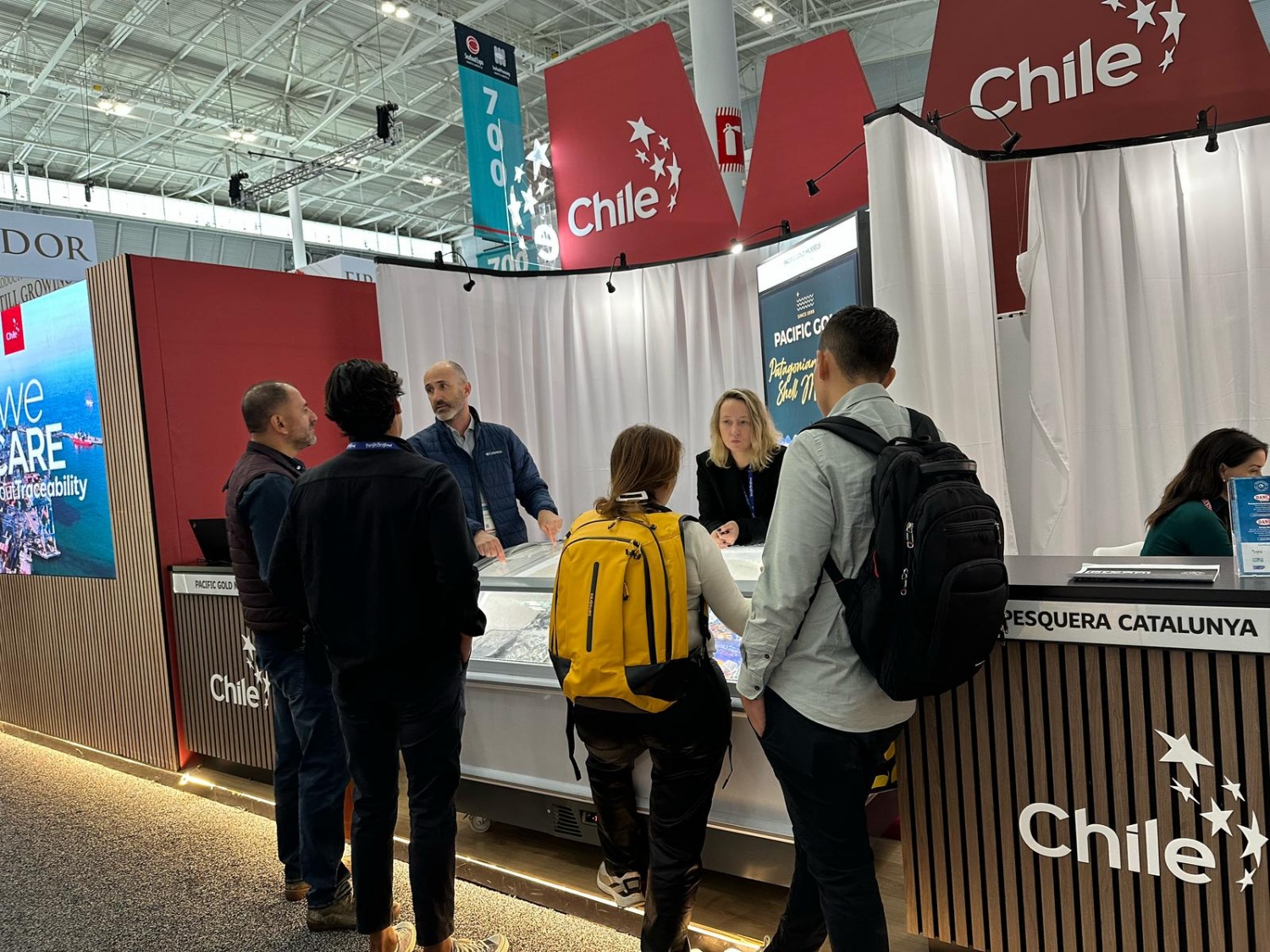
With a high turnout and great public interest, the Chilean Alliance for the Sustainability of the Giant Squid presented the progress of its Fisheries Improvement Project (FIP) within the framework of Conxemar 2025 (Vigo, Spain), one of the most important international events for the fishing industry.
The event was attended by the Undersecretary of Fisheries and Aquaculture, Julio Salas; Javier Rivera, Chief of Cabinet; and the Director of the National Fisheries and Aquaculture Service, María Soledad Tapia. In addition, representatives of artisanal fishing and international buyers interested in sustainability participated, as well as national processing plants that are not yet part of the alliance, interested in joining. this collective effort.
"The presence of national authorities in this instance was fundamental. Their support gives solidity and scope to this process, showing that the sustainability of the giant squid (known in Chile as jibia) is a shared task by the entire value chain, that is, fishermen, processing plants, exporters, scientists and public institutions," said Gonzalo. Araya, director of Market Links of the NGO Sustainable Fishing.
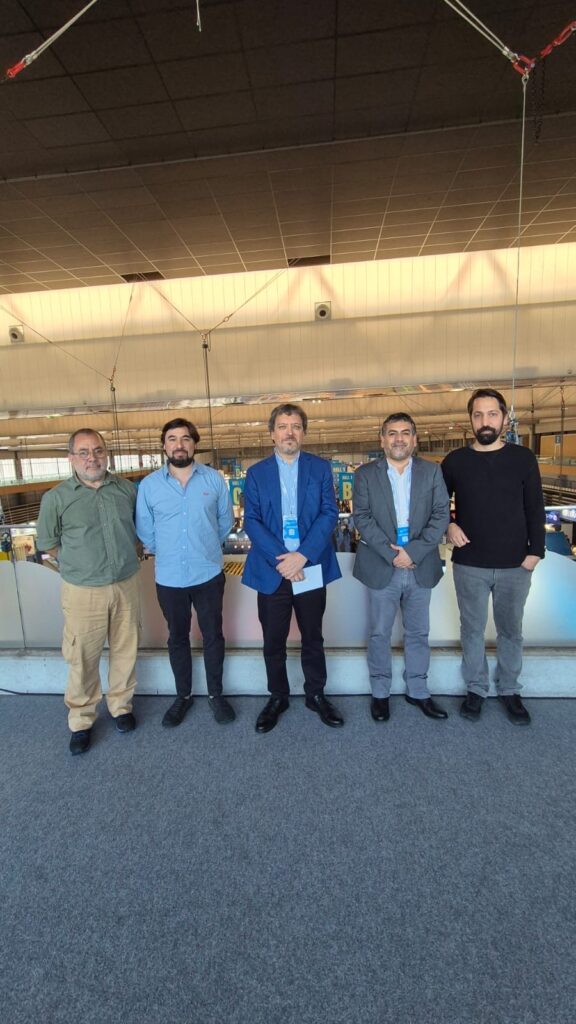
This space is part of the roundtable organized by Sustainable Fisheries Partnership (SFP), which shared information on science and market management for the giant squid, highlighting the importance of integrating scientific research with the commercial requirements of traceability and good practices.
To conclude, Gonzalo Araya thanked the space, highlighting that "it was a very valuable opportunity to show the work we are doing in Chile and how the artisanal sector can be a protagonist in the construction of a more responsible and recognized fishery at an international level. Seeing the interest generated by the presentation motivates us to continue advancing with hope towards a sustainable future for the giant squid and for those who" they live off it.
Next steps
In line with the efforts to strengthen the work of the Alliance in favor of a more responsible giant squid fishery, Gonzalo Olea, director of Fisheries Management and Evaluation, participated as an exhibitor in the II National Workshop on Jibia Fisheries, convened by the National Fisheries Council of the Undersecretary of Fisheries and Aquaculture. In this instance, which brings together representatives of the entire value chain, it announced the Fisheries Improvement Program that promotes the partnership, in the context of the certification of the Marine Stewardship Council (MSC).
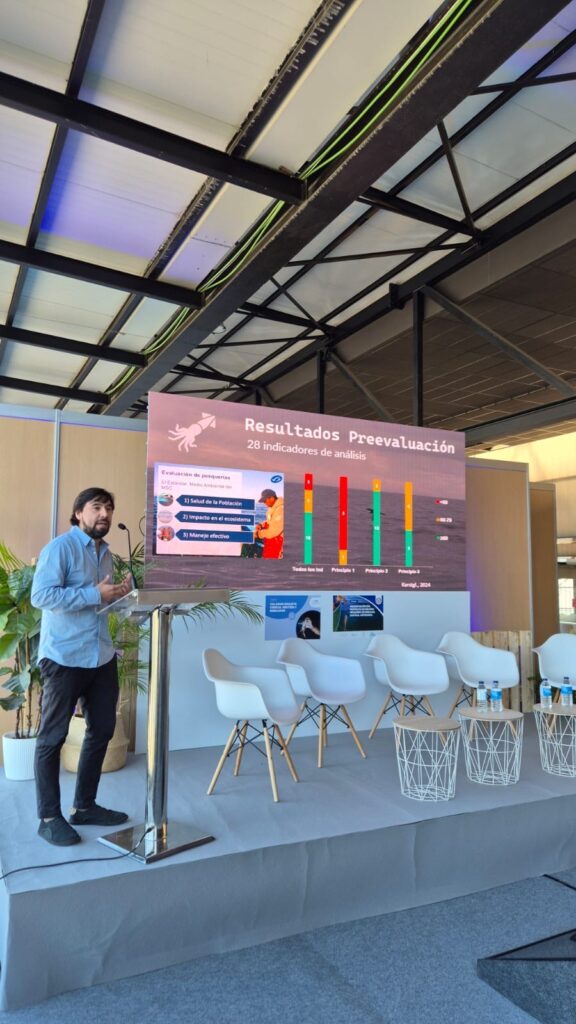
This day also addressed the national and regional context in the evaluation of the stock of jibia. In this regard, Gonzalo Olea commented: “The work of the OROP-PS has been key to promoting an ecosystem and cooperative vision in the management of the giant squid, promoting the generation of common scientific information and evidence-based management strategies. This collaborative work between coastal countries and international fleets is a fundamental step towards a more equitable and sustainable management of the resource, ensuring that management decisions are made on the basis of shared data and consensual evaluation models.”
In this regard, he appreciated the work of the Institute of Fisheries Development in Chile, which considers the information from countries such as Peru, China and Ecuador for its evaluations: “We propose to value what Chile is doing to advance to build common control rules and coordinated strategies between these countries. It is certainly the only real opportunity to ensure the sustainability of the giant squid across the South Pacific, thus ensuring the continuity of the resource and the work of thousands of artisanal fishermen who depend on it,” he concluded.