Sernapesca has managed important advances for the optimization in the use of drugs and the awareness related to the prevention of bacterial resistance.
The National Service of Fisheries and Aquaculture (Sernapesca) recently published the Antibiotic Use Report in National Salmon Farming, covering the period from January to June 2023. The report provides a detailed overview of antibiotic use in the salmon farming industry, highlighting that during the first half of 2023, 177,32 tonnes (t) of active ingredient were used, representing a 25,7% reduction compared to during the same period in 2022.
Of the total antibiotics used during the period, 1.9% were used in the freshwater phase, while 98.1% of these were used in the sea fattening phase. In this last stage, the majority was used in the Aysén region (67.38%), to a lesser extent in the Los Lagos region (35.52%), and in a very small percentage in the Magallanes region (0.09%).
Regarding diseases treated with antimicrobials, piscirickettsiosis accounts for 93.79% of use, and to a lesser extent renibacteriosis (4.14%), tenacibaculosis (1.94%) and other causes (0.12%) account for the remaining percentage.
In the species analysis, 91.8% of the antibiotics are used in Atlantic salmon (Atlantic salmon), a 34.45% increase in coho salmon (Coho salmon) and 12.32% in rainbow trout (Rainbow trout).
In this report, which presents the results of the Antimicrobial Consumption Index (ICA) by closed cycle, companies, species and region for the first half of 2023, the reduction in the use of antimicrobials is highlighted, both for the freshwater phase (-26.5%) and for the marine water phase (-25.7%) during the period, as well as the non-use of antimicrobials of critical importance for human health. It also highlights the widespread reduction. from the indicator, which went from 389.7 g/t in 2022 to 188.14 g/t in 2023.
Finally, the report reveals the results of the PROA-Salmon program, a certification promoted by Sernapesca for those producers at the forefront of the optimal and responsible use of antimicrobials, with strategies that address comprehensively prevention, surveillance and timely therapies. It is highlighted the increase in certified PROA-Salmon tonnes, which amount to 361,763 t, with more than 125 certified centers belonging to eleven fish farming companies.
Surveillance
During this year, the Service has managed important advances for the optimization in the use of antimicrobials and the awareness regarding the prevention of bacterial resistance (RAM) to these pharmaceutical products.
One of them corresponds to the advances for the implementation of the project led by Sernapesca, named SVAR "Surveillance, alert and response system (SVAR) for the use of antimicrobials in Chilean salmon farming" Co-funded by the International Centre for Antimicrobial Resistance Solutions (ICARS) of Denmark with an amount of US$500 million, which includes the participation of academia, producers and the State, with a three-year extension, whose objective is to maintain a risk factor management system for the use of antimicrobials in the sea fattening phase, generating timely alerts that allow optimizing the use of antimicrobials.
On the other hand, during September, the first meeting of the antimicrobials table was held at the Sernapesca offices in Valparaíso, which brought together all companies through their technical management, guilds, MEVEA (Chilean Society of Aquaculture Specialized Veterinarians), Subsecretariat of Fisheries and Aquaculture (Subpesca), where the procedure for extra-label use and the update of the PROA-Salmon program were addressed. It is expected that this meeting will be held again in the first quarter of 2024.
Download below the full report:
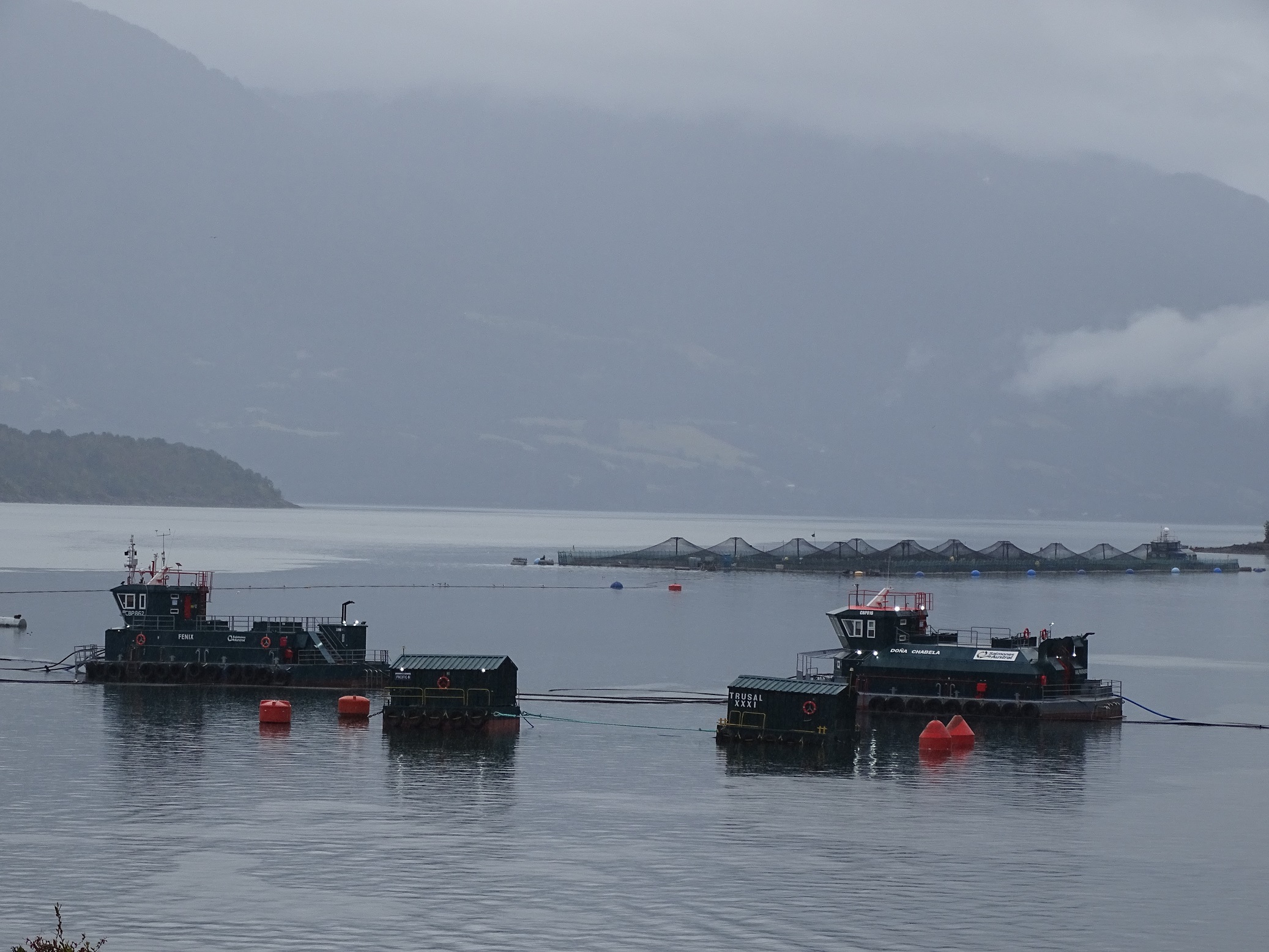
*The featured photo is context-based and corresponds to Partnerfish file - Aquaculture Directory.