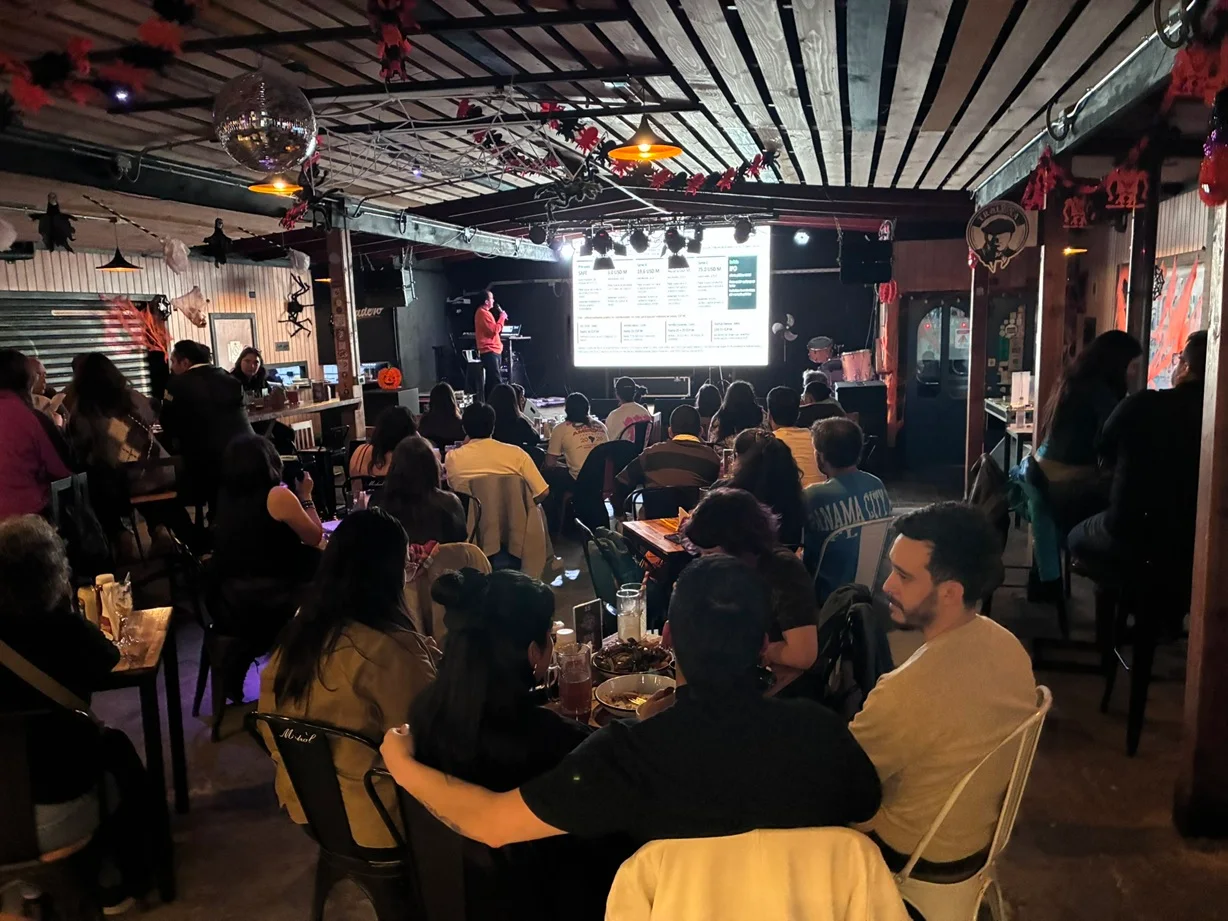
How much do we know about red tides and their risks? Can aquaculture contribute to the recovery of marine ecosystems? These questions will feature the penultimate meeting of CerveCiencia Puerto Montt of 2026, with the participation of researchers Pamela Carbonell Arias and Luis Alberto Henríquez Antipa, both from the Fisheries Development Institute (IFOP).
Pamela Carbonellbiologist and researcher of the Centre for the Studies of Harmful Algae (CREAN) of the FIFG, will present “Harmful Algae Flowers: Main weaknesses and strengths in the knowledge of communities living in southern Chile”.
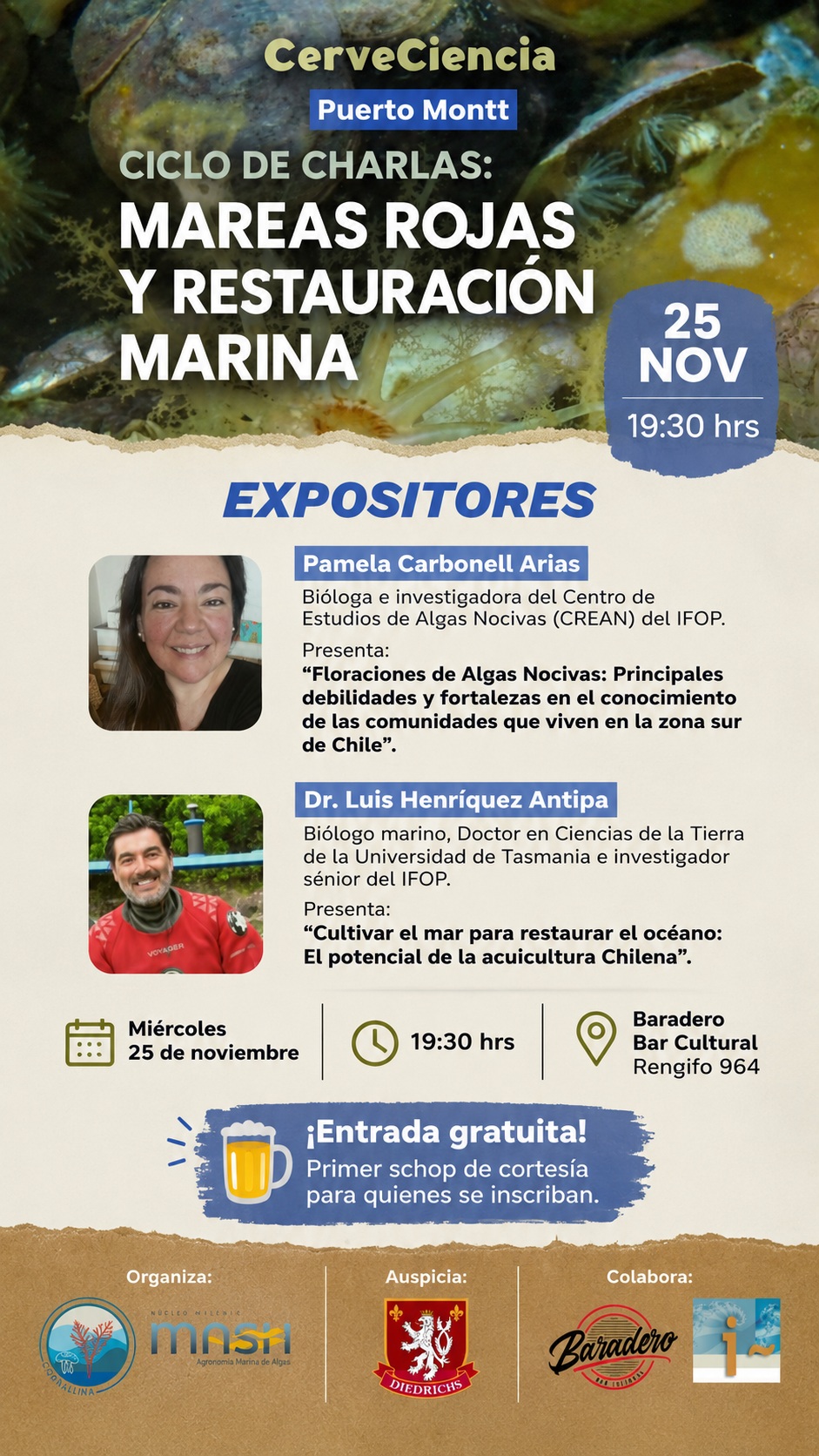
His work focuses on monitoring the flowering of harmful algae from Biobío to Magallanes and, over the last decade, has developed educational initiatives with rural school communities and inhabitants of coastal areas, seeking to strengthen the prevention and communication of risks associated with red tides.
By their part, Luis Alberto Henríquez, marine biologist, PhD in Earth Sciences from the University of Tasmania and senior researcher at IFOP, will present “Cultivating the Sea to Restore the Ocean: The Potential of Chilean Aquaculture”.
Specialist in marine ecology and scientific diving, Henríquez will address the possibilities offered by aquaculture to contribute to the restoration of marine ecosystems.
Science for sharing
BeerCiencia is an initiative of Fundación Corallinadeveloped in Puerto Montt next to the Millennium core MASH of the i~mar center of the University of Los Lagos, headquarters Puerto Montt, and Baradero Cultural Bar, sponsored by Diedrichs beer.
The activity is free and will take place on Wednesday, November 25, from 19:30, in Baradero Bar Cultural, Rengifo 964, Puerto Montt.
Inscriptions on this link https://docs.google.com/forms/d/e/1FAIpQLSdcO0sItfP0skk1iJeq2B9BW3Hg6mRSnQs29jXaxqB5WTC8ig/viewform