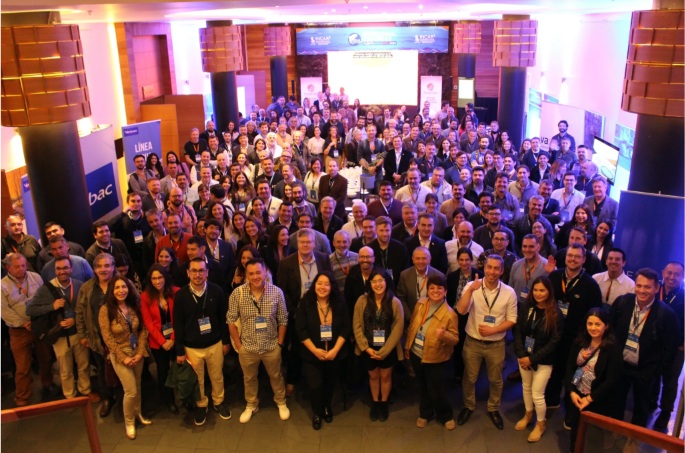
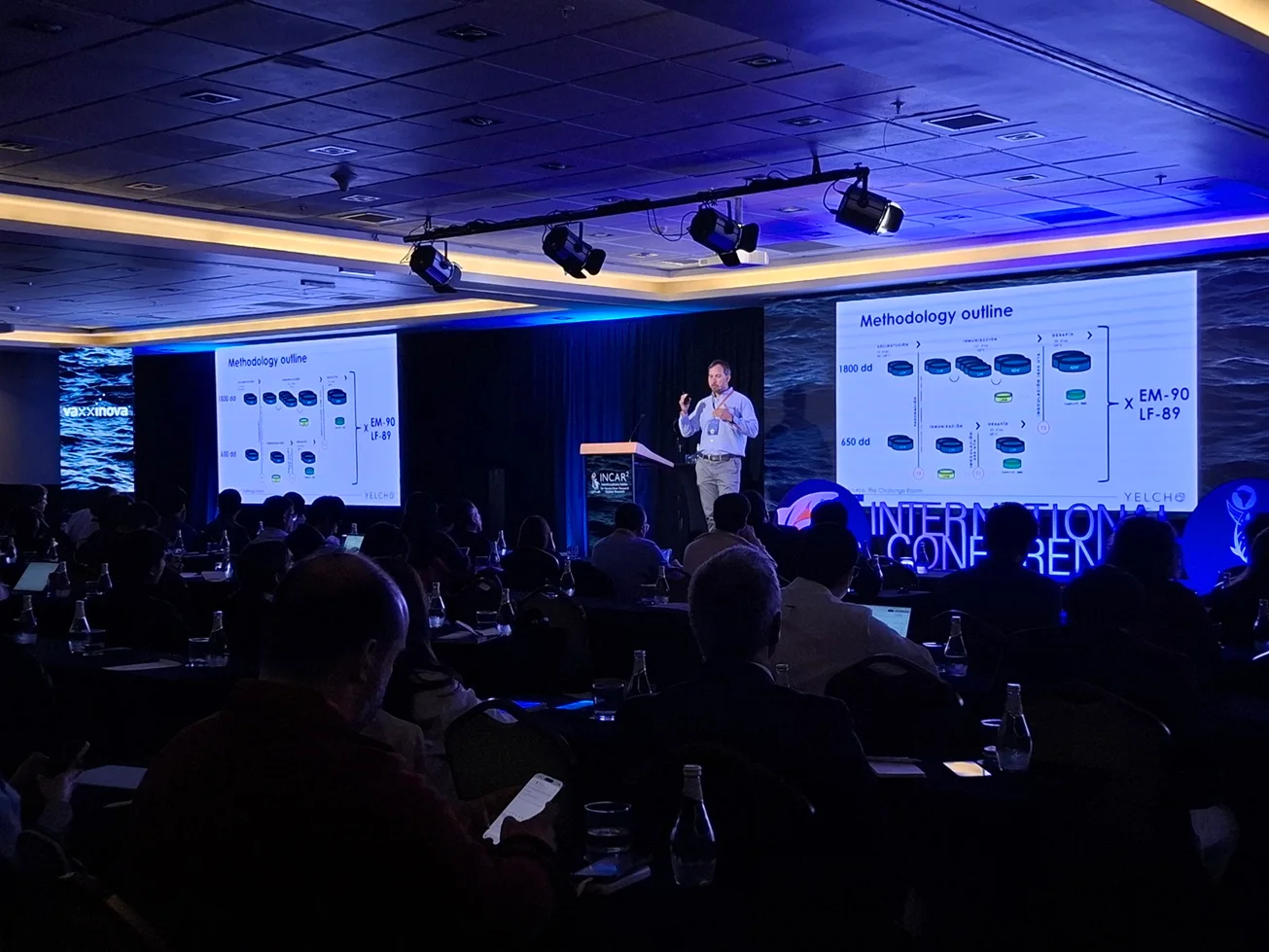
Alianza Yelcho presented the results of its first experimental trial of vaccines against Piscirickettsiosis at SRS International Conference 2026, organized by the Center for Applied Research in Sustainable Aquaculture (INCAR²), which took place between 9 and 11 November in Puerto Varas. The alliance participated as a sponsor of the conference and contributed two talks to the scientific-technical program in the sessions “Control Tools” and “Animal Welfare”, where the complementary dimensions of its work were presented: the evaluation of prevention tools and the articulation of capacities to promote new health solutions.
Evaluation of vaccines and vaccination strategies
In the talk “Jelcho experimental trial: evaluation of vaccines and vaccination strategies to improve immunity against SRS”, Daniel Woywood, coordinator of the alliance, presented the results of an investigation comparing the effectiveness and safety of seven immunization alternatives against Piscirickettsia salmonis: three live vaccines, one inactivated vaccine including the EM-90 and LF-89 genogroups, and three co-injection strategies for live pentavalent vaccines. The study included a control group and considered experimental intraperitoneal challenges against both genogroups, performed at 650 and 1,800 thermal units accumulated (UTA) after immunization.
The study, developed by Challenge Room between August 2025 and May 2026, showed that, under the experimental conditions evaluated, live vaccines administered alone offered greater protection and a more favorable safety profile than combinations with pentavalent vaccines and the inactivated vaccine analyzed. Compared to the EM-90 genogroup, live vaccines alone maintained a high efficiency at 650 and 1,800 thermal units Cumulative (UTA) after immunization, although with some decrease in the later evaluation. Compared to LF-89, they achieved a relative percentage survival rate (RPS) of approximately 80–85% at 650 UTAs and even greater protection than 1,800 UTAs. Combinations with pentavalents showed a high initial protection against EM-90, but this decreased in the second challenge, while against LF-89 they recorded a lower PSR than the of live vaccines alone in both evaluations. The comparison between moments was more consistent for LF-89, since the mortality of controls was maintained at 76%, while for EM-90 it varied from 83% to 58%.
In safety, live vaccines administered alone showed virtually zero peritoneal adhesions, reduced melanosis and absence of vaccine residues, unlike combinations with pentavalents and inactivated vaccine, which generated higher reactions, although with relatively low adherence scores. The three live vaccines had a similar behavior, without significant differences between them, and were observed cross-protection in all groups, especially with live vaccines at 1,800 UTA.
Based on these results, the professional proposed reviewing the current vaccination strategies, particularly the co-administration of live and pentavalent vaccines, warning that the findings correspond to controlled conditions and that the performance in production could be different.
In conclusion, Daniel Woywood announced that Alianza Yelcho will conduct two new studies: One vaccine lag, which will start in the coming weeks, to evaluate between 6 and 7 groups of live and pentavalent vaccines with intervals compatible with the productive reality of the industry; and another, on the relationship between temperature and immunization. These results will serve as a basis for a new experimental test to be carried out in 2027, which Considers evaluating vaccines, booster and additives that can act as immunisation enhancers.
Collaboration to promote new solutions
For his part, Fernando Flores, executive director of the alliance, gave the talk “The Yelcho Alliance: a new model of public-private governance and collaboration with the animal health sector”, focused on the articulation of capacities to accelerate the development and implementation of immunological solutions to Piscirickettsiosis, in addition to contributing to the reduction of the use of antibiotics in salmon farming.
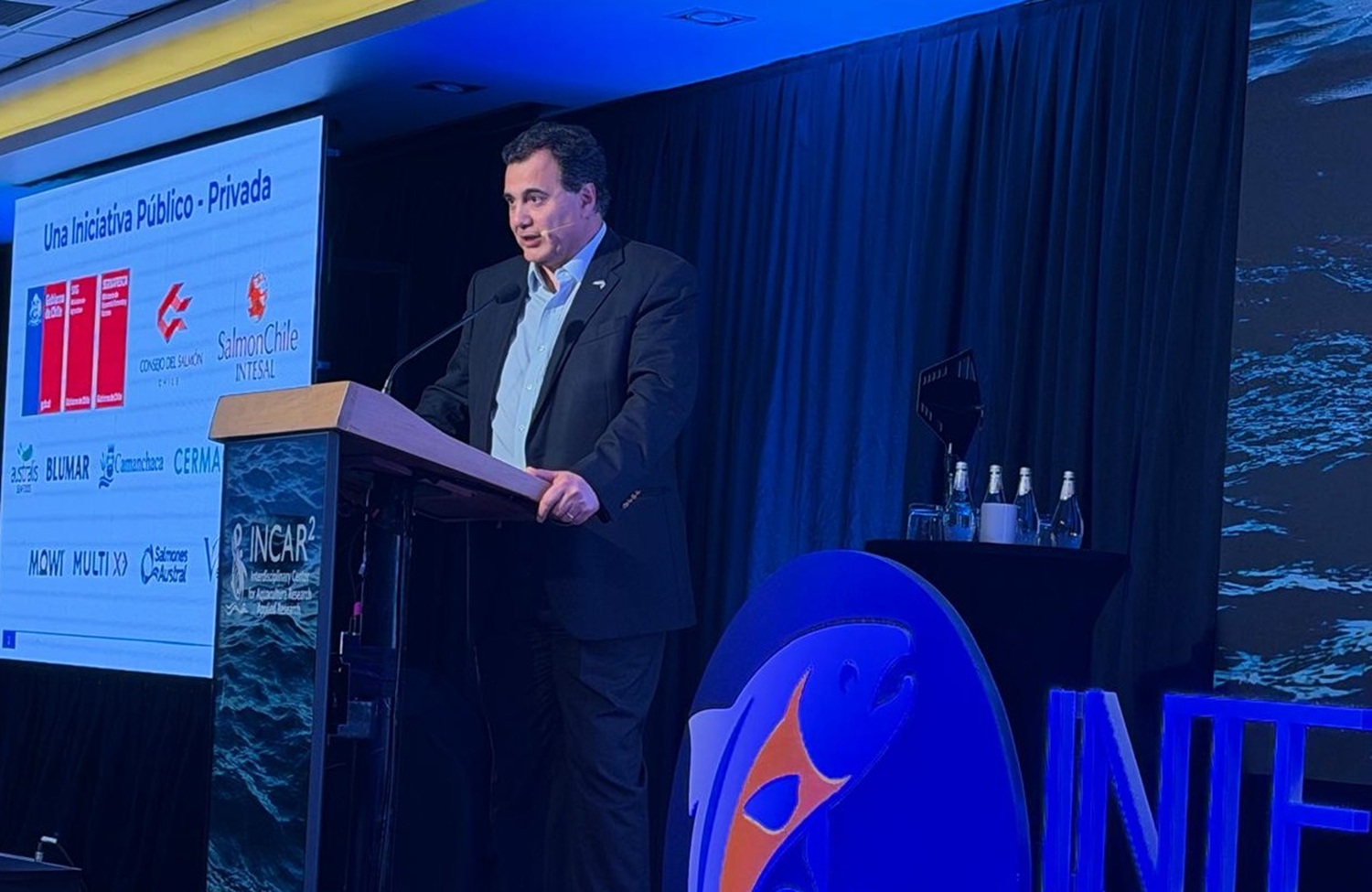
The executive recalled that the alliance – which was formed in 2024 – promotes a new link with pharmaceutical companies to facilitate innovation, evaluate vaccine prototypes and encourage the adoption of effective tools. Its structure brings together SalmonChile, the Salmon Council, SAG, Sernapesca and nine salmonid producing companies, under the technical coordination of Aquabench, connecting the health needs of the sector with research and development capacities.
Among the advances, he highlighted the expansion of the search for innovation to more than 50 institutions, the evaluation of three vaccine prototypes and support for developments based on new technology platforms. He also noted that the availability of new solutions depends on both regulatory deadlines and investment in research and the quality of technical files submitted by companies. In this context, he highlighted the recently agreed with SAG to establish a working table aimed at identifying improvements and promoting innovation.
Fernando Flores also appreciated the participation of the alliance in the SRS Conference 2026 and congratulated the INCAR² Center for its organization. He highlighted the number and diversity of applied research initiatives presented, reflecting growth over previous years, and called for identifying and enhancing the factors that have driven this progress.
Exchange with researchers
Another relevant activity developed by the alliance within the framework of the conference was a working day, on Monday, November 9, in Puerto Varas, where it called together national and foreign researchers working on the development of solutions against the SRS – taking advantage of its participation in the international meeting – as well as authorities and representatives of the unions, to share scientific advances and explore opportunities for the development of the SRS. collaboration in the face of pathology.
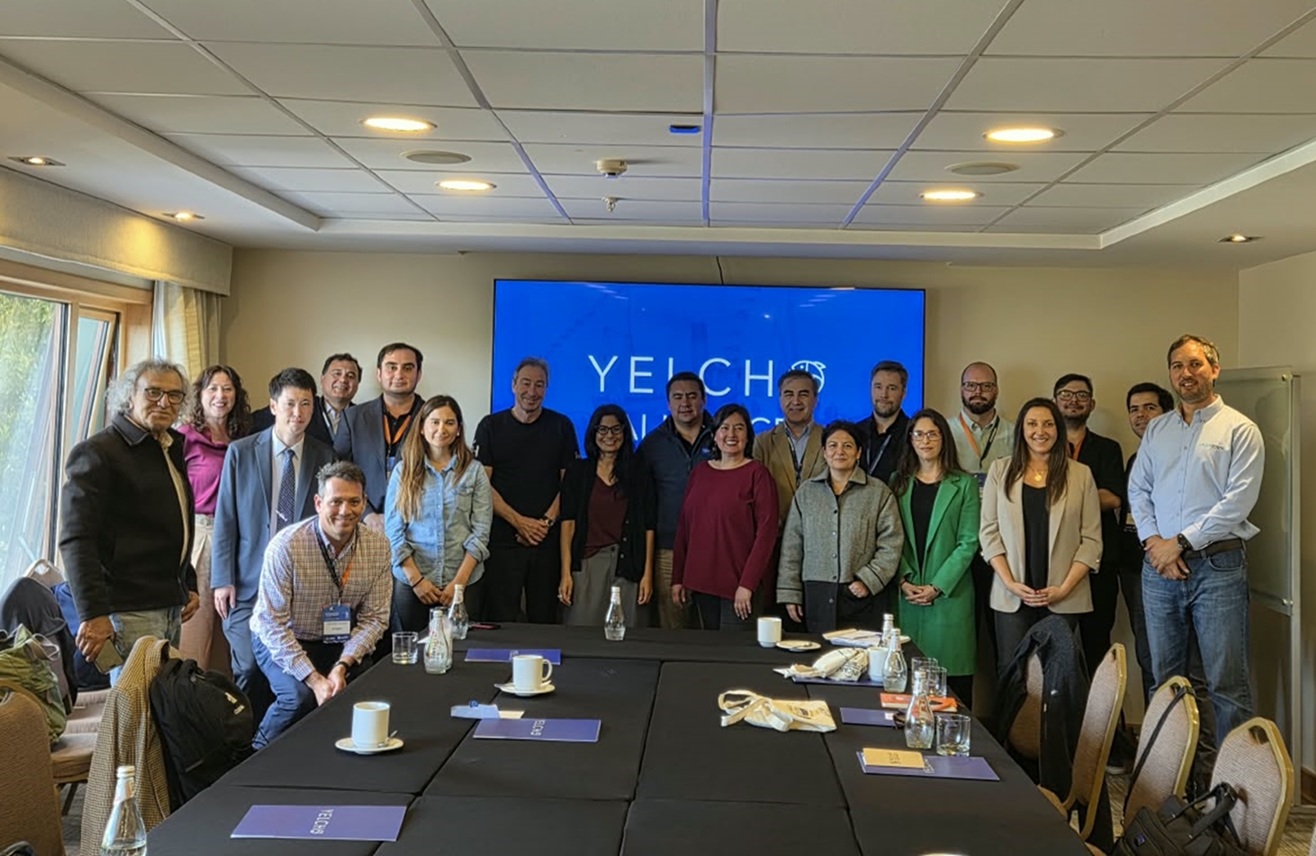
“This meeting allowed us to learn about their lines of research, the state of progress of their projects and the opportunities for collaboration in which the partnership can provide support and capacities to facilitate their development. We also managed to identify three new projects for the scouting 3.0 that we are carrying out, expanding the diversity of approaches to address this disease,” said Fernando Flores.
He also highlighted the willingness of researchers to share their advances, the interdisciplinary exchange, the positive evaluation of Yelcho's collaborative model and the need to expand investment in research, development and innovation, commenting that, after the meeting, a follow-up meeting with one of the participating groups was already held.