The initiative seeks to promote the exchange of knowledge, technologies and experiences, with a projection to six regions of the country.
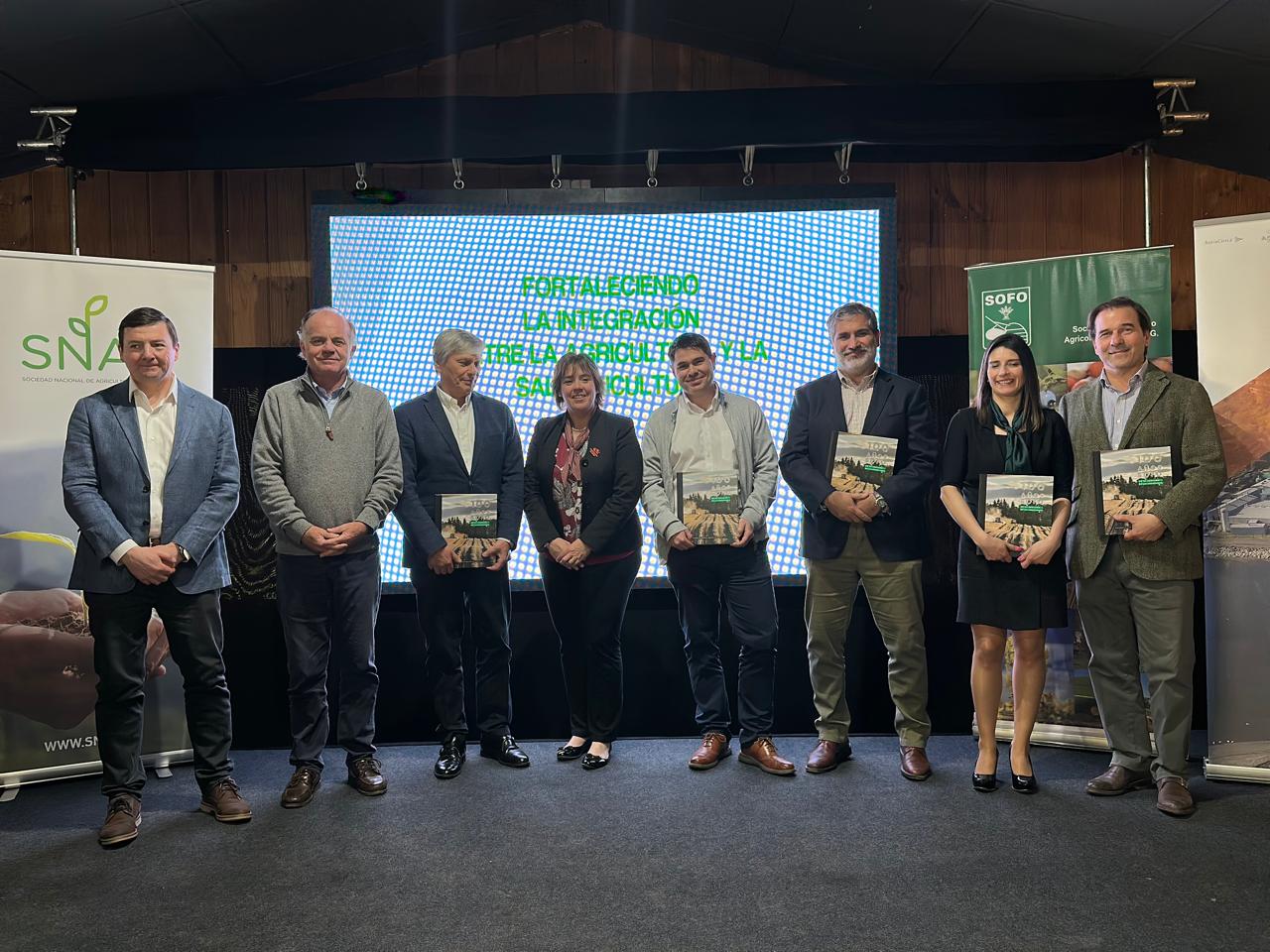
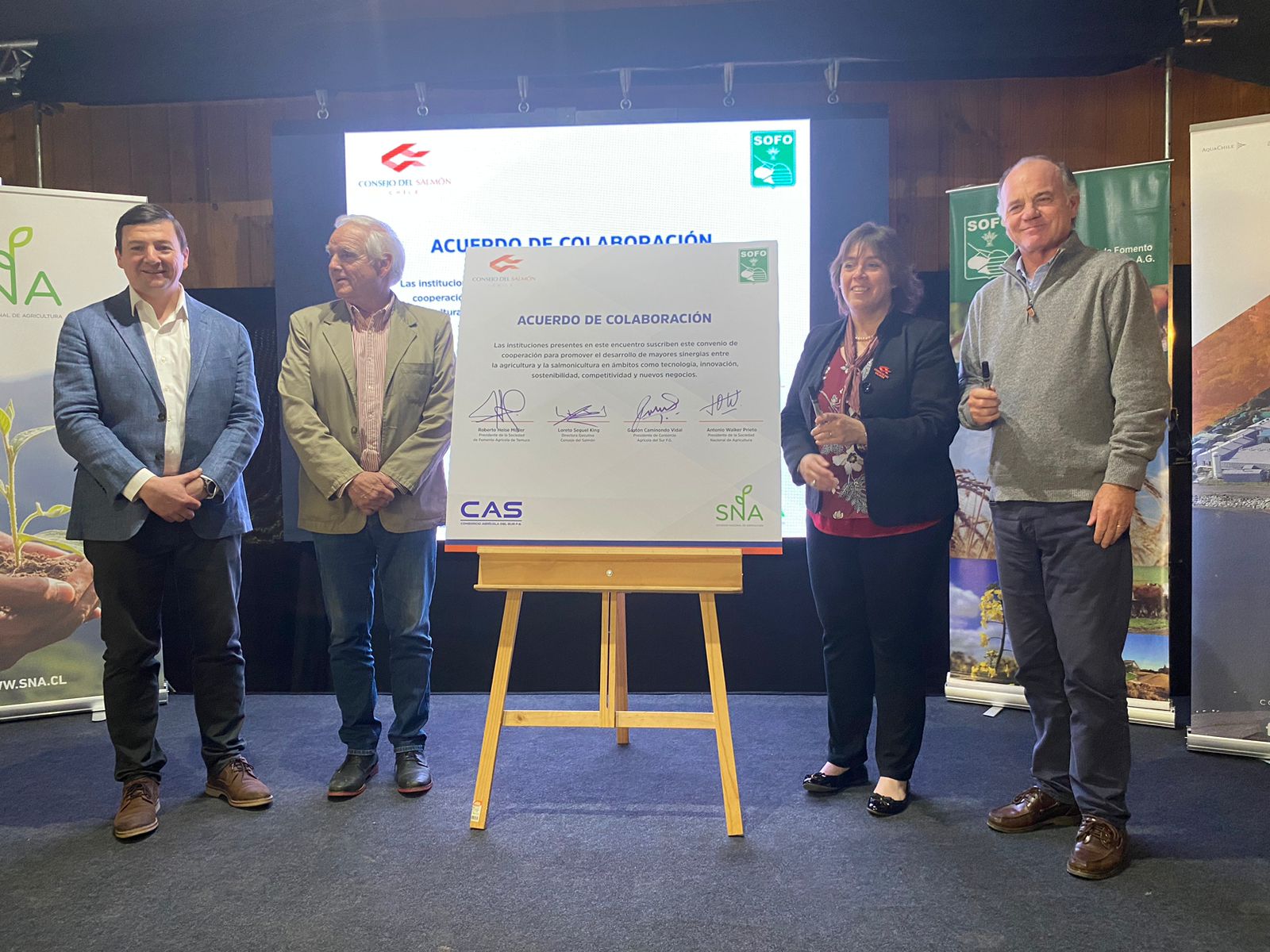
The Chilean Salmon Council (CDS), a union that brings together five of the main production companies operating in the country (AquaChile, Australis Seafoods, Cermaq, Mowi and Aysen Salmons), led the signature of a collaboration agreement with the Temuco Agricultural Development Society (SOFO)the National Society of Agriculture (SNA) and the Southern Agricultural Consortium F. G. (CAS) - made up of guilds Saval, Socabio, SOFO, Sago and AgroLlanquihue- I'm sorry. The aim is to connect the salmon industry with Chilean agriculture and to explore synergies between the two productive activities.
The initiative emerged from the opportunity to promote the exchange of knowledge, technologies and experiences between the salmon and agricultural industries. This, considering that over 60% of the food composition of the food that nourishes Chilean salmonids comes from grains like raps, soy, wheat, canola and cereals in general, which Today they are imported, but that Chile could produce in large volume, mainly from the Maule region to the Lakes region.
The agreement was announced at the seminar entitled "Strengthening the integration between agriculture and salmon farming", which was held on Wednesday, October 9 in Temuco (Araucania region) and its main objective was to strengthen the value chain, identify business opportunities and technological development.
Representatives of both industries participated during the event, such as Loreto Seguel, executive director of the CDS; Roberto Heise, president of SOFO; Antonio Walker, president of the SNA; Gastón Caminondo, president of the CAS; José Ramón Gutiérrez, executive president of Multi X; Claudina Uribe, director of Molinera Gorbea, and in the panel of food producers were present José Manuel Schwerter (AquaChile) and Juan Enrique Rosales (Cargill).
Voices
Loreto Seguel assured that thanks to the agreement will be possible build alliances and business meeting points, contributing to research, development and innovation (R & D & I) projects.
"Chile is the world's second largest salmon producer thanks to an activity taking place in Los Lagos, Aysén and Magallanes, which generates more than 70,000 jobs and represents 17.6% of GDP (gross domestic product) of these three regions. If we integrate farmers' production into this equation through the sustainable food of the salmon with Chilean grains, we are including six regions of the country in this productive chain that is beneficial because it will help to boost the long term a sustainable local environmental, social and economic industry," he argued.
By their part, Roberto Heise, president of SOFO, commented that "in the area of crop production we have been very uncertain for many years in the commercialization of our products and undoubtedly this link with the salmon producers, which began shortly after 2000, is a great opportunity to expand our marketing channels."
For the helm of the SNA, Antonio Walker, is a key alliance: "This union of the SNA with SOFO and CAS, which are guilds of regions of southern Chile, is very important. Together we are making this alliance with the salmon industry. We are uniting the land, we are uniting with the sea, we are in a sector of bioproduction, of bioeconomy. This agricultural, forestry, livestock, fishing, aquaculture, exports $28 billion and generates more than a million jobs and it cannot be that the salmon industry is supplying itself with imported grains when we have them in La Araucanía and other regions of the south."
First approaches
A significant milestone in the prelude to the signing of this agreement was born in the celebration of the 100th anniversary of the OMSA (World Organisation for Animal Health) in Paris, France. During the holding of this event the first rapprochement between the Ministry of Agriculture began (Minagri) and the Salmon Council, which deepened at the meeting organized by the SNA in June.
Read more » Chilena assumes the presidency of an important commission of OMSA
Also read » They seek to regulate genome editing
"Since we started the talks, the focus has always been on connecting both industries to create synergies. That is what we materialize today with the signing of this agreement. We want to share experiences, schedule technical visits and bring together both worlds to privilege Chilean inputs and to promote domestic industryhighlighting the high value of Chilean salmon as an export product. Our union seal has always been to generate public-private partnerships and collaborate with authority for the well-being of Chile and their people. We appreciate the leadership of the Minister (of Agriculture, Esteban) Valenzuela, who from the beginning has supported this country crusade," said Loreto Seguel.
PTEC-INVA
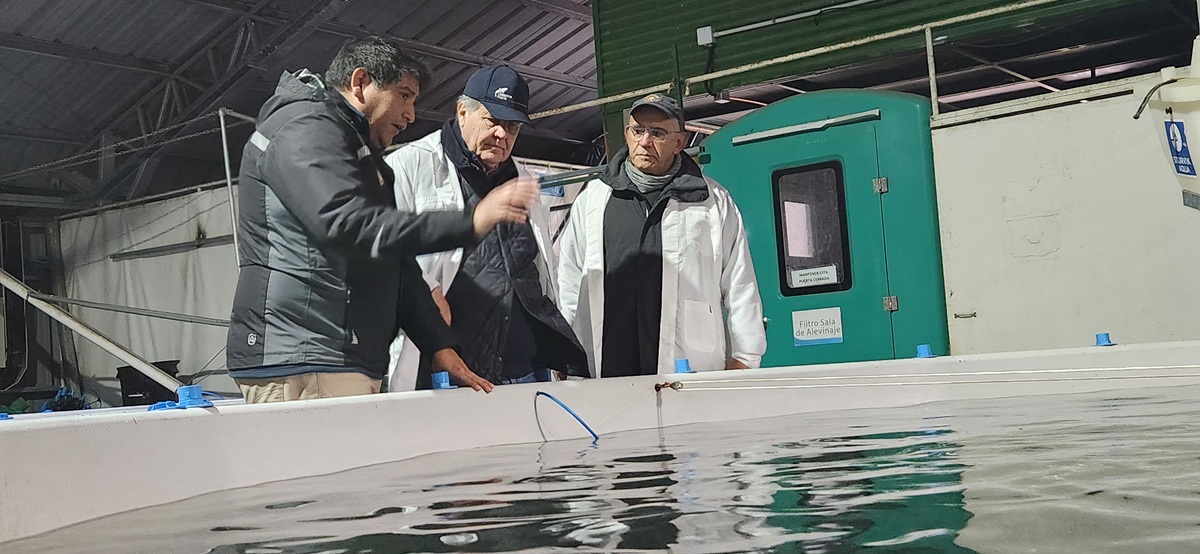
The seminar was also attended by Dr Daniel Nieto Díaz-Muñoz, Manager of the Technological Program for the Local Production of Nutritional Insumes for Aquaculture (PTEC-INVA), an initiative promoted by the Production Development Corporation (Corfo) and whose fundamental objective is to create a enabling platform support for the production and use of nutritional vegetable inputs from rotational crops in the southern and southern macrozone of Chile as sustainable source of proteins and oils, which may be scalable, cost effective and environmentally effective for use in the development of fish diets.
The Programme, which is in its third year of implementation of a total of five, is led by the company Antarctic Salmonwhile the following entities are present as co-executors: (INIA), Food Innovation Technology Center (CeTA), VeHiCe, Agrotop (Saprosem), the Catholic University of Temuco (UCT) and the University of Chile (University of Chile).
The area of productive development, meanwhile, is focused on the regions of La Araucania, Los Ríos, Los Lagos, Aysén and Magellan.
During the day, Dr. Nieto stressed that the signing of this collaboration agreement between the Salmon Council, SOFO, SNA and CAS marks another key milestone for the joint development of salmon farming and agriculture: "This partnership represents a new opportunity to strengthen the relationship between the salmon and agricultural industries, promoting a comprehensive approach that will benefit both parties, optimizing resources and promoting sustainability."
"It is also essential that both salmon farming and agriculture continue to link with the State through technological programmes such as PTEC-INVA, which is already in its third year of implementation, thus strengthening innovation and competitiveness which lead to the creation of a new third industry from the union between the two sectors", concluded the representative of the PTEC-INVA, which is one of the emblem initiatives on public-private and academic linkages.