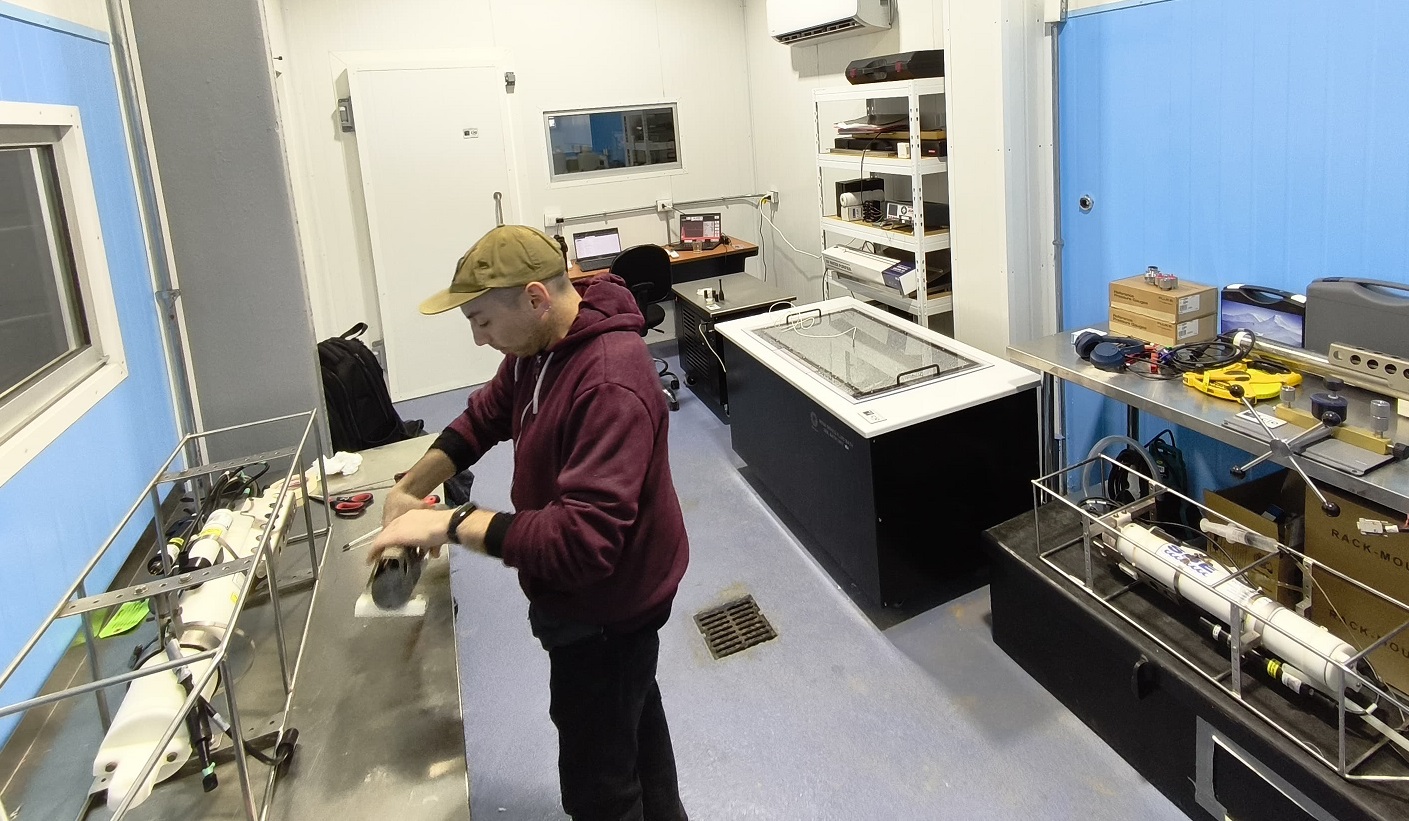
Infrastructure aims to provide researchers and professionals in the region with high-precision facilities for the calibration of oceanographic probes (conductivity, temperature and pressure), a service essential to ensure the reliability of measurements in the scientific and technical field.
The Oceanographic Instrumentation Center (CIO) from the University of Concepción and funded by ANID, continues to strengthen its role as a reference in oceanographic science in Latin America with the implementation of a new oceanographic instruments calibration laboratory, which will begin operating in the second half of 2025.
This laboratory, funded through the project Metrological Platform for the Calibration of Oceanographic Instruments (PMCIO) with funds from the Scientific and Technological Equipment Fund (FONDEQUIP Mediano) of the National Agency for Research and Development (ANID), it aims to provide researchers and professionals in the region with high-precision infrastructure for the calibration of oceanographic probes (conductivity, temperature and pressure), an essential service to ensure the reliability of measurements in the scientific and technical field.
The project, which started 18 months ago, has involved the acquisition and manufacturing of advanced equipment, as well as the adaptation of spaces and training of CIO staff, in direct collaboration with the manufacturers.
Cutting-edge technology to ensure accurate measurements
The new laboratory will include a second high-precision Guildline salinometer, a calibration tank with automatic control of seawater temperature, and state-of-the-art equipment from the brand Fluke to measure hydrostatic pressure and temperature. These devices represent a critical renewal of the old CIO equipment, much of which was over 20 years old, as explained by Darío Torres, Laboratory Head of CIO calibration: "The incorporation of these first-class instruments is a fundamental step to keep us at the forefront of metrological technology, ensuring the quality and accuracy of our calibrations."
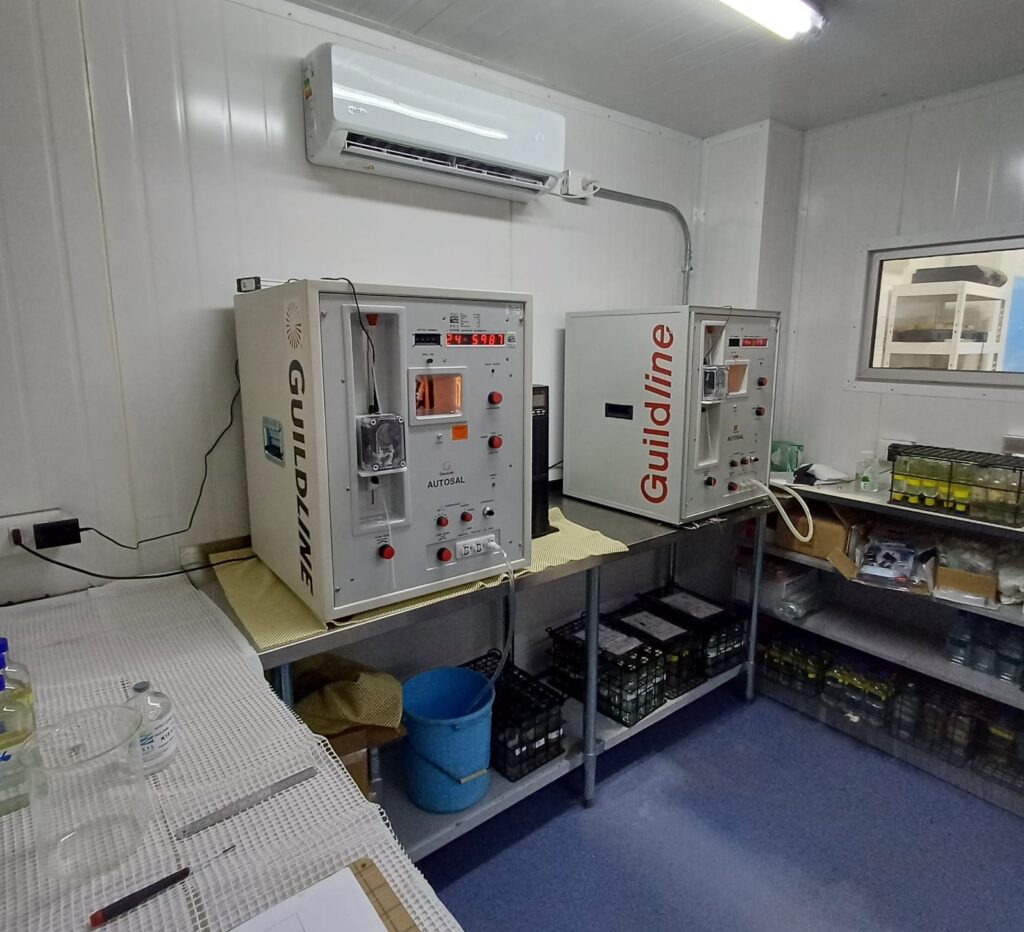
The ability to offer high-precision instrument calibration in Chile not only represents a significant advance for the country, but also a milestone for Latin America, where there are few laboratories specialized in this type of calibration. Gerardo García Ruiz, director of the Calibration and Laboratories Unit of the CIO, highlights: "This project will allow to raise the oceanographic measurement standards in Chile, ensuring that equipment used by researchers and professionals is rigorously verified and validated for the measurements they perform.”
The Oceanographic Instrumentation Centre has strengthened its capabilities through strategic partnerships with internationally renowned companies that have provided advanced training and essential technical expertise. A key partner in this process has been Old Helmet, representative in Chile of NKE, important manufacturer of oceanographic sensors. Thanks to this collaboration, the CIO has been officially recognized to provide calibration services for the oceanographic probes offered by NKE. Casco Antiguo has facilitated not only access to state-of-the-art instruments, but also the exchange of valuable technical experience on verifications and calibrations, which has been essential to optimize the quality of the services of CIO calibration.
Another strategic partner has been OSIL, world leader in oceanographic instrumentation, with which CIO has received technical training specialized in the use of Guildline equipment. This training has been key to improving the metrological capabilities of the center.
In addition, Intronica, representative in Chile of Fluke, has been another fundamental ally of the CIO. Through this collaboration, CIO staff have received formal training on the use of FLUKE equipment and technical training in applied metrology, which has further strengthened the centre's capabilities in terms of precision calibration.
These alliances with Old Helmet, Intronica and OSIL consolidate CIO as a benchmark in the calibration of oceanographic equipment, ensuring its leadership both nationally and internationally in the field of oceanographic metrology.
Commitment to quality and trust in the scientific community
Through the PMCIO project, CIO aims to position itself as a leader in metrological calibration, not only in Chile, but also in the international arena. The laboratory vision is to provide high-quality calibration services, ensuring that equipment is ready for the demands of the scientific community and industry, and to build confidence in measurements made.
Each calibration performed in the CIO is supported by a detailed Calibration Certificate, which includes all parameters and references to the metrological patterns used, ensuring traceability.
A promising future in oceanographic research
In addition to the equipment mentioned above, the laboratory will have a pressure chamber that simulates the pressure conditions at depths of up to 500 meters, allowing critical testing for equipment operating in that depth range. This key component in the laboratory will expand capabilities and be complemented by a water purification system and optical instruments for development testing turbidity sensors and fluorescence.
“With this infrastructure, we are taking an important step forward in the future of oceanographic instrument calibration in the country. We want to continue developing the laboratory, including new capabilities to verify sensors that measure other essential variables, such as dissolved oxygen, further contributing to the accuracy of oceanographic research,” concluded Gerardo García Ruiz.
With this new laboratory, CIO reaffirms its commitment to quality science, positioning itself as a key pillar in oceanographic and metrological research, both nationally and internationally.