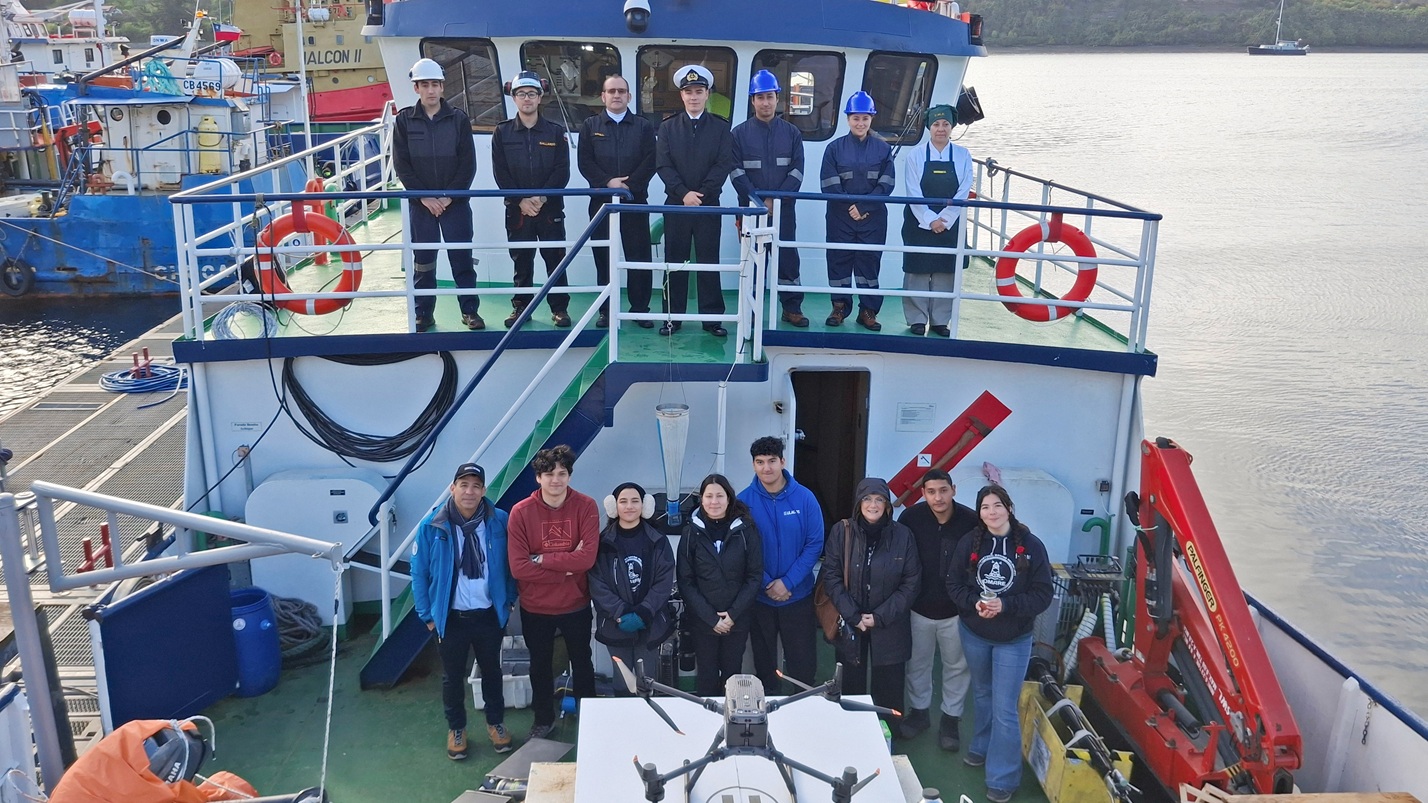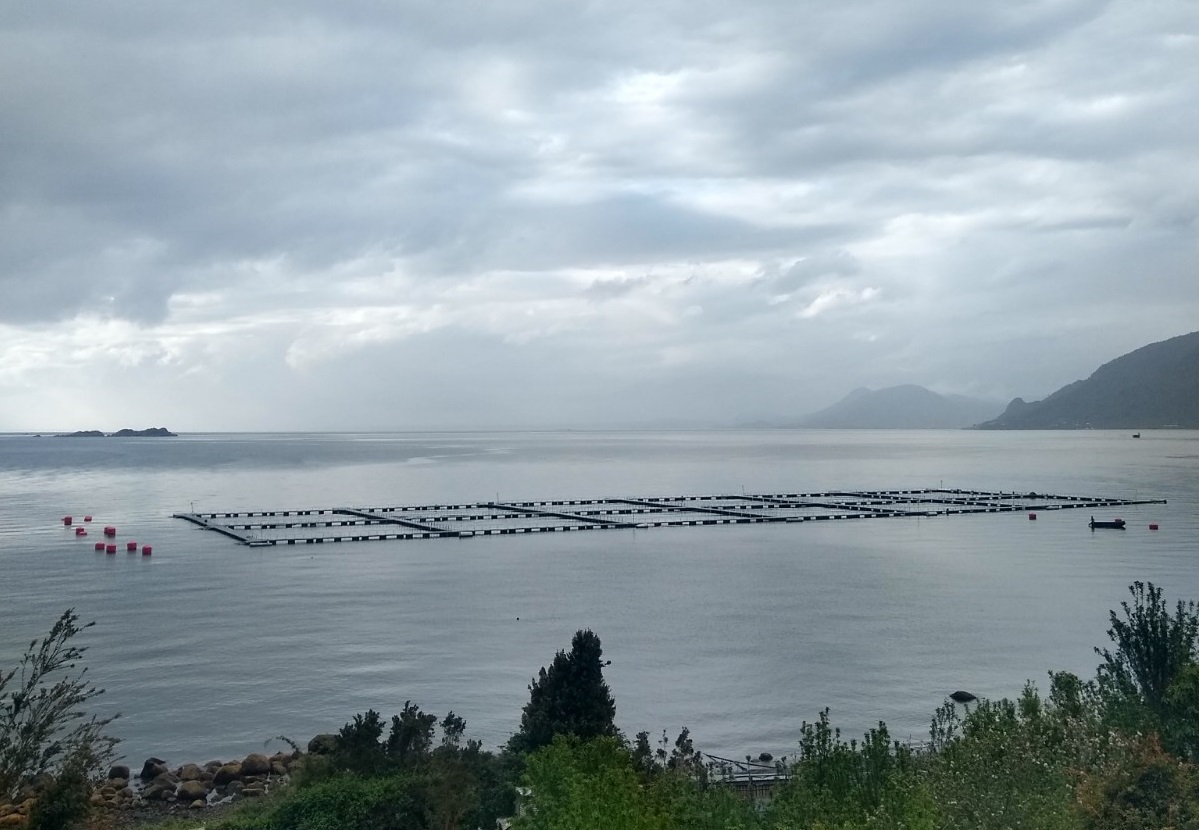
In the framework of the oceanographic cruise that researchers of Center i~mar of the Los Lagos University carry out in the Hornopirén channel, the Doctor Patricio Díaz stated that the weather conditions during the first half of April this year have been optimal for the proliferation of microalgae. It has been a period marked by low rainfall of just 44 millimeters accumulated by April 18, 2024, very similar to the 34 millimeters accumulated in March 2021 recorded at the El Tepual Airport weather station. In addition, the accumulated rainfall during January and February 2024 was also very low and only reached 65 millimeters, far from the average of 170 millimeters that fall during that time. This, added to the intense radiation and high temperatures recorded in the area during these weeks, makes it seem like a perfect scenario for the proliferation of this species., indicated the researcher.
Doctor Díaz added that the socio-economic impacts recorded in 2021 have not yet been perceived or properly reported by the industry to date, that is, an eventual occurrence of mass salmon mortalities in centers located in the affected area. Previous actions could be associated with the timely activation of contingency plans, such as early harvesting, moving fish to lower risk areas and using mitigation mechanisms. Another possible explanation is that the current bloom strain has lower toxicity than the 2021 strain, reducing the damage., said the academic from the University of Los Lagos.
About whether the current algal bloom in Hornopirén is comparable to the one in Comau fjord in 2021, Patricio Díaz explained that since the first days of April of this year, an intense algal bloom of the species has been developing in the channels adjacent to Hornopirén Heterosigma akashiwo. Such events are commonly called “brown tides” because they produce intense brown patches at the surface. The blooms are highly toxic to farmed salmon. The current bloom recalls the event at the head of Comau Fjord in early autumn 2021, which killed approximately 6 thousand tonnes of salmon.
“After 3 years of this intense event, one of similar characteristics is generated again, coinciding in time and space (~40 km to the north), considering the extensive geographical extension of the Patagonian fjord system. The intense brown stains that have been observed these days in the Hornopirén area are very similar to those recorded at the head of the Comau fjord in 2021," added Dr. Díaz.
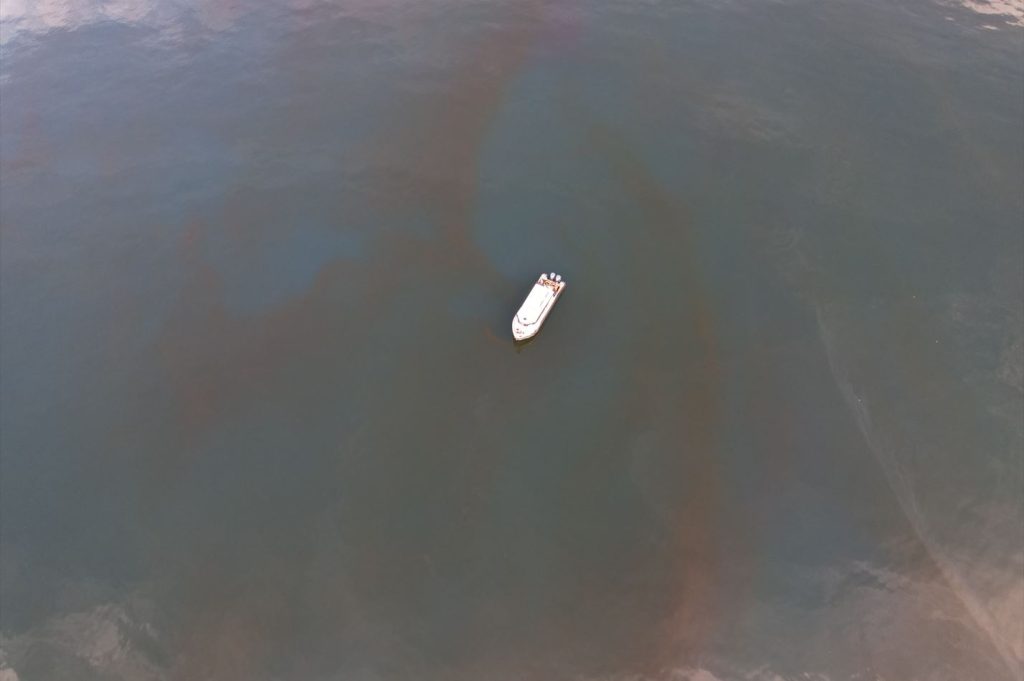
The researcher also pointed out that the event is still in its development phase and could continue to remain in the area for the next few days and/or weeks. This was confirmed during a flight over the area on Wednesday 18 April, where very intense brown surface patches were observed in the area.
The scientific team from the i~mar Center of the University of Los Lagos will continue to monitor the event and has already scheduled a new oceanographic campaign in the coming days, which will allow to collect new information on this intense harmful algal bloom.
It is a collaborative work between different research projects awarded to scientists from the i~mar Center of the University of Los Lagos, which are carried out in parallel and address the phenomenon of red tides.
The initiative of Dr Patricio Díaz is part of the RTI10-22 project titled "Harmful Algal Blooms in Reloncaví Sound: Exploring the causes and their potential impacts", funded by the University of Los Lagos through its Territorial Research Networks programme.
In the case of Dr Daniel Varela, it is the project "Optimisation of the acquisition and treatment processes of hyper-spectral images from a remote detection technology of harmful microalgae (FAN), through deep-learning and the distinction of relevant bio-oceanographic variables", which was awarded funds for its implementation in the IDeA DE I+D 2024, FONDEF of the National Agency for Research and Development (ANID)
The latter is the second part of a project awarded in 2019 called “Development of a Technology Tool that Allows the Use of Oceanic Hyperspectral Footprints for Remote Detection of Harmful Algae (FAN)”, which is being finalized and whose objective was to develop a new way of monitoring harmful algal blooms, by means of a hyperspectral camera installed on a drone, as a technological tool of last generation.