Drug resistance encourages research into non-pharmacological methods as physical barriers.
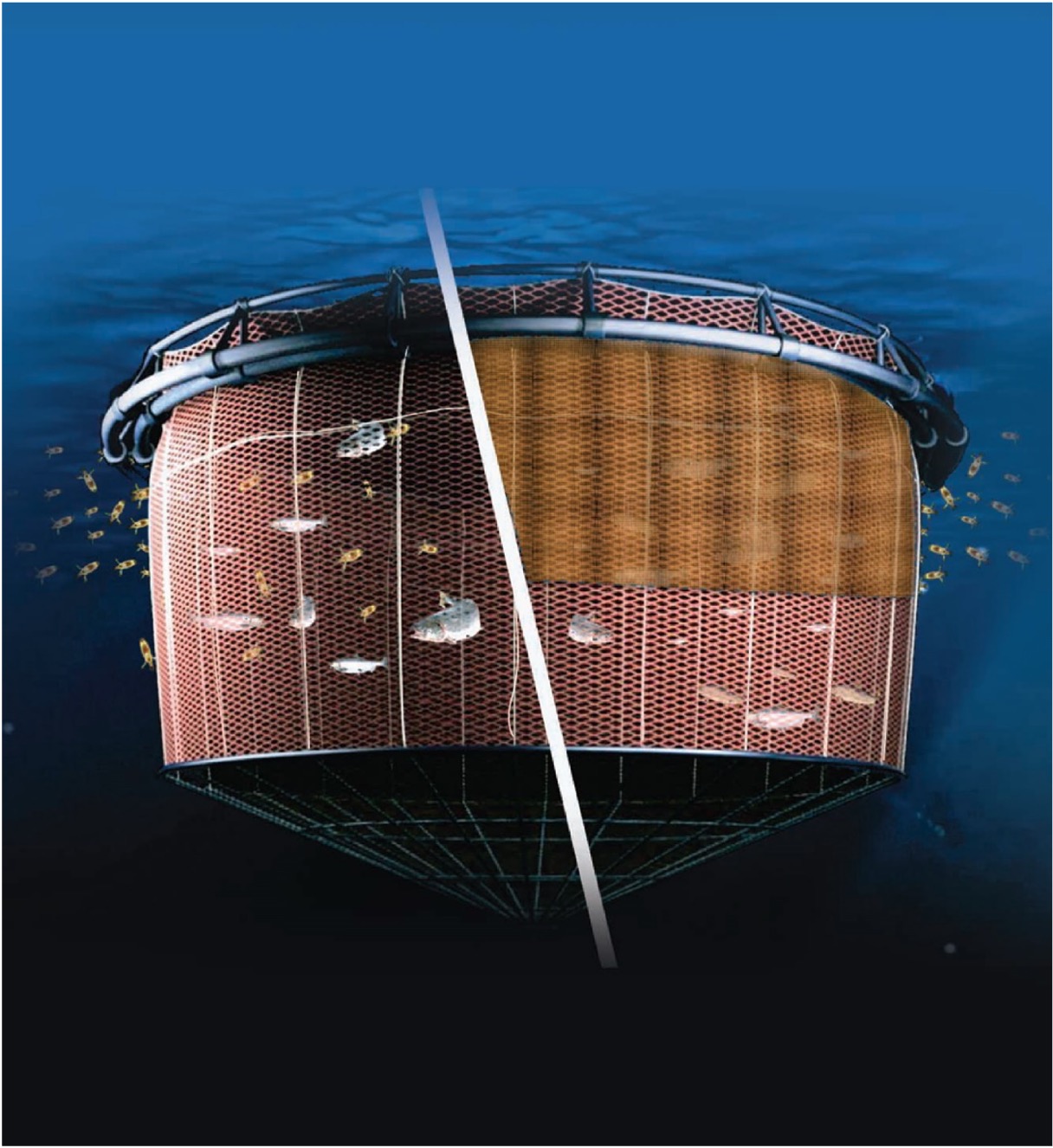
After presenting a scientific abstract, Garware Technical Fibres was selected to present his Skirt X12 as a non-pharmacological tool in the evaluation of textile barriers against larvae of calygus (sea piojo) in the "2nd National Congress of Caligidosis" organized by the Salmon Technological Institute (Intesal) and that will be held this Tuesday 22nd and Wednesday 23rd of October at the Hotel Cumbres from the city of Puerto Varas, Los Lagos region.
The objective of the congress is to generate an instance of presentation of research results on Caligus rogercresseyi to analyse the current situation and address the challenges posed by calygus in Chilean salmon farming.
"The infestation by Caligus rogercresseyi It hinders salmon production. The resistance to drugs promotes research into non-pharmacological methods such as physical barriers, including skirts o skipt anticojos to reduce the interaction between the water column and the Cultivation centres of salmon," says the scientific abstract.
Evaluation of MOWI and UACh
The aim of the study is to assess the effectiveness of two meshes Garware with different porosities in larvae retention C. rogercresseyi. The mesh 1 is designed for this Chilean parasite and the mesh 2 for the Northern Hemisphere (Lepeophtheirus salmonis), using them as mechanical barriers.
The evaluation requested by Garware Technical Fibres, coordinated by MOWI Lab and the Universidad Austral de Chile (University of Chile)included: retention tests, where more than 19.000 larvae in nauplium and copepodite stages to evaluate retention rates; tests of mesh cage permeability in a flow channel with 3.700 larvae by water speed, totaling more than 133.800 larvae and also functional tests of cages with salmon and larvae, which were used to estimate the rate of fixation of copepods that passed through the mesh.
The results show that skirt 1 showed a 90% nauplium retention and a 93% of Copeopodites, while the skirt 2 presented a lower retention. So, skirt 1 is more effective for cultivation centers in Chile. "The skirts evaluated are effective as part of a integrated strategy to reduce infestations by sea lice, decreasing the need for healthcare treatments", concludes the study.
In short, the congress will address the biology of calygus and host-parasite interaction, pharmacological treatments, sensitivity and resistance, non-pharmacological tools, along with sustainability for the prevention and control of caligidosis, among other important topics.
* Highlighted image: courtesy of Garware.