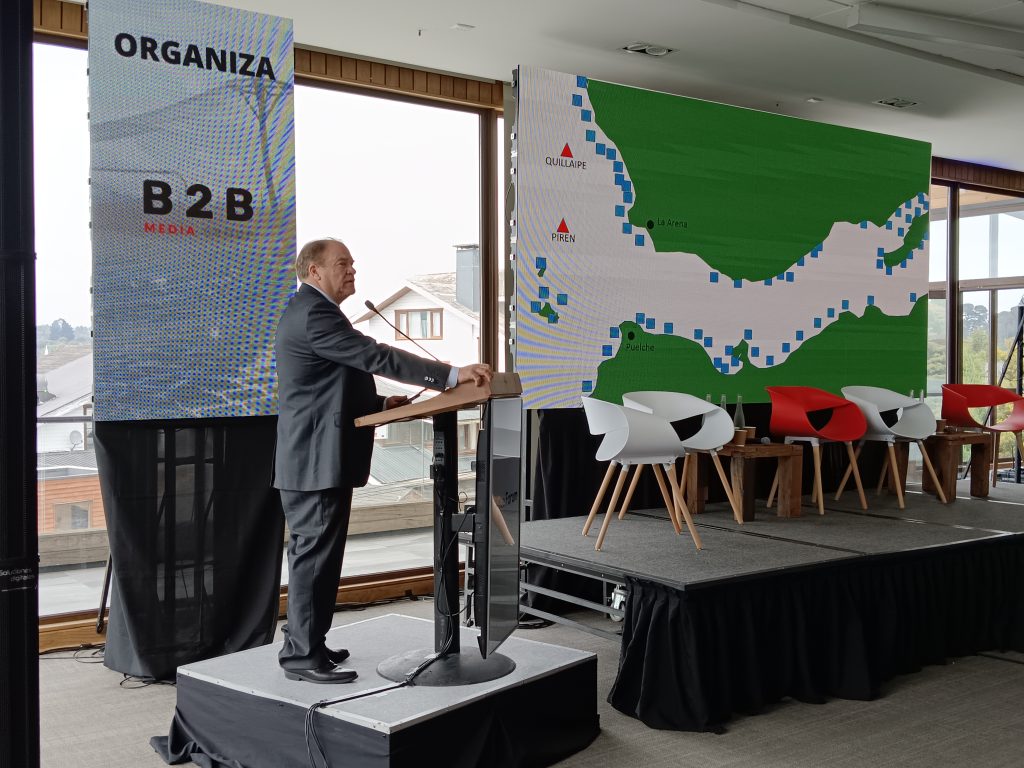
Dr. Daniel Nieto-Díaz Muñoz said – among other things – that the development of this private public initiative allows us to address the creation of new and better AAA and to encourage relocations, especially of concessions located in marine protected areas and national parks.
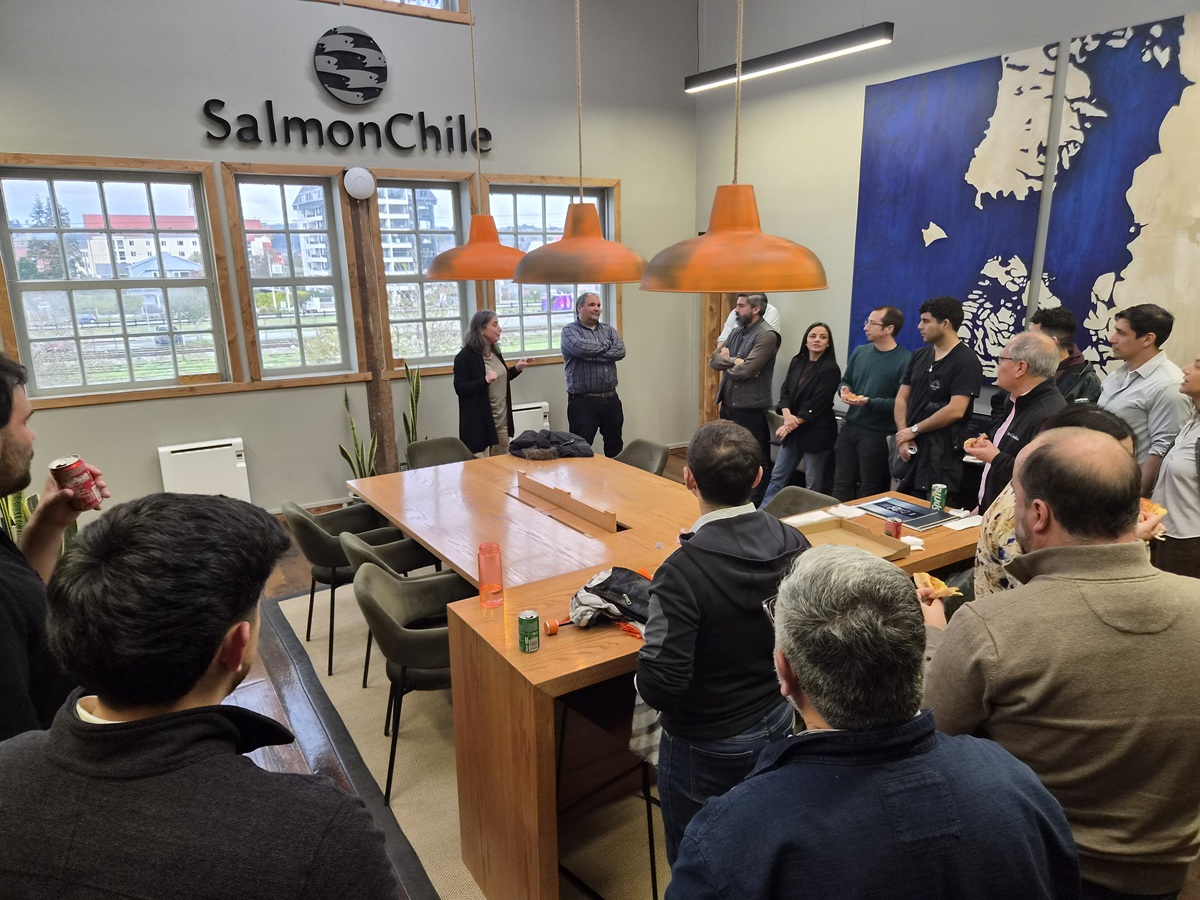
This Wednesday, November 9, in the city of Puerto Varas, Los Lagos region, a new version of the AquaForum International Conference. And it was in this instance that one of the exhibitions that attracted the most interest and subsequent conversation was that of the director of the Strategic Technological Programme for the Development of Oceanic Aquaculture (17PTECAO-84017), Dr. Daniel Nieto Díaz-Muñoz.
This public-private initiative was launched in 2019 under the umbrella of Strategic Programme Mesoregional Salmón More Sustainable of the Corporation of Production Promotion (Corfo) and has as its fundamental objective to move towards the cultivation of fish in exposed areas or also called high energy.
Specifically, it's in the centers “Quillaipe” and “Pirén” from the salmon culture company Granja Marina Tornagaleones (GMT – Marine Farm) in which the different technologies that are part of the PETECAO (summaries of 17PTECAO-84017) and that have been developed by the supplier companies are being validated Walbusch (works rafts and anchoring engineering), Aquarov (manufactures the ROVs, acronym of the English Remotely Operated Vehicle) and AST Networks (generates home automation).
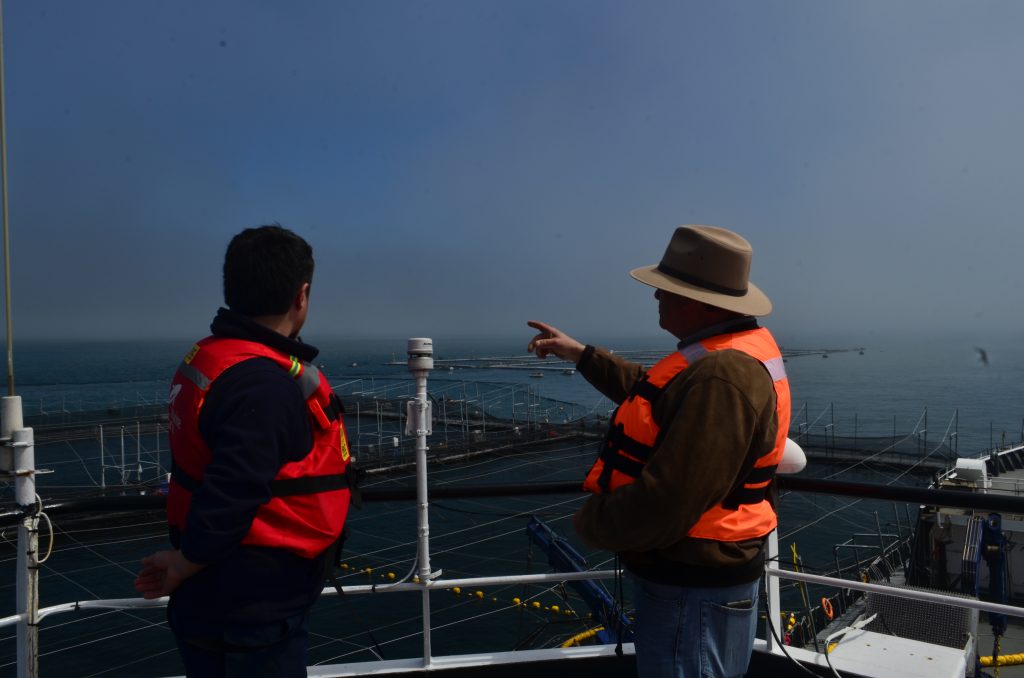
“In this program we focus on technologies; in addition to economies of scale, lower emissions, lower carbon footprint and, therefore, sustainability,” Dr. Grandson. It is that, according to his words, the “installing crops further out – in terms of distance from the coastal edge – and in scenarios of greater dynamism of water exchanges, results in greater animal welfare, along with ecosystem sustainability by diluting the impact of the crop on a perimeter of up to 10 kilometers around the center”.
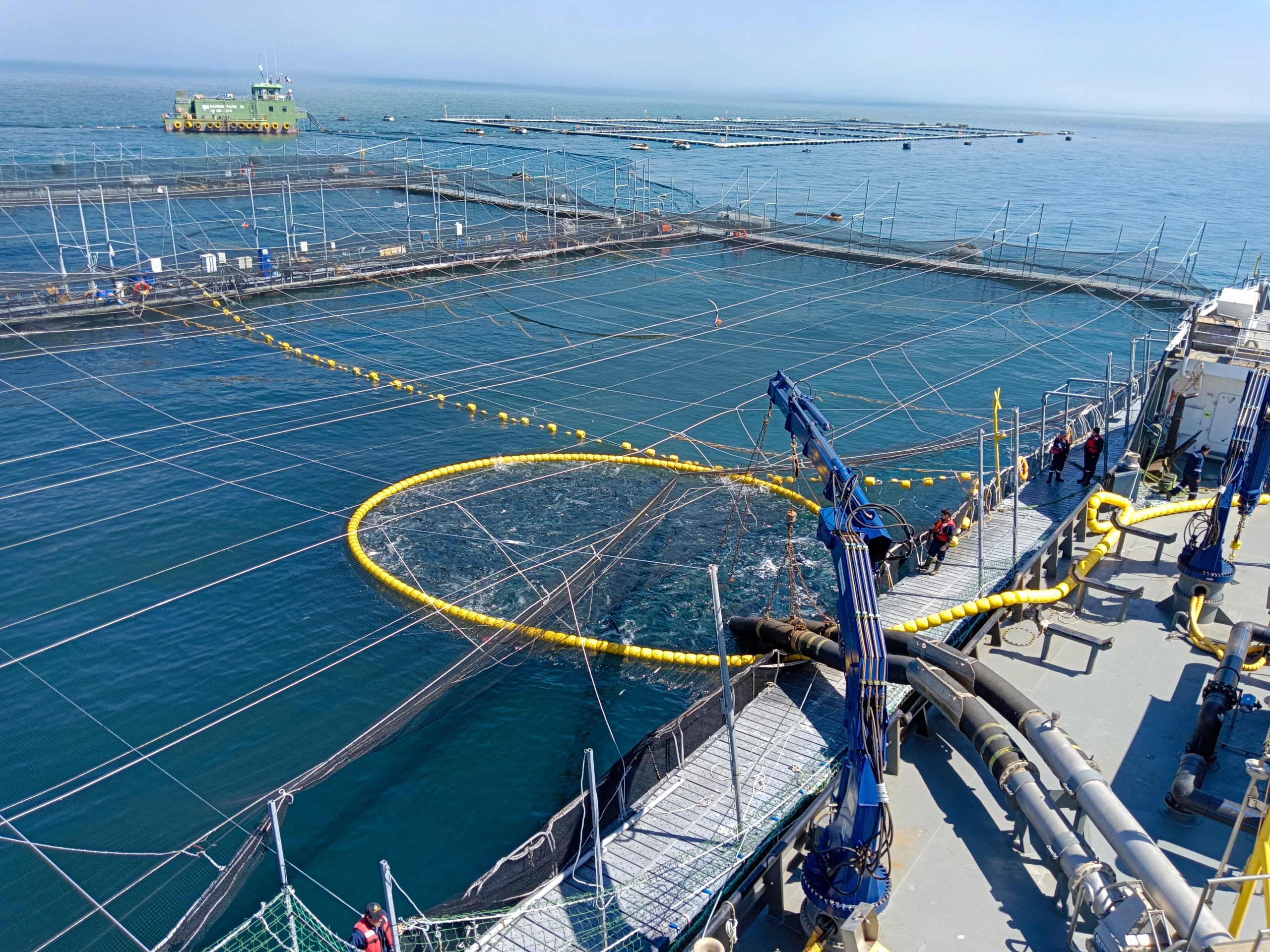
In the same line, he emphasized that the decrease of the square meters (m2) of nets, especially in the raft of cultivation of 80 by 80 meters that is located in the center “Quillaipe”, implies “less fueling, less energy for cleaning, less operations and logistics”.
Legislation and control
Among the commitments of the Programme is the direct relationship with the public services, mainly with the Under-Secretary for Fisheries and Aquaculture (Sub-fishing) and with the National Fisheries and Aquaculture Service (Sernapesca).
With the Subpesca, The Program is already working to generate the guidelines needed to establish specific AO legislation in Chile. “It is a proposal of regulations and technology for continuous and transmissible monitoring of environmental variables for ocean aquaculture (AO) or exposed. This, together with an analysis and proposal of technical elements for the elaboration of a calculation memory for the anchoring and installation of cultivation modules in high-energy areas”, specified Dr. Grandson.
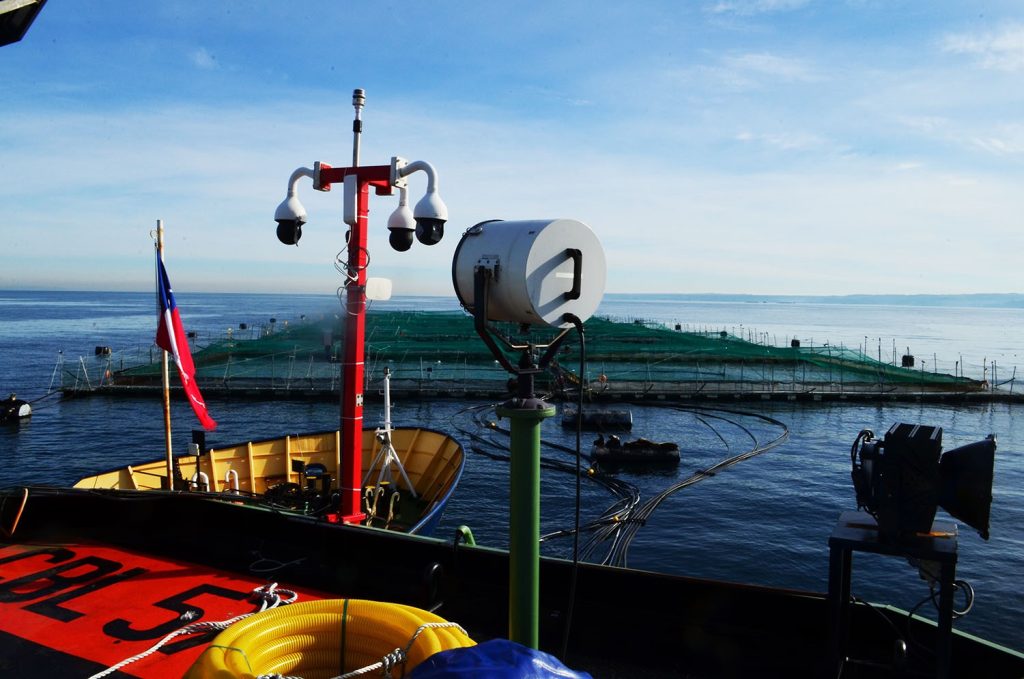
In the case of the commitment to Sernapesca's audit work, the Program, through its co-executor company AST Networks, has developed a computer system to estimate the daily biomass from food. In addition, through Aquarov, progress is being made in the delivery of a monitoring ROV mortality, sediment, fouling, among other environmental items.
“Currently, our Program is in the final validation phasefor which there is a plan and their respective protocols. This runs for co-executive companies Walbusch, AST and Aquarov,” said Dr. Nieto, before concluding his presentation at AquaForum arguing that “the enormous technological development promoted by the Program, allows, among other things, to address with full confidence the creation of new and better areas suitable for aquaculture (AAA); to encourage relocations, especially of concessions located in marine protected areas and national parks; and to decongest the coastal edge and the use of common places with other productive areas, avoiding conflicts also with the communities.”
You can then download Dr. Daniel Nieto Díaz-Muñoz:
While, for more information, visit acuiculturaoceanica.cl and/or write to info@acuiculturaoceanica.cl. You can also review the videos posted on the YouTube - Corpho Oceanic Aquaculture Program