In Chile, a rise in sea temperature of 1.5 °C has been recorded, which increases the probability of having FAN events.
The Interinstitutional Committee for Environmental Emergencies (CIICA) of the Los Lagos Region has initiated an information and dissemination process that began with a workshop in the commune of Quellón, Chiloé province, which was addressed to representatives of artisanal fishing, processing plants, aquaculture industry and local authorities. This, with the aim of informing about the work that different public institutions are carrying out for face the possible consequences of the El Niño phenomenon.
The latest report from the Fisheries Development Institute (IFOP) highlights that there is a 95% chance that El Niño will persist between December 2023 and the summer season of 2024 across the southern hemisphere.
In Chile, specifically, an increase in sea temperature of 1.5 °C above average has been observed along the northern coast, increasing the probability of having harmful algal bloom (HAB) events during this period. This is the relevance of coordinated work between institutions and for the public and users to be informed of their possible consequences.
The workshop focused specifically on FANs. Thus, IFOP researchers explained the climate variability and probability of blooms for the spring-summer 2023-2024 season and the monitoring they carry out of this phenomenon in the Pacific Ocean.
Regarding this, the National Service of Fisheries and Aquaculture (Sernapesca) presented on the status, surveillance and monitoring of the Bivalve Mollusk Health Program (PSMB); and finally, the Regional Ministerial Secretariat (Seremi) of Health referred to the management of the Red Tide Program that closes and opens areas for the extraction of shellfish for national consumption.
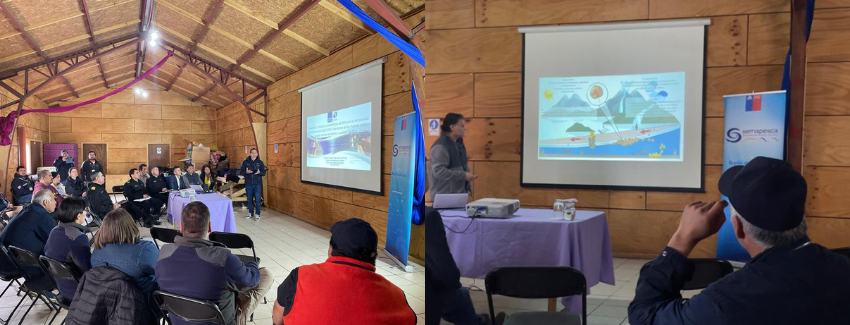
"This was the first community dissemination workshop that we carried out as CIICA aimed at informing the different productive sectors, communities and local authorities about the causes and possible negative effects of this climatic and oceanographic event. We hope during the course of the year to reach all the communes and thus inform and disseminate these topics to all the authorities and productive sectors of the coastal edge," explained the regional director of Sernapesca Los Lagos, Cristian Hudson.
The leader of artisanal fishing, Marco Salas, thanked the information session and highlighted the importance of greater control: "It is very important to continue with the work and monitoring by (Seremi of) Health, IFOP and Sernapesca in the PSMB areas. Although the situation is stable for now, the authority must be alert to possible changes and consider mitigation measures in the labor and economic areas."
Finally, the regional minister of Economy, Luis Cárdenas, emphasized that the communication that should be maintained "is at all levels and for this same reason, it is very relevant to be present in the territories to talk with the sector actors and thus be able to provide them with timely, clear and first-hand information."
*Image credit (contextual): Partnerfish archive | Aquaculture Board.