Training, carried out by 1000 Genomas Chile, brought together professionals from Subpesca and other public institutions to address genomic tools applied to regulation, conservation and sectoral management.
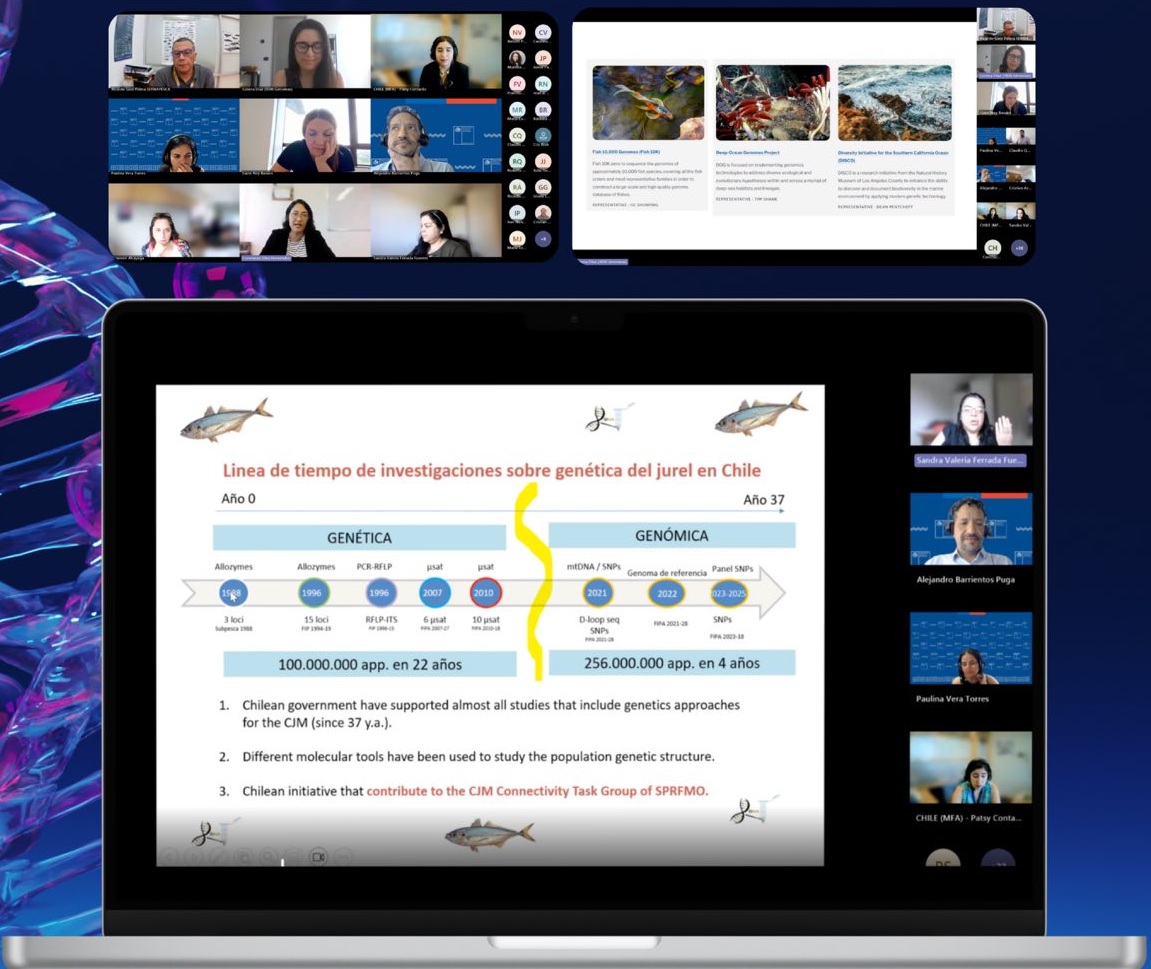
With the aim of strengthening institutional capacities in the use of genetic and genomic tools applied to public management, the Directorate of Fisheries and Aquaculture (Subpesca), through the Aquaculture Division, coordinated the training "Genomics and genetic resources in aquatic systems: fundamentals, applications and challenges for the management and research of hydrobiological resources", carried out by the 1000 Genomes initiative. Chile.
The event, held teleactively during the month of January, called upon female and male officials from Subpesca, Sernapesca, IFOP, the Ministry of Foreign Relations, as well as advisors from the United Nations Development Programme (PNUD).
Over two days, key topics were addressed such as the fundamentals of molecular biology; genetic inheritance; traditional genetic improvement in aquaculture; population genetics; the use of genomics in aquatic systems; the application of environmental DNA (eDNA) as a non-invasive monitoring tool; and the regulatory challenges related to the Nagoya Protocol, the High Seas Treaty and the Global Action Plan for Resources. Aquatic Genetics of the FAO.
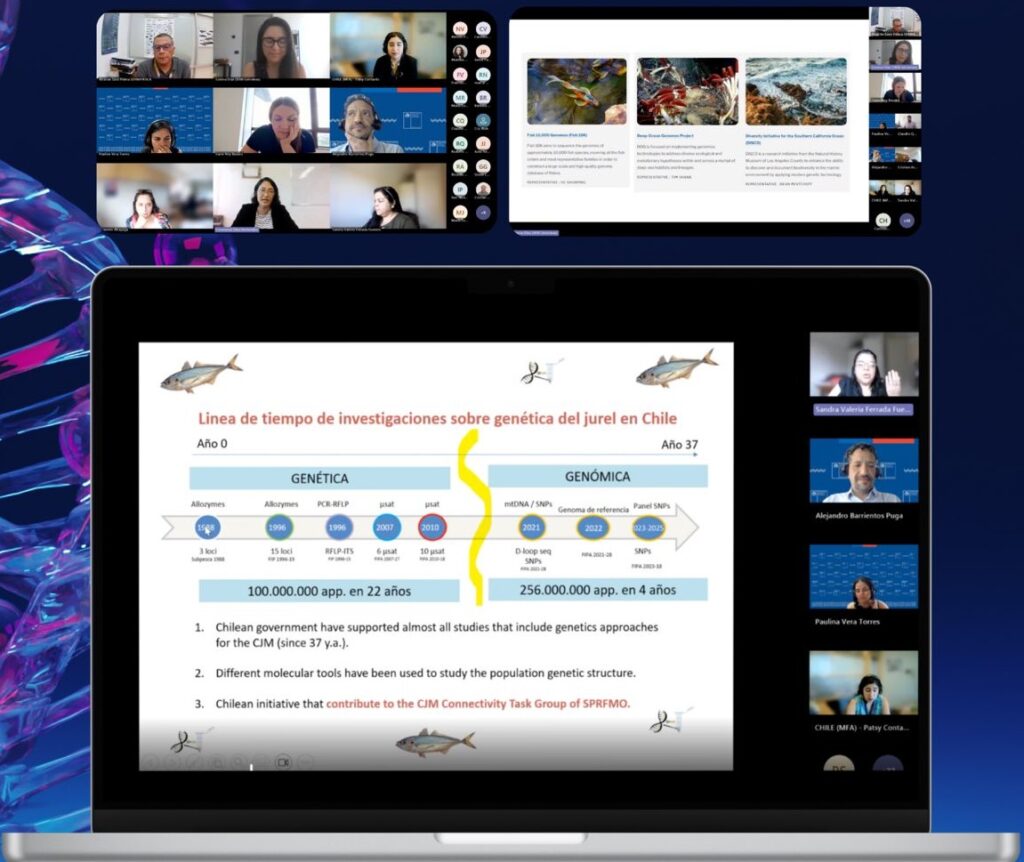
The participation of Subpesca professionals in this type of instances is fundamental in a context where fisheries and aquaculture management face the growing challenge of strengthening their ecosystem-based and precautionary approaches in a climate change process. In this scenario, genomics is positioned as a strategic tool to advance towards more accurate, transparent and consistent decisions with international standards.
The head of the Aquaculture Division, Constanza Silva, highlighted that "this training constitutes a collaborative contribution for the sector's institutions and their technical teams, especially in the face of international commitments and challenges in the areas of fishing, aquaculture and genetic resources."
The activity included exhibitions by researchers affiliated with 1000 Genomas Chile, from national universities and research centers, who shared experiences and concrete applications of these technologies in aquaculture, fisheries, conservation and policy design, creating a technical dialogue space between science and public management.
As part of its institutional strengthening agenda, Subpesca will continue promoting spaces for coordination with the scientific-academic sector and public bodies in the sector, aimed at strengthening evidence-based management and improving the technical capacity of the State to face emerging challenges in the areas of climate change, biodiversity, genetic resources and the sustainability of fisheries and aquaculture development.
1000 Genomas Chile is a scientific initiative led by the Center for Genome Regulation (CRG), together with the Pontificia Universidad Católica de Chile and other research centers, which seeks to sequence the genome of 1,000 species of Chilean biodiversity - from the Atacama Desert to Antarctica - in order to contribute to its conservation, promote the scientific and technological development of the country; and generate advances in areas such as medicine, biotechnology, agriculture and cultural identity.