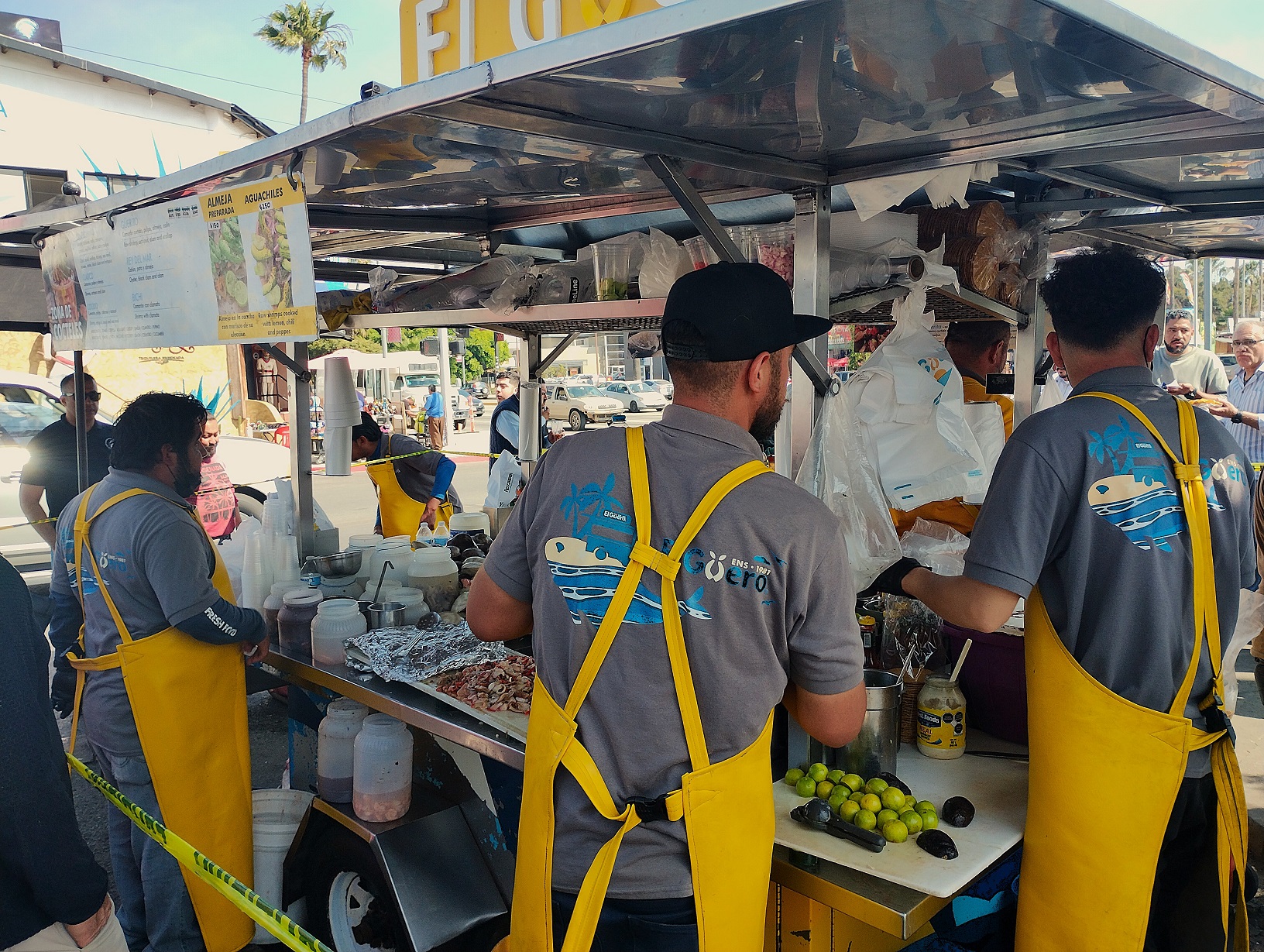
During the technology tour in the United States and Mexico, the AquaPacífico team gained key insights regarding sales strategies, territorial marketing and consumption formats, with the aim of working on the design of a marketing model to position the Japanese oyster in the Chilean market.
In the framework of Aquaculture Diversification Technology Program for the Japanese Oyster Resource (PTEC Oyster) of the North Catholic University (UCN), part of the team of AquaPacific carried out a technology tour in the United States and Mexico, focusing on learning successful strategies for the promotion and commercialization of this resource. The delegation was composed of Claudia Soto, executive director of the Center, and Daniel Arriagada, project manager, who participated along with the PTEC Ostra team and researchers of the program, Dr. Jesús López and Mg. German Lira.
As co-executor of the program, AquaPacífico is responsible for the development of portfolio number 5, focused on promoting consumption, design and implementation of a business model and marketing strategies for the Japanese Oyster. In this context, the tour allowed to gather key learnings to adapt international best practices to the Chilean reality.
Gastronomy, territorial identity and aquaculture marketing
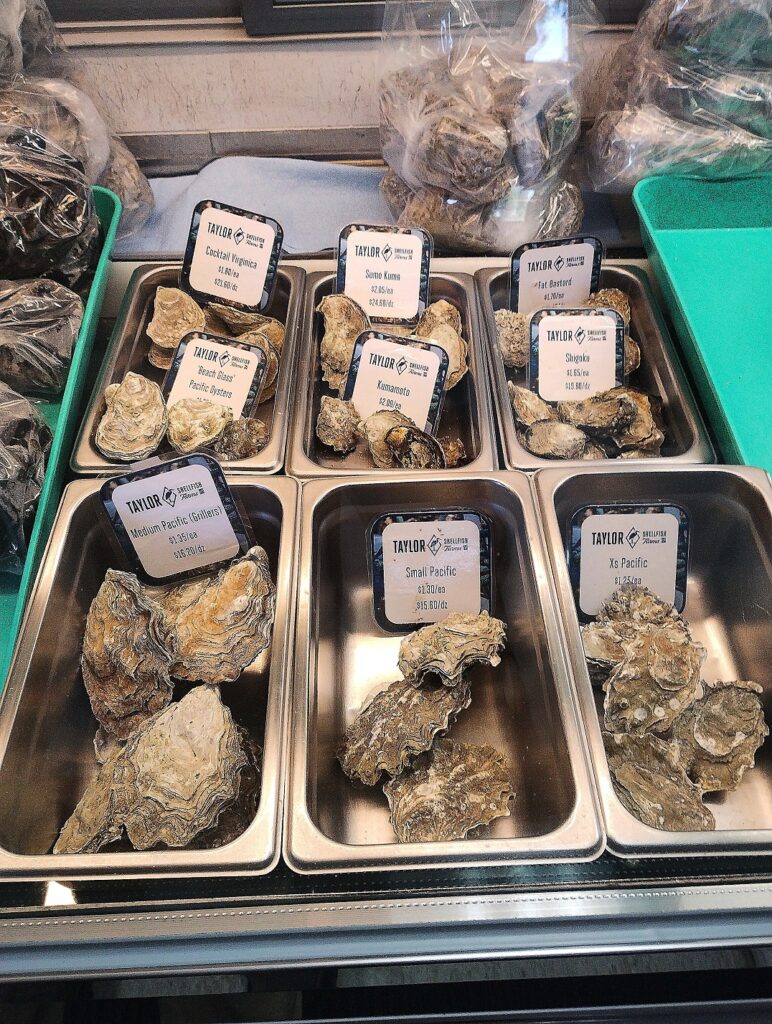
The tour started in the United States with visits to leading companies such as Taylor Shellfish Farms, Hama Hama Oyster Company and Chelsea Farms. In these, the team learned about integrated production models, direct marketing and promotion of oyster consumption in different formats for the national and international markets.
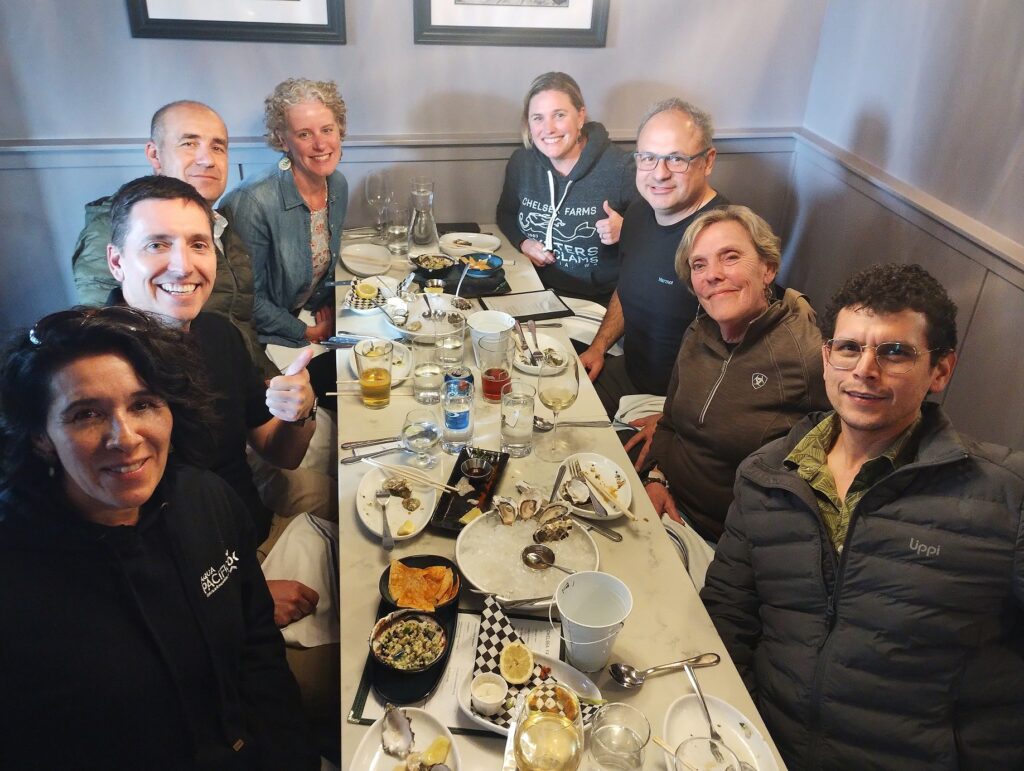
"These experiences allowed us to see how oyster consumption integrates with gastronomy, local identity and consumer education. It's not just about selling a product, but about creating an experience," said Claudia Soto, who added that "in places like Hama Hama, for example, the story of the territory and the product is part of the value proposition that drives demand."
It also highlighted the importance of product diversity according to the market and the concept of merroir (the "terroir of the sea"), which values the organoleptic characteristics that the oyster acquires according to the place where it is cultivated. “We learned that not a single oyster is marketed, but a variety of them with different names, stories and flavor profiles, associated with a territory and form of cultivation,” he said.
For Daniel Arriagada, business models, on the one hand, have a strong component of local identity (where they come from, their production history, etc.) and, on the other, require an important collaboration and commitment between the different parts that make up the value chain.
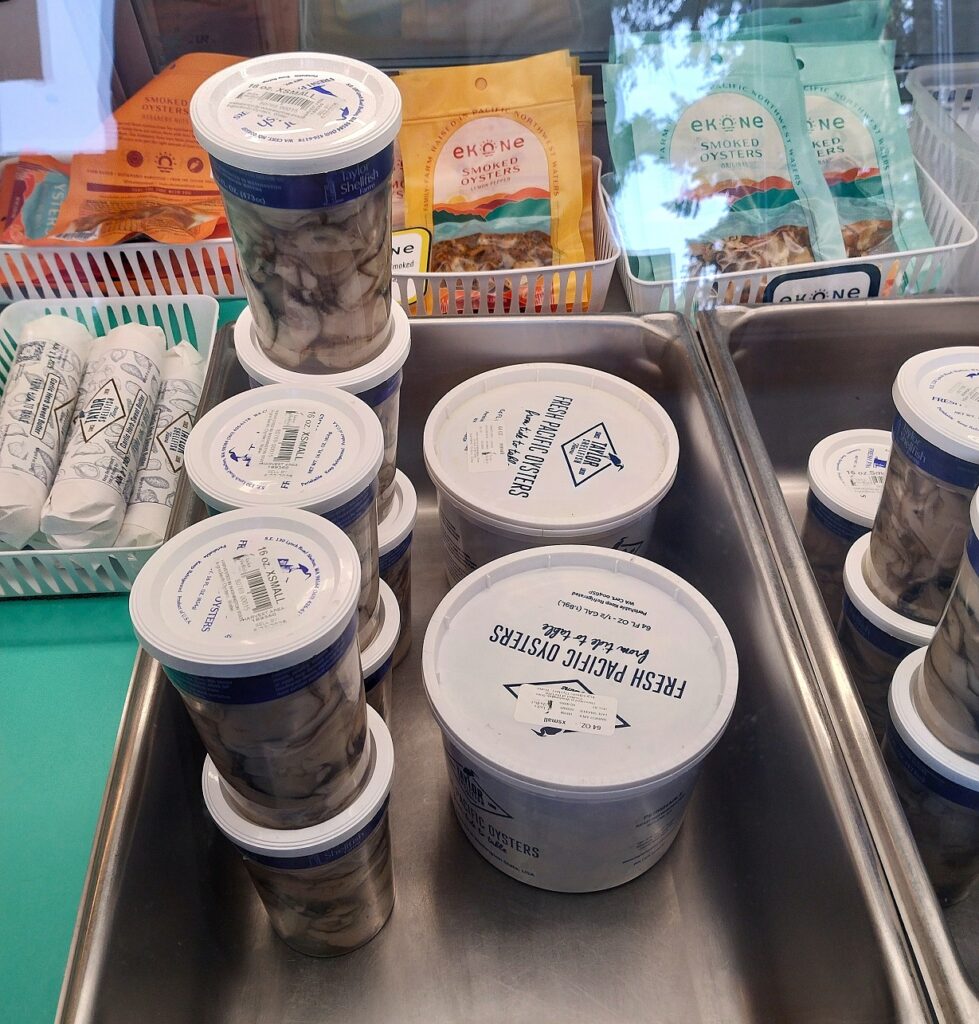
“It is a product that has a bearing on the development of local communities, therefore, on that side, it is necessary to do a powerful marketing and promotion of consumption. On the other hand, there is also the fact that for this oyster or oyster production sector to exist, there must be strong collaboration within the value chain. For example, in the distribution of the seed or in the products that are fattened or in the cultivation strategies. All this generates or leads to a product with its own stamp and local identity,” he emphasizes.
Adrienne Anderson, gastronomic manager of Hama Hama Oyster Saloon, indicated that they are located in the Channel Hood that is part of the “Salish Sea”, a geographic network of waterways that includes the Puget Sound, the Strait of Juan de Fuca and several smaller bays around the Sound.
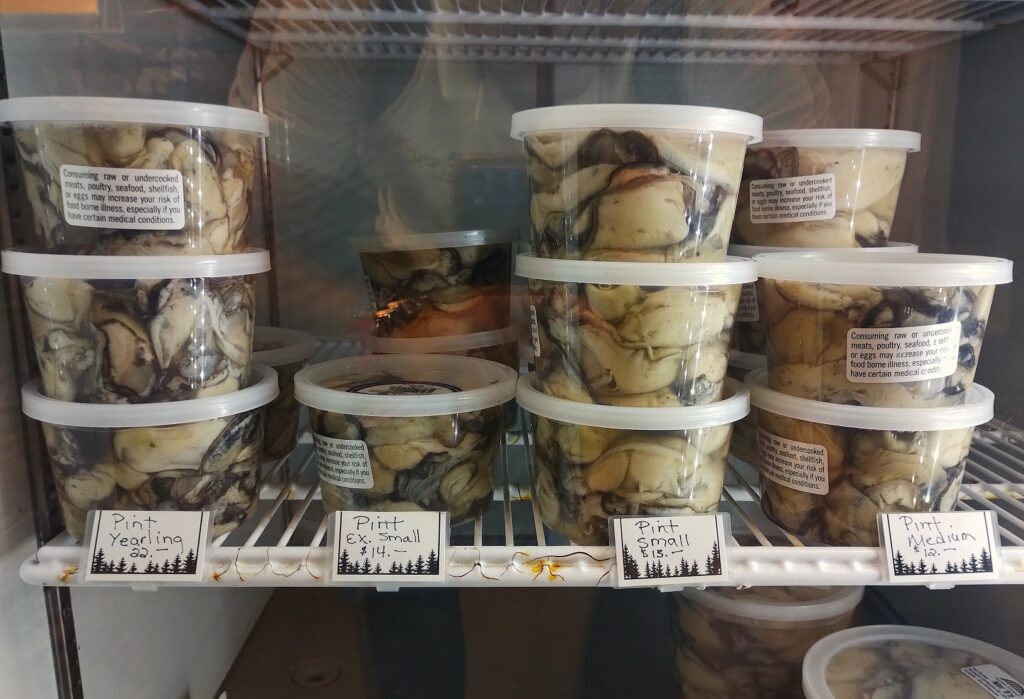
“Each of these bodies of water produces oysters with a very different flavor and also a different story about how they have been grown. Different people use different technologies, methods and factors, either by tradition, productivity or simply by what they have available and the scale of their business. If they are smaller, they may have a different way of growing oysters than larger operations,” he explained, adding that “people not only is she buying oysters, she’s buying the experience of someone telling them a little bit about oyster, what its flavor means, how to cook it.”
“It’s really wonderful to have a place where you can see exactly where oysters come from, talk about how we grow them, introduce yourself to the people who grow them, and then serve oysters so you have the experience that they come directly from water to your dish,” he said.
Visits to hatcheries, pre-fat technologies and integral aquaculture model
During the U.S. tour. The US also visited seed production centers such as Taylor's hatchery and Whitney Shellfish, and systems flupsy of pre-fat at sea at different productive scales. These instances were key to know the technologies that support product traceability and quality.
Connection with Mexican experiences and small-scale aquaculture model
In Mexico, the tour included meetings with institutions such as CICESE, UABCS, COVITECS-CIBNOR and various production centers such as La Palizada Farm, Sol Azul and the Baja California Coastal Ostras Farm. There he deepened in models of integral aquaculture that combine science, community bonding and market strategies.
“These visits allow us to project a roadmap for the development of the marketing portfolio in Chile, which considers both the product and its social and territorial environment,” said Claudia Soto.
The team concluded that one of the most promising strategies in the short term will be the promotion of fresh consumption for restaurants and hotels, as a gateway to position the Japanese oyster in the Chilean market.
With these experiences, AquaPacific strengthens its role as an articulator between science, technology and the market, moving towards sustainable, diverse and inclusive aquaculture.