The initiative will soon go to the Chamber of Deputies' Hall.
After thirteen hours of session, the Fisheries, Aquaculture and Maritime Interests Commission from the Chamber of Deputies approved sending to the Finance Committee, the land division bill. The initiative, driven by the Executive, was discussed -unprecedentedly- fishery by fishery, approving the full processing of 18 fisheries, in two permanent and two temporary articles, with nearly 30 votes in total.
The approval of the new division also led to a significant and significant correction of the distribution of resources between industrial and craft industries, as envisaged in the present Fisheries Act In the north. The most significant example of this is the new fractionation approved: the congressmen unanimously ratified the division of the anchoveta and Spanish sardine between the regions of Arica and Parinacota and Coquimbo proposed by the Executive, assigning a 80% for the craft sector and 20% for the industrialist.
In the field of horse mackerel -and in the spirit that the project redistributes resources, but does not affect fiscal balances - the Executive pointed out that there could be significant effects, after which some suggested indications in the field of horse mackerel fractionation were declared inadmissible by the Commission.
Finally, a dynamic mechanism for this fishery. A range of 80-90% for industrial fisheries and 20-10% for artisans in the area between Arica and Parinacota and Antofagasta. In turn, in the area between Atacama and Los Ríos the fractionation would be 65-75% for industry and 35-25% for artisans. Finally, for the region of the Lakes, guarismo would be 80-90% for the industrial sector and 20-10% For the craftsman.
What does this mechanism imply? In simple terms, if the industry does not comply with the actual catch of its previous year's allocation, the initial fractionation proposed for the artisanal fishing sector may increase by 5% per year each time, having as roof the upper limit of the range and making explicit that the sector will have no less than the floor that is posed for each area.
The Undersecretary for Fisheries and Aquaculture, July Salasthe importance of this resource for the country and detailed that "we grow to 15% around the horse mackerel and we believe that we can Keep growing much more without threatening the resource." The authority informed the Commission that studies from the Institute of Fisheries Development (FIFG) evidence that the state of this fishery "is so optimal that it would remain in perfect condition with a stable quota over time, even - in the hypothetical scenario - of double the current quota".
Other fisheries
Among other fisheries that are in good condition, such as nylon shrimp and red prawns, a fractionation of 20% for the craft sector and 80% for industrialists; and 30% for the craft sector and 70% for the industrial sector, respectively. In turn, and despite not previously having fractionation, the instance decided that for the fishery of the reineta distribution 90% crafts and 10% Industrial.
In the meantime, the transitional articles approved address: to promote the equitable development of the artisanal sector, of all regions, in the distribution of the increase of the artisanal fraction of the global quota; and also the provision of a regulation regarding the increases of the overall quota of horse mackerel derived from decisions of administration of the Regional Organisation of Fisheries Management of the South Pacific (OROP-PS)which shall govern on the following two occasions where it is appropriate to fix overall catch quotas.
In both Monday and Tuesday sessions, the helmsman of the Undersecretary for Fisheries and Aquaculture (Subsecretariat) was accompanied by the zone directors of the northern zone - Karen Guissen (Arica and Parinacota, Tarapacá and Antofagasta) and Javier Chávez (Atacama and Coquimbo) - as well as the marine biologist and advisor Lilian Troncoso, and the head of the Division of Administration Pesquera, Aurora Guerrero, who accompanied him remotely. The experts were made available to the congressmen to respond to their consultations during the course of the discussion.
The bill, which promotes equity in the fisheries sector to ensure the sustainable and just development, will continue its legislative procedure and will be discussed at the instance of the Finance Committee before passing - soon - to the Chamber of the Chamber of Deputies.
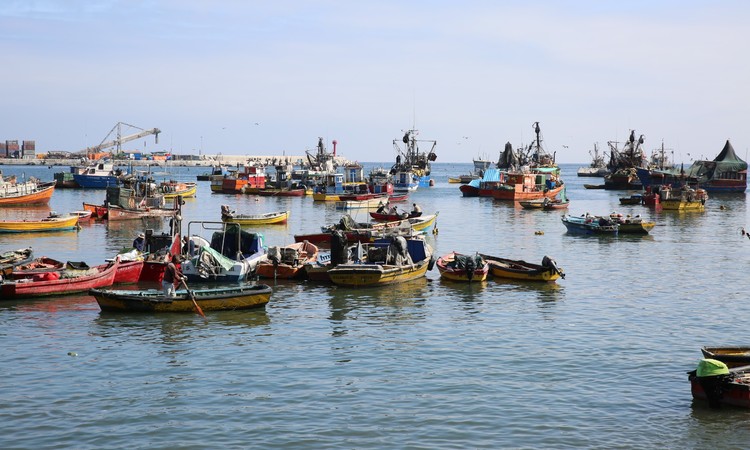
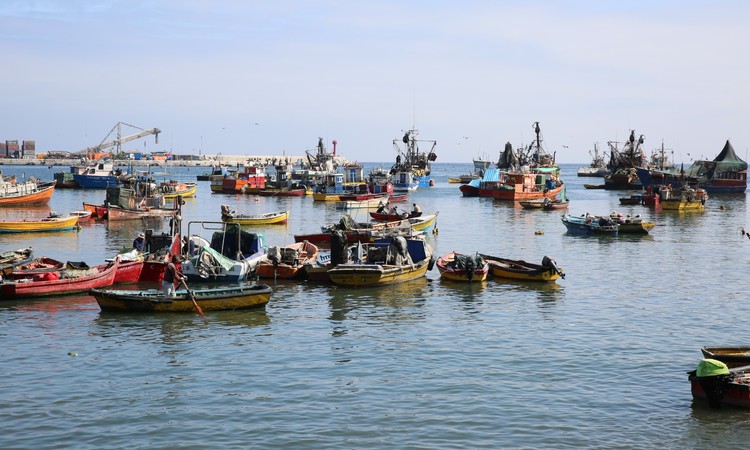
* Credits from the featured photo: courtesy of Subpesca.