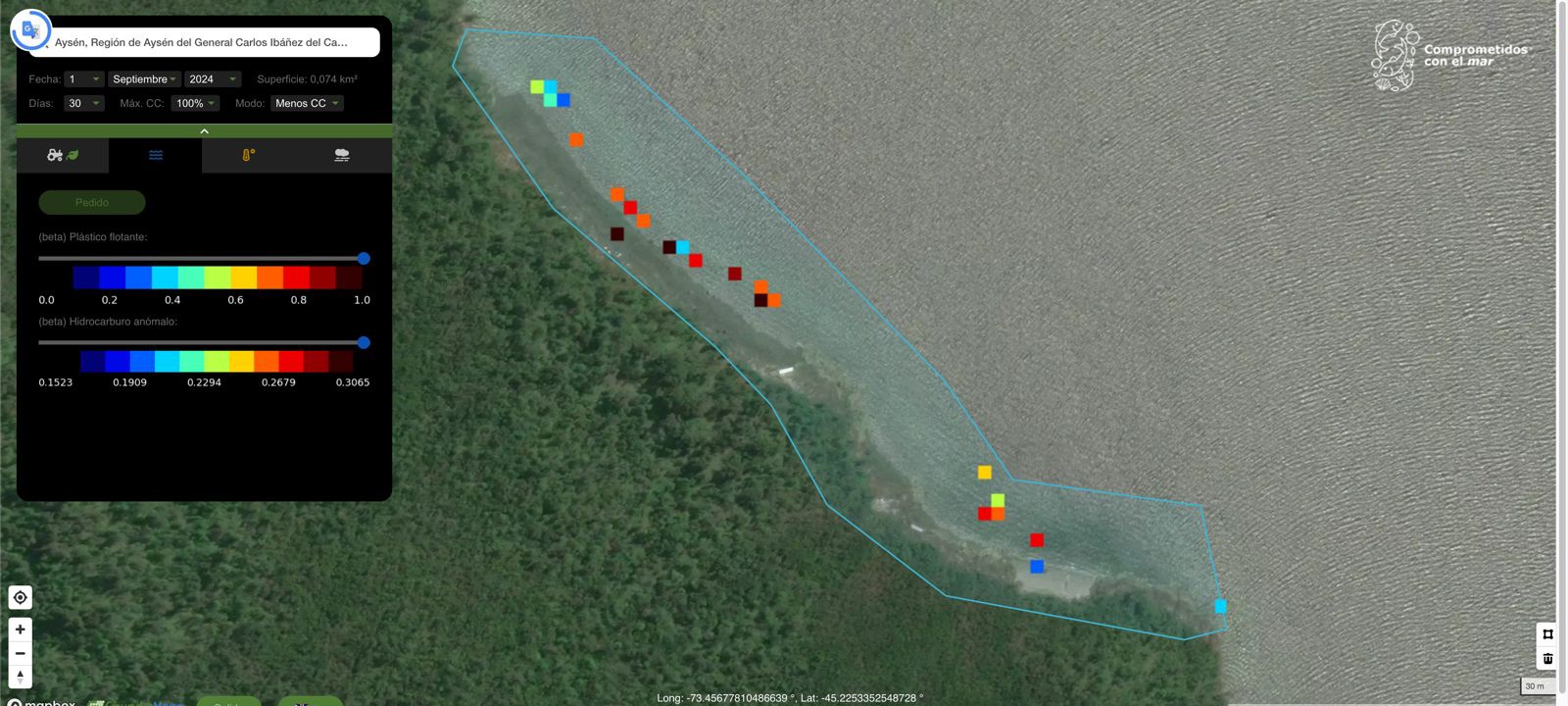
In the framework of the open innovation challenge "Playa Observatory", launched last June, SalmonChile selected the joint initiative of the New Zealand non-profit organization Eye Sea and the environmental consultancy firm Paz Recycling, which allows identifying the presence of waste in land areas to optimize their cleaning.
In order to reaffirm the salmon farming industry's commitment to the environment, in June SalmonChile -with the support of the sustainability consultancy Këtrawa- launched an open innovation challenge to find innovative technological solutions that would support the monitoring and cleaning of beaches in the fjords of Patagonia. This area, of great ecological value, faces unique challenges due to its remote geography and conditions. extreme weather conditions, which make it difficult to remove waste from their coastal edges, both domestic and industrial.
Today, the results of the call for proposals carried out under the umbrella of the beach cleaning project "Committed to the Sea", are beginning to take shape, through the implementation of the pilot plan of the selected proposal among more than 14 submissions. It is the joint initiative of the new zealand non profit organization Eye Sea and the environmental consultancy firm Paz Recycling which -through satellite photos and artificial intelligence- supports and makes the cleaning of these public spaces more efficient.
The Director of Projects of SalmonChile, Marcela Bravo“The care of the coastal edge is a challenge in which SalmonChile works permanently. We are very happy to be able to start this pilot with the advice of Këtrawa, where we hope to be able to monitor almost in real time the state of the beaches of the south of our country.”
For his part, the Director of Technology of Eye Sea, Marius Suteu, stressed that “it is a pride to be able to collaborate with SalmonChile in its innovative project of the Observatory of Beaches, joining forces in order to promote a triple impact: social, economic and environmental. Our technological contribution supports not only the conservation of the local ecosystem, but also the consolidation of a sustainable and sustainable economic and productive model for community, through the salmon industry. This pioneering project will serve as an example to other communities around the world facing similar environmental challenges, multiplying their reach beyond Chilean borders.”
"We have a great opportunity, where thanks to Eye Sea technology and the commitment to the health of the SalmonChile ocean, we can begin to diagnose in real time the residues that affect the biodiversity of our ecosystem. This information opens the opportunity for the future to improve processes, materialities and commitments for the generation of waste that reach our ocean, in which entrepreneurship and innovation plays a fundamental role,” said the general manager of Këtrawa, María José Urrutia.