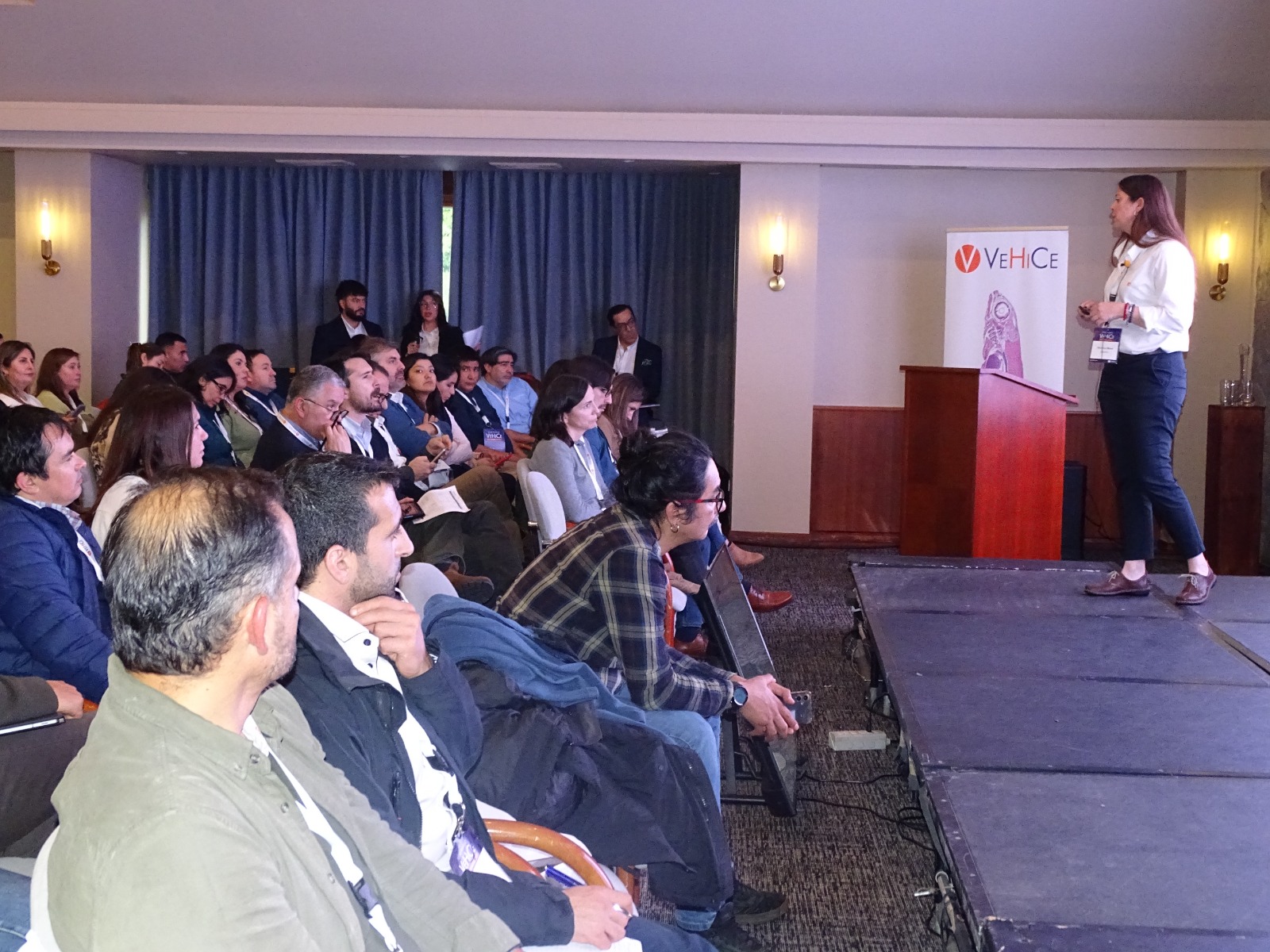
During a VeHiCe seminar held in the La Araucanía region, Verónica Morel, the Freshwater KAM of Salmofood, highlighted the role of antioxidants to prevent fish from reaching situations of oxidative stress, with all the implications that this can have on the performance of the specimens.
Puerto Varas, 03 July 2026. - A notable participation was had by Verónica Morel, KAM of Freshwater of Salmofood, a Vitapro brand, in the international seminar "The Smolt Route: Science, Production and Health on the Way to the Sea". The event was organized by VeHiCe and took place on 25 June at the Hotel Park Lake in Pucón (La Araucanía region), addressing the main sanitary, physiological and productive challenges of the freshwater stage in the production of salmonids.
In the event, which had a large turnout of producers, researchers, professionals and industry experts, the professional presented the talk "Oxidative Stress: An Invisible Threat to Smolt Quality".
The expert explained that "oxidative stress is the imbalance between the production and neutralization of reactive oxygen species (ROS) by antioxidant mechanisms. Reactive oxygen species (atoms or molecules that have one or more unpaired electrons) are chemically unstable and highly reactive, as they seek to stabilize themselves through the exchange of electrons."
He added that the endogenous production of ROS is essential for the life of fish and that these can be elevated - causing oxidative stress - due to factors such as: handling, vaccines, smoltification, diseases, pollutants, hypoxia, radiation, high temperatures and poor nutrition.
Effect on the fish
What impact can oxidative stress have on fish? According to Verónica Morel, there are several repercussions that this can cause. For example, it is a relevant risk factor for cataracts, since the lens depends on a balanced redox state to maintain its transparency. It can also cause poor growth, bad conversion, immunosuppression, diseases and, in general, poor quality of smolt.
To keep oxidative stress within physiological ranges in the farmed population, it is important that the fish receive antioxidants. There are endogenous antioxidants (produced by the fish itself) - enzymatic and non-enzymatic - and those that can be administered through the diet, such as Vitamin C, Vitamin E, Vitamin A, Flavonoids/Polyphenols and Minerals (Zn, Se, Mn).
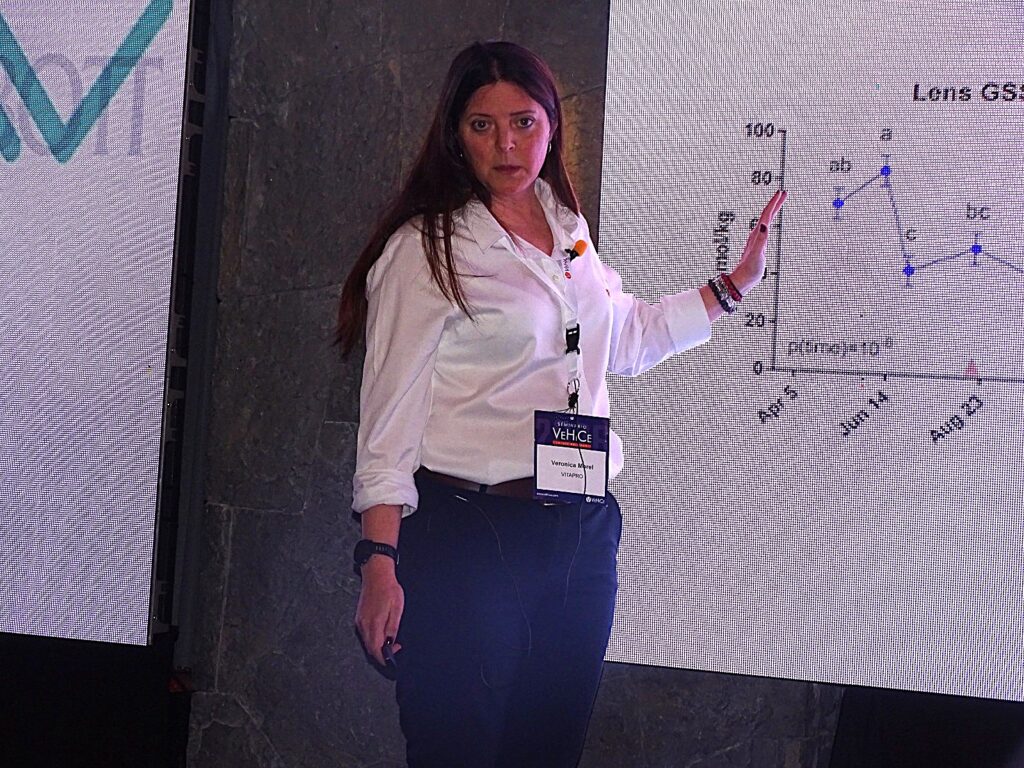
“Antioxidants yield an electron from their orbital to stabilize the free radical. The antioxidant is rusty, but it is much more stable,” said the professional.
In this sense, he mentioned the advantages of the VITA line of Salmofood, which offers an antioxidant support for smolts more robust. “Fish diets should provide adequate levels of antioxidant vitamins, especially C and E. They should also include Selenium and Zinc, which are involved in internal antioxidant enzymes and improve their effectiveness. Similarly, amino acids such as histidine (and depending on the stage, methionine or other sulfurates) support protection against oxidative stress and tissue maintenance. Finally, polyphenols of origin natural complement these functions, reinforcing the antioxidant network of fish. All these elements are considered in this nutritional line that we have at the disposal of salmonid producers,” the specialist reported.
“Our VITA diet is designed to meet this challenge, incorporating optimal levels of antioxidants that support the physiological state of smoltfavoring the production of more robust fish in the long term,” he emphasized.
Functional additive
Veronica Morel also highlighted the qualities of ANTIOX+, an advanced antioxidant formulation composed of a synergy of bioactive ingredients of botanical origin, which contains a package of polyphenols and compounds analogous to the role of vitamins in the body. This additive has antioxidant and anti-inflammatory capacity with chelating effect of certain metals, which makes it an excellent free radical binder, enhancing, In addition, the functioning of endogenous antioxidant enzymes. This product can be used at any stage of cultivation and its results in the field have been very favorable.
“A proper nutrition strengthens the antioxidant defense of the fish. In smoltification, the diet must support growth and physiological robustness and that is precisely where we are focused. It should also be borne in mind that environmental management is key to avoiding unnecessary stress. The overlapping of stressors should be avoided so as not to exceed the adaptive capacity of the fish. All this, as a whole, will make it possible to achieve a better performance,” concluded Salmofood’s representative.