The Public Policies Observatory of the Millennium Institute in Coastal Socio-Ecology (SECOS) analyzed the level of compliance with the 44 commitments of the current Government.
Just eight months before the current government of President Gabriel Boric ends, the Observatory of Public Policies of the Milenio Institute in Coastal Socio-Ecology (SECOS) has made known the Compliance Report 2025 - Commitments President Gabriel Boric (2022-2026) in Artisanal Fishing, Aquaculture and Coastal Development. The study analyzed the level of compliance with 44 presidential commitments, corresponding to the period March 2022 – June 2025, extracted from the government program and programmatic agreement, the public accounts of 2022, 2023 and 2024, and other relevant public policy documents such as the commitments made with artisanal fishers' organizations in June 2022.
"This study aims to generate a tool for reviewing programmed commitments and a mechanism for prioritizing and monitoring the agenda of public fisheries, aquaculture and coastal policy. It also seeks to contribute to identifying the opportunities where knowledge can inform the development of regulatory instruments associated with the different commitments," says Francisca Reyes, academic from the Institute for Sustainable Development UC. and researcher at the Millennium Institute SECOS, where she coordinates the Science and Public Policies Unit.
In addition, Reyes adds that "a little more than a third of the commitments can be assessed as fulfilled, but more than half of the commitments are in the process of development, several of which are associated with the discussion of the new general fishing law, which once again emphasizes the importance of passing on the testimony of public policy between administrations in a serious and coherent manner."
To select the relevant commitments, the government program of President Gabriel Boric (2022-2026), its annual public accounts and policy documents committed by the government in the mentioned areas were reviewed, then classified into 9 categories to facilitate their analysis: socio-economic development; Institutional framework and regulation; Sustainability: Resource quality and availability/Protection of the biodiversity; Climate change; Infrastructure; Management and management of hydrobiological resources; Social development and gender; Research and scientific development; Tourism.
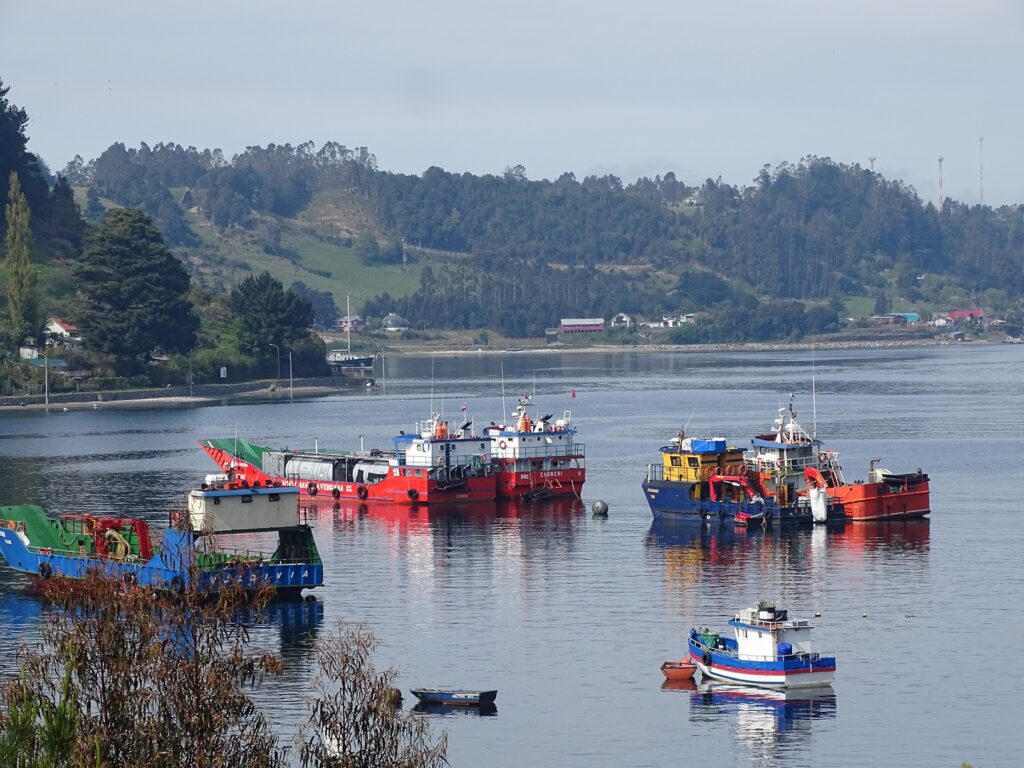
Of the 44 commitments registered, 14 are fulfilled (32%), 28 are in progress (64%) and 2 (4%) show no progress. In institutionality and regulation during this period, 19 commitments were identified, of which 9 have been fulfilled, 8 are in process and 2 are without progress. Among those that stand out as finishes is the presentation of the draft New General Fisheries Law (NLGP), built from a process participative (“Fishing encounters”), which seeks to channel several of the commitments entered into. Among them, the modification of the catch quotas, addressed in this project and then in its subsequent division in the bill that establishes a new division of catch quotas between the artisanal and industrial fishing sector (boletín 17096-21). Also, during this period, the promulgation of regulatory bodies of a lengthy legislative process, such as the SBAP Law (21.600) and the Benthic Resources Law (21.651), pledged in the government programme and in agreements with artisanal fishing organisations, respectively.
In terms of compliance with foreign policy commitments, the elaboration of the Turkish Foreign Policy (PET) and the ratification of the Agreement on the Conservation and Sustainable Use of Marine Biological Diversity beyond National Jurisdictions (BBNJ Treaty) stand out. In addition to this, the publication of the National Ocean Programme, as a policy instrument that operates and continues the objectives set out in the National Oceanic Policy (PON).In this period, the report also highlights the efforts made to strengthen gender equity in the artisanal fisheries sector, improve working conditions and promote the participation of the different actors in the sector. These include the enactment of Acts Nos 21.698 and 21.709, which set out the gender approach in the administration of coves and the appointment of representatives in the Management Committees, respectively, together with the creation of the Register of Related Activities (RAC), as part of the implementation of Law No. 21.370 that promotes gender equity in the fisheries and aquaculture sector, approved in 2021, during the second administration of the Pdte. Piñera (2018-2022).
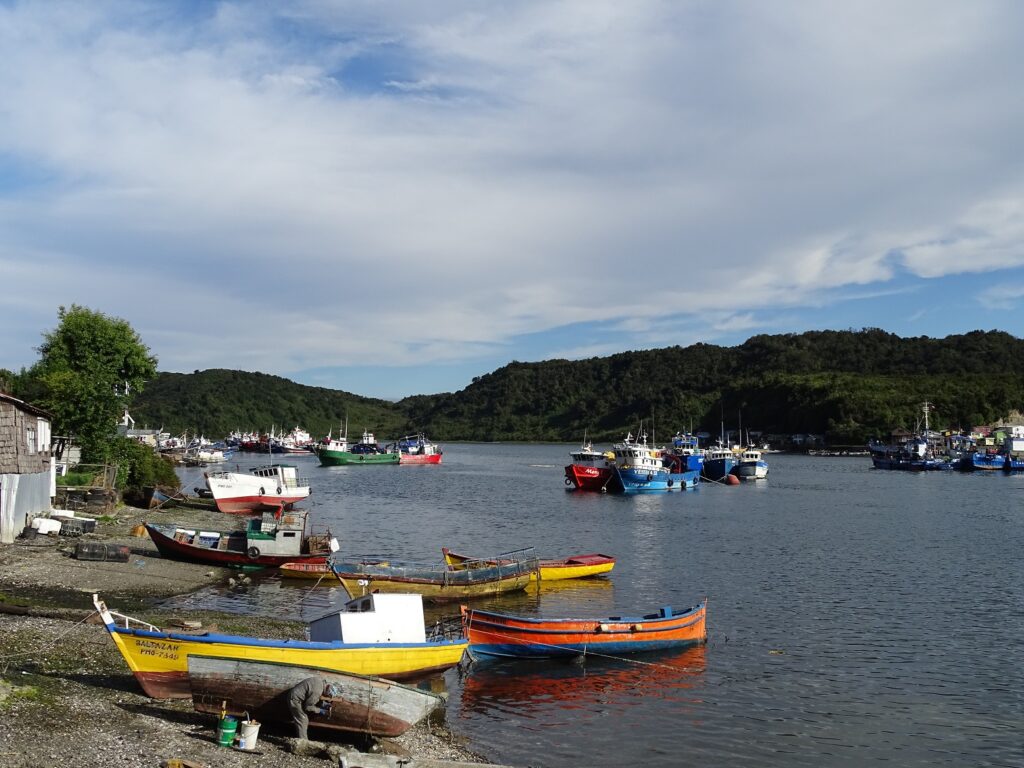
At the management level, it is revealed that an agreement between INDESPA and FOSIS is signed aimed at reducing gender gaps and promoting entrepreneurship related to gastronomy, tourism, crafts and the transformation of seafood products. Also the presentation of the bill that creates the contract of divers and related activities (Boletín 17005-13), which seeks to amend the Labour Code to incorporate a regulation in the contract of employment of diving and related activities, including aspects such as occupational safety, underwater work and regulations applicable to working conditions.
Transfer of tasks between administrations
The report also notes that since 28 of the 44 commitments made at the beginning of this presidential period are still “in process”, the transfer of testimony must be assumed not as a closure, but as a key moment to project learning, review progress and compromise the necessary update, but also the continuity of important part of the actions under way.
“There are enabling conditions that the next government must take advantage of: regulations already enacted, participatory processes already initiated, active regional networks, organized communities, and international instruments that support the shift towards more just and sustainable management. The call that emerges from this report is not only to follow up on the commitments in the process of development, but to take on the structural challenge of build a vision of an oceanic and coastal country, where artisanal fishing, small-scale aquaculture and coastal territories are pillars of collective well-being, ecological sustainability and social justice,” says Reyes.
With regard to institutionality and regulation, the commitment under way is the adjustment of the regulations of Act No. 20,249, which creates the Coastal Marine Areas for Originary Peoples (ECMPO) whose progress to date includes the publication of the Exempt Resolution No. 2456-2024 establishing the “Internal Instructions for the Processing of Requests for the Establishment of ECMPO, in accordance with Law Lafkenche No. 20,249 and its rules of procedure”, but which did not involve the adjustment in the regulations of the law itself; the effective implementation of the Biodiversity and Protected Areas Service (SBAP), and the approval of the 37 new protected areas approved in this administration, of which 9 correspond to marine ecosystems – among them, Sea of Pisagua, Gulf of Tic Toc-Corcovado and Humboldt Archipelago.
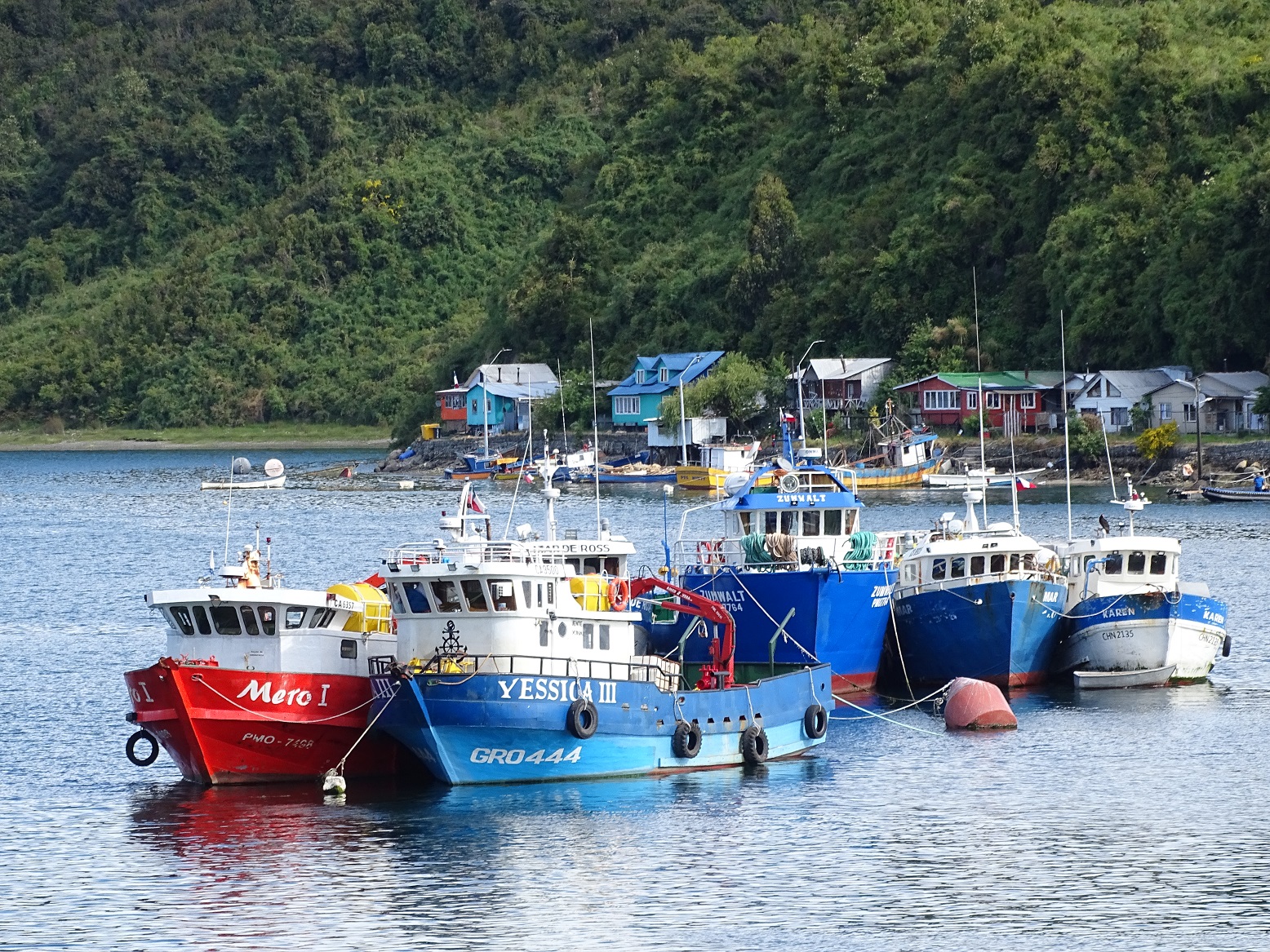
Finally, in relation to infrastructure commitments, the continuity of the policy of construction and improvement of caletas and coastal edges is highlighted. For example, of the 17 Caletas committed in the Public Account of 2022, 9 completed works are currently recorded, 4 in execution, 2 in tender and 2 in the process of tendering and obtaining Favourable Recommendation (RS) from the National Investment System. In addition, the continuity assumed by this administration regarding 9 construction and improvement works inherited from the second government of President Piñera that were completed.
At the closing date of this report, no progress has been made in the commitment to submit a bill to restrict underwater mining in the country. The latter is an inescapable challenge, since at the international level it is an active item on the agenda of agencies to which the country is a party, such as the International Seabed Authority, and which is also linked to the coherence of the objectives of the PN and with the candidacy promoted by Chile for Valparaíso to be the seat of the technical secretariat of the BBNJ Treaty. On the other hand, in the field of research and scientific development, we note that, although during this administration (2022-2025), the budget of the CTCI Ministry has increased by 24.3%, this increase is still far from fulfilling the presidential commitment to double it to reach 1% of GDP.