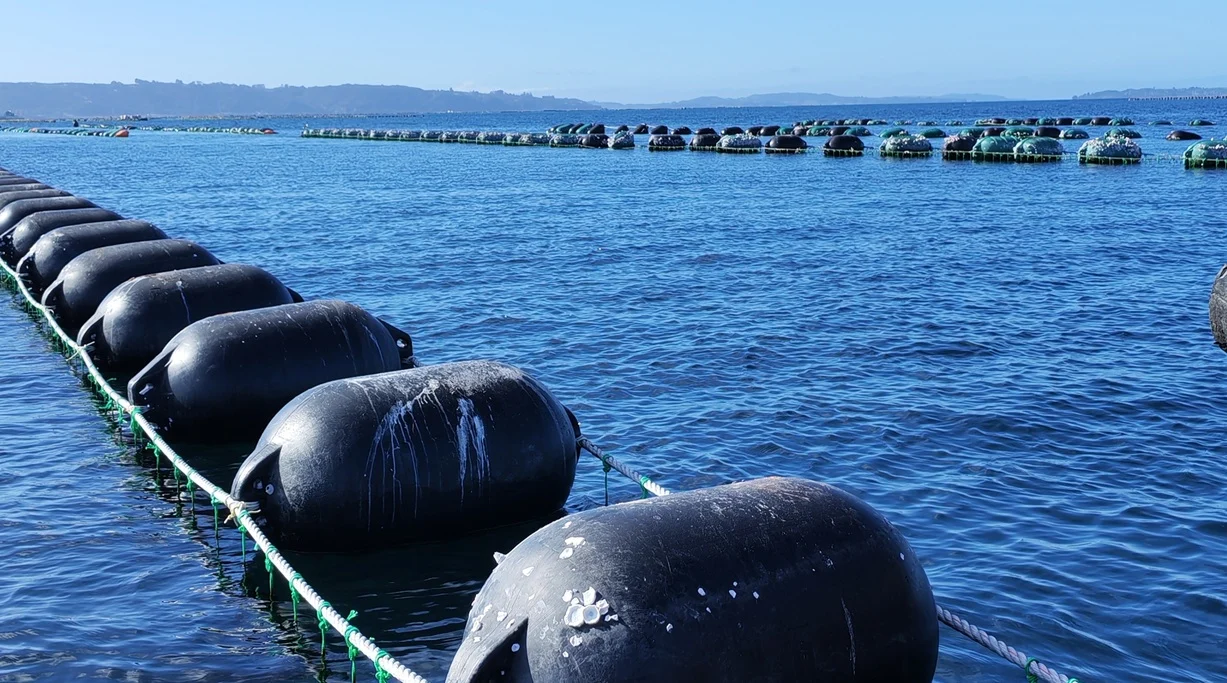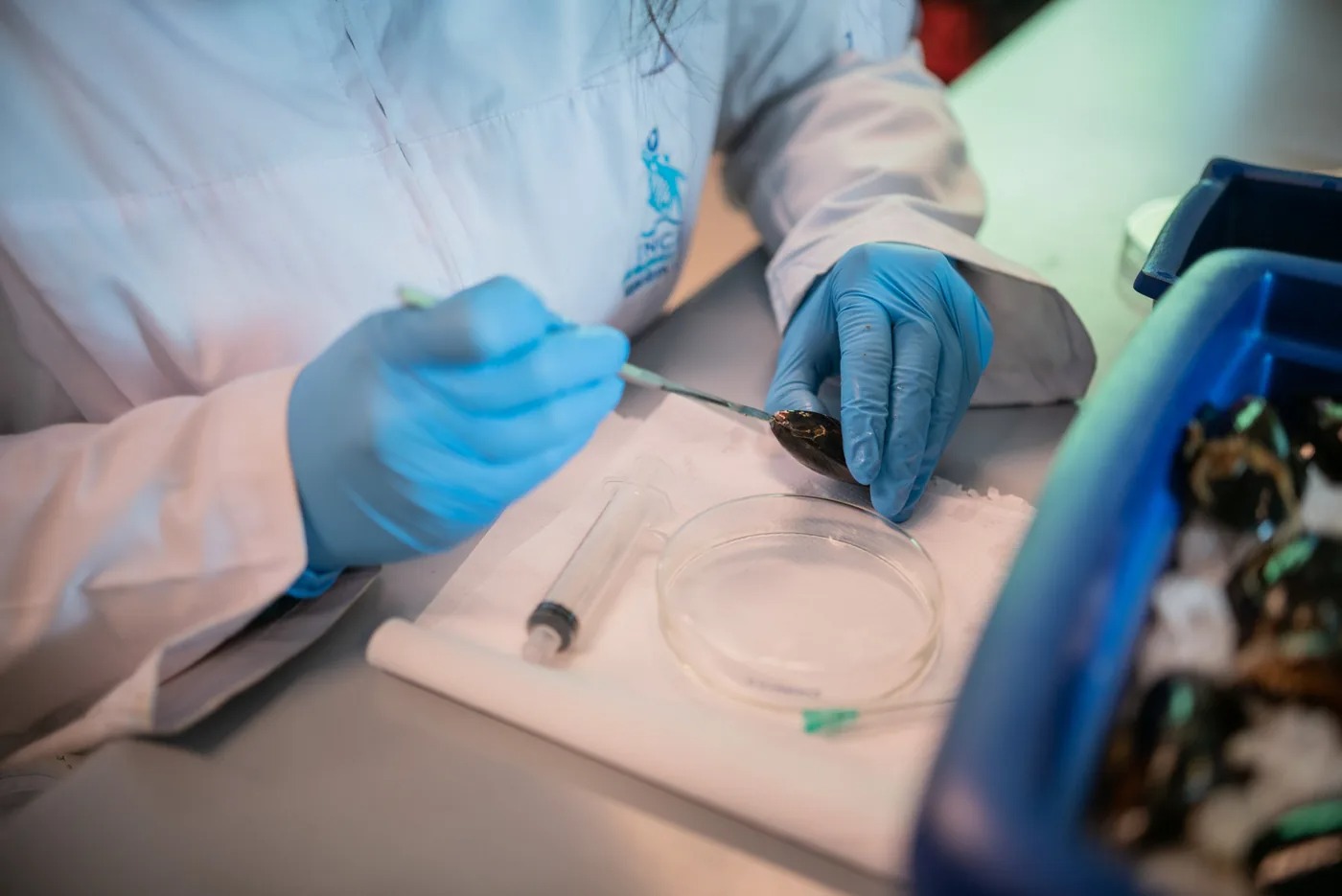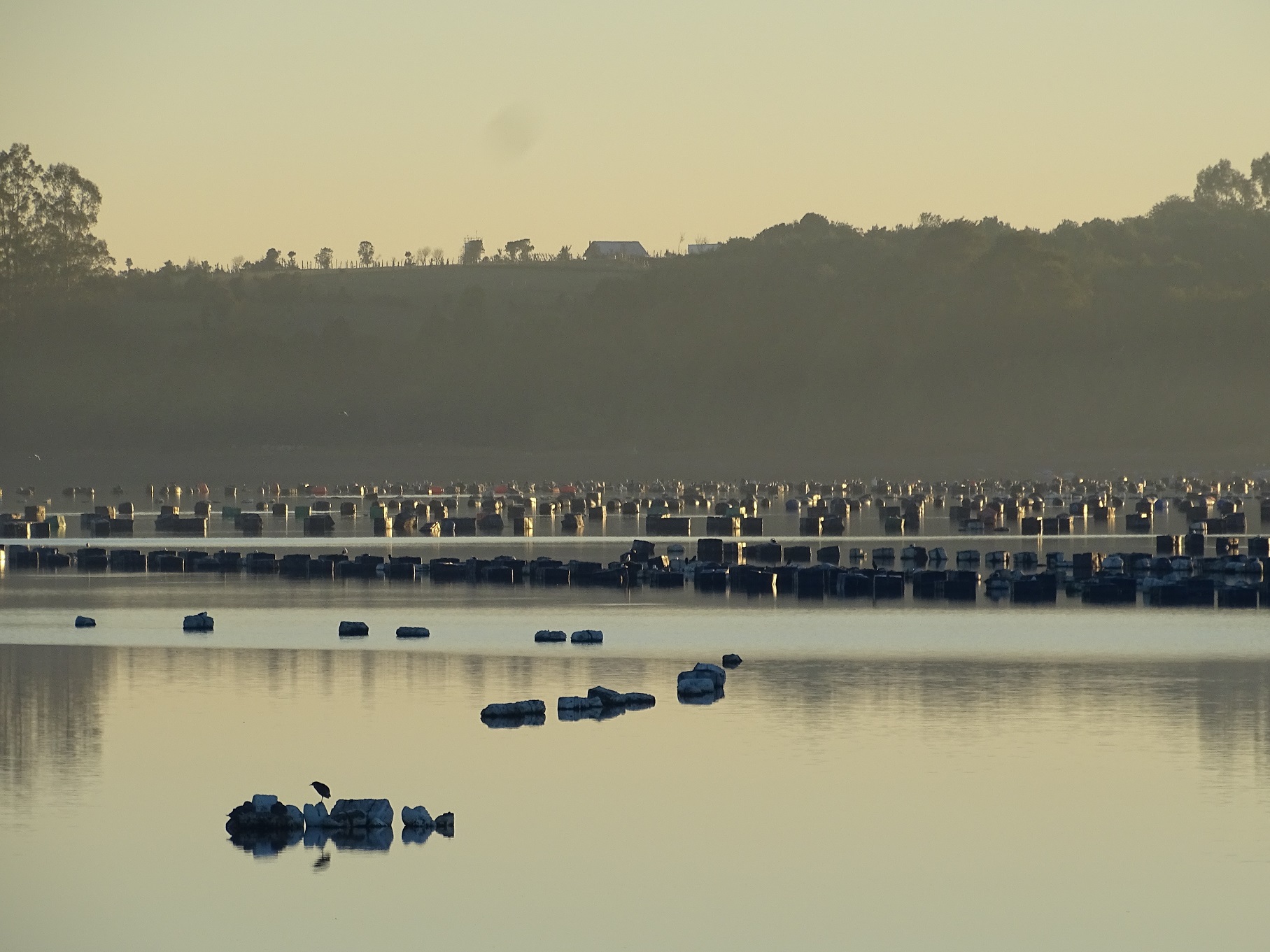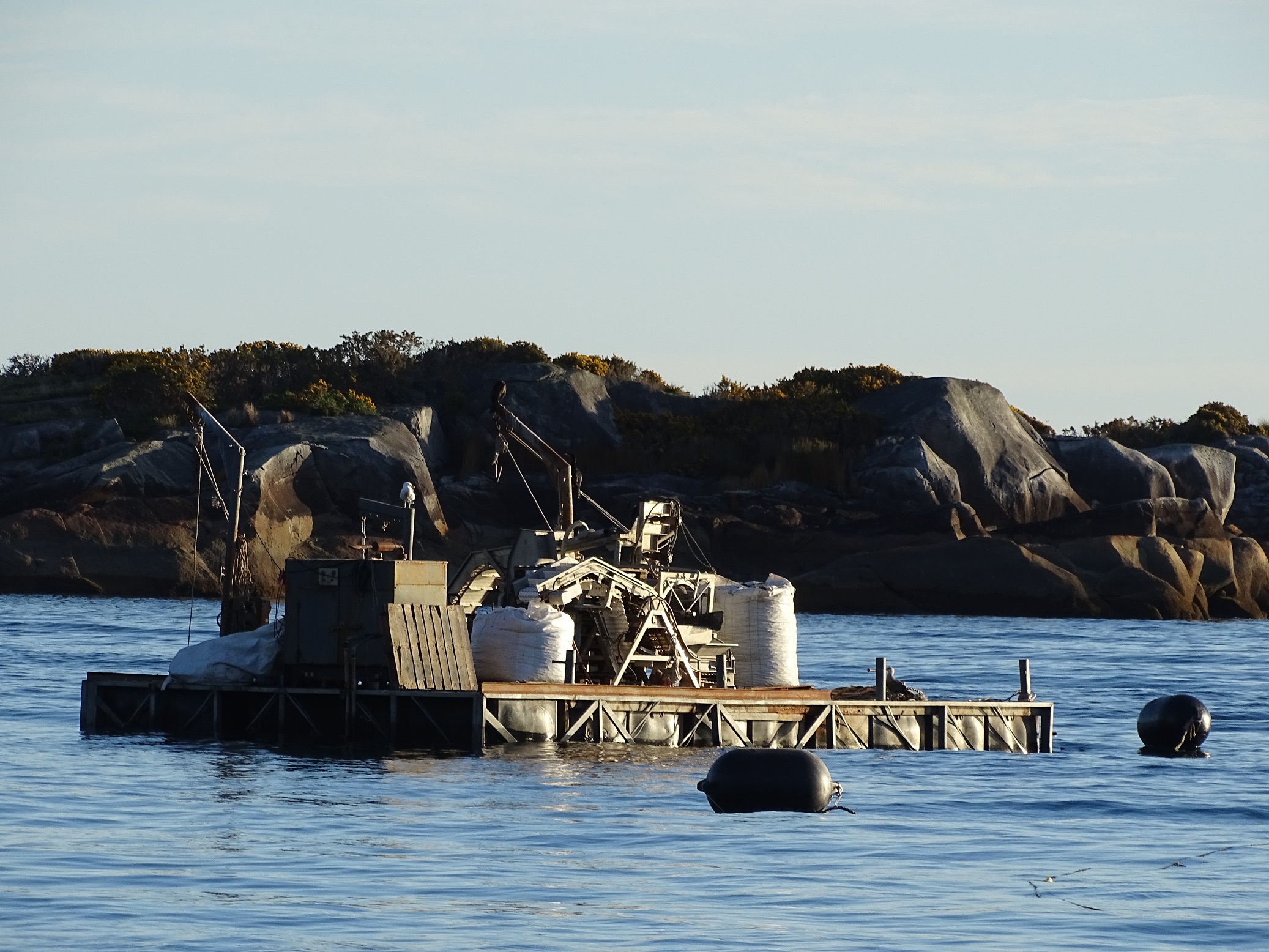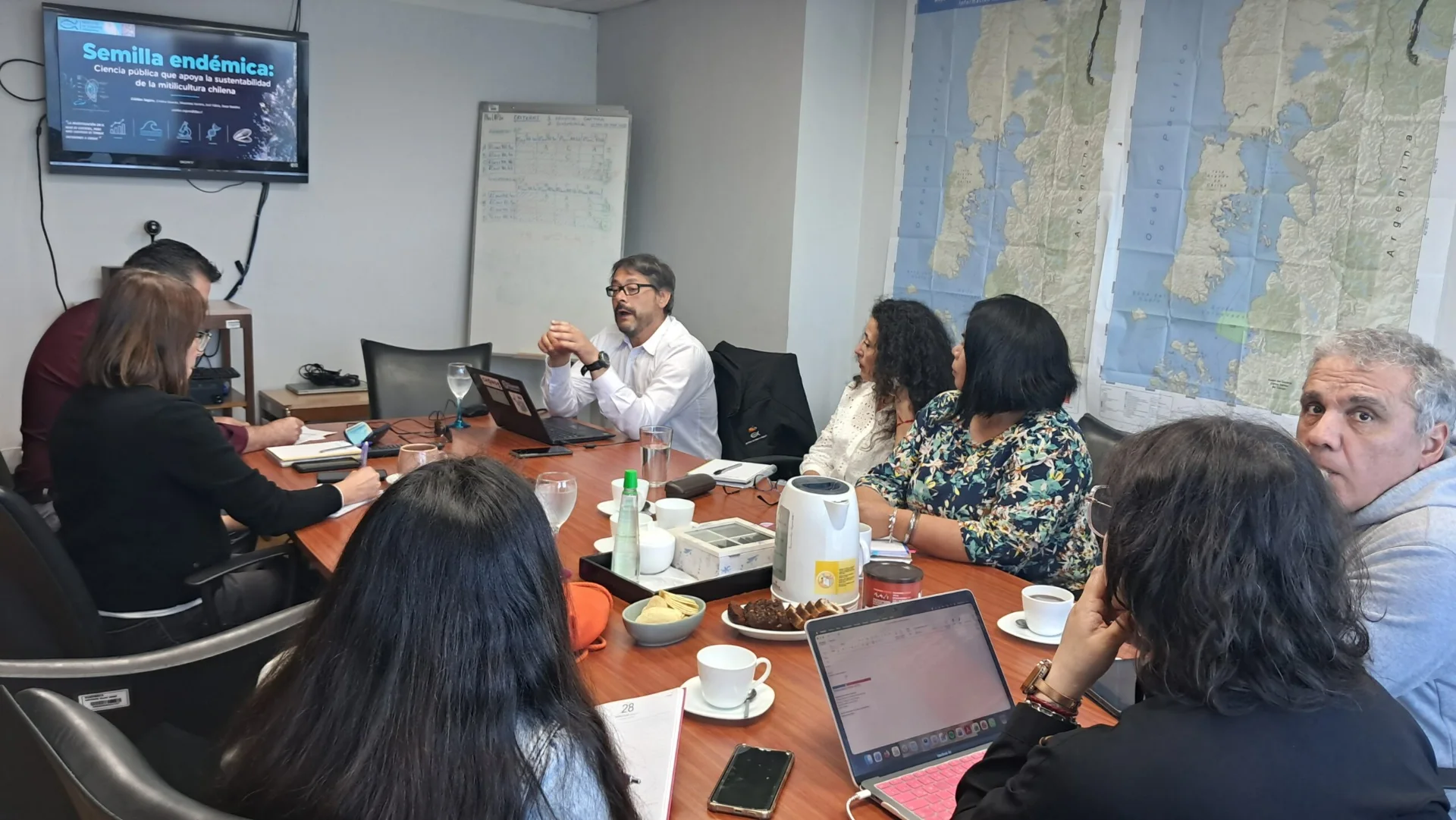
With the aim of disseminating and promoting the use of the Endemic Seed of mussels platform among the teams of the sectoral authority, researchers of the Larval Mussel Monitoring Programme, belonging to the Department of the Environment of the Aquaculture Division of the Fisheries Development Institute (IFOP), held a working day on 28 October with professionals of the Undersecretary of Fisheries and Aquaculture (SUBPESCA) and the National Fisheries and Aquaculture Service (SERNAPESCA). The activity showed that the platform panels can help to answer directly many of the questions raised by the authority for the management of mussel cultivation.
Endemic Seed makes available information generated from more than a decade of scientific monitoring in the country's main minority areas. In the cultivation of mussels, one of the most important productive activities in southern Chile, understanding the processes of natural seed harvesting, is essential to support the decisions of producers, public bodies and other actors in the sector.
The day took place in units of the Zonal Fisheries and Aquaculture Directorate of the Los Lagos Region. On behalf of the Larval Monitoring Program, the semi-senior researcher Cristian Segura and researcher Macarena Herrera participated, who presented the scientific and operational scope of the platform and its potential for public management and territorial analysis.
In the first stage, the main guidelines of the Program were presented, which generates information on the abundance and spatial-temporal distribution of mussel larvae in southern Chile. This background allows us to understand the processes of recruitment and availability of natural seed, essential components for the sustainability of the industry.
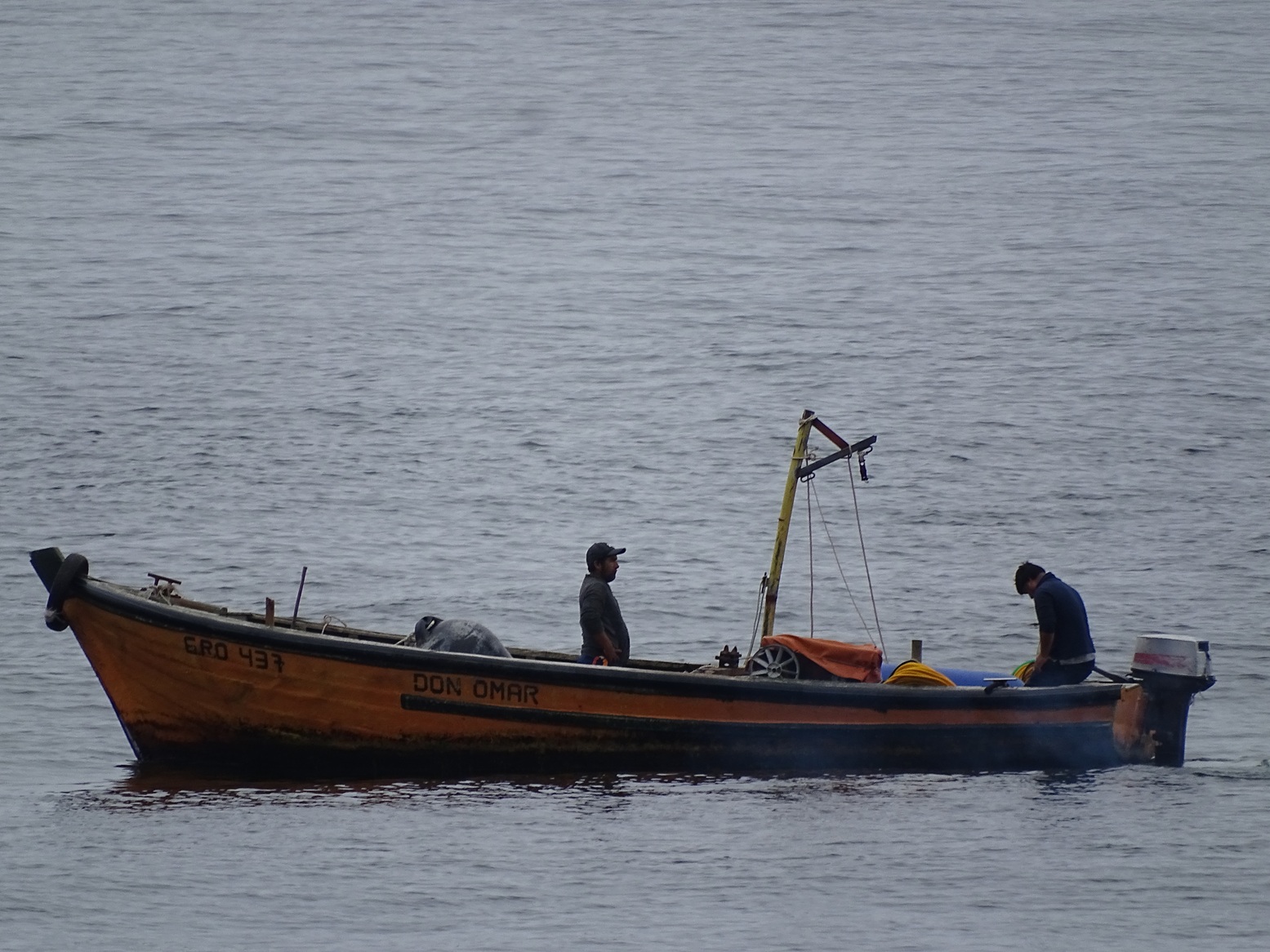
Subsequently, in a practical stage aimed at incorporating Endemic Seed into the usual work of the authority teams, the attendees explored in a participatory way their tools of consultation, visualization and analysis of data.
Among other topics, the professionals reviewed the historical importance of the different sectors in terms of larval abundance and potential input of seeds, comparing simultaneously their evolution in several territories. They also identified processes of advance or delay of spawning in different seedlings, phenomena that can reduce the uptake efficiency when collectors are not installed in a timely manner. Also They analyzed the historical behavior of seed harvesting and peeling in highly contrasting environments, such as the Reloncaví fjord and the inland sea of Chiloé.
The day of dissemination was attended by the Zonal Director of Fisheries and Aquaculture of the Region of Los Lagos, Gustavo Castro Alcaíno, along with the professionals of the Direction Zonal Mariela Guzmán Vilches, responsible for aquaculture, Martina Delgado in charge of benthic affairs and artisanal fishing and Alejandra Paineo in charge of indigenous and territorial affairs. On behalf of SERNAPESCA participated Marisela Altamirano Ocampo, of the Aquaculture Support and Analysis Unit, Anabel Soto, responsible for mussel cultivation, and Nelson Pino, of the Territorial Management Unit.
Value for governance and territory
More than a digital repository, Endemic Seed is a technology diffusion platform that brings complex scientific information to users with different levels of specialization. It is based on the database of IFOP's Larval Mussel Monitoring Programme, one of the most consolidated biological monitoring initiatives for national mussel cultivation.
Thanks to the continuity and robustness of their records, this information has served as a basis for numerous scientific studies, technological developments and applied research aimed at understanding the dynamics of seed harvesting and the environmental factors that condition it. Therefore, it is recognized in the sector as a reference to address questions about larval availability, recruitment and activity planning.
The platform also strengthens coordination among the institutions that manage, regulate and control aquaculture by providing them with a common basis of scientific information for evidence-based decision-making.
Assessments by participants
The Area Director of Fisheries and Aquaculture of Los Lagos, Gustavo Castro Alcaíno, said: “We deeply value the work carried out by FIFG and the effort to transfer this knowledge to public bodies. The Endemic Seed platform is a strategic tool for the management of mussel cultivation, since it makes available reliable and long-term scientific information that contributes both to the work of state services and to the decision-making of producers and users. This kind of initiatives strengthen inter-agency collaboration and bring science closer to the specific needs of the territory.”
Meanwhile, Mariela Guzmán Vilches, responsible for aquaculture of the Zonal Directorate of Fisheries and Aquaculture, said: “We know in detail the functionalities of the tool and the various options available to consult and analyze relevant information for the monitoring of this productive activity. As Area Management we value this type of training and inter-agency coordination spaces, as they strengthen our technical capacities and deliver us better tools to support management and decision-making in the area of mussel cultivation. The platform also allows us to better orient users, giving them background information that contributes to a more informed planning of their seed harvesting activities.”
By their part, Marisela Altamirano Ocampo, of the Aquaculture Support and Analysis Unit of SERNAPESCA, said: “The activity was extremely enriching. It allowed us to see how data integration and technology translate into concrete tools such as the Endemic Seed platform, which directly empowers the collectors, delivering technical certainty for decision-making in each season. I believe that continuous monitoring of variables biological and environmental is the key way to ensure the sustainability of the activity, and allows us to move towards more preventive management, accurate and supported by technical evidence over time. To know in detail the studies and methodologies carried out by the FIFG reaffirms the value of its research, which today materializes on a platform accessible to both mussel producers and technical and technical bodies. controllers, incorporating a historical information base that constitutes a strategic tool for management.”
Finally, Cristian Segura“The most valuable thing of this day was to verify, together with the teams of Subpesca and Sernapesca themselves, that many of the questions raised by the authority can be answered directly from the Endemic Seed panels. We are talking about more than a decade of larval monitoring that becomes a tool of everyday use for public management and for their own mussel producers.”
Projection
This dissemination day identified new opportunities for collaboration between FIFG, SUBPESCA and Sernapesca and reaffirmed the importance of bringing public research closer to technical bodies and users in the sector for more informed and sustainable management of mussel cultivation. In this line, IFOP's commitment is to continue improving Endemic Seed capabilities to deliver a better service to its public users and private.
To learn more about the Endemic Seed platform, visit: https://www.ifop.cl/monitoreo-larvas-de-mitilidos/