One of the aspects that attracted the most attention in this edition of the fair was the number of milestones presented by national suppliers, reaffirming the innovation and development hub that southern Chile's aquaculture represents.
From virtual reality simulations, through digital applications, to metal mechanical innovations for aquaculture processes, service companies for aquaculture saw in Aquasur 2026 the ideal opportunity to present their latest innovations for the sector.
In a version that marked a récor of attendees -more than 30 thousand-, as well as exhibitors -550-, representatives of Chilean companies valued the space to show their new products for the aquaculture sector, in addition to the possibility to re-find with customers, partners and key contacts of the industry.
Undoubtedly, one of the aspects that attracted the most attention was the number of milestones presented by national suppliers, reaffirming the innovation and development hub that the aquaculture of southern Chile represents and its increasingly consolidated position as a global reference in the cultivation of hydrobiological species, with all the technological development model that this implies.
Reproduction and embryonic development analysis
One of the companies that presented for the second time at Aquasur was AquaAnalytix. The company, based in Valdivia, Los Ríos region, showed its innovative service that applies advanced electronic and computer technologies, with the aim of identifying the causes that affect the reproduction and embryonic development of salmonids.
Eduardo Pulgar, CEO of AquaAnalytix and leader of the project Volvix, he explained to Partnerfish that for the analysis of embryo reproduction and development, they apply laboratory techniques with computer technologies and data analysis.
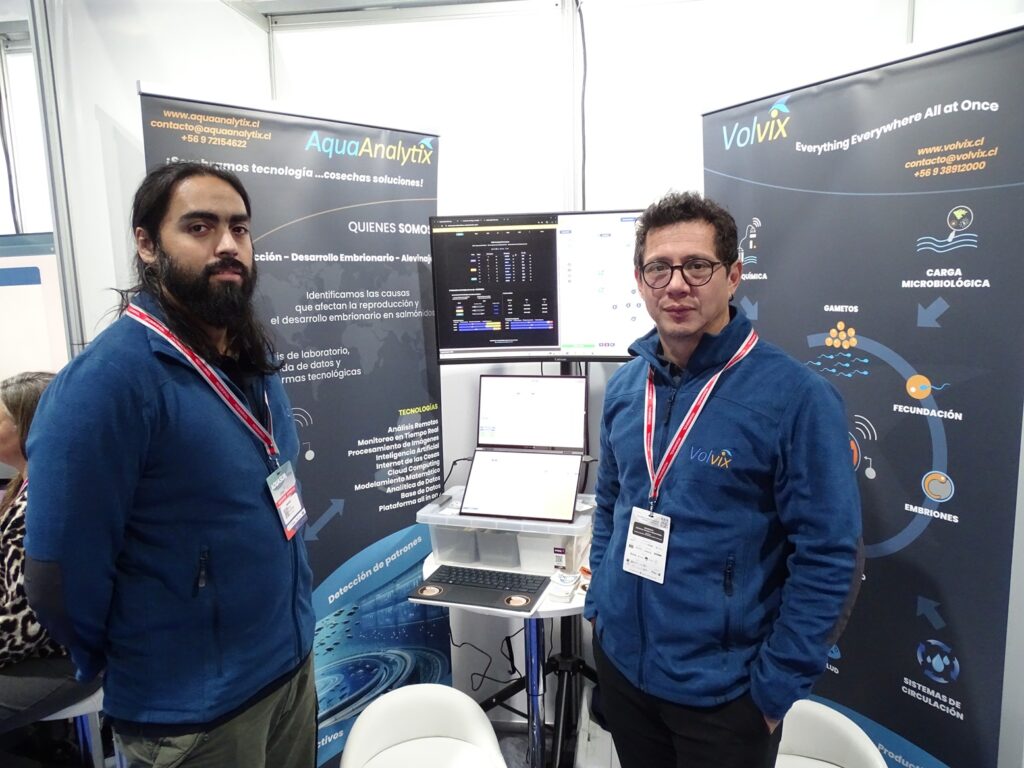
“As a company we have been operating for 3 years, but we have been in industry for about 5 years. The main requirement of our clients are the problems that occur during embryo fertilization and development and also during breeding of the breeders,” said Pulgar, who added, “we try to understand what the embryo or the breeder has and go to the causes and try to solve the problem.”
For the representative of AquaAnalytix and Volvix, it has been a path of much study, as “all customers have different realities and problems. It is not a thing that will be resolved in a day.”
Pulgar said that in this second experience in Aquasur, the goal was to attract international customers as well. In addition, they showed their platform of Hatchery, which basically tracks and tracks the embryonic cultivation of salmonids or any biological species. “Our system has a digital twin of a water circulation system, where you can map a circulation system and measure different parameters within that system and make an integration of all the parameters of the system,” he said, emphasizing that his services have had an excellent reception by the salmon industry.
Development of smart aquaculture software
Another company that drew attention to the development of tailor-made platforms, with alert systems throughout the production chain, was Ankker AI. At its stand at Aquasur 2026, the company showed its developments with artificial intelligence, focused on the operational area of the industry, with diving platforms to generate KPIs, reporting systems and cameras with artificial intelligence to detect any non-compliance.
According to César Mancilla, CEO of Ankker AI, they have had a good reception from the aquaculture industry. “We see that there are many people interested in this type of technology, especially applying artificial intelligence in each of its processes,” said Mancilla, stressing that they have developed a platform in which it is possible to manage diving activities online.
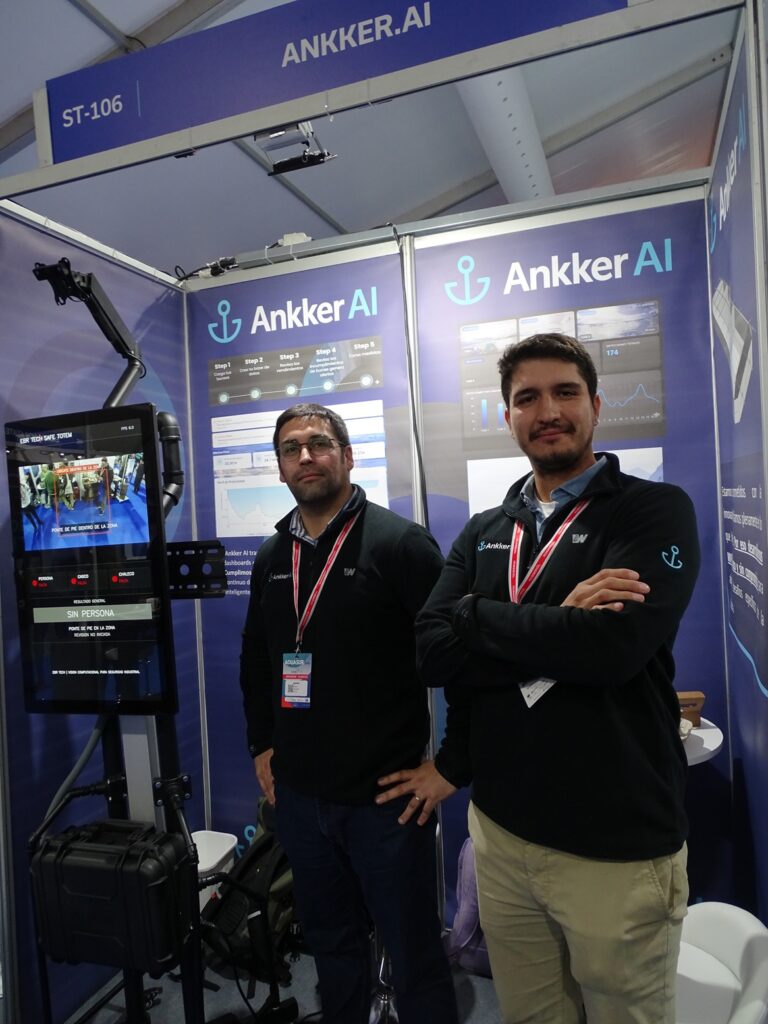
“We can detect everything that is non-compliance, ascent, descent, excesses of depth, we generate KPI of performance, excesses in diving, shift changes and everything that currently the regulations require of the industry,” he added.
The representative of Ankker AI has specified that in the fair has attracted attention, from the public, specifically the topic of the analysis with AI through the cameras, that can be integrated to the ships, centers and any other aquaculture infrastructure, being able to identify the lack of compliance in tasks of the field.
Training supported by virtual reality
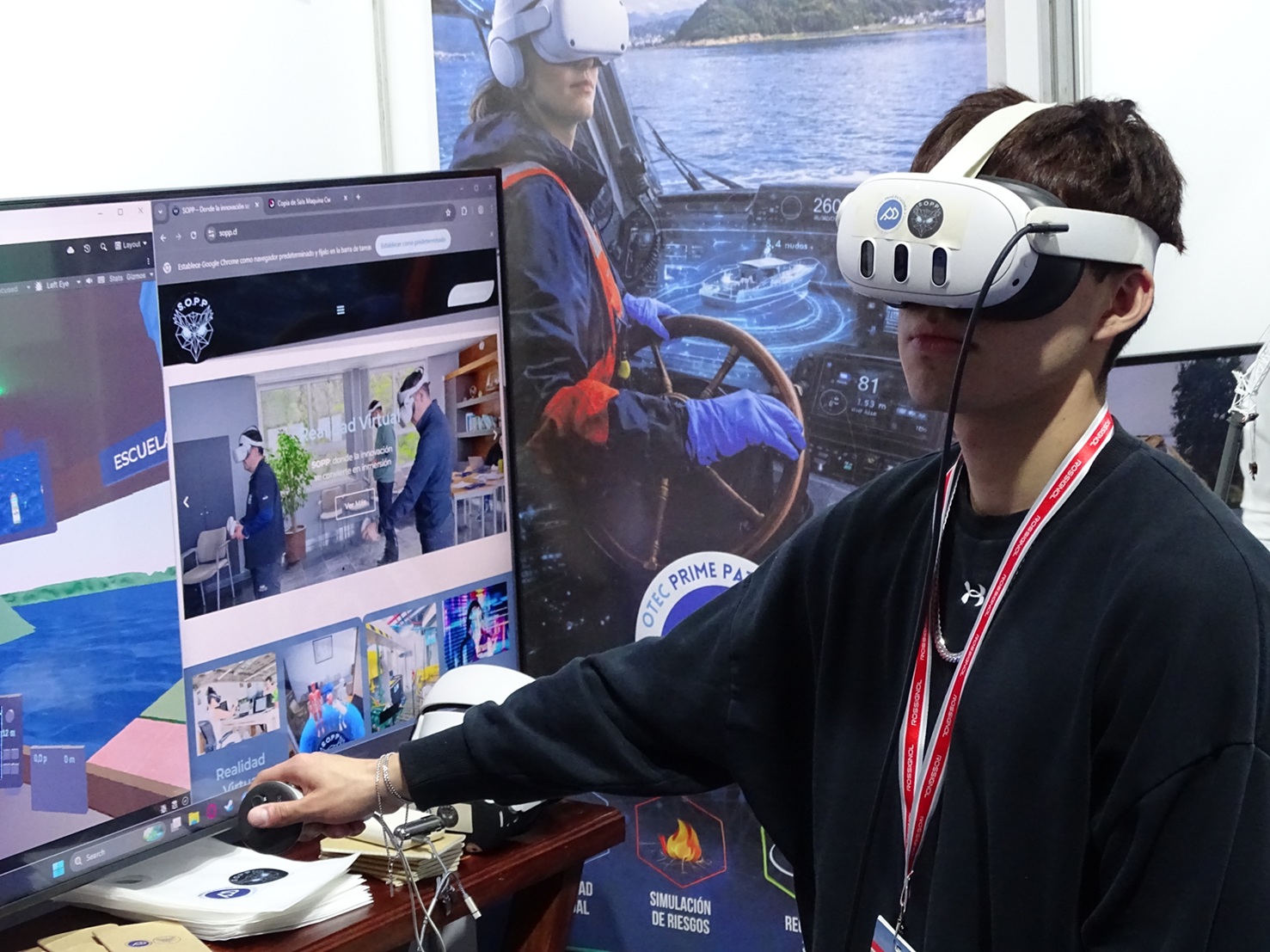
A stand that caught the attention of many visitors, especially of the younger ones, was that of Prime Patagonia Trainings. This is because OTEC showed how it relies on virtual reality and the development of navigation software, to provide courses for the maritime sector. As explained by Nelson Toro Aguirre, CEO of Prime Patagonia, all its software development is based on the channels of southern Chile. “From Chinquihue, Calbuco, to the south. It's not software they sell you from abroad. Here it is clearly local, with the characteristics the Navy’s official maritime signage, with the aim of complying with all regulations,” he said.
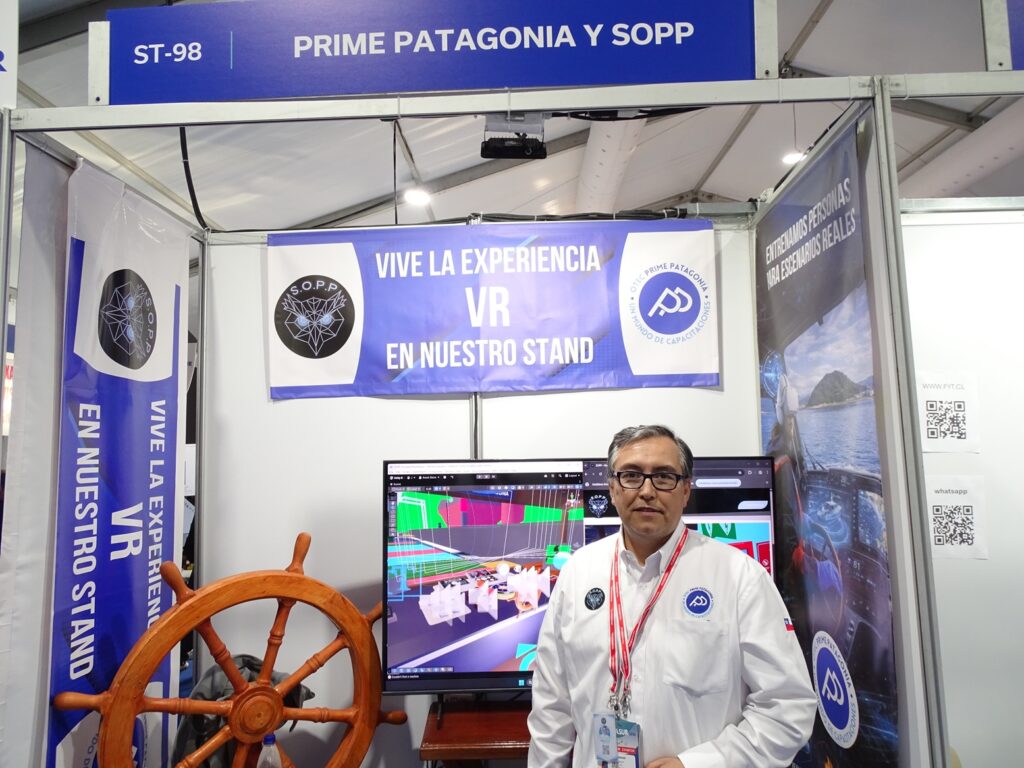
The representative of Prime Patagonia commented that virtual reality technology has been used for 5 years. “This world is very developed in the mining field. But in the aquaculture and training part very little, given the high costs. However, we have come to create developments of these characteristics at a low cost, even leveraged with training processes in parallel, which brings training with this technological tool,” he said.
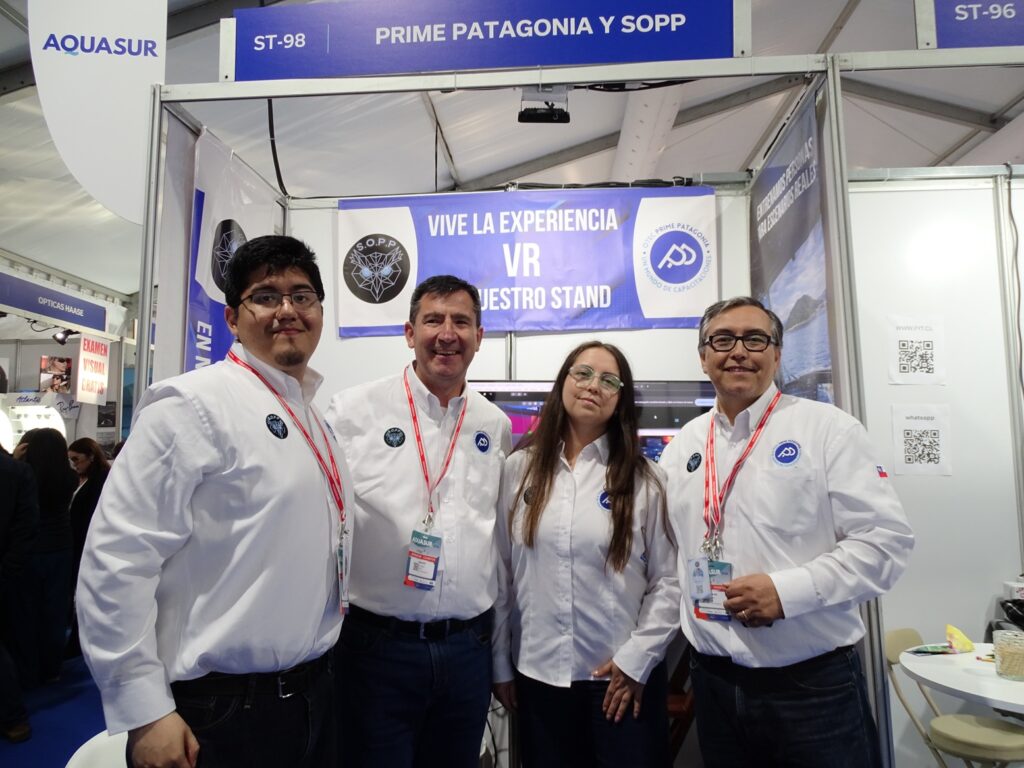
Toro added that the area that most requires this technology is labor health, for a recovery issue, in addition to training in the maritime world. “75 per cent of vessels across the country are registered here in this area. I mean any type of boat and obviously require certain degrees of experience and ongoing training for maritime personnel. The main clients of Prime Patagonia they are companies of the marine field and salmoniccultora companies.
Nelson Toro was surprised by the interest of professionals and students, who came to his booth eager to know this type of technology and how it can be applied in the southern Chilean industry. “We interacted with young people who are still studying to be officers of Marina Mercante and caught their attention because they don’t have a simulator like ours. A lot of people came up from robotic companies too. Underwater, we were asked if we could support them and develop software for ROVs’ driving systems, so the experience was very positive,” said Prime Patagonia Manager Capacitaciones.
App for anchoring jobs
Given his experience in anchoring jobs, both as a crew member, chief of operations, supervisor of the Fondeo, now as advisors, Robinson Mansilla Vera created Fondeapp, a digital platform developed as an integral ecosystem for anchoring projects, considering traceability, process digitization and standardization of work. As he told Partnerfish, this civil engineer in mines pointed to an improvement in the data obtained, KPIs, and to improve compliance with resolution 1821, which is the norm for aquaculture anchoring. “Today, the traceability of all anchoring elements is requested, but Through paperwork, which is still used on ships, it is very cumbersome. In this sense, the digital platform supports all parties, whether captains, anchoring services, chiefs of operations, in order to obtain an auditable record in the cloud, which can be corroborated wherever necessary,” said Mancilla.
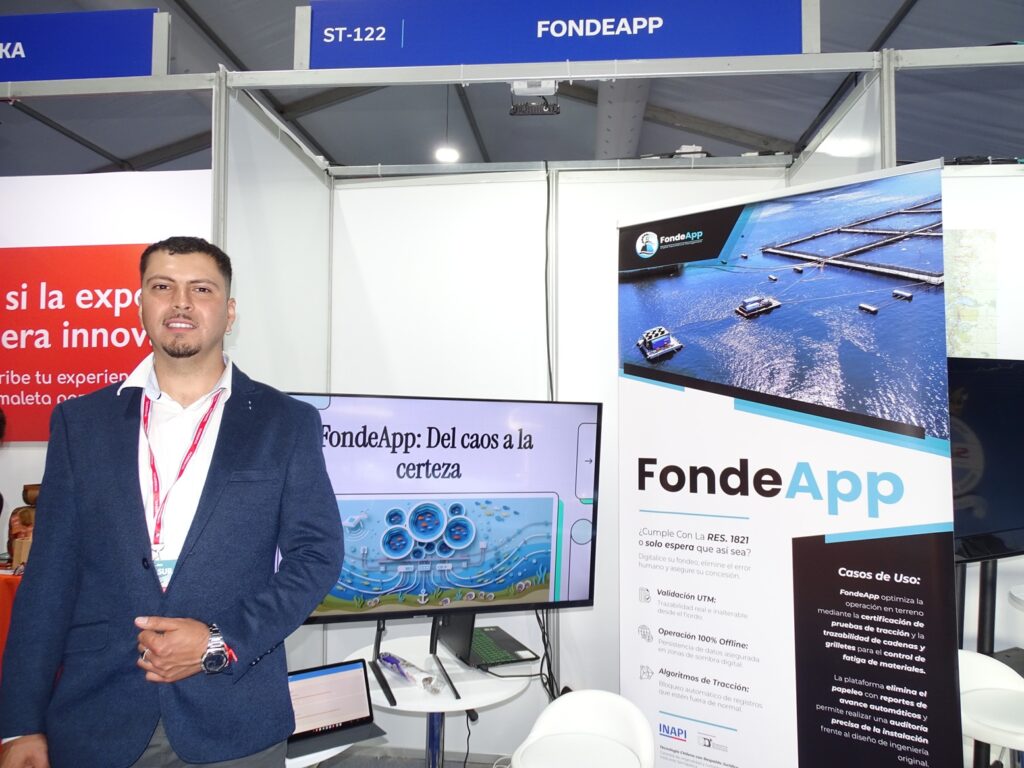
The professional asserted that Fondeapp functions as a digital link between the office, the engineering department and the anchoring boat. The application has been in development for more than a year, in what has been a learning process and application of the experience you have obtained as supervisor of the anchoring area. “All this has allowed me to get ideas and to be a real help and to focus on what the industry needs, especially for salmon vessels, which have seen it as something very new, since it can be a great contribution to them,” added Robinson Mansilla, who pointed out that the application works through subscription, through which precise data is generated to maintain preventive maintenance of the elements, allowing there to be no critical failures in each anchoring system.
“For now we are in the phase of looking for customers to generate the white marches and generate feedback of the application, improvements and everything the industry needs to focus it better and align it with its goal,” concluded Fondeapp creator.
Innovation for silage
In order to make known all its work in the development, engineering and manufacturing of machinery for the silage process of salmon, Commercial Insapro participated in Aquasur, concentrating wide interest of visitors. Miguel Fernández is the manager and owner of this company with its headquarters in Rio Bueno, Los Ríos region, and that already has more than a decade of history and positioning in the industrial sector of southern Chile.
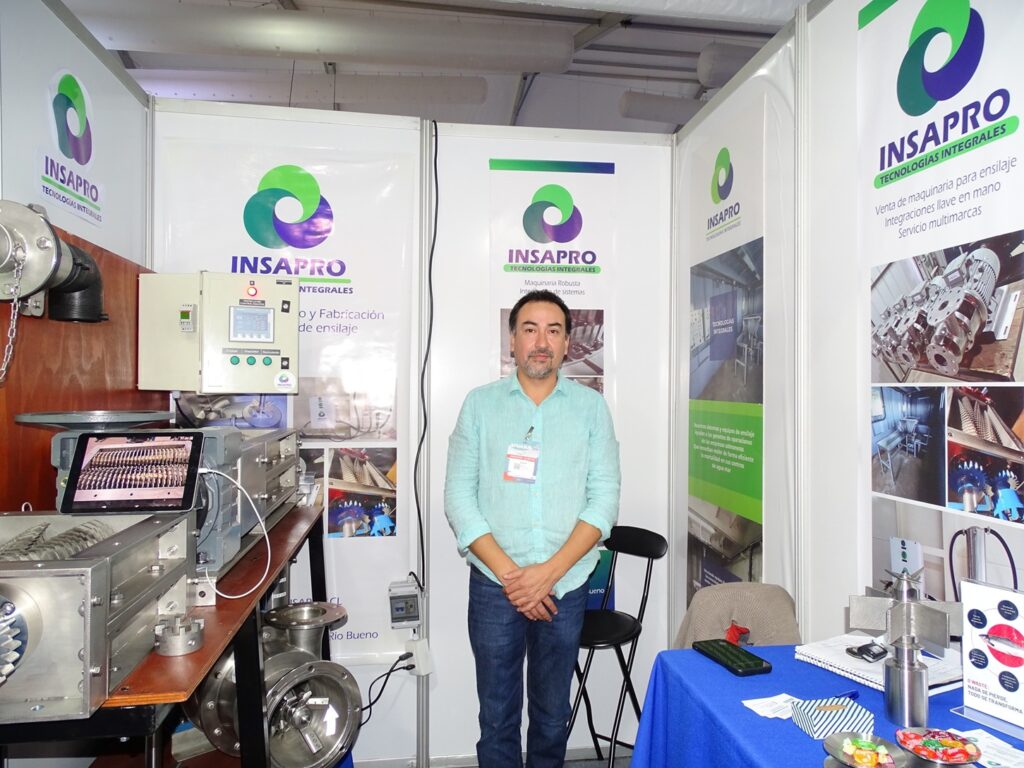
"As an enterprise I have been working for 11 years and with our machines already in positioning, about 5 years working with our final products. Our participation in the fairs was excellent, the public liked to see things done in Chile that have a focus on quality, both in the development and in the manufacture of the products that are achieved," Fernández said.
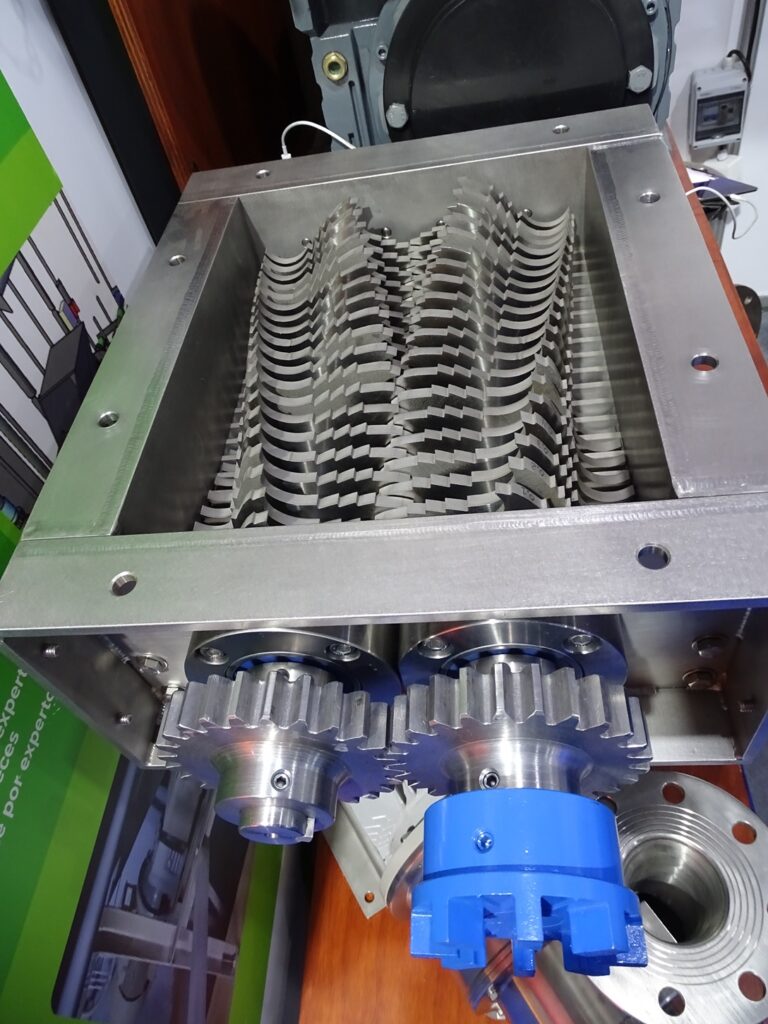
The founder of Insapro said that the fact of identifying that machines can also be developed here that can meet the objectives that the industry itself is requesting, is highly valued by the clients, along with the integration of turnkey projects. "It's a business format we call turnkey porque we design, run, install and integrate it with all our machines, 100% made in Chile. We do the fluid transport route, we do the installation of the electrical boards, a complete integration until the customer says we are OK, we deliver with a talk and a start-up to ensure the correct functioning," said Miguel Fernández.
From his perspective, "the constant accompaniment to the customer is an aspect highly valued by them phrase that we are in charge of advising during the process of silage and then to continue accompanying them in the maintenance of those machines so that they have conditions to be operational year by year".
Custom-made industrial automation
A company that participated for the first time as exhibitor of Aquasur was TecnoAustral, company with parent company in Puerto Montt that focuses on automation solutions with SCAD systems, integrating artificial intelligence and electrical engineering development for the industry in general.
According to Claudio Quezada, manager of TecnoAustral, “the fair was a good opportunity to open up some business opportunities. What most caught the public’s attention was the integration of reportability technology connected to the SCADA systems (traceability) that show the processes, in addition to the area of artificial intelligence, on a single platform.”
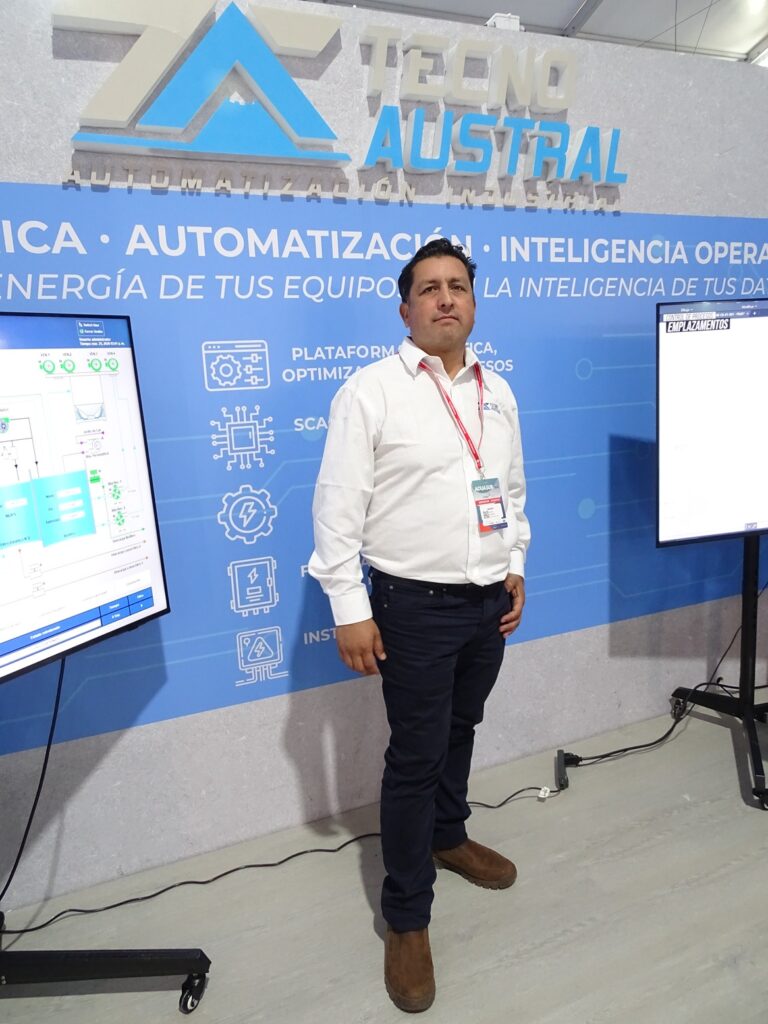
Quezada pointed out that this type of system “is something new for the industry, since it has not been seen much so far, and we are renewing our services in that area. The executive emphasized that through the integration of advanced SCADA with traceability report, analytics and artificial intelligence, they can provide real-time traceability, intelligence and control in a single solution for facilities and plants in the field food.
In this way, and with Artificial Intelligence models implemented directly in plant, they can predict failures and make decisions in time for the proper functioning of their customers' facilities, which 50% are from the aquaculture sector, while the remaining 50% correspond to the dairy and process world.
National engineering for plaprocess
Fabrinox is another company with extensive experience in the industrial field, specifically in the implementation of connection systems in food plants and the manufacture and installation of conveyor belts, among other business lines.
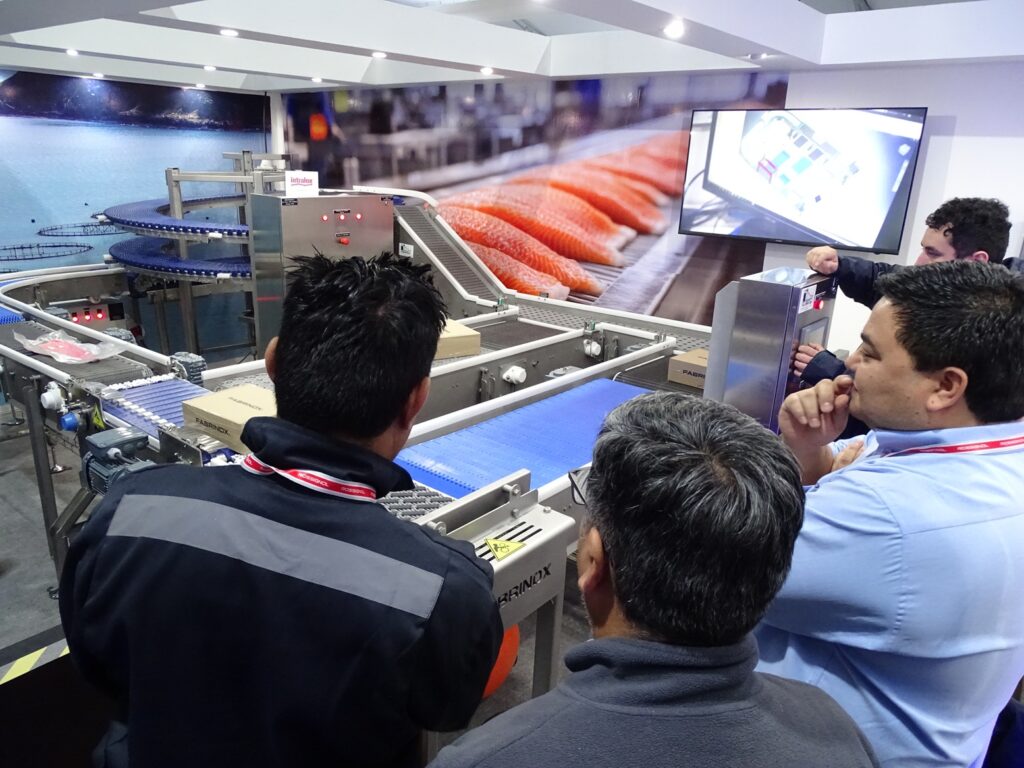
Hernán Moraga, deputy manager of Engineering and Projects of the company, valued the attendance of “people of high interest within the salmon industry, and also drew attention to the visit of people from other industries, in the search for technology to lead to their industrial processes.”
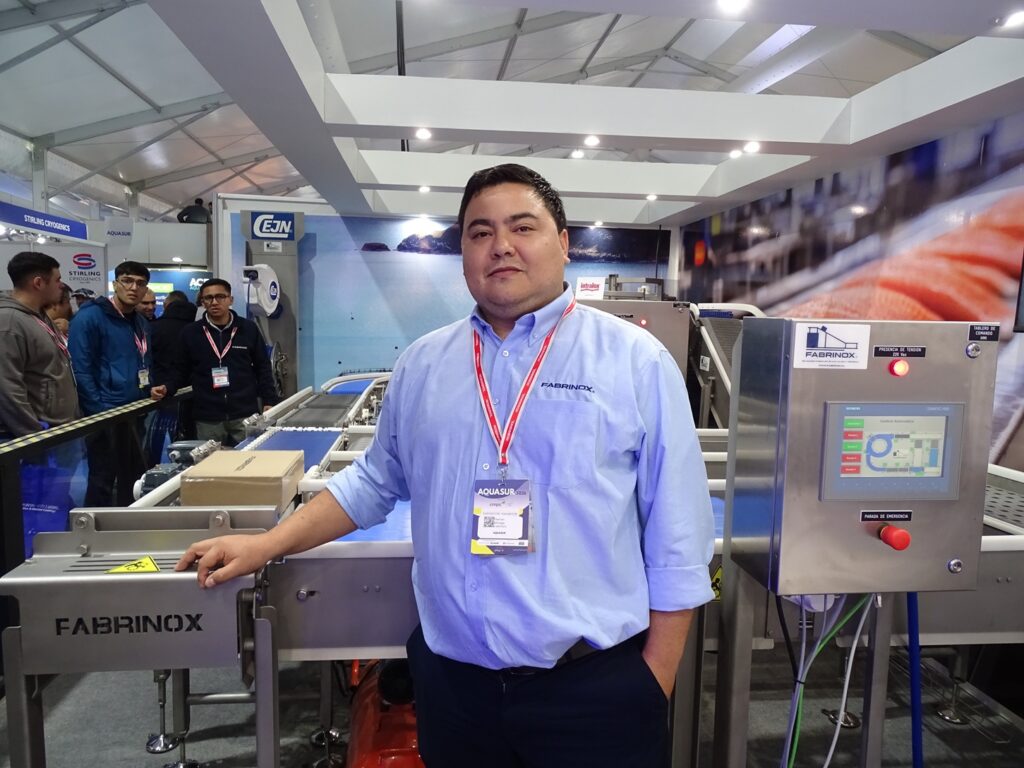
Moraga stressed the fact that she is a consolidated company, which has been in the industry for more than 25 years, with very tailored solutions. “We don’t work with standard equipment, but we’re aligned with our customers’ needs,” he said, noting that they managed to generate more than a hundred key contacts for new projects.
Increasingly sophisticated ROVs
MC Marine Connection participated for the second consecutive edition in Aquasur and its presentation also caused expectation among those who visited the fair. This as they showed their latest models of submarine ROVs, among them the Maullin, which is the smallest equipment they have developed so far and which is oriented to the smaller depth segment -up to 150 meters-.
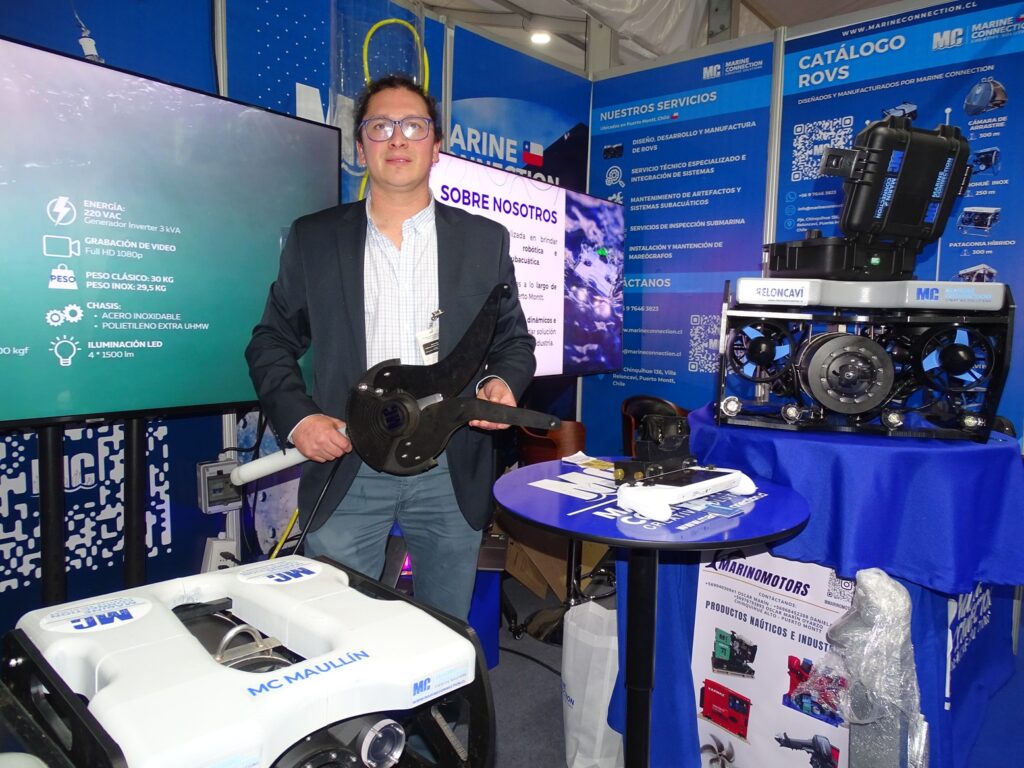
Nelson Hernández, general manager of the company, explained that the balance was totally positive. “I felt very good feedback of clients, of people who have been working with us for years. And participating here was to refresh all that, to be back in conversation and also to generate contacts with new customers, since what we showed was quite striking, with tools and new accessories for the teams,” said the founder of Marine Connection.
In his opinion, one of the elements that caught the most attention was “the cutting tool that we use for the disarmament of centers, an accessory that helped us to close several sales in recent months,” adding that after 8 years of experience in the aquaculture market, they already have all their products “pretty mature, tested, robust and recognized equipment in the industry for the same reason”.
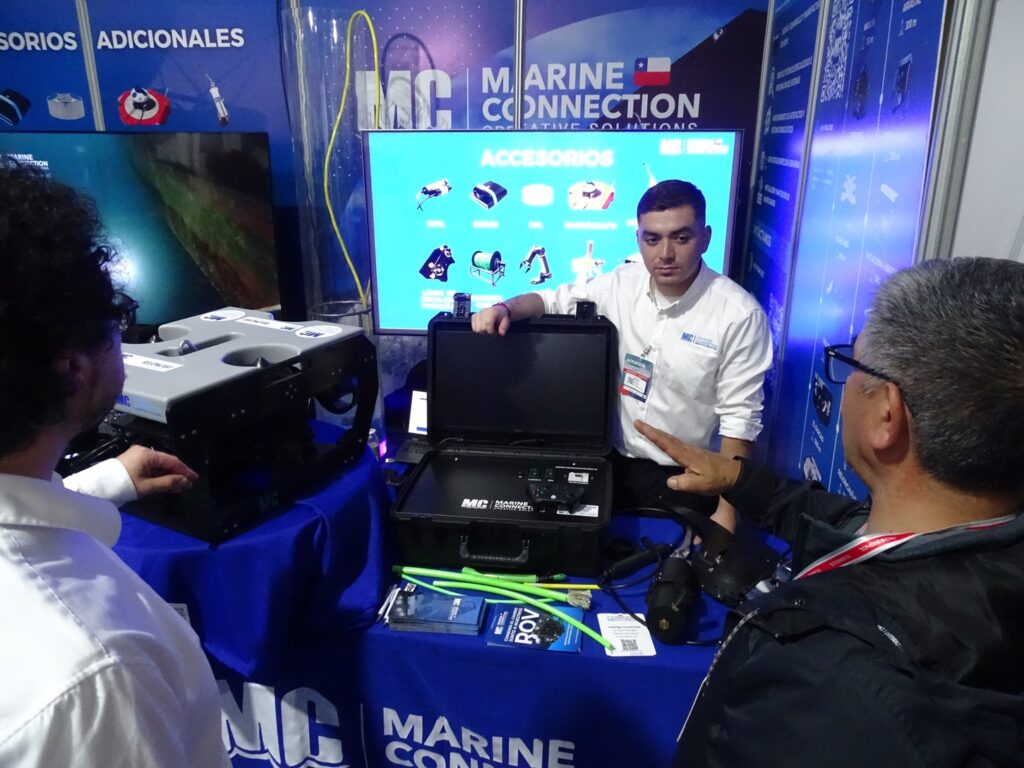
They also exhibited the Huinay robot, which is a computer with a greater capacity for loading and incorporating accessories such as multi-function arms, sonar, USBL. “It has a push up to 60 to 80 kilograms, can reach 600 meters depth, laser and double camera. In addition, we show the model Reloncaví, which has had a very good sale, given its good price and what it offers in thrust and load capacity,” said Hernández, who noted that the key to MC Marine Connection’s success has been “improving each of the products based on customer requirements. We always collect feedback and are in constant communication with them.”
Custom-made technological solutions
With more than 25 experience in the aquaculture sector, C&G Services was present showing its solutions for the industrial maintenance of processing plants. According to Patricio Calderón, owner and founder of C&G Servicios, Aquasur unveiled its specialized solutions in maintenance, parts manufacturing, technological improvements (upgrade) and industrial systems for the food industry, with a focus on aquaculture.
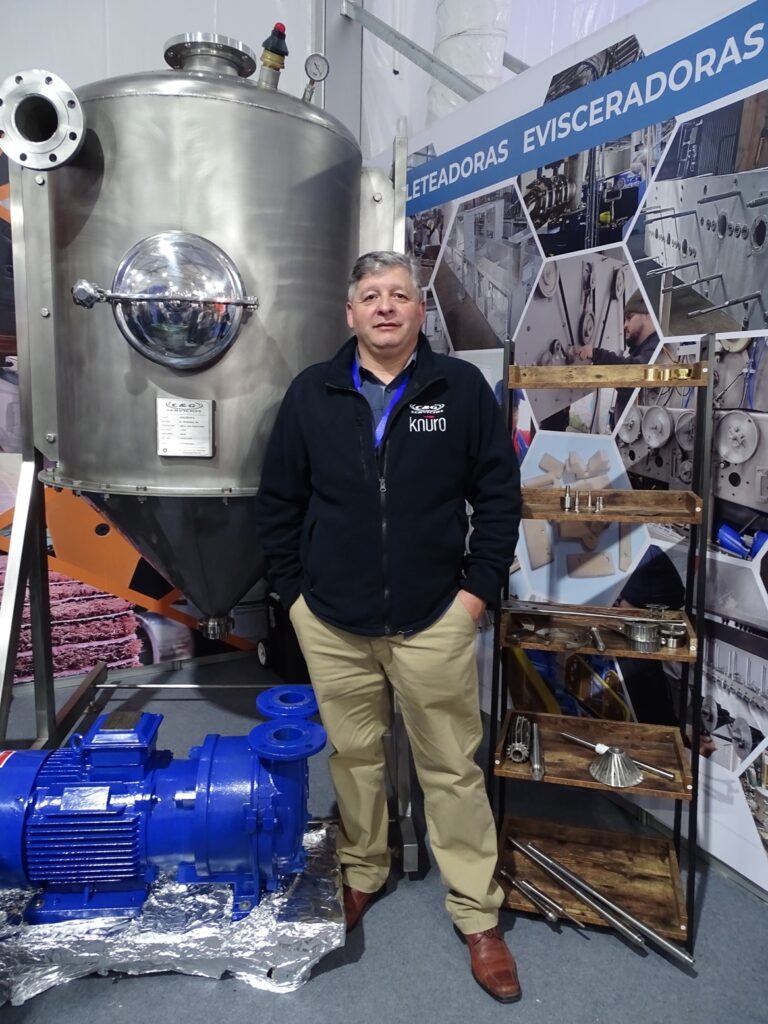
In addition, they presented the representation of Knuro, a Norwegian brand that is entering the Chilean industry with its first automatic evisceradoras. “The idea is to automate to the fullest and has been a totally successful integration process, in which we develop the vacuum line,” Calderón said.
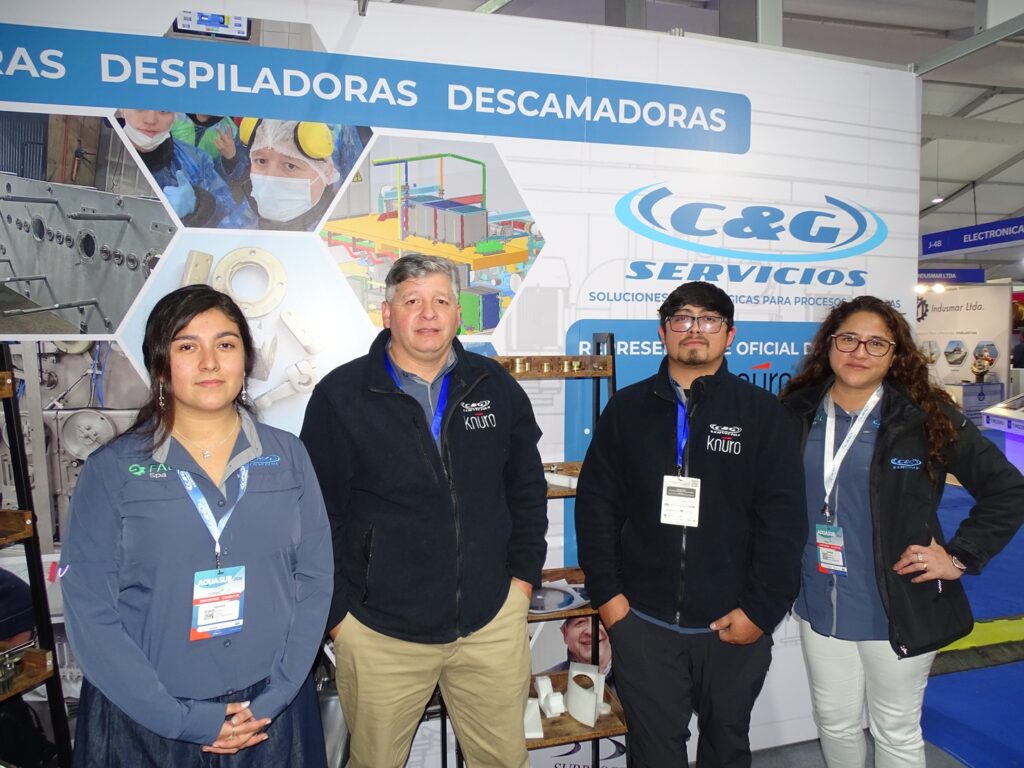
The C&G representative explained that together with strong growth in the automation area, they have had to focus on innovation and development in conjunction with other suppliers, such as masters and engineering companies. “There is a lot of research, innovation and development work as well. They are looking for us for that, given our experience and trajectory,” added Patricio Calderón.
Partnerships and collaborations in engineering
One of the companies that collaborates with C&G is FAL marketer. For Jorge Ávila, general manager of the company, “the first goal of participating in Aquasur was to make known the brands, alliances and what we do as a company, where we develop technological links and unite solutions for the salmon industry.”
In Ávila’s view, it was important to participate in an “international showcase of this entire ecosystem and for people to know that we are located in Puerto Varas, Puerto Montt and Quellón addressing the needs of the industry.”
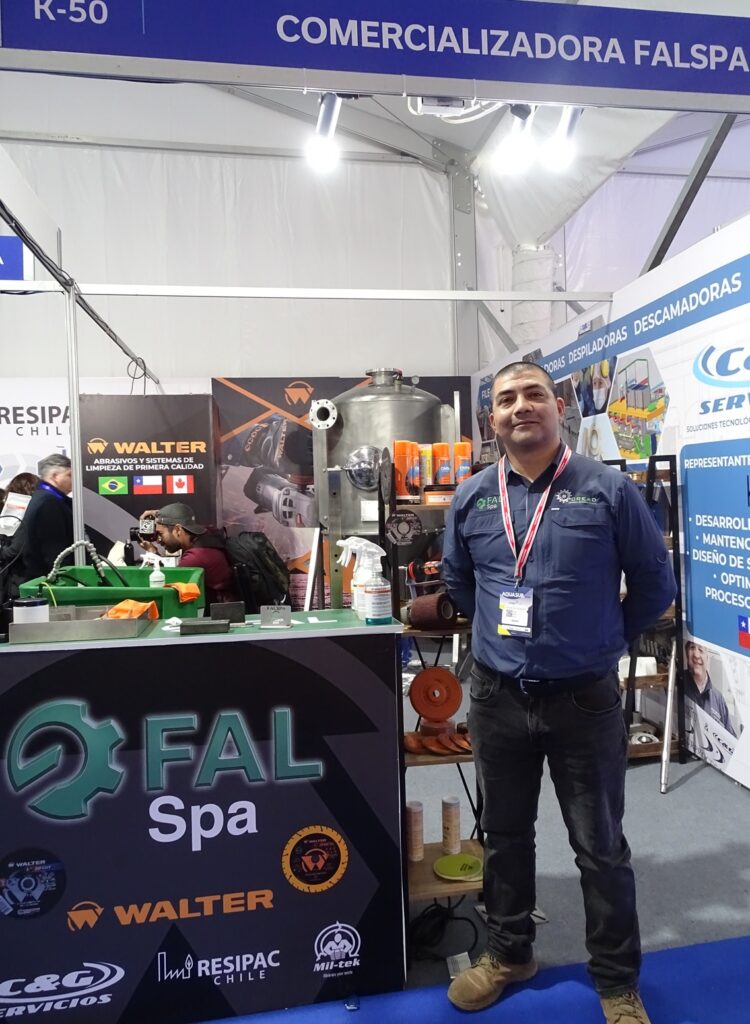
The founder of FAL said that today they import machines, vacuum pumps, solutions for salmon cutlery, in addition to being official importer of the C&G brand in these lines of business. “We are official distributors of the Walter Technologies brand, a high level engineered brand in abrasive and biodegradable chemical solutions, solutions that do not exist in the local market and that we have imported directly from Canada and Brazil,” he said.
And to conclude, they exhibited a third line of business, which has to do with Resipac Chile and Mil-tek, an alliance of two brands that they seek to do is circular economy, recycling and waste management from the REP law. For Ávila, his balance of Aquasur 2026 was “very positive, we had a lot of interaction with the more than 300 visitors we received during the three days of the fair.”
New photoperiod lamp
Libysay Noriega, head of marketing and management control at Energry, made an excellent balance of the fair, at which time they presented their new Prylight Quantum Adaptative 600 lamp, which adapts to the conditions of the aquatic environment.
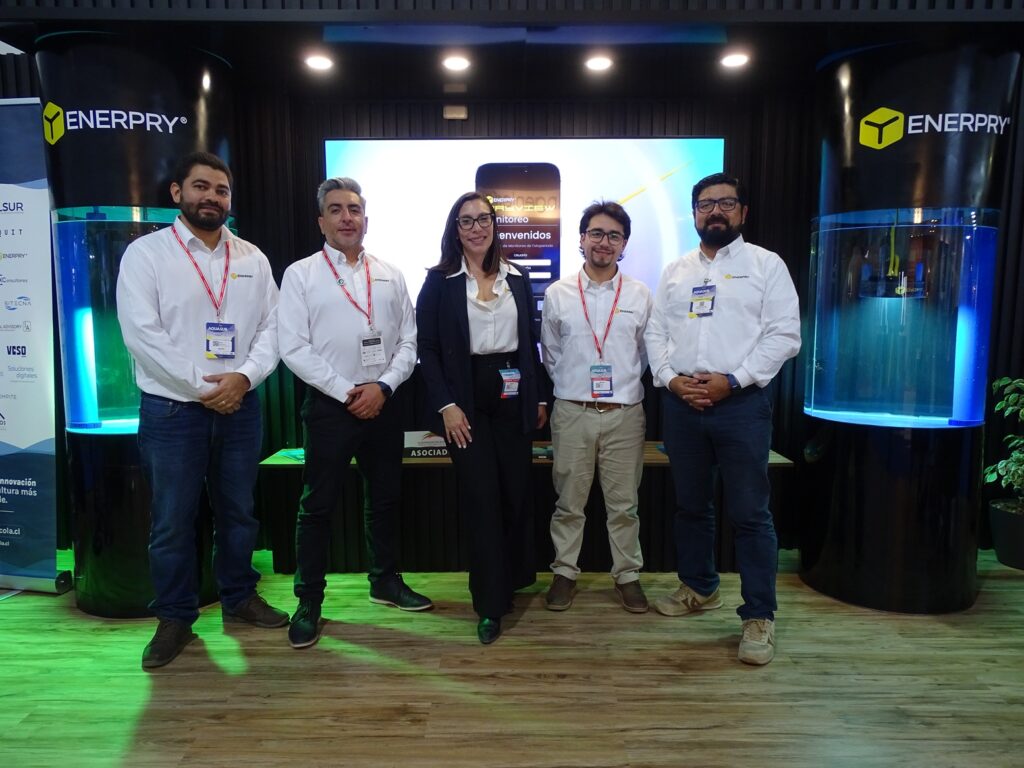
“There came a lot of people interested in knowing the new lamp, which helps improve the sustainability of the cultivation centers and also lower costs. They consulted about the improvements that we have made, the benefits for operations and really that have gone super happy especially for everything that is able to provide the new lamp,” said the executive.
Noriega also highlighted the visit on behalf of the Puerto Montt Sports Club, who were able to learn about the fair and what Energry is doing, as well as sharing with the company's audience and collaborators at the stand.
Electromobility for the maritime sector
Another aspect that was exhibited in Aquasur was that of electromobility applied to the maritime environment. In this sense, the company ElectroRiders showed technology made in Chile for the national industry, with electric motors buera of embarra for boats, with the differentiation that is an engineering service.” My objective was to know the environment that is lived here in the south, in order to show this as technology developed for the market Chile, and we have done so,” said Ariel Echeverria, CEO of ElectroRiders.
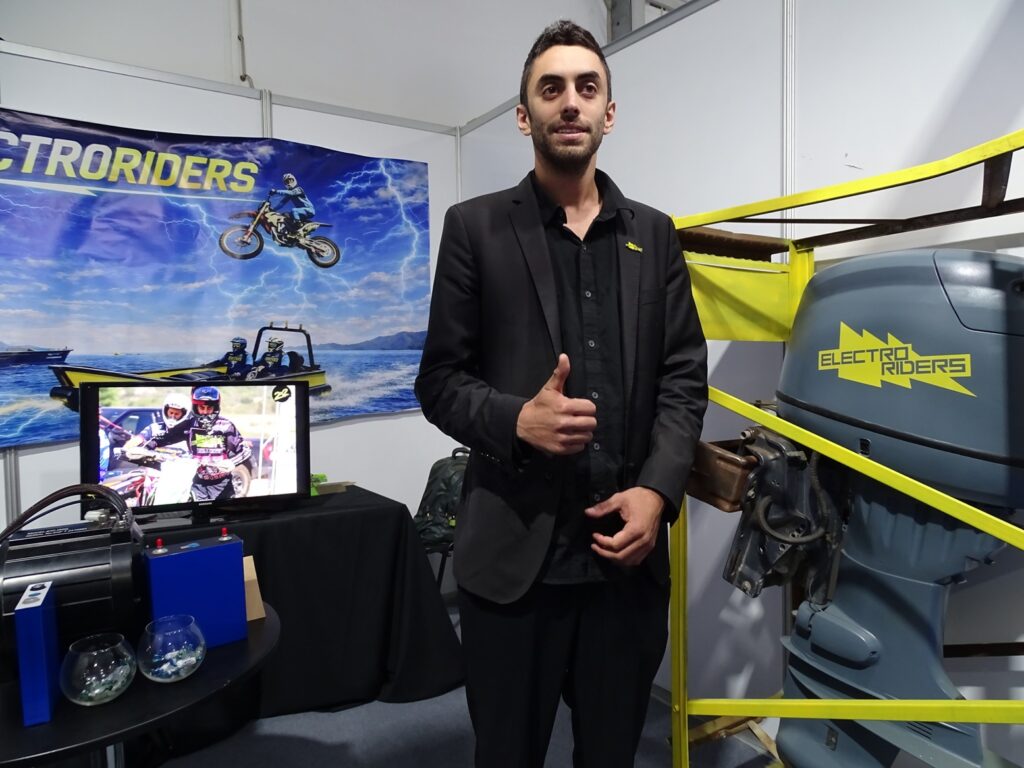
The representative of the national company indicated that they accompany “each client in the lifting of the problems and where the boats are used, for us to dimension the project according to what it requires”. Echeverría said he was surprised by the interest in new technologies on the part of the public who visited the fair. In particular, they showed a engine created from scratch, of 6 horsepower, which has a battery modular 3 kWh.
He added that his goal for this year is to finish, in less than two months, a 50 HP engine for boat support in the aquaculture pontoons. “I have realized that they are not only very interested in the type of technology, but beyond being sustainable, of being efficient in the operation, which is just what we deliver. Reduce operating costs, reduce maintenance times and be more efficient,” he stressed. Echeverry.
Monitoring, ERNC and backup systems
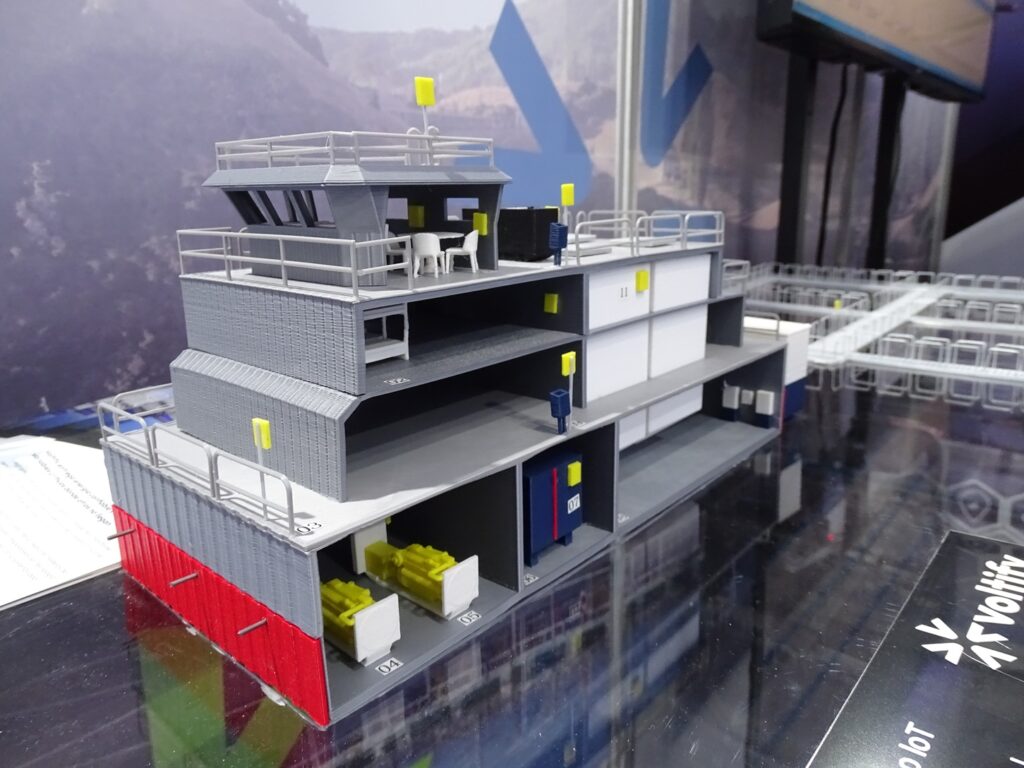
Voltify was another company that focuses on new trends in providing renewable energy solutions, monitoring and digitization of industrial facilities. José Miguel Peña Cuadra, product manager of monitoring of Voltify, explained that the aim of the company was “to show all our business units focused on aquaculture. We have a business segment of monitoring, renewable energies and backup systems that we have installed in various aquaculture centers.”
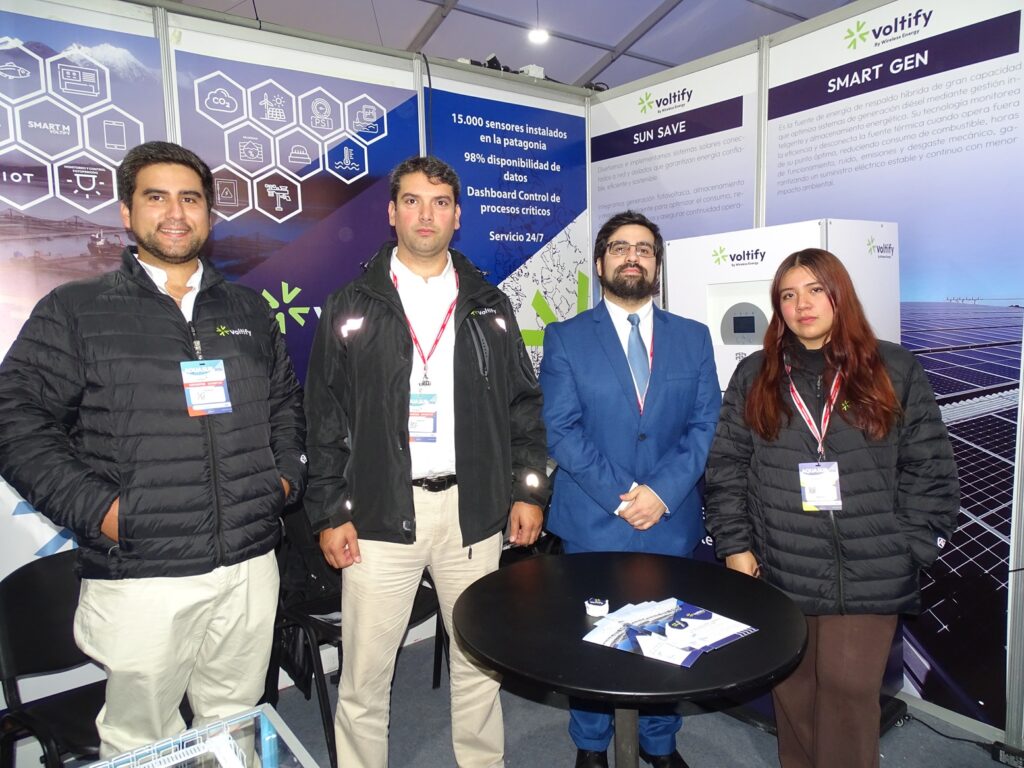
Peña highlighted the high interest of visitors in knowing their tailor-made solutions, adapted to the needs of each client. “We accompany them at every stage, from design to installation and monitoring, to ensure the best service. Customers have several problems that they want to solve in terms of industrial monitoring and digitization. For the same reason, several stakeholders have gone by who are seeing our services and we have scheduled several business meetings,” said the executive of Voltify, a company that has several years of experience in the implementation of non-conventional renewable energies.
Cybersecurity for industry
Another exhibitor who caught the public's attention for showing on-site a dashboard with all its IT and TO solutions was Red Core. The company, which specializes in cybersecurity solutions, showed how they help organizations meet the minimum cybersecurity standard of Framework Law 21.663, where companies are forced to safeguard information and have a cybersecurity manager who can make decisions and mitigate the risks that affect production.
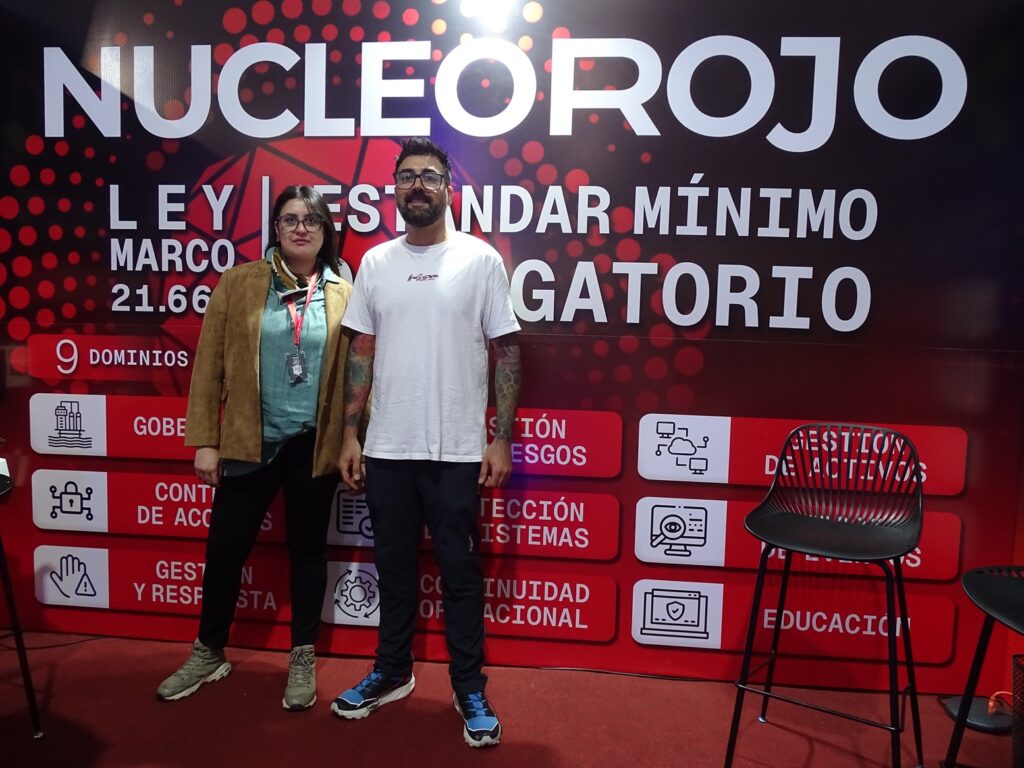
According to Matías Román, representative of Red Core, one of the main requirements they have of the industry in general is the control and management of threats for both IT and TO environments. “We have noticed that the aquaculture sector acquires more and more original technology and technology platforms, but they often forget to look after the cybersecurity or integrity of these systems. And that's where we are with more and more requirements. by the companies in the field,” Román said.